Exploration Log 2: Al Thomas’ “Sex in Space: A Brief Survey of Gay Themes in Science Fiction” (1976)

Today I have the second post in my new Exploration Log series. Some posts will be a brief survey of the various SF-related non-fiction I’ve read. Other posts, I hope, will be a jumping off point for my own research. In this instance, I’ll share the elements of an article that resonated with me.

Check out my previous post on publishing Ursula K. Le Guin behind the Iron Curtain here.


Al Thomas’ “Sex In Space: a Brief Survey: A Brief Survey of Gay Themes in Science Fiction” first appeared in Gay Peoples Union News, Vol. 5, N. 12 (September 1976). You can read it online here.

In 1971, inspired in part by the Stonewall Riots of 1969 that brought national attention to the gay liberation movement and Wisconsin’s earlier and lesser known LGBTQ riots, the Gay Peoples Union (GPU) was founded in Milwaukee, Wisconsin as “a social service agency dedicated to the needs of the gay community” and “concurrently dedicated to educating the community at large about gays and lesbians” (source). An offshoot of the Gay Liberation Organization at the University of Wisconsin Milwaukee, the GPU was the “‘first’ at many things” including community center, gay health clinic, and published a monthly periodical called GPU News (source). The publication soon gained national recognition for its broad coverage of topics to the gay and lesbian community. GPU News produced the “first regularly scheduled, scripted gay and lesbian [radio] program in the nation” between 1971-1972 and collaborated on multiple programs with the mainstream Milwaukee news sources. For recordings and other pieces of ephemera check out the University of Wisconsin-Madison digital collection. For a brief oral history of attending a GPU meeting, check out this fascinating interview with Don Schwamb and other early members.

The article I’ll cover today–Al Thomas’ “Sex In Space: A Brief Survey of Gay Themes in Science Fiction” (September 1976)–appeared in the publication’s heyday in the 70s before it folded due in the early 80s due to lack of volunteers (source).

Al Thomas, about whom I’ve been able to find nothing about, surveys the state of science fiction on gay (and occasionally lesbian) themes up to 1975. While the article itself is riddled with errors that impact the conclusions he reaches, “Sex In Space” is a fascinating look at how science fiction was viewed by the gay liberation movement of the day. I’ve provided each work with gay and lesbian themes covered in the article below.

Continue reading

Updates: Recent Science Fiction and Fantasy Purchases No. CCCXII (J. G. Ballard, Roger Zelazny, John Wyndham, and Joel Zoss)

Which books/covers/authors intrigue you? Which have you read? Disliked? Enjoyed?

1. The Impossible Man and Other Stories, J. G. Ballard (1966)

From the back cover: “THE IMPOSSIBLE MAN is the eighth book by J. G. Ballard to be published in the United States. Since the publication of his famous first two novels in 1962, The Wind from Nowhere and The Drowned World, no writer in modern science fiction has received higher acclaim from the critics:

“…the freshest new talent in science fiction since Brian Aldiss.— DAMON KNIGHT

“Ballard is one of the brightest new stars in post-war fiction… he may turn out to be one of the most imaginative of Wells’s successors.” — KINGSLEY AMIS

THE IMPOSSIBLE MAN gathers together nine of Ballard’s most recent stories. A few samples:

In “The Drowned Giant” an enigmatic visitor is subjected to the various kindnesses of man…”

Continue reading

Short Story Reviews: Alfred Coppel’s “The Dreamer” (1952), “Double Standard” (1952), “The Hunters” (1952), and “Death is Never Final” (1952)

The following review is the 17th, 18th, and 19th installment of my series searching for “SF short stories that are critical in some capacity of space agencies, astronauts, and the culture which produced them.” Some stories I’ll review in this series might not fit. Many are far from the best. And that is okay. I relish the act of literary archaeology.

Reinvigorated by the positive response to my last post in my series, I turn now to an author, Alfred Coppel (1921-2004), whom I’ve only infrequently explored. Track down his post-apocalyptic masterpiece, of the “realistic” variety, Dark December (1960) if you haven’t already. As I was in the Coppel reading mood, I included an extra tale on a different theme.

As always, feel free to join the conversation and read along with me on the search for the depressed astronaut.

Previously: John D. MacDonald’s “The Flaw” (1949)

Up Next: Harlan Ellison’s “Psycho at Mid-Point” (1956)

3.5/5 (Good)

Alfred Coppel’s “The Hunters” first appeared in Fantastic Story Magazine, ed. Samuel Mines (Fall 1952). You can read it online here.

“The Hunters” imagines a world after humanity has voyaged to the stars. Or rather, after humanity figured out that they were not suitable for the stars–a simulacrum of the human was required instead. Felti hides from the hunters–Grancor and Corday–on a “twisted, tortured world that had not died with dignity” (107). An archaeologist by trade who studied the culture that started the exploration of the cosmos, Felti felt the pull of this shattered place despite its “acrid tang of radiation” (107). But he was on the run! The “Psychoanalyzer” required Felti’s reconditioning (107).

Continue reading

Exploration Log 1: Sonja Fritzsche’s “Publishing Ursula K. Le Guin in East Germany” (2006)

I devour a massive quantity of scholarship on science fiction (authors, culture, fandom, etc.) and history topics that intersect with my SF interests. Some weeks I spend more time reading historical fanzine debates and magazine articles than fiction. I thought that I would share some of what I’ve found most transfixing with you all! In the past I’ve tweeted the most intriguing bits I’ve come across (Michael Moorcock burning John Brunner novels for example) but with the impending implosion of the platform I thought it best to post more on my site which is on track for a banner year.

Thus, I inaugurate the first in what I hope are many future Exploration Logs! Some posts will be a brief survey of the various SF-related non-fiction I’ve read. Other posts, I hope, will be a jumping off point for my own research. In this instance, I’ll share the elements of an article that resonated with me.

Today I’ll cover an absolutely transfixing piece by Sonja Fritzsche on how two Ursula K. Le Guin novels went through an “elaborate approval process” before appearing print in Communist East Germany (GDR). Read more to learn more about the Stanislaw Lem Club’s stash of illegal western SF and how The Dispossessed‘s Shevek was incorporated in the East German national myth!


Sonja Fritzsche’s article “Publishing Ursula K. Le Guin in East Germany” appeared in Extrapolation, vol. 47, Iss. 3 (Winter 2006). As I could not find a copy online, I requested it through my university’s Interlibrary Loan system. If you’re desperate to get your hands on a copy, reach out!

“Publishing Ursula K. Le Guin in East Germany” reveals three fascinating intersecting threads–1) the mechanisms of the censorship program according to the “official literary policy of Socialist Realism,” 2) status of genre within the GDR and 3) how Le Guin’s complex takes were interpreted and rationalized in order to see print for the growing number of East German SF fans in the 70s and 80s.

Continue reading

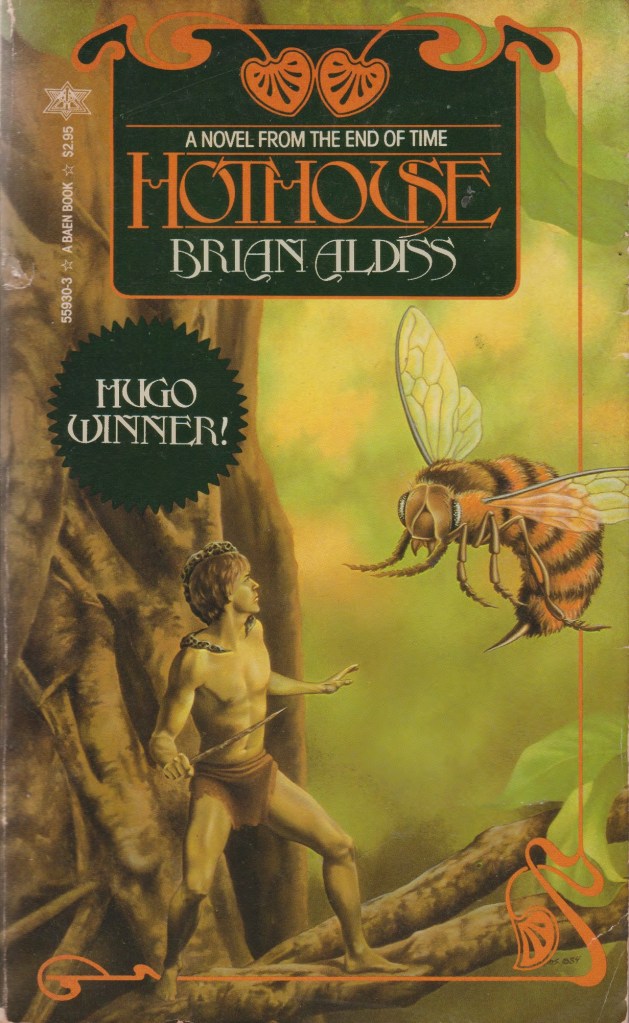
Book Review: Hothouse (variant title: The Long Afternoon of Earth), Brian W. Aldiss (1962)

4.5/5 (Very Good)

Brian W. Aldiss’ Hugo-winning Hothouse (1962) imagines an oppressive, violent, and alien Earth transformed by “the long age of the vegetable” (187). The surviving humans live–“more by instinct than intelligence” (54)– in a continent-encompassing banyan tree in constant fear of killer flora and fauna. Aldiss succeeds in constructing a profoundly unsettling worldscape encyclopedic in its details with unusual rituals of survival. There’s the existential sense throughout that the humans, detached from any memory of their past, who attempt to survive are but frantic movements of an apocalyptic paroxysm. Inventive, relentless, hallucinogenic.

Continue reading

Updates: Recent Science Fiction Purchases No. CCCXI (Phyllis Gotlieb, John D. MacDonald, Robert Onopa, and Peter George)

Which books/covers/authors intrigue you? Which have you read? Disliked? Enjoyed?

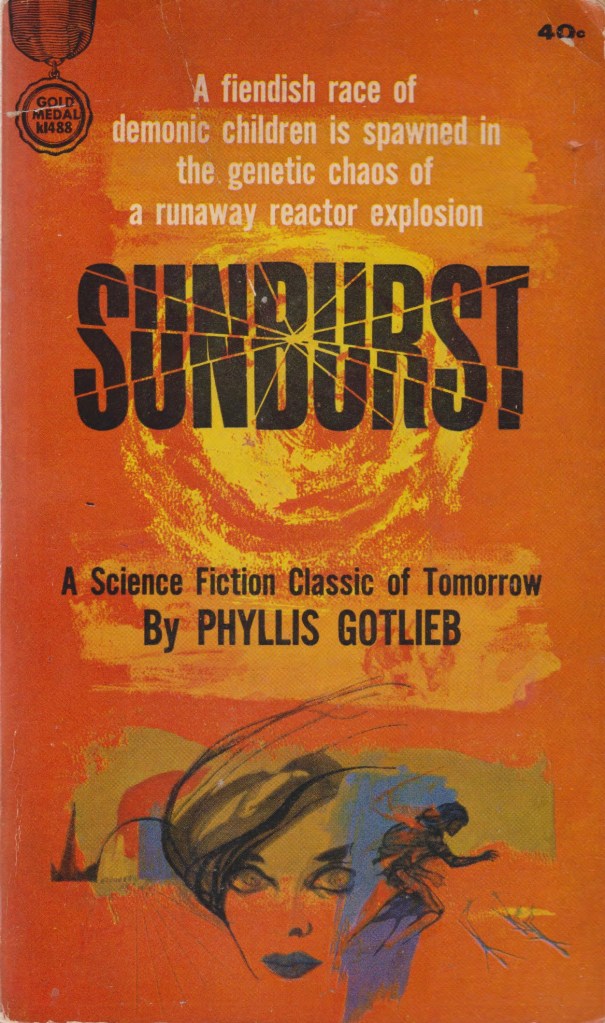
1. Sunburst, Phyllis Gotlieb (1964)

From the back cover: “In the hideous aftermath of the atomic sunburst. The people of Sorrel Park had been written off. Now they were nothing but a kind of human garbage, festering and hopeless.

In the center of town lived the worst of the human garbage–and by far the most dangerous. They were a breed of terrible children, possessed by terrifying supernormal powers. They were a new race of monster bred out of the sunburst, and if they ever broke loose they would destroy the world…”

Continue reading