This is the 22nd post in my series of vintage generation ship short fiction reviews. While I have dabbled in the more esoteric as of late due the rapidly decreasing number of available choices, thanks go out to all who have joined some part of my read-through already. I’ve also compiled an extensive index of generation ship SF–expanded from a monograph by Simone Caroti–if you wish to track down my earlier reviews on the topic and any that you might want to read on your own.1
Previously: George Hay’s Flight of the “Hesper” (1952)
Next Up: TBD
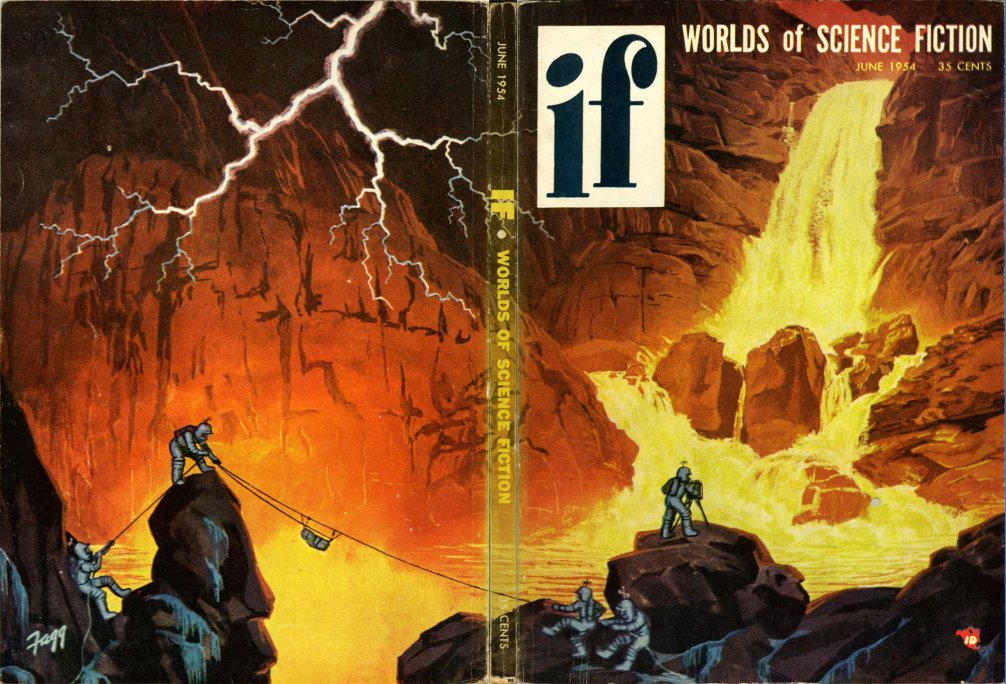
Kenn Fagg’s cover for If, ed. James L. Quinn (June 1954)
2.75/5 (Below Average)
Mari Wolf’s “The First Day of Spring” first appeared in If, ed. James L. Quinn (June 1954). You can read it online here.
As I mentioned in my only other review of Mari Wolf’s work, she’s best known for her contributions to fandom including the Fandora’s Box column (1951-1956) in Imagination. In addition, Mari Wolf (1926-) published seven short stories between 1952 and 1954, six of which appeared in If. Unfortunately, after her divorce in 1955 from fellow SF author Rog Phillips (1909-1966), she stopped publishing SF. Here is a brief bibliographic blurb on her life, career, and SF endeavors. Ted White wrote an article about her in the fanzine e*I*5 (Vol. 1 No. 5) December 2002 (here). The issue also includes Wolf’s short story “Prejudice” (1953), which only received a fanzine publication.
The Nature of the Generational Voyage
Continue reading
 Science Fiction and Other Suspect Ruminations