Short Story Review: Izumi Suzuki’s “Terminal Boredom” (1984, trans. by Daniel Joseph 2021)

Today I’m joined again by Rachel S. Cordasco, the creator of the indispensable website and resource Speculative Fiction in Translation, for the sixth installment of our series exploring non-English language SF worlds. Last time we covered Arkady and Boris Strugatsky’s ruminative “Wanderers and Travellers” in International Science Fiction, ed. Frederik Pohl (November 1967).

Please note that Rachel and I are interested in learning about a large range of authors and works vs. only tracking down the best. That means we’ll encounter some stinkers. Thankfully, not this time! We got a powerful one.

Unfortunately, Izumi Suzuki’s “Terminal Boredom” (1984, trans. by Daniel Joseph 2021) does not exist online. A large range of her SF stories were translated and published in two volumes by Verso books with various translators. You can acquire Terminal Boredom (2021) and Hit Parade of Tears (2023) at relatively inexpensive prices online. Despite my substantial qualms with the editions (see my review below), I recommend acquiring them.

“Terminal Boredom” (1984) does double duty as the 35th installment of my review series on media landscapes of the future.

Previously:  George H. Smith’s “In the Imagicon” (1966).

Up Next: TBD

Enjoy!


Rachel S. Cordasco’s Review

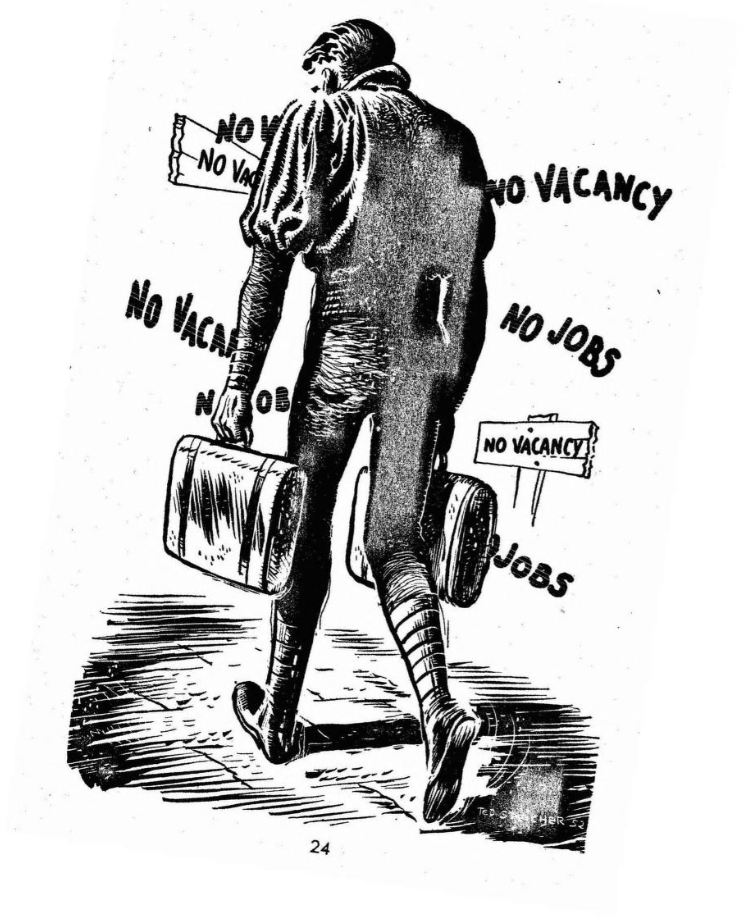
In an article on the “iconoclast” Japanese sf writer Izumi Suzuki, Andrew Ridker distills her stories down to three words: “Ambivalence, disappointment, resignation: Suzuki’s stories speak so eloquently to our burnt-out moment that it’s easy to forget the importance of her cultural context” (LitHub, 5/7/21). We are indeed burnt out, more burnt out even than when Ridker was writing just four years ago. It’s now 2025 and time to face the fact that Facebook and YouTube have been around for over twenty years. The iPhone has been around for nearly that long, and for an entire year, the world was turned upside down during a pandemic, during which time we were even more closely connected to our devices. We’re burnt out by phones, by the rapidly-developing world of AI, by the streaming services that offer us so many choices that it’s nearly impossible to pick something to watch.

Continue reading

Book Review: Octavia E. Butler’s Clay’s Ark (1984)

4.5/5 (Very Good)

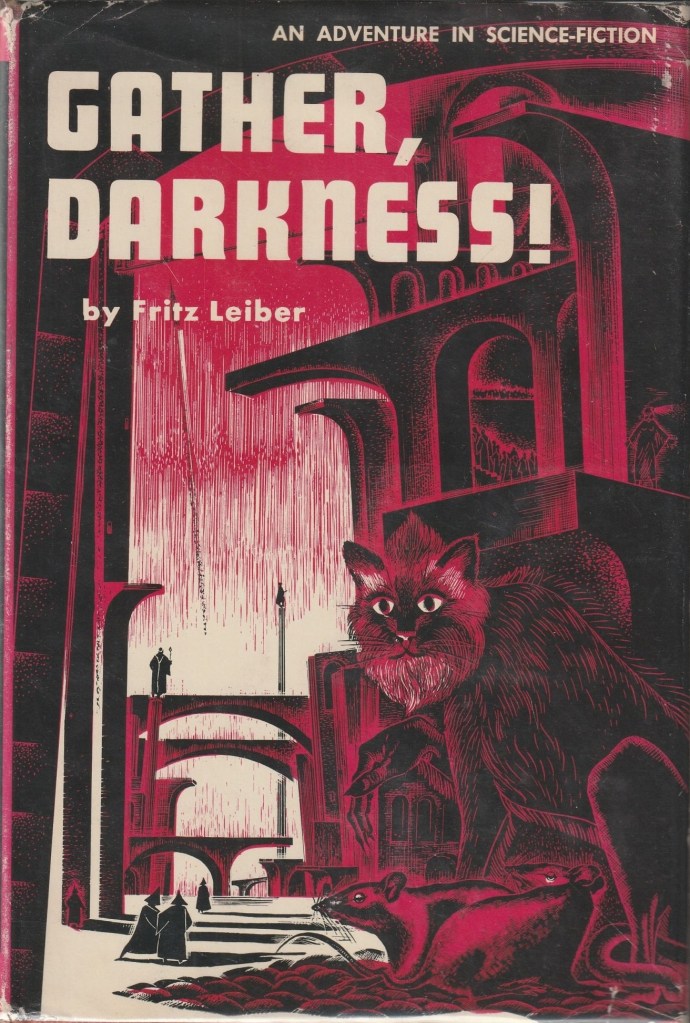
Octavia E. Butler’s Clay’s Ark (1984) is the final published volume of her Patternist sequence (1976-1984).1 It is the third novel according to the internal chronology of the series. Clay’s Ark is, without doubt, the most horrifyingly bleak science fiction novel I have ever read.2 It’s stark. It’s sinister. It’s at turns deeply affective before descending into extreme violence and displaced morality. The moral conundrum that underpins the central problem, the spread of an extraterrestrial disease, unfurls with an unnerving alien logic. Butler’s characters are trapped by the demands of the alien microbes, scarred by the pervasive sense that their humanity is slipping away, and consumed by the fear of starting an epidemic. A true confrontation of the moment cannot lead to anything other than suicide or the first steps towards an apocalyptic transformation.

Continue reading

Short Fiction Reviews: George H. Smith’s “The Last Days of L.A.” (1959) and “In the Imagicon” (1966)

Back in 2021, I reviewed and adored George H. Smith’s “The Last Crusade” (1955), a scathing take-down of modern war (replete with confused soldiers in mech suits). While a good portion of Smith’s science fictional output was comedic smut with titles like Those Sexy Saucer People (1967) and Flames of Desire (1963), he clearly could craft an effective short fiction in the best genre magazines of the day.

I appeared recently on a podcast about Philip K. Dick’s masterpiece “Foster, You’re Dead” (1955) and felt the urge to track down story about nuclear terror. Smith’s drunk whirlwind of a story “The Last Days of L. A.” (1959) fits the bill. In addition, I selected “In the Imagicon” (1966), an intriguing take on a personal virtual reality machine, as the 34th story in my series on media landscapes of the future.

Previously in my future media series: Russell Bates’ “Hello, Walls and Fences” (1973) and “Warning: The Surgeon General Has Determined…:” (1977)

Up Next: Izumi Suzuki’s “Terminal Boredom” (1984)

Let’s get to the stories!


4/5 (Good)

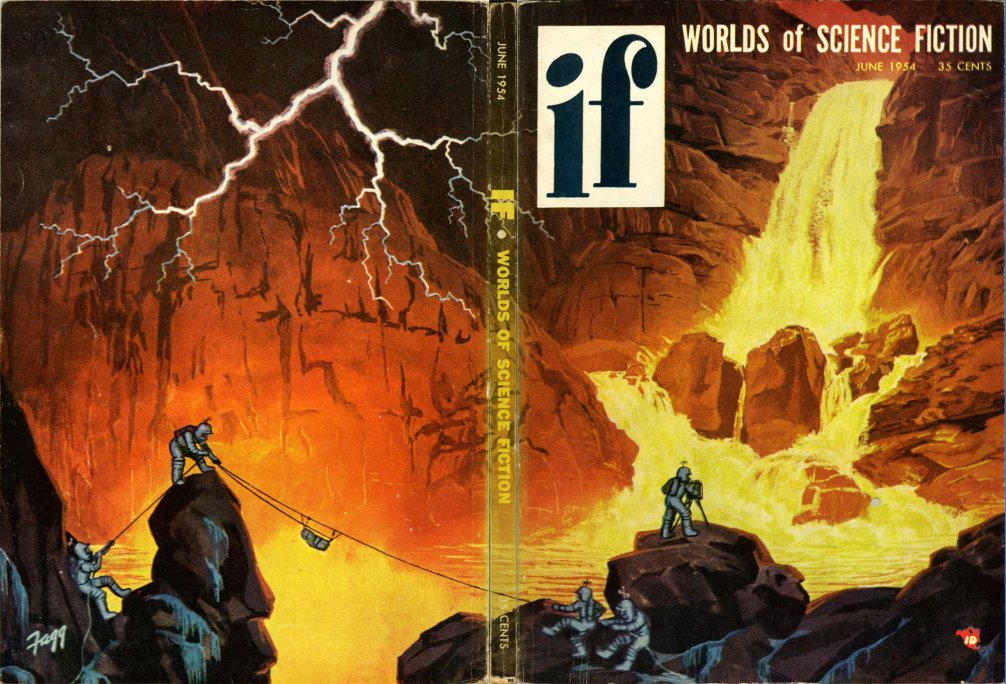
“The Last Days of L. A.” first appeared in If, ed. Damon Knight (February 1959). You can read it online here.

Continue reading

Short Book Reviews: Joe Haldeman’s All My Sins Remembered (1977) and Burt Cole’s Subi: The Volcano (1957)

Note: My read but “waiting to be reviewed pile” is growing. Short rumination/tangents/impressions are a way to get through the stack before my memory and will fades. My website partially serves as a record of what I have read and a memory palace for future projects. Stay tuned for more detailed and analytical reviews.

1. Joe Haldeman’s All My Sins Remembered (1977)

4/5 (Good)

The vast Confederación is comprised of radically distinct worlds ruled by the entire spectrum of political systems with both alien and non-alien inhabitants. There are few rules: don’t take advantage of indigenous populations and don’t wage wars on neighboring planets. At 22, the naive Otto McGavin, an Anglo-Buddhist, joins the Confederación as an agent to “protect the rights of humans and non-humans” (1). But there’s a twist. Under “deep hypnosis” (6) a “construct” of Otto McGavin will be created for each mission. He’ll take on the identity–under a sheath of plasticine flesh–of whatever person he needs to be depending on the task. Otto, and all his training, will only kick in when his life is at risk.

Continue reading

Book Review: Jack Dann’s Timetipping (1980)

3.75/5 (collated rating: Good)

Alien sex dolls. Carpet stain entities constructing love-nests. Underground retirement community entertainment. Jack Dann’s stories obsessively chart the new rituals of survival in a blasted, irradiated, and decayed future. His characters attempt to identify their place in the world, or, at the very least, stay alive as the world shifts. If you do not care for anti-heroes, a good dose of dystopian perversity, and moments of metaphysical descent, Timetripping (1980) might not be for you. Four of the fourteen stories in the collection were nominated for the Nebula Award.

If you are a fan of the New Wave (and Barry N. Malzberg and Robert Silverberg in particular), and haven’t yet explored Dann’s nightmares, don’t wait as long as I did. Also, go ahead and snag a copy of his later masterpiece The Man Who Melted (1984). I’ve acquired copies of two early fix-up novels Junction (1981) and Starhiker (1976).

My 20 best short story reads of 2025 will undoubtedly include a handful of stories from Timetripping (1980). I found his best works—“The Dybbuk Dolls” (1975), “A Quiet Revolution for Death” (1978), “I’m with You in Rockland” (1972), and “Camps” (1979)—remain cohesive despite moments of metaphysical rumination and deluge of surreal image. Even at his least effective moments of narrative wander, Dann adeptly conjures image and turn of phrase.

Continue reading

Short Story Review: Arkady and Boris Strugatsky’s “Wanderers and Travellers” (1963, trans. 1966)

Today I’m joined again by Rachel S. Cordasco, the creator of the indispensable website and resource Speculative Fiction in Translation, for the fifth installment of our series exploring non-English language SF worlds. Last time we covered Kathinka Lannoy’s strange (and unsuccessful) Dutch language story “Drugs’ll Do You” (1978, trans. 1981).

Please note that Rachel and I are interested in learning about a large range of authors and works vs. only tracking down the best. That means we’ll encounter some stinkers! Unlike our last entry, this one isn’t a stinker.

The first translated edition of Boris and Arkady Strugatsky’s “Wanderers and Travellers” appeared in Path Into the Unknown, ed. uncredited (1966). Unfortunately, the translator and editor (I assume Judith Merril as she wrote the intro) is unknown. You can read it online here. You can also read it in International Science Fiction, ed. Frederik Pohl (November 1967) online here.

Enjoy!


Rachel S. Cordasco’s Review

Arkady and Boris Strugatsky, two of the greatest science fiction authors of the twentieth century, really should be read more widely in the Anglophone world. Thankfully, the Chicago Review Press has been trying to make this happen, reissuing many classics like Roadside Picnic (1972), Hard to be a God (1964), The Inhabited Island (1971), and more. Together, the Strugatsky brothers wrote an astonishing number of novels, short stories, essays, plays, and film scripts, stretching from the 1950s through the 1980s, many of which have been translated into English.

Continue reading

Short Fiction Review: John Wyndham’s “The Man From Beyond” (variant title: “The Man from Earth”) (1934)

The following review is the 36th installment of my series searching for “SF short stories that are critical in some capacity of space agencies, astronauts, and the culture which produced them.” Some stories I’ll review in this series might not fit or are poor quality. And that is okay. I relish the act of literary archaeology.

Why John Wyndham? I snagged a copy of David Seed’s new book John Wyndham (2025) out via University of Liverpool Press and realized how little I knew about his pre-War science fiction.1 This story, among a few others, jumped out to me due to its critical stance on human exploration.

Previously: E. C. Tubb’s “Without Bugles” (1952), “Home is the Hero” (1952), and “Pistol Point” (1953)

Up Next: TBD


3.5/5 (Good)

John Wyndham, writing as John Benyon Harris, published “The Man from Beyond” (variant title: “The Man from Earth”) in Wonder Stories, ed. Hugo Gernsback (September 1954). You can read the story online here.

The Contours of Venusian Wonder

Continue reading

Book Review: Zoë Fairbairns’ Benefits (1979)

3.75/5 (Good)

Zoë Fairbairns’ Benefits (1979) charts the struggles of the British women’s liberation movement in a dystopic near future. An anti-feminist fringe political party called FAMILY comes to power, simultaneously proclaiming family values while systematically dismantling the welfare state. Benefits effectively eviscerates governmental doublespeak and champions the need to organize and educate in order to fight against patriarchal forces and messianic movements that promise to solve all our ills.

The Lay of the Land

The year is 1976. A massive heatwave rocks the UK.1 However, a seemingly innocuous policy will be used to plunge the country into nightmare. The plan? The British government promises to implement “weekly payment to mothers” (5).2 The titular “benefits” would move some earnings from the wallets of fathers into the purses of mothers. The problem? Confronted by a powerful male-dominated trade union movement attempting to protect its male workers, the government “flew in the face of its commitment to women’s rights” and postponed the scheme (5). Mothers decides to go on strike.

Continue reading

Book Review: George Hay’s Flight of the “Hesper” (1952)

This is the 21st post in my series of vintage generation ship short fiction reviews. While not technically a short story, George Hay’s novel clocks in at a mere 112 pages. I’ve decided to include it in my series. While I have dabbled in the more esoteric as of late, thanks go out to all who have joined some part of my read-through already. I’ve also compiled an extensive index of generation ship SF–expanded from a monograph by Simone Caroti–if you wish to track down my earlier reviews on the topic and any that you might want to read on your own.1

Previously: Poul Anderson’s “The Troublemakers” (1953)

Next Up: TBD

2/5 (Bad)

In 2019, I made the resolution to read all the pre-1985 science fiction on the theme of generation ships available in English. I’ve made substantial progress, especially on the short story front! Last year I posted the 20th installment of my short story read-through.2 I’ve covered authors from John Brunner to Judith Merril. As I mentioned above, I’ve decided to include George Hay’s short novel Flight of the “Hesper” (1952) in my series. Unfortunately, no online copies exist to link.

Continue reading