Updates: Recent Science Fiction Purchases No. CCLXXXIII  (Kurt Vonnegut, Jr., Lisa Tuttle, T. L. Sherred, and Robert Bloch)

Which books/covers/authors intrigue you? Which have you read? Disliked? Enjoyed?

1. Player Piano, Kurt Vonnegut, Jr. (1952)
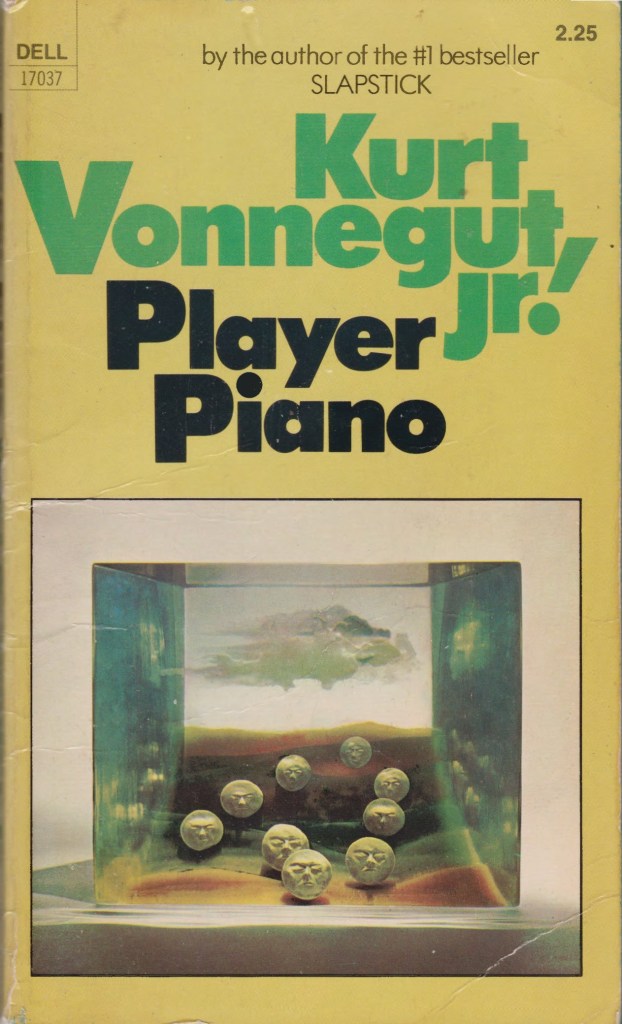
From the back cover: “Want the computer to solve all your problems? Want machines to give you everything you need? Want to be taken care of from cradle to grave by an industrial society that knows what is best for you? Want to find out what hell is really like?

Then you are invited to visit Kurt Vonnegut’s funny and savage vision of a future that is somewhere between Animal Farm and Alice In Wonderland. You’ll laugh until you cry.”

Initial Thoughts: Of Vonnegut’s SF, I’ve only read the magnificent Cat’s Cradle (1963) and Slaughterhouse-Five or The Children’s Crusade: A Duty-Dance with Death (1969) more than a decade ago. The latter has faded a bit from memory. I am intrigued by his first novel. Here’s the synopsis from The Internet Speculative Fiction Database: “In the near future, when cybernetic automation has effectively separated people into two castes, the “engineers and managers”, and the remainder of the population who can find work only in “recycling and reclamation” or the largely useless military, an underground movement arises with the intention of rolling back those changes and giving the masses the dignity of owning their own, productive, work once more.”

Continue reading
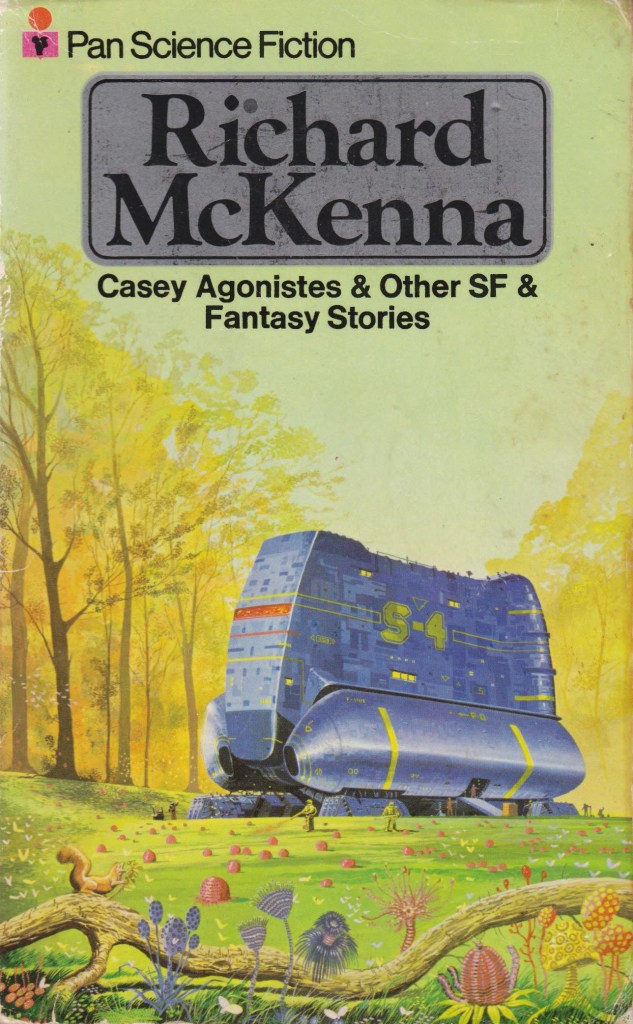
Book Review: Casey Agonistes and Other Science Fiction and Fantasy Stories, Richard McKenna (1973)

4/5 (collated rating: Good)

Richard McKenna (1913-1964) spent the majority of his adult career (1931-1953) “not very happily” in the US Navy. He was forced to leave college and join the service due to his lack of opportunities in rural Idaho during the Great Depression. Many of his science fiction stories explore the homosocial world of the military–the comradery through shared trauma and battle, the corrosive effect on those who struggle to fit in, and the destructive culture of machoism. After his military service, he enrolled at the University of North Carolina in English. Only a handful of SF short stories appeared during his lifetime, the majority were published posthumously. McKenna considered SF to be his “training ground” before a planned career in mainstream literature. Right before his early death in 1964, he hit it big with the non-SF novel The Sand Pebbles (1962), which was turned into a famous 1966 movie by the same name.

Continue reading

Updates: Recent Science Fiction Purchases No. CCLXXXII  (Isaac Asimov, Mary Vigliante, Algis Budrys, and Vladimir Voinovich)

Which books/covers/authors intrigue you? Which have you read? Disliked? Enjoyed?

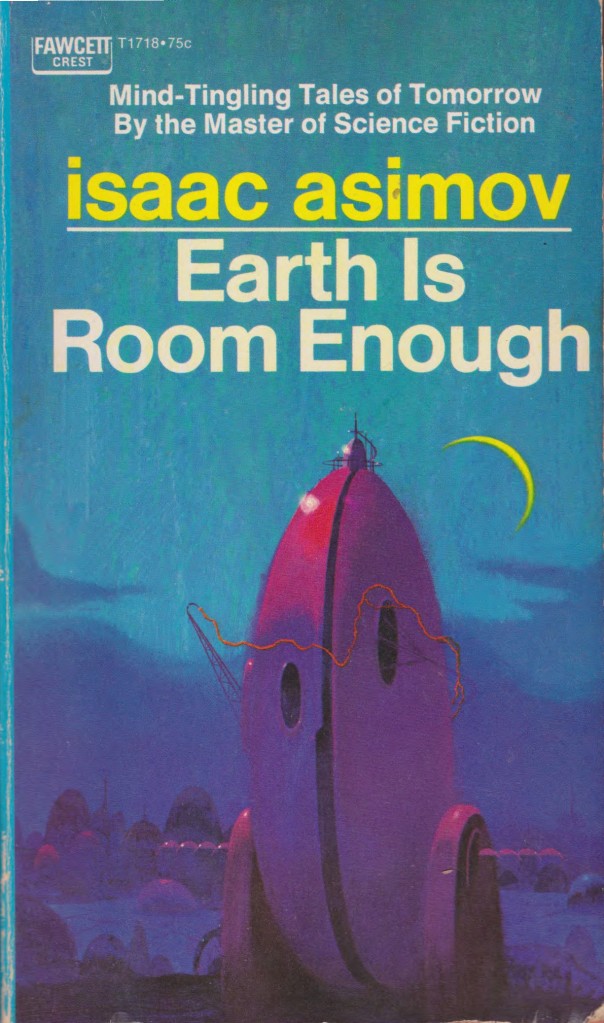
1. Earth Is Room Enough, Isaac Asimov (1957)

From the back cover: “ANYTHING CAN HAPPEN and probably will RIGHT HERE ON EARTH.

You don’t have to rent a spaceship or sign up for a singles cruise to Saturn or spend your weekends star-hopping along the Milky Way because EARTH IS ROOM ENOUGH.

Earth is where the action is and each tomorrow unleashes new discoveries.

Here are brilliant, witty, frightening, and fascinating stories of the future by the greatest science fiction master of them all. Just hitch your mind to these weird and wonderful tales for a spin around the world of tomorrow that will take you right to the center of your wildest dreams.”

Contents: “The Dead Past” (1956), “Franchise” (1955), “Gimmicks Three” (1956), “Kid Stuff” (1953), “The Watery Place” (1956), “Living Space” (1956), “The Message” (1956), “Satisfaction Guaranteed” (1951), “Hell-Fire” (1956), “The Last Trump” (1955), “The Fun They Had” (1951), “Jokester” (1956), “The Immortal Bard” (1954), “Someday” (1956), “The Author’s Ordeal” (1957), “Dreaming Is a Private Thing” (1955)

Continue reading

Generation Ship Short Story Review: Michael G. Coney’s “The Mind Prison” (1971)

This is the 12th post in my newly resurrected series of vintage generation ship short fiction reviews. Today I have something a bit different — a 1970s commentary on the subgenre. While the story itself is not a generation ship tale as it takes place on Earth, it fits and critiques the theme from within a similar enclosed environment.

As a reminder for anyone stopping by, all of the stories I’ll review in the series are available online via the link below in the review.

You are welcome to read and discuss along with me as I explore humanity’s visions of generational voyage. And thanks go out to all who have joined already. I also have compiled an extensive index of generation ship SF if you wish to track down my earlier reviews on the topic and any that you might want to read on your own.

Previously: Arthur Sellings’ “A Start in Life” (1954).

Next Up: Vonda N. McIntyre’s “The Mountains of Sunset, the Mountains of Dawn” (1974).


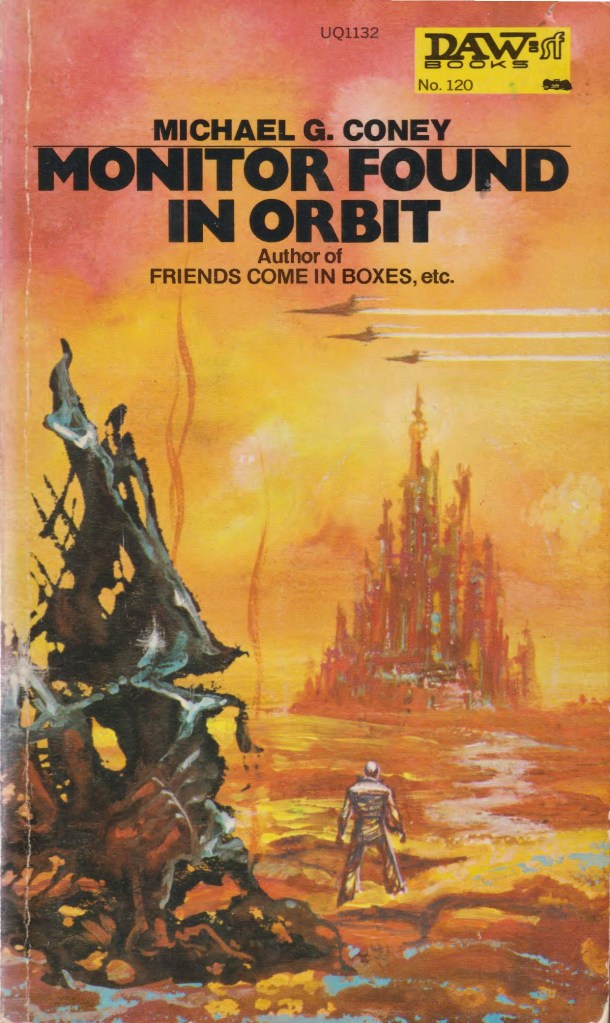
Michael G. Coney’s “The Mind Prison” first appeared in New Writings in SF 19, ed. John Carnell (1971). 3.5/5 (Good). You can read it online here. I read it Coney’s collection Monitor Found in Orbit (1974).

Coney positions “The Mind Prison”, in the introduction to his collection Monitor Found in Orbit, as a commentary on generation ship stories–in particular Robert A. Heinlein’s Orphans of the Sky (serialized 1941) and Brian W. Aldiss’ Non-Stop (variant title: Starship) (1959) which he read and reread over the years. He writes: “I cannot explain why I find the closed environment story so fascinating [..] Why should an adventure story be more exciting, merely because the people therein are not subject to external influences?” (114). Coney emphasizes the centrality of male heroism in many of these stories: “I would rather think that these stories emphasize identification, since the hero is invariably the only normal person around, surrounded by nonsensical religions, illogical facts, widely held misconception, which only he [emphasis Coney’s] can see the stupidity of” (114). “The Mind Prison” explores an enclosed environment remarkably similar to a generation ship, with a female heroine.

Continue reading

Book Review: Only Lovers Left Alive, Dave Wallis (1964)

4/5 (Good)

The scene: Early 60s London. Conjure displays of cool style at local discothèques. Youthful insolence and wit. Frivolous consumerism. Into this swirling myth/reality of the “Swinging” city in the early 60s, Dave Wallis’ Only Lovers Left Alive (1964) weaves its own petulant “image making.” The youth attempt to create a world in the ashes of their forefathers who commit suicide in droves.

Continue reading

Updates: Recent Science Fiction Purchases No. CCLXXXI (Brian W. Aldiss, Michael Swanwick, Anita Mason, Robert C. O’Brien)

Which books/covers/authors intrigue you? Which have you read? Disliked? Enjoyed?

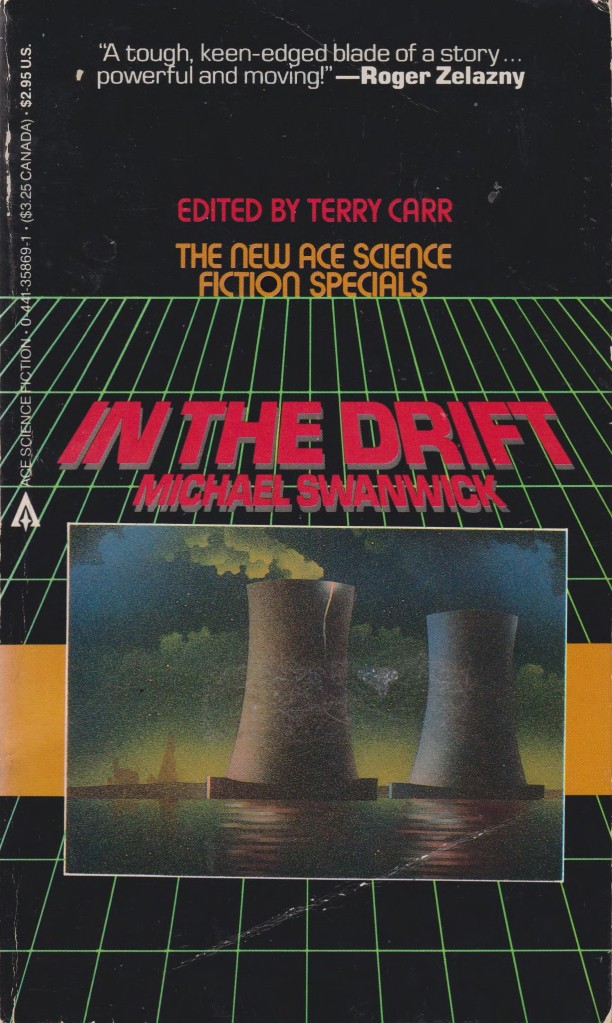
1. In the Drift, Michael Swanwick (1985)

From the back cover: “The meltdown at Three Mile Island created the death zone known as the Drift, where the sky burned dark blue and pink and where boneseekers destroyed bodies within.

Continue reading

Generation Ship Short Story Review: Arthur Sellings’ “A Start in Life” (1954)

This is the 11th post in my newly resurrected series of vintage generation ship short fiction reviews. I’m continuing my exploration of 50s visions.

As a reminder for anyone stopping by, all of the stories I’ll review in the series are available online via the link below in the review.

You are welcome to read and discuss along with me as I explore humanity’s visions of generational voyage. And thanks go out to all who have joined already. I also have compiled an extensive index of generation ship SF if you wish to track down my earlier reviews on the topic and any that you might want to read on your own.

Previously: Frank M. Robinson’s “The Oceans Are Wide” (1954).

Next Up: Michael G. Coney’s “The Mind Prison” (1971).

Arthur Sellings’ “A Start in Life” first appeared in Galaxy Science Fiction (September 1954), ed. H. L. Gold. 3/5 (Average). You can read it online here.

Continue reading

Book Review: Fellowship of the Stars, ed. Terry Carr (1974) (Ursula K. Le Guin, John Brunner, George Alec Effinger, Pamela Sargent, Fritz Leiber, et al.)

3.5/5 (Collated rating: Good)

Terry Carr’s anthology Fellowship of the Stars (1974) collects nine original short stories by luminaries of the genre, Ursula K. Le Guin and Fritz Leiber, to lesser known authors such as Alan Brennert and Mildred Downey Broxon. As the title suggests, Carr commissions stories on the “theme of friendship between human and alien beings” (vii). In a bit of a twist, in more than one instance “friendship” might be code for something far more sinister.

Continue reading

Updates: Recent Science Fiction Purchases No. CCLXXX (Brian W. Aldiss, Judith Merril, Brian M. Stableford, and Chad Oliver)

Which books/covers/authors intrigue you? Which have you read? Disliked? Enjoyed?

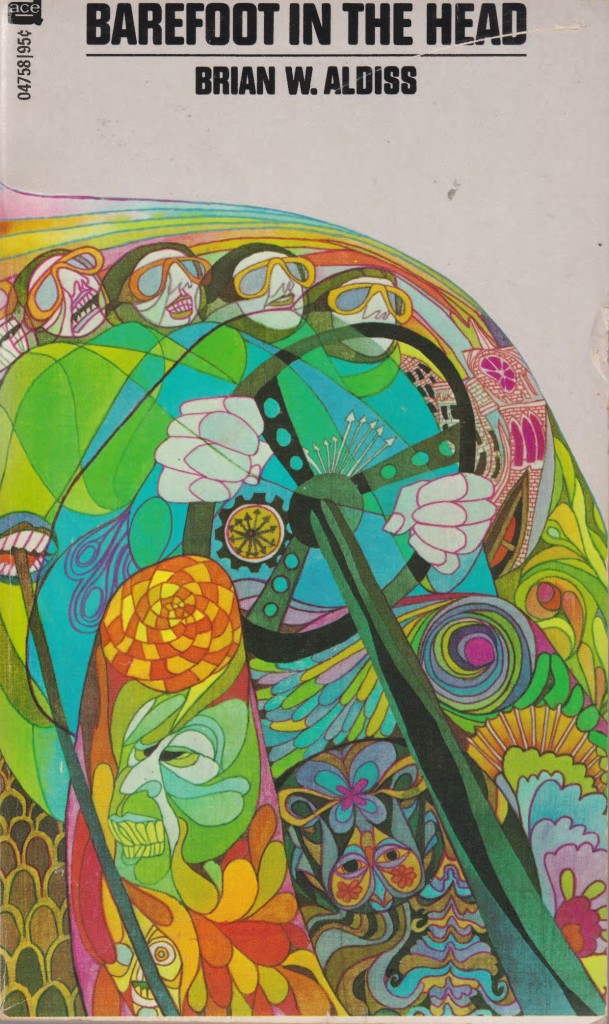
1. Barefoot In the Head, Brian W. Adliss (1969)

From the back cover: “AFTER THE ACID WAR…. Rising from the dust and ashes of a Europe still reeling from the effects of the great Acid War comes Colin Charteris, a futuristic Don Quixote riding the mechanized brontosaurus of the times.

Charteris tries desperately to make sense of the drugged, chaotic world he lives in, and finds himself hailed as the new Messiah. Stranger still, Charteris himself comes to believe this.

His adventures as he tries to save the world from its insanity are brilliantly told, a satiric science fiction comment on the future of mankind.”

Continue reading