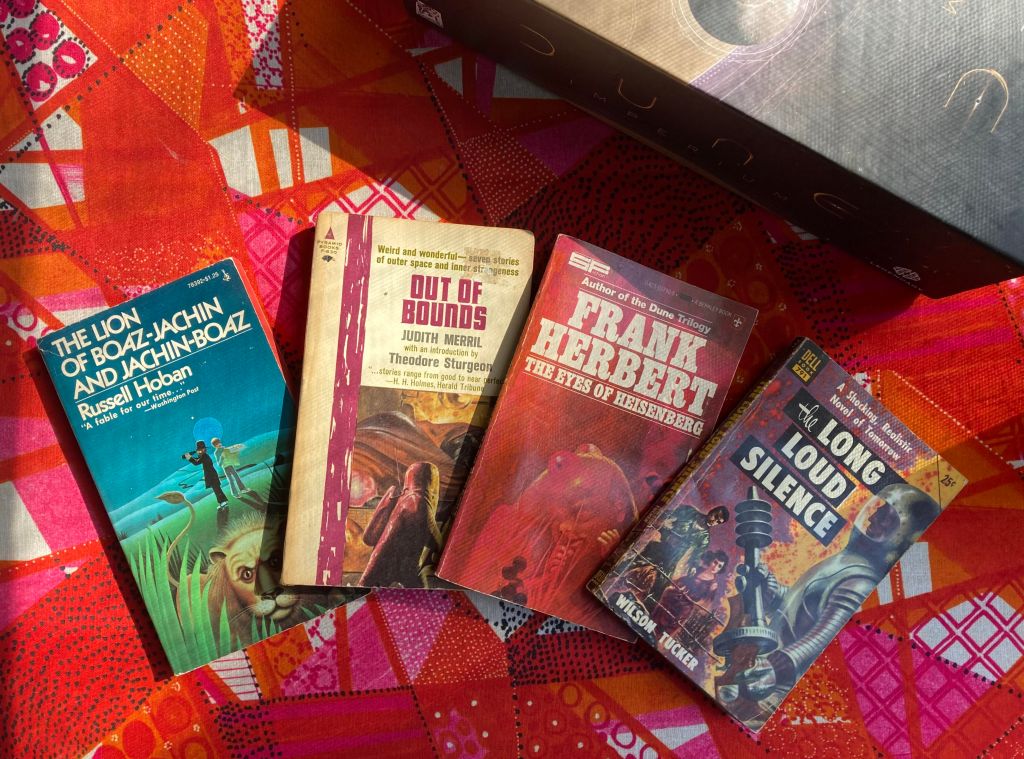
What pre-1985 science fiction are you reading this week?
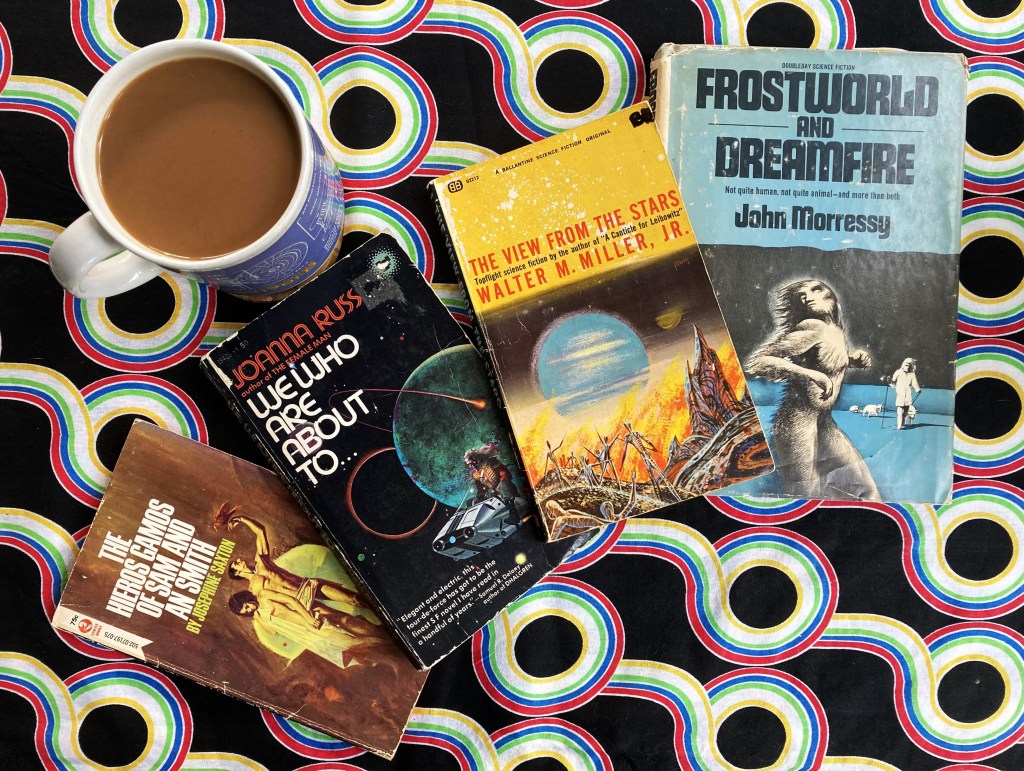
I apologize for the break in my update schedule. It’s been a month since the previous installment. Alas. As I say week after week, thank you for all the great conversation. The community that’s emerged over the years is one of the main reasons I keep writing. I’ve included a bit about the books in the photograph, birthdays from the last two weeks, and brief ruminations on what I’ve been reading and writing.
Note: My read but “waiting to be reviewed pile” is growing. Short rumination/tangents are a way to get through the stack before my memory and will fades. My website partially serves as a record of what I have read and a memory apparatus for future projects. Stay tuned for more detailed and analytical reviews.
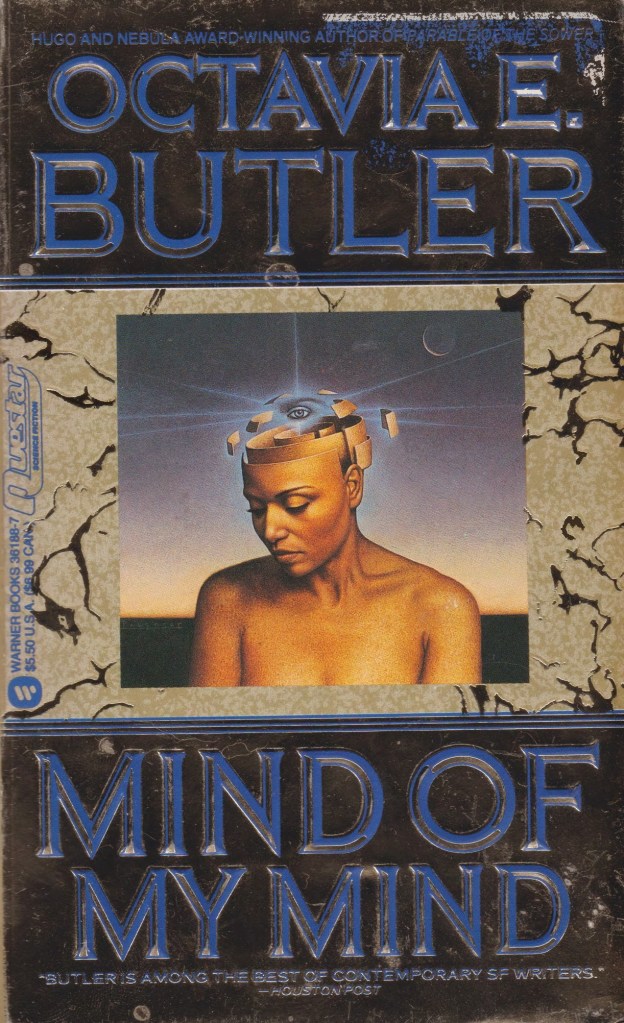
1. Mind of My Mind, Octavia E. Butler (1977)
John Jude Palencar’s cover for the 1994 edition
4/5 (Good)
Octavia E. Butler’s Mind of My Mind (1977) is the second-published and second chronological installment of her Patternist series of novels (1976-1984), that chart the dystopic and hyper-violent development (and destruction) of a telepathic society. The series also contains her disowned (and hard-to-afford without selling a child) novel Survivor (1978). I wish I had read Wild Seed (1980) first!
The immortal Doro, able to hone into those with telepathic talent and shift his essence into new human bodies at will, oversees a generations-old telepathic breeding project. The harrowing story follows one his many daughters, Mary, a rare active telepath (vs. latent), as she comes of age and begins to understand the role that she is designed to play. Doro preys on the downtrodden and abandons the majority of latent telepaths to live miserable lives, unable to filter out the emotions they sponge up. Doro pairs Mary with another active telepath named Karl in order to guide her through her transition. But something new appears in her mind, she seems to have created a pattern that compulsively draws in actives from across the country. And Doro begins to feel threatened by his own creation.
My rough start to the semester proves hard to dispel. I’ll get back to my regular programming soon–I promise. In the meantime, I’ve collected some goodies!
Which books/covers/authors intrigue you? Which have you read? Disliked? Enjoyed?
1. The Man Who Fell to Earth, Walter Tevis (1963)
Jim Burns’ cover for the 1982 edition
From inside page: “He was not a man; yet he was very much like a man. He was six and a half feet tall, and some men are even taller than that; his hair was as white as that of an albino, yet his face was a light tan color, and his eyes a pale blue. His frame was improbably slight, his features delicate. There was an elfin quality to his face, a fine, boyish look to the wide intelligent eyes.
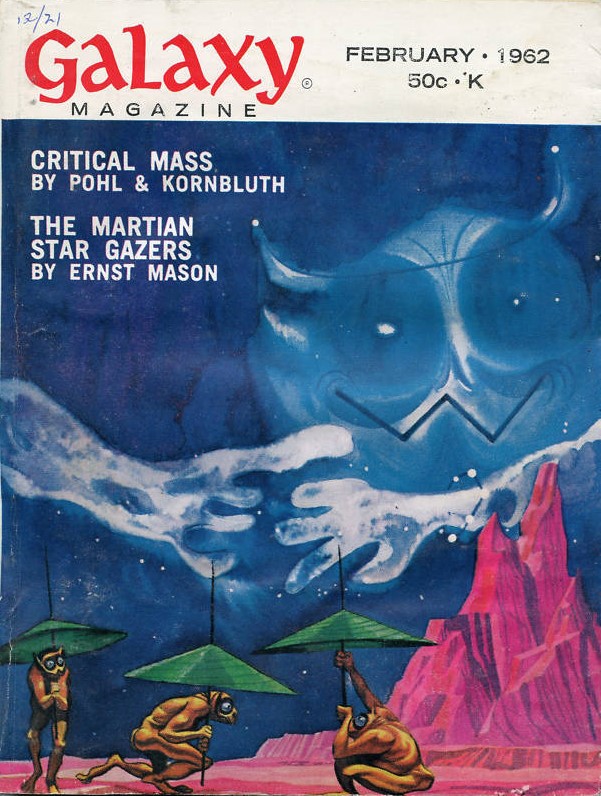
Today I’ve reviewed the 29th story in my series on the science fictional media landscape of the future. In Sydney J. Van Scyoc’s debut “Shatter the Wall” (1962), a bedraggled wife attempts to prevent her daughter and husband from taking on the personas of a television family.
Sydney J. Van Scyoc (1939-2023) published eleven novels and around thirty short stories across her writing career (primarily 1962-1991). Her visions were rarely republished or anthologized. “A Visit to Cleveland General” (1968) might be her best-known short story as it appeared in Carr and Wollheim’s best of 1969 anthology. I have a positive impression of her work so far.
Have you read any of her work? If so, what were your thoughts?
Jack Gaughan’s cover for Galaxy, ed. Frederik Pohl (February 1962)
3/5 (Average)
“Shatter the Wall” first appeared in Galaxy, ed. Frederik Pohl (February 1962). You can read it online here.
According to Gary R. Edgerton in The Columbia History of American Television (2007), a debate emerged in the late 1950s about American materialism and its glorification on television. John Kenneth Galbraith’s The Affluent Society (1958) suggested that advertising created synthetic needs and damaging desires in American citizens. “Shatter the Wall” is all about synthetic needs and damaging desires.
What pre-1985 science fiction are you reading this week?
Thanks again for all the great conversation. Make sure to check out the previous installment if you haven’t already. As before, I’ve included a bit about the books in the photograph, birthdays from the last two weeks, and brief ruminations on what I’ve been reading and writing.
What pre-1985 science fiction are you reading this week?
I’ve thoroughly enjoyed the conversations and connections you all have made in the comments over the last two months of this column. Make sure to check out the previous installment if you haven’t already. As before, I’ve included a bit about the books in the photograph, birthdays from the last two weeks, and brief ruminations on what I’ve been reading and writing.
Today I have the third post in my Exploration Logseries.
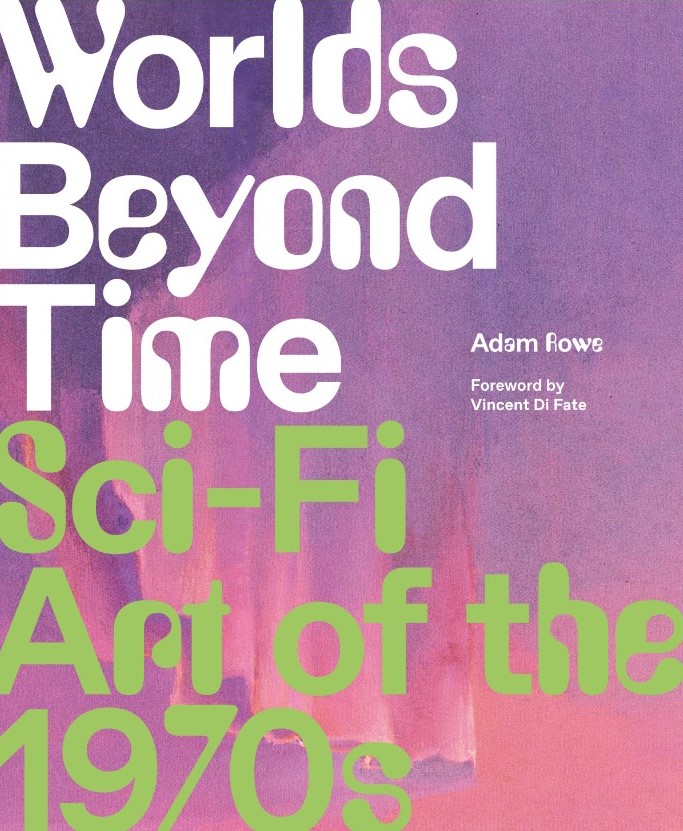
I would like to welcome Adam Rowe to Science Fiction and Other Suspect Ruminations. He is the author of a brand new book–Worlds Beyond Time: Sci-Fi Art of the 1970s (2023)–on 70s science fiction cover art with a foreword by artist Vincent Di Fate. You can follow Adam’s art account on Twitter and Tumblr. I also recommend subscribing to his free 70s SF art newsletter. You can buy Worlds Beyond Time on Amazon and Barnes and Noble.
Adam Rowe is a writer who has been collecting retro science fiction art online since 2013. He covers technology at Tech.co and has been a Forbes contributor on publishing and the business of storytelling. He has also written for iO9, Popular Mechanics, Tor.com, and the Barnes & Noble Sci-Fi & Fantasy Blog. Worlds Beyond Time: Sci-Fi Art of the 1970s (2023) is his first book.
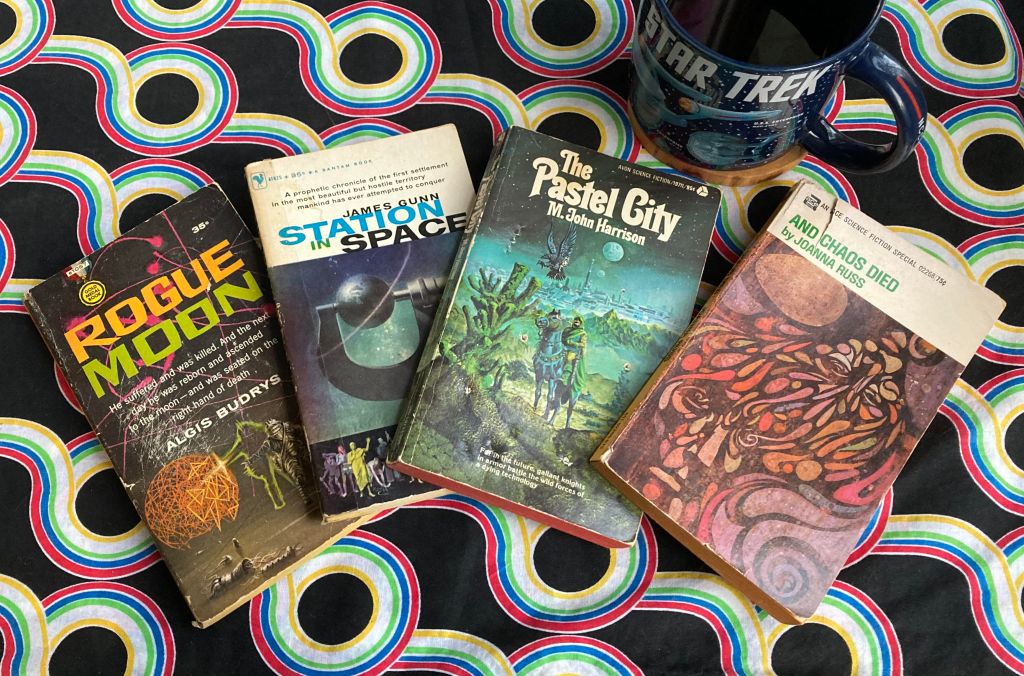
What pre-1985 science fiction are you reading this weekend?
Thank you all for making this fanzine column a success! I’ve thoroughly enjoyed the conversations and connections you all have made in the comments. Make sure to check out the previous installment if you haven’t already. As before, I’ve included a bit about the books in the photograph, birthdays from the last two weeks, and brief ruminations on what I’ve been reading and writing.
Robert Foster’s cover for the 1st paperback edition
5/5 (Masterpiece)
Nominated for the 1965 Hugo Award for Best Novel [1]
Edgar Pangborn’s Davy (1964) takes place in a future devastated by a partially abortive nuclear war and the depravations of subsequent plagues (50). A powerful theocracy and perpetually warring microstates in the American Northeast emerged from the Years of Confusion. The novel takes the form of an autobiography. We follow a young orphan in love with life and desperate to escape his unfortunate circumstances.