After Frederik Pohl (1919-2013) left his editorial position at Galaxy and If in 1969, he set his pen towards a productive vein of form in the 70s that would culminate in his Hugo and Nebula-winning Gateway (1977). The Gold at the Starbow’s End contains five short stories–including the first of his Heechee sequence–from this period. Two of the best stories, the titular “The Gold at the Starbow’s End” (1972) and “The Merchant of Venus” (1972), demonstrate Pohl’s characteristic blend of hyperbolic satire and delirious energy. There are no duds in this collection.
What pre-1985 science fiction are you reading this week?
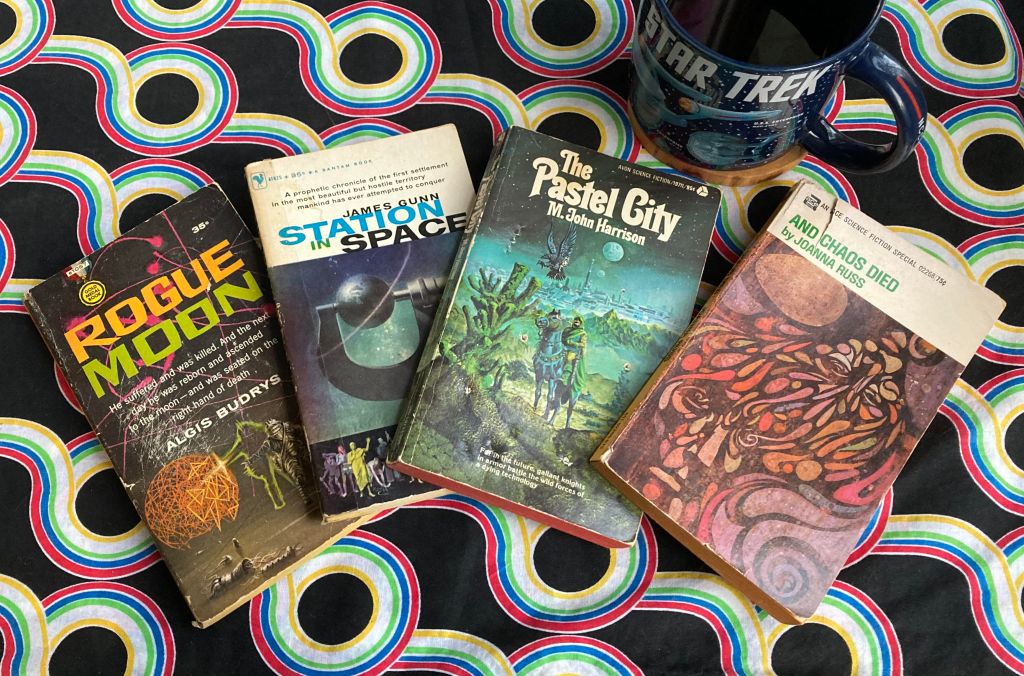
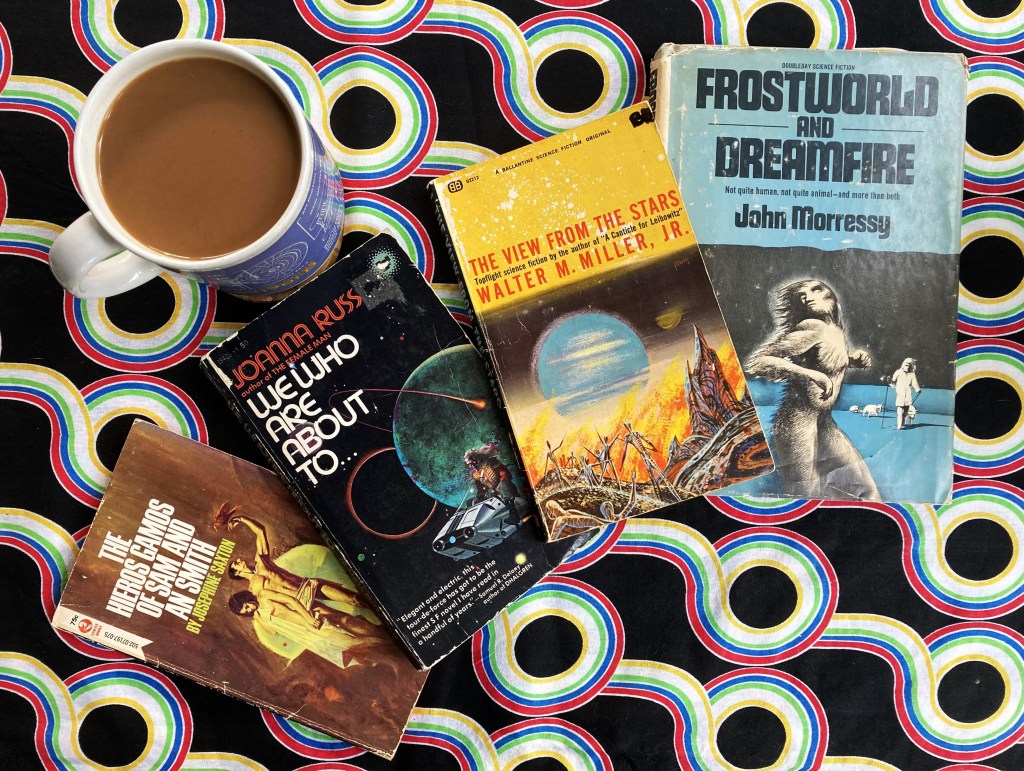
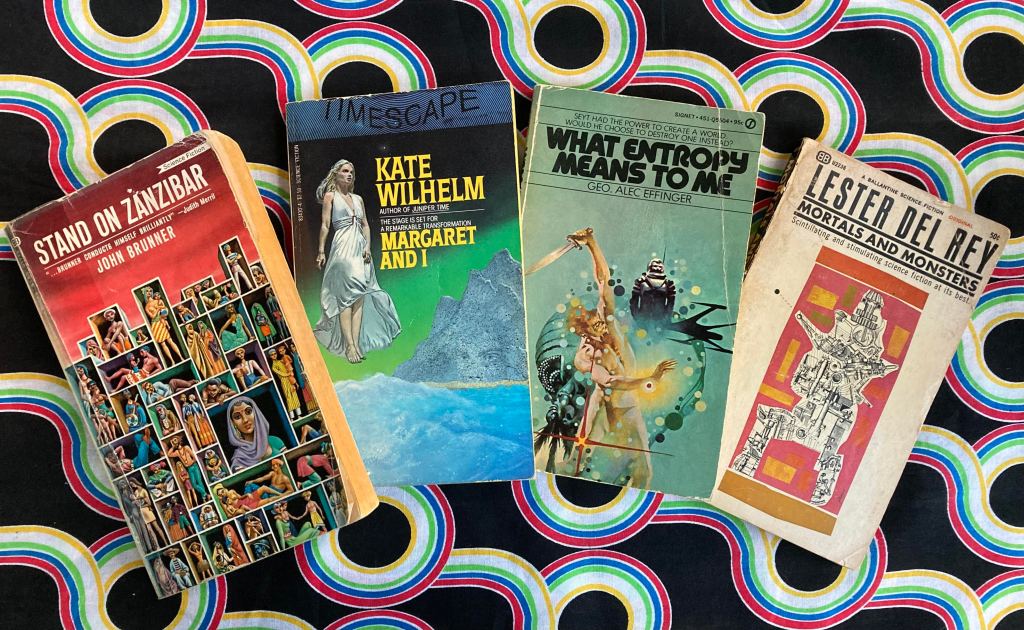
I’ve thoroughly enjoyed the conversations and connections you all have made in the comments over the last two months of this column. Make sure to check out the previous installment if you haven’t already. As before, I’ve included a bit about the books in the photograph, birthdays from the last two weeks, and brief ruminations on what I’ve been reading and writing.
The following review is the 27th and 28th installment of my series searching for “SF short stories that are critical in some capacity of space agencies, astronauts, and the culture which produced them.” Some stories I’ll review in this series might not fit. And that is okay. I relish the act of literary archaeology.
Kate Wilhelm’s “Planet Story” (1975) charts a planetary mystery that seems just out of reach of the cold, factual truth of scientific instruments. And Clark Ashton Smith’s “Master of the Asteroid” (1932) imagines the fragile minds of human explorers unable to grapple with the interplanetary gulf.
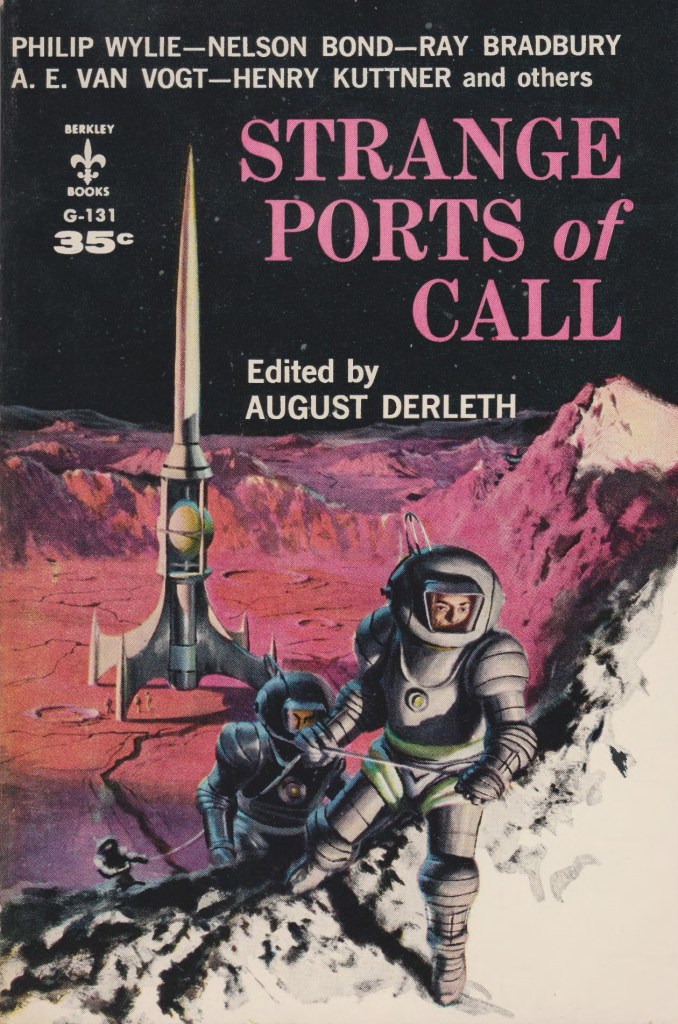
Clark Ashton Smith’s “Master of the Asteroid” first appeared in Wonder Stories, ed. Hugo Gernsback (October 1932). You can read it online here. I read it in the 1958 edition of Strange Ports of Call, ed. August Derleth (1948).
Cark Ashton Smith (1893-1961) is characterized as “one of the big three of Weird Tales, with Robert E. Howard and H. P. Lovecraft.” His fiction was deeply influenced by his psychological afflictions, “including intense agoraphobia,” and nightmares. Due to the Great Depression and the declining health of his parents, Smith wrote more than a hundred short stories between 1929-1934. “Master of the Asteroid” (1932), produced in this productive moment, reads like an unnerving catalog of manias.
Today I have the third post in my Exploration Logseries.
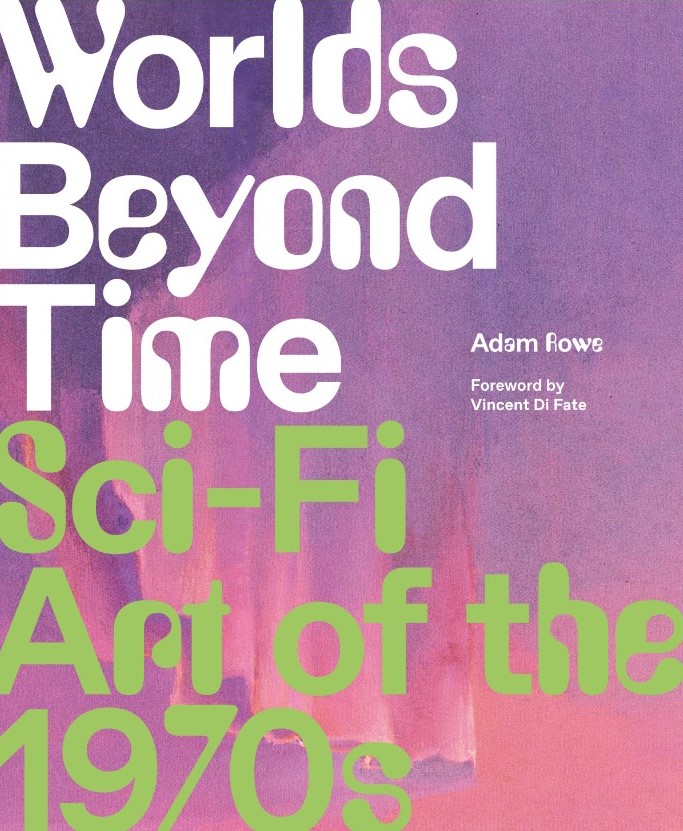
I would like to welcome Adam Rowe to Science Fiction and Other Suspect Ruminations. He is the author of a brand new book–Worlds Beyond Time: Sci-Fi Art of the 1970s (2023)–on 70s science fiction cover art with a foreword by artist Vincent Di Fate. You can follow Adam’s art account on Twitter and Tumblr. I also recommend subscribing to his free 70s SF art newsletter. You can buy Worlds Beyond Time on Amazon and Barnes and Noble.
Adam Rowe is a writer who has been collecting retro science fiction art online since 2013. He covers technology at Tech.co and has been a Forbes contributor on publishing and the business of storytelling. He has also written for iO9, Popular Mechanics, Tor.com, and the Barnes & Noble Sci-Fi & Fantasy Blog. Worlds Beyond Time: Sci-Fi Art of the 1970s (2023) is his first book.
What pre-1985 science fiction are you reading this weekend?
Thank you all for making this fanzine column a success! I’ve thoroughly enjoyed the conversations and connections you all have made in the comments. Make sure to check out the previous installment if you haven’t already. As before, I’ve included a bit about the books in the photograph, birthdays from the last two weeks, and brief ruminations on what I’ve been reading and writing.
What pre-1985 science fiction are you reading this weekend?
After the success of the previous installment, I’ve decided to make this a bimonthly post (“column”) for my site (“fanzine”). As before, I’ve included a bit about the books in the photograph, birthdays from the last two weeks, and brief ruminations on what I’ve been reading and writing.
Which books/covers/authors intrigue you? Which have you read? Disliked? Enjoyed?
1. The Saliva Tree and Other Strange Growths, Brian W. Aldiss (1966)
Les Edwards’ cover for the 1979 edition
Contents: “The Saliva Tree” (1965), “Danger: Religion!” (1962), “The Source” (1965), “The Lonely Habit” (1962), “One Role with Relish” (1966), “Legends of Smith’s Burst” (1959), “Day of the Doomed King” (1965), “Paternal Care” (1966), “Girl and Robot with Flowers” (1965)
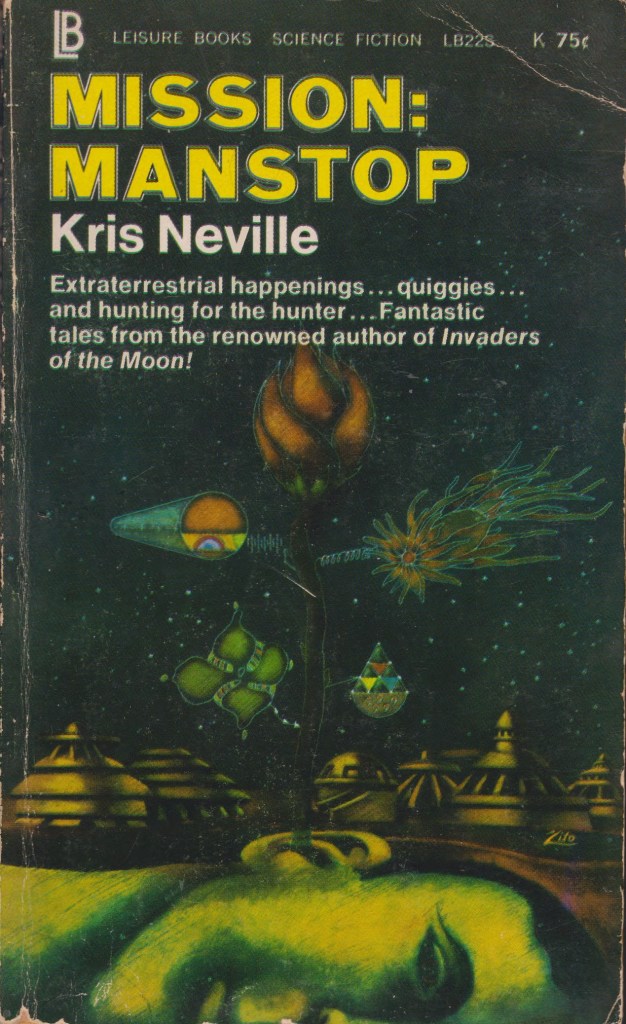
The career of Kris Neville (1925-1980) can be divided broadly into two parts. In his most productive period (1949-1957), Neville’s SF appeared in all the major magazines of the day, The Magazine of Fantasy and Science Fiction in particular. Afterwards, while he continued to publish short stories at a far reduced clip until his death, he wrote a handful of fix-up novels between 1964-1970. This trajectory neatly maps onto the restriction of magazine markets in the late 50s and the growing importance of the SF novel.
I’ve returned from my expedition abroad. It’s time to get back to writing about science fiction! But first, there are always new books that have accumulated at my doorstep…
Which books/covers/authors intrigue you? Which have you read? Disliked? Enjoyed?
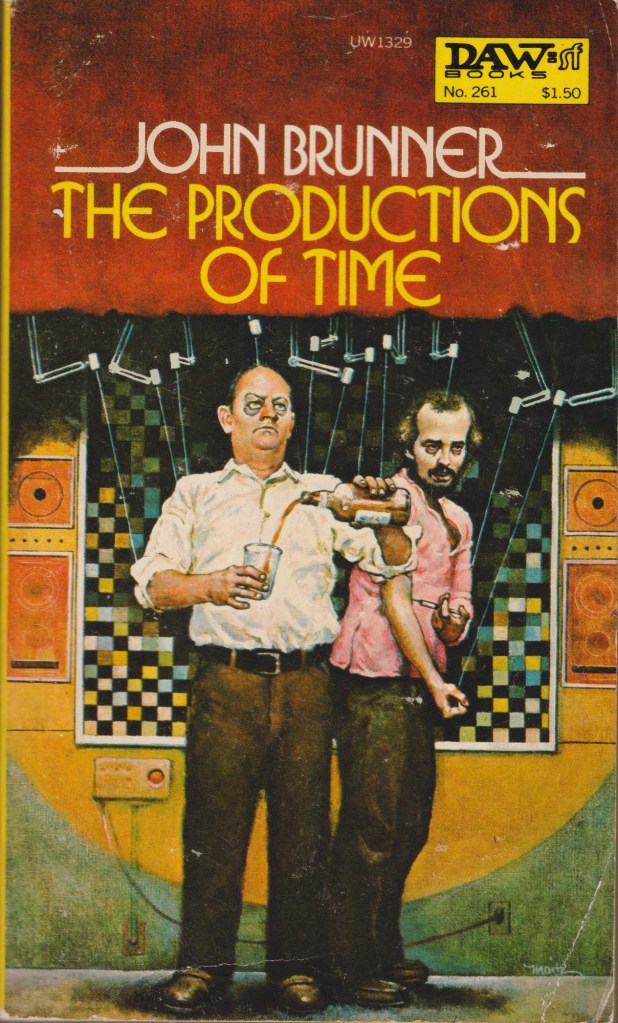
1. The Productions of Time, John Brunner (serialized 1966)
Don Maitz’s cover for the 1977 edition
From the back cover: “Murray Douglas had been a theatrical star until he’d hit the bottle once too often. But now he had broken the habit, and, handsome and fit, was ready for a comeback. The most challenging opening available was an avant-garde play where the actors themselves would make up the drama as they went along.
But out at an isolated country estate where the rehearsals were going on, Murray found himself trapped on a real-life day-and-night stage in which nothing was as it seemed, in which inexplicable devices monitored everything and eerie lures attracted each actor’s psychological weakness.
Who then was the real sponsor of this terrifying play–and to what alien audience was it to be presented?
By the Hugo-winning author of STAND ON ZANZIBAR, this is the first unabridged American edition of this John Brunner classic.”


 Science Fiction and Other Suspect Ruminations