What pre-1985 science fiction are you reading? + Update No. XXVII

What pre-1985 science fiction are you reading or planning to read next month? Here’s the October installment of this column.

If I’m feeling a bit unmotivated to write about science fiction, I always end up on Fanac or another online repository of fanzines/newspapers exploring all the old historical fannish debates. I especially enjoy their reports on various conventions and the community (from accepting to reactionary) that emerges. For example, the details I uncovered about a lost Philip José Farmer speech titled “SF and the Kinsey Report at the 11th World Science Fiction Convention (Philcon 2) in Philadelphia (September 1953) and Pat M. Kuras and Rob Schmieder’s article “When It Changed: Lesbians, Gay Men, and Science Fiction Fandom” (1980) on the first Worldcon panel with an openly LGBTQ topic: “The Closed Open Mind: Homophobia in Science Fiction Fantasy Stories” moderated by Jerry Jacks, one of the “early openly gay fans.” I recently edited a friend’s article for academic publication on the role of conventions in forming feminist and political activism. Conventions sound like fascinating places, at least from my historically-minded vantage point and lens.

Continue reading

What pre-1985 science fiction are you reading? + Bimonthly Update No. I

What pre-1985 science fiction are you reading this weekend?

Every Saturday for more than a year, I’ve asked this question on Twitter (and since February on Mastodon) with a photo of books I’ve read and reviewed on my website from my shelves. Due to the painful implosion of Twitter and the confused and frustrating “what platform do we go to next” panic, I’ve decided to move my weekly question and photo to my site. This community is always first and foremost in my mind. Thank you commenters and lurkers!

Continue reading

Updates: Recent Science Fiction Purchases No. CCCX (R. A. Lafferty, Jan Morris, Star anthology, and an August Derleth anthology)

Which books/covers/authors intrigue you? Which have you read? Disliked? Enjoyed?

1. Strange Ports of Call, ed. August Derleth (1948)

From the back cover: “‘Begotten of Imagination, on the body of Technology, there springs forth the wild child Science Fiction.’ –Clifton Fadiman

The above is one of the many attempts that have been made to describe a department of fiction which, in spite of some sniping critics, continues to increase its followers. Recently Bertrand Russell observed that science fiction consists of ‘intelligent anticipation–much more intelligent than the expectations of statesmen.’

Continue reading

Short Fiction Reviews: Algis Budrys’ “Forever Stenn” (variant title: “The Ridge Around the World”) (1957), Basil Wells’ “Sole Survivor” (1957), Helen McCloy’s “The Unexpected” (1957), and John D. Odom’s “The Word is Law” (1957)

Preliminary note: I never can pinpoint exactly why I read what I read when I read it as I am a creature of impulse and whim. While browsing lesser known authors, I came across Helen McCloy (1904-1994). She’s best known for her post-apocalyptic novel The Last Day (1959) (as Helen Clarkson)—which you read online as paper copies are incredibly scarce and expensive–and wrote a handful of speculative short stories of which three appear to be science fiction. Mysteries and non-genre fiction made up the majority of her output.

The Last Day led me to McCloy’s “The Unexpected” (1957) and that in turn lead me to the December 1957 issue of Satellite Science Fiction, ed. Cylvia Kleinman. As I recently read the short novel in the issue, Jack Vance’s solid The Languages of Pao (1957), I decided that I might as well read the rest of the stories in the magazine. And I hadn’t read a Budrys short in a bit… And I’d never heard of Basil Wells (1912-2003) or John D. Odom (unknown dates).

Continue reading

Updates: Recent Science Fiction Purchases No. CCLXXXII  (Isaac Asimov, Mary Vigliante, Algis Budrys, and Vladimir Voinovich)

Which books/covers/authors intrigue you? Which have you read? Disliked? Enjoyed?

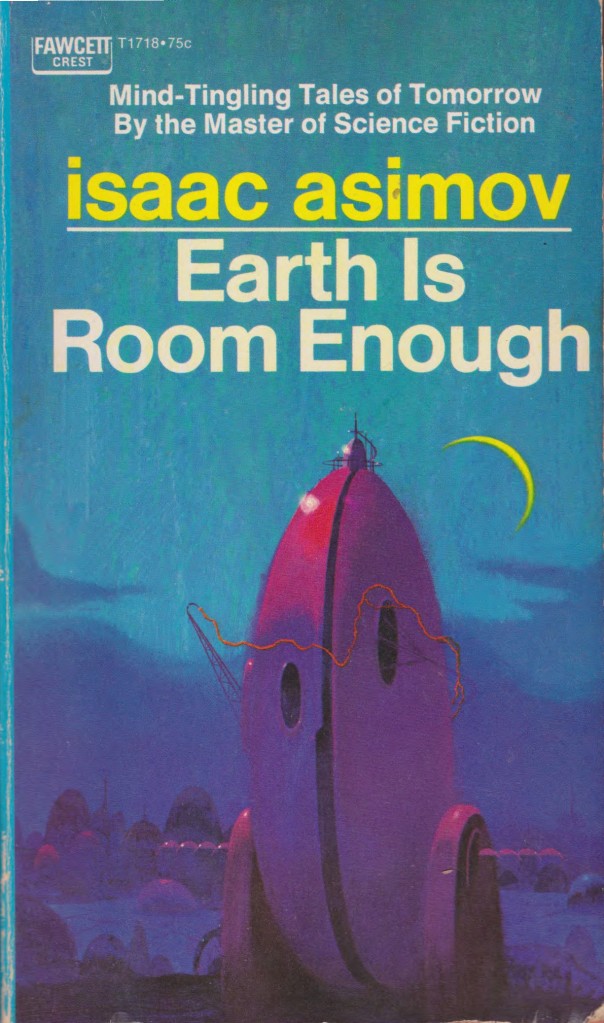
1. Earth Is Room Enough, Isaac Asimov (1957)

From the back cover: “ANYTHING CAN HAPPEN and probably will RIGHT HERE ON EARTH.

You don’t have to rent a spaceship or sign up for a singles cruise to Saturn or spend your weekends star-hopping along the Milky Way because EARTH IS ROOM ENOUGH.

Earth is where the action is and each tomorrow unleashes new discoveries.

Here are brilliant, witty, frightening, and fascinating stories of the future by the greatest science fiction master of them all. Just hitch your mind to these weird and wonderful tales for a spin around the world of tomorrow that will take you right to the center of your wildest dreams.”

Contents: “The Dead Past” (1956), “Franchise” (1955), “Gimmicks Three” (1956), “Kid Stuff” (1953), “The Watery Place” (1956), “Living Space” (1956), “The Message” (1956), “Satisfaction Guaranteed” (1951), “Hell-Fire” (1956), “The Last Trump” (1955), “The Fun They Had” (1951), “Jokester” (1956), “The Immortal Bard” (1954), “Someday” (1956), “The Author’s Ordeal” (1957), “Dreaming Is a Private Thing” (1955)

Continue reading

Short Book Reviews: M. John Harrison’s A Storm of Wings (1980), Algis Budrys’ Some Will Not Die (1961, rev. 1978), and William Greenleaf’s The Tartarus Incident (1983)

James Gurney’s cover art detail for the 1st edition of William Greanleef’s The Tartarus Incident (1983)

Note: My read but “waiting to be reviewed pile” is growing. Short rumination/tangents are a way to get through the stack. Stay tuned for more detailed and analytical reviews.

1. A Storm of Wings, M. John Harrison (1980)

Michael Whelan’s cover for the 1982 edition

4.5/5 (Very Good)

A Storm of Wings (1980) is the second volume, after The Pastel City (1971), of the Viriconium sequence. Far more dense and oblique than its predecessor, A Storm of Wings revels in the creation of a surreal urban tapestry–redolent with decay and decadent excess. Two Reborn Men (Fay Glass and Alstath Fulthor) attempt to animate the somnolent city of Viriconium Continue reading

Updates: Recent Science Fiction Purchases No. CCLXI (Algis Budrys, Gwyneth Jones, Russell M. Griffin, Dino Buzzati)

As always, which books/covers/authors intrigue you? Which have you read? Disliked? Enjoyed?

1. Some Will Not Die, Algis Budrys (1961, rev. 1978)

Frank Kelly Freas’ cover for the 1978 edition

My 1978 revised edition contains no inside flap or back cover blurb. Instead, here’s the brief description of the novel and its complex publication history from SF Encyclopedia: “Budrys’ first novel has a complex history. As False Night (March 1954 Galaxy as “Ironclad”; much exp. 1954) it was published in a form abridged from the manuscript version; this manuscript served as the basis for a reinstated text which, with additional new material, was published as Some Will Not Die (1961; rev 1978). In both versions a Post-Holocaust story is set in a plague-decimated Continue reading

[Short] Book Reviews: Rogue Moon, Algis Budrys (1960) and Syzygy, Michael G. Coney (1973)

Note: My “to review” pile is growing. Short reviews are a way to get through the stack. Stay tuned for more detailed and analytical reviews.

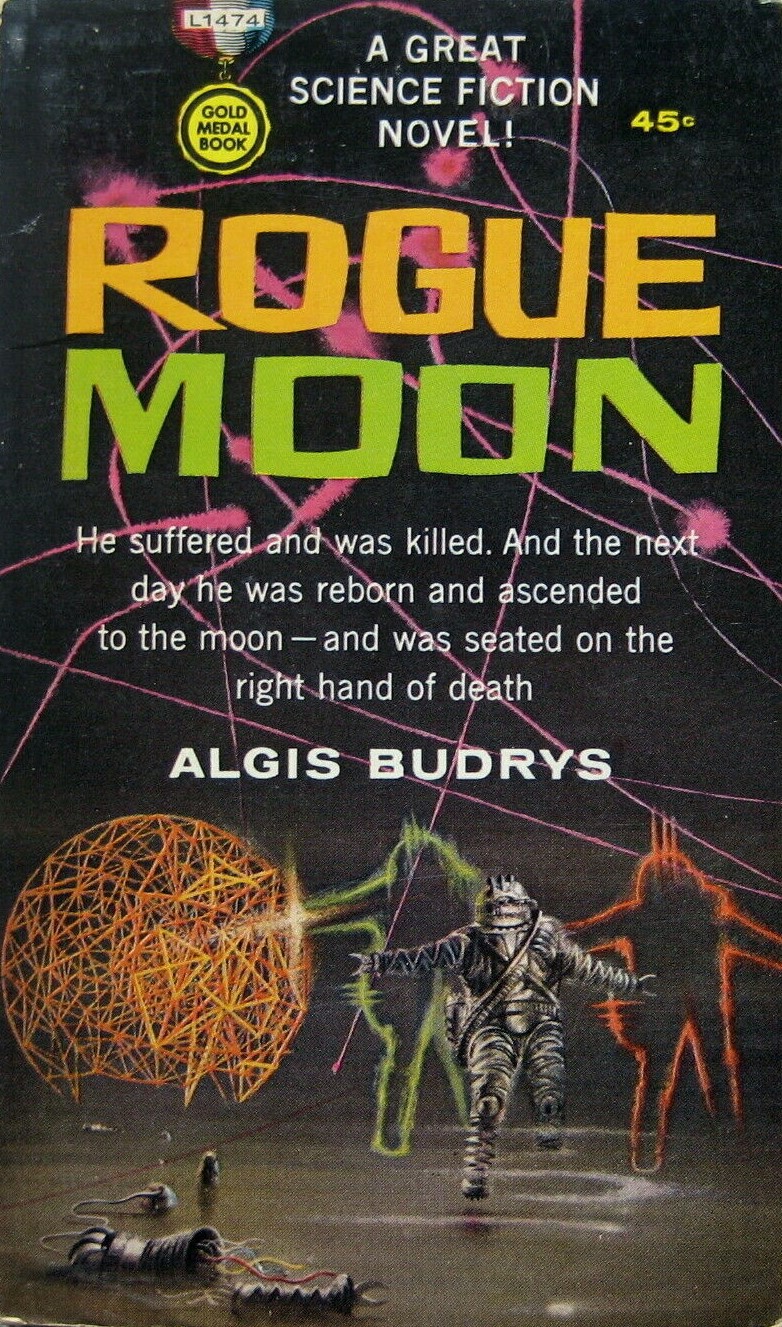
1. Rogue Moon, Algis Budrys (1960)

(Richard Powers’ cover for the 1960 edition)

4/5 (Good)

Over the almost decade of reading for my site, I’ve enjoyed Algis Budrys’ short stories and disliked his novels. After the moody and noir(ish) Rogue Moon (1960), I’ll continue exploring his oeuvre.

Rogue Moon, one of his best-known works, is an odd and oblique read. And odd in that reviewers seem to expect the science fiction al core should be given greater weight than the melodrama… Unlike the melodrama in Michael G. Coney’s Syzygy reviewed below, Budrys’ brand engages as each of his Continue reading

Updates: Recent Science Fiction Acquisitions No. CLXXVIII (Carter + Boyd + Platonov + Anthology with Sturgeon, Bradbury, Budrys, et al.)

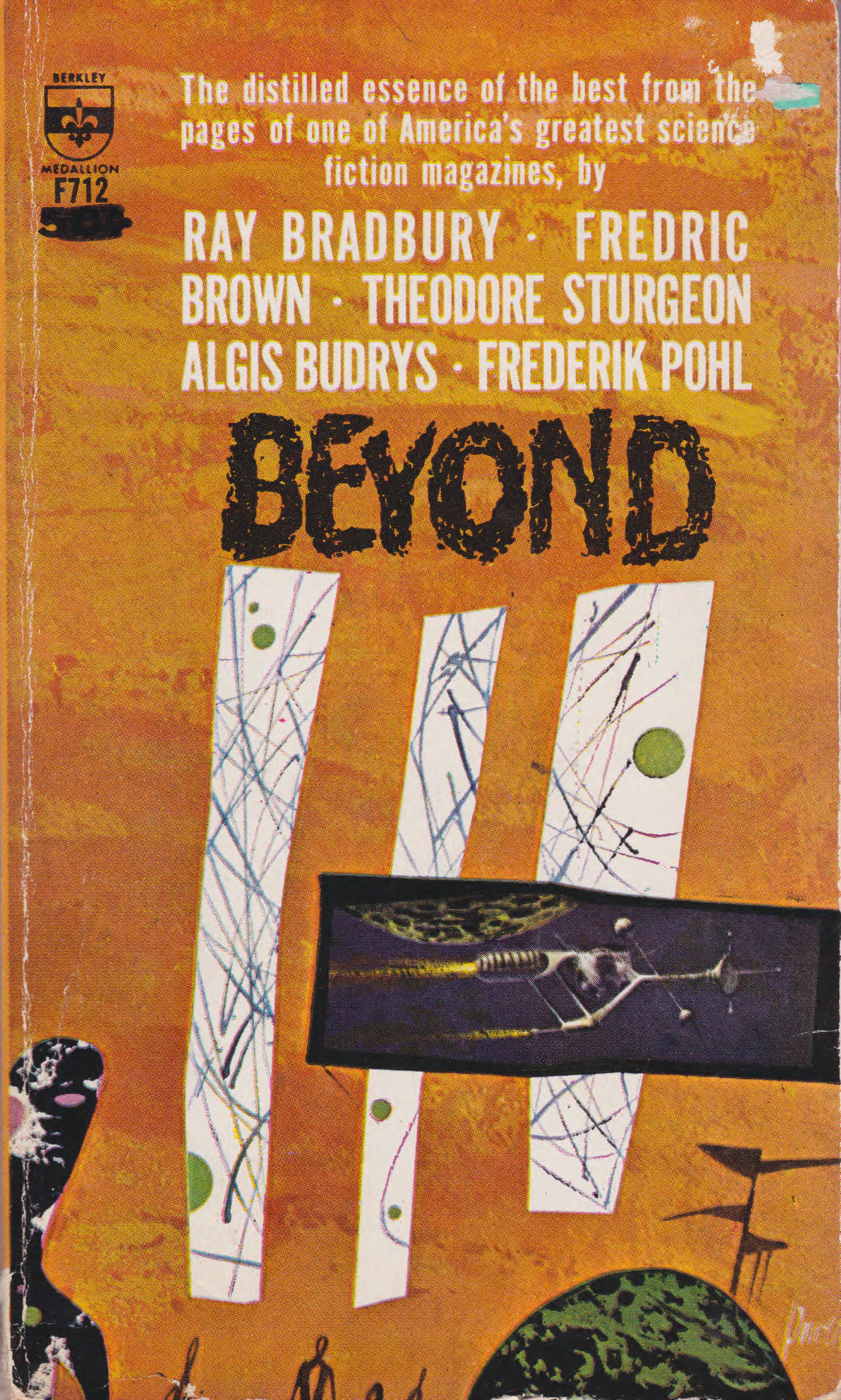
1) Can’t resist a beautiful Richard Powers cover even on a rather standard 60s anthology of short stories—includes Ray Bradbury, Fredric Brown, Theodore Sturgeon, Wyman Guin, Algis Budrys, etc.

Relevant reviews: Algis Budrys’ collection Budrys’ Inferno (1963) and Wyman Guin’s superb collection Living Way Out (variant title: Beyond Bedlam) (1967).

2) A SF novel by Angela Carter — enough said…

3) One of the great (and lesser read) Soviet dystopias! Can’t wait!

4) Another bargain bin find by John Boyd… with some incredibly hyperbolic cover blurbs on the back about his earlier (and lackluster) novel The Last Starship from Earth (1968).

As always, thoughts/comments are welcome!

1. Beyond, ed. Thomas A. Dardis (1963)

(Richard Powers’ cover for the 1963 edition) Continue reading