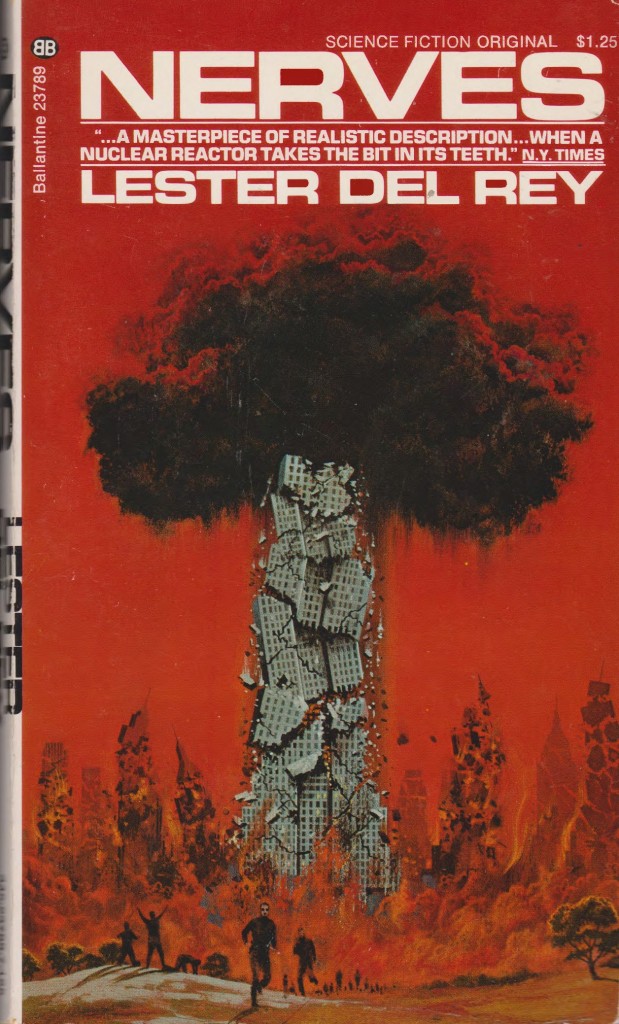
From the back cover: “THIS IS NO STORY OF SPACE SHIPS AND MARTIANS. THIS IS A STORY ABOUT OUR WORLD RIGHT NOW.
‘In 1942, three years before the general public had ever heard of nuclear fission. Lester del Rey wrote a brilliantly detailed novella of disaster in an atomics plant, which now appears, skillfully expanded to book length, as NERVES. A wholly admirable blend of prophetic thinking (in medicine as well as atomics), warm human values and powerful narrative suspense, this novel is strongly recommended…’ –N.Y. Herald Tribune.”
Which books/covers/authors intrigue you? Which have you read? Disliked? Enjoyed?
1. The Martian Chronicles, Ray Bradbury (1950)
Ian Miller’s cover for the 1979 edition
From the back cover: “A MAGNIFICANCTLY ILLUSTRATED EDITION OF THE MARTIAN CHRONICLES WHICH MASTERFULLY ENHANCES THE CLASSIC WONDER AND TERROR BY THE WORLD-RENOWNED AUTHOR OF THE ILLUSTRATED MAN RAY BRADBURY.
Every morning for the last few years, I post on Twitter the birthdays (pre-1955) of artists, authors, and editors involved in some way with science fiction. In the last year, a singular compulsion has hit and I’ve started to include even more obscure figures like Gabriel Jan (1946-) and Daniel Drode (1932-1984). On May 31st, while perusing the indispensable list on The Internet Speculative Fiction Database, I came across an author unknown to me–Melisa Michaels (1946-2019) (bibliography). She’s best known for the five-volume Skyrider sequence (1985-1988) of space operas “depicting the growth into maturity of its eponymous female Starship-pilot protagonist” (SF Encyclopedia).
As I’m always willing to explore the work of authors new to me, I decided to review the first three of her six published SF short stories. Two of the three stories deal with my favorite SF topics–trauma and memory.
Karl Kofoed’s interior art illustrating Melisa Michaels’ “In the Country of Blind, No One Can See” in Isaac Asimov’s Science Fiction Magazine (January 1979)
“In the Country of the Blind, No One Can See” (1979), 3.5/5 (Good): First appeared in Isaac Asimov’s Marvels of Science Fiction (1979). It was reprinted in Isaac Asimov’s Science Fiction Magazine (January 1979). You can read it online here.
On a terraformed Mars, Allyson Hunter and her two clone sisters, Rebecca and Kim, are societal outcasts. They spent their lives trying to be “real people” yet were “reminded, every day in a dozen little ways, that they weren’t real people” (87). Clones retain their first usage as replacement body parts. Permitted to live only due to indications of telepathic potential (needed to guide spaceships), the sisters attempt to live meaningful lives and develop useful skills. The sisters charter two identical twins, Frank and Todd, to convey them across the Martian landscape. A horrific crash kills Kim and forces the survivors to work together and move past the deep resentment and hatred the brothers hold.
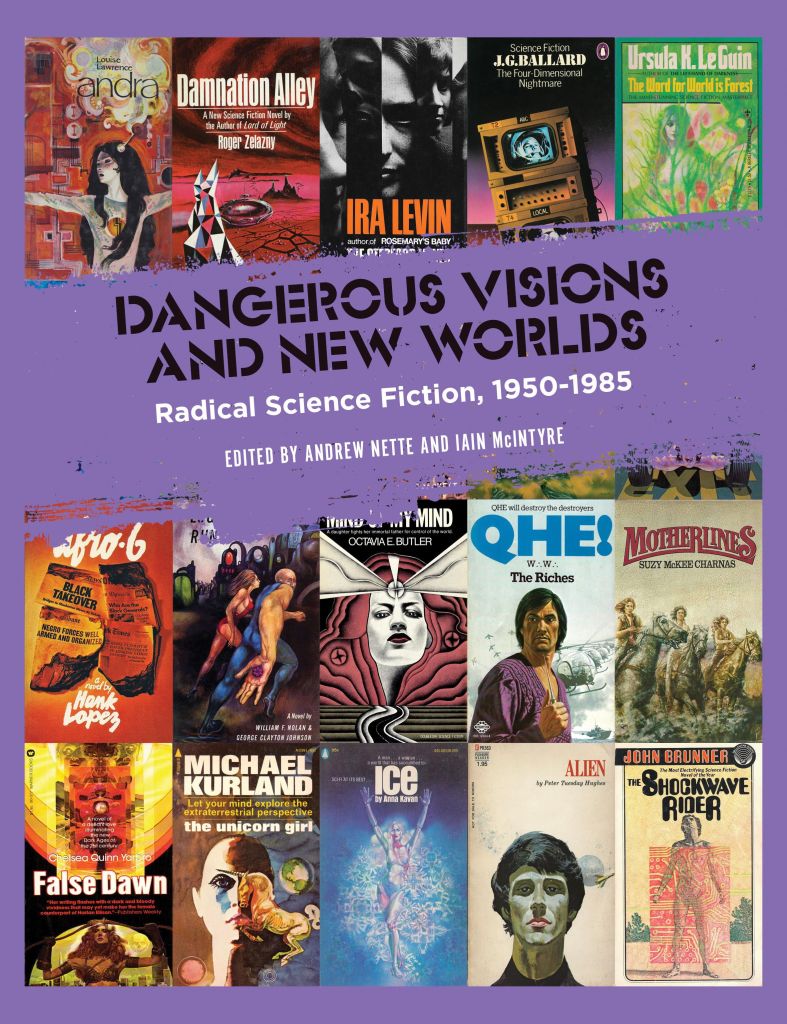
I’ve recently conducted a binge read of my ARC of Dangerous Visions and New Worlds: Radical Science Fiction, 1950-1985, ed. Andrew Nette and Iain McIntyre (2021). It is a must buy for any SF fan of the era interested in exploring the larger world behind the texts. Considering the focus of my website and most of my reading adventures over the last decade, I can unabashedly proclaim myself a fan of the New Wave SF movement–and this edited volume is the perfect compliment to my collection and interests.
The editors and PM Press have graciously provided me with the introduction to the volume. Perhaps it’ll convince you to purchase your own copy!
The “long sixties,” an era which began in the late 1950s and extended into the 1970s, has become shorthand for a period of trenchant social change, most explicitly demonstrated through a host of liberatory and resistance movements focused on class, racial, gender, sexual, and other inequalities. These were as much about cultural expression and social recognition as economic redistribution and formal politics. While the degree to which often youthful insurgents achieved their goals varied greatly, the global challenge they presented was a major shock to the status quo.
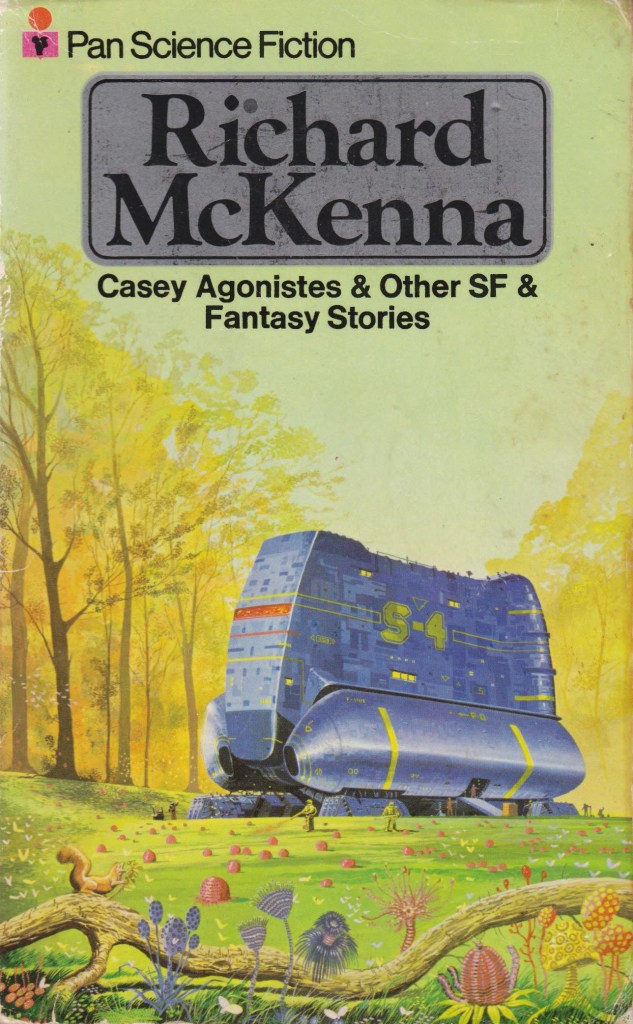
Richard McKenna (1913-1964) spent the majority of his adult career (1931-1953) “not very happily” in the US Navy. He was forced to leave college and join the service due to his lack of opportunities in rural Idaho during the Great Depression. Many of his science fiction stories explore the homosocial world of the military–the comradery through shared trauma and battle, the corrosive effect on those who struggle to fit in, and the destructive culture of machoism. After his military service, he enrolled at the University of North Carolina in English. Only a handful of SF short stories appeared during his lifetime, the majority were published posthumously. McKenna considered SF to be his “training ground” before a planned career in mainstream literature. Right before his early death in 1964, he hit it big with the non-SF novel The Sand Pebbles (1962), which was turned into a famous 1966 movie by the same name.
Terry Carr’s anthology Fellowship of the Stars (1974) collects nine original short stories by luminaries of the genre, Ursula K. Le Guin and Fritz Leiber, to lesser known authors such as Alan Brennert and Mildred Downey Broxon. As the title suggests, Carr commissions stories on the “theme of friendship between human and alien beings” (vii). In a bit of a twist, in more than one instance “friendship” might be code for something far more sinister.
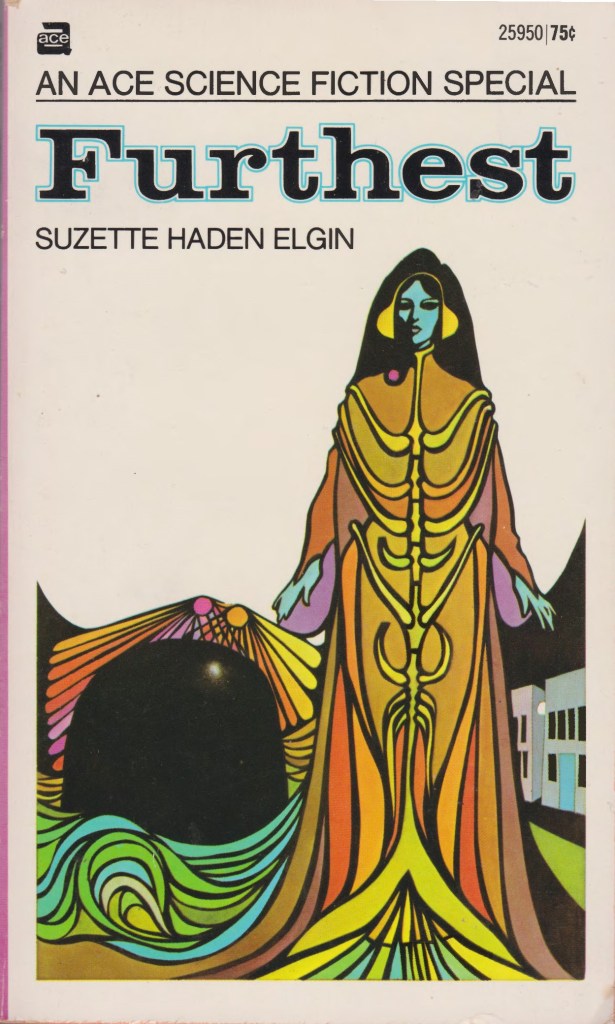
Coyote Jones arrives on the planet Furthest, a world of water with “spangled life” that danced and pulsed with “red and green and gold and deep soft blue” (7), to learn more about the descendants of a puritanical religious group that fled persecution. The reason for his mission? Little is known about Furthest as it only joined the Federation three years earlier. The psychological readings of the colonists in the central computer seems askew. And, due to the charms of bureaucracy, the delegate from Furthest will soon be appointed the President of the Tri-Galactic Federation! So off goes the bumbling Coyote Jones, folk musician/telepath/relentless lover, to uncover the mysteries of the world. Mostly frustrated by the prudish nature of the women he encounters, Coyote also discovers that the city domes do not contain cities. And the one he is allowed to explore seems a bit too planned and the people a bit too controlled.
As always, which books/covers/authors intrigue you? Which have you read? Disliked? Enjoyed?
1. Strength of Stones, Greg Bear (1981)
John Harris’ cover for the 1st edition
From the back cover: “Ages ago this world was named God-Does-Battle. No one remembers wh. It was colonized in the most up-to-date way possible, supplied with the best Cities ever built by Robert Kahn. Huge laboratories labored for decades to produce the right combinations of plant, animal, and machine, and to fit them into the right design. The result was magnificent; living Cities, able to regenerate broken parts, to produce food on demand, and medicine, and clothing. so careful, so advanced was Robert Kahn that he even built into his Cities the ability to protect their inhabitants; to sense the presence of the occasional person whose potential for violence or cruelty made him a threat to society, to remove him from the City, and to erect walls of needle-sharp crystal to be sure he did not return.
As always, which books/covers/authors intrigue you? Which have you read? Disliked? Enjoyed?
1. Dawn, Octavia E. Butler (1987)
Enric’s cover for the 1st edition
From the back cover: “XENOGENESIS: The birth of something new—and foreign.
Lilith Iyapo awoke from a centuries-long sleep—and found herself aboard the vast living spaceship of the Oankali. Alien creatures covered in writhing tentacles, the Oankali had saved every surviving human from a dying, ruined Earth. They healed the planet, cured cancer, increased human strength and disease resistance, and were now ready to help Lilith lead her people back to Earth.





 Science Fiction and Other Suspect Ruminations