Which books/covers/authors intrigue you? Which have you read? Disliked? Enjoyed?
I apologize for the photos of my copies instead of my normal hi-res scans. My scanner died suddenly. Goodbye Dutiful and Dedicated Recorder of the SF Volumes.
1. Always Coming Home, Ursula K. Le Guin (1985)
Chris Hopkins’ cover for the 1986 edition
From the back cover: “Ursula K. Le Guin’s Always Coming Home is a major work of the imagination from one of America’s most respected writers of science fiction. More than five years in creation, it is a novel unlike any ever written. A rich and complex interweaving of story and fable, poem, artwork and music, it totally immerses the reader in the culture of the Kes, a peaceful people of the far future who inhabit a place called the Valley on the Northern Pacific coast.”
2022 was the single best year in the history of my site for visits and unique viewers!
As I mention year after year, I find reading and writing for the site—and participating in all the SF discussions generated over the year—a necessary and greatly appreciated salve. Whether you are a lurker, occasional visitor, or a regular commenter, thank you for your continued support.
Continuing a trend from 2021, I read only a handful of novels this year. Instead, I devoted my obsessive attention to various science short story review initiatives (listed below), anthologies, and histories of the science fiction genre. Without further ado, here are my favorite novels and short stories I read in 2022 with bonus categories. Descriptions are derived from my linked reviews.
Check out last year’s rundown if you haven’t already for more spectacular reads. I have archived all my annual rundowns on my article index page if you wanted to peruse earlier years.
My Top 5 Science Fiction Novels of 2022 [TITLES LINK TO FULL REVIEWS]
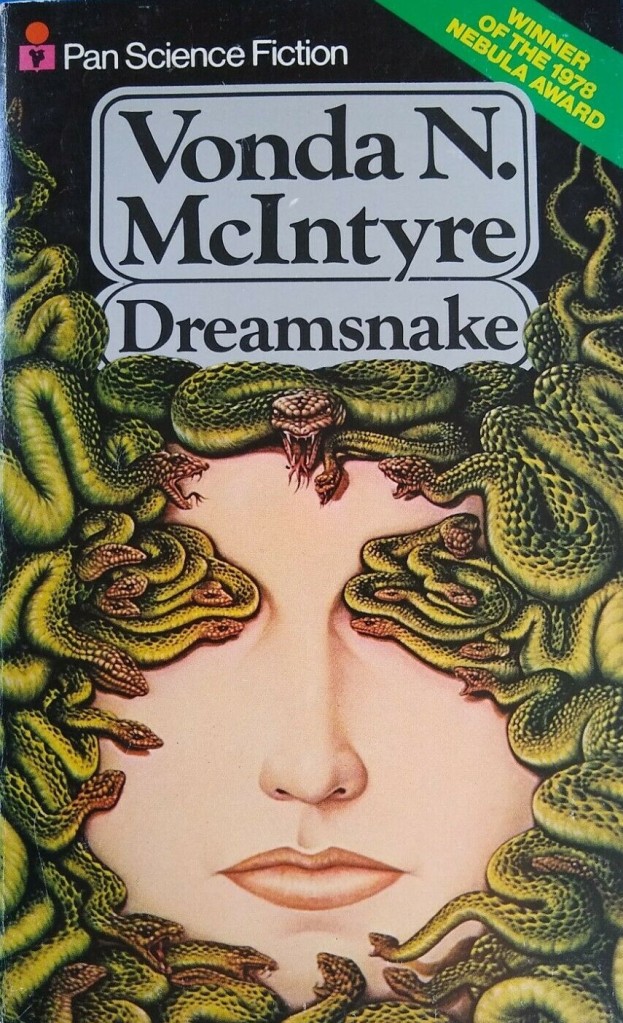
George Underwood’s cover for the 1979 edition
1. Vonda N. McIntyre’s Dreamsnake(1978), 4.75/5 (Near Masterpiece): Won the 1979 Hugo, Locus, and Nebula Award for Best Novel. Snake journeys across the post-apocalyptic wastes of a future Earth with three serpents healing the sick and caring for the dying. She is a member of the healers, who adopt orphans and rescue the oppressed and train them how to use the serpents. Mist and Sand are genetically modified vipers of terrestrial origin. But Grass comes from another alien world. Snake uses Mist and Sand’s venom to create vaccines, treat diseases, and cure tumors. Grass, the rare dreamsnake, with its alien DNA is the most important of them all–it provides therapeutic pleasure and dreams that facilitate conquering one’s fear and healing in the ill. In Snake’s voyages, she encounters prejudice and violence. A joyous sense of sexual freedom permeates the proceedings. A powerful and different take on a post-apocalyptic worldscape in every possible way.
Which books/covers/authors intrigue you? Which have you read? Disliked? Enjoyed?
1. Courtship Rite, Donald Kingsbury (1982)
Rowena Morrill’s cover art for the 1st edition
From the inside flap: “Gaet, Hoemei and Joesai are three clone brothers, survivors of the rigorous and deadly process of nurture and weeding that produces people of high kalothi, people worthy of surviving on the inhospitable planet of Geta. Geta was settled many thousands of years ago by human starships, but only legends of the people’s origins remain, memories that have become myths.
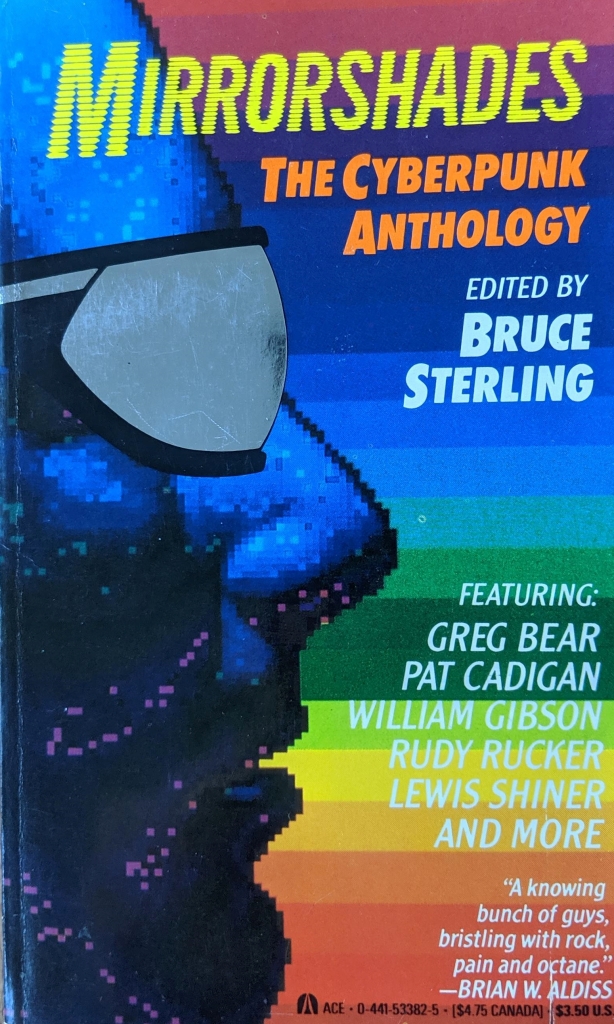
Today I’ve reviewed the twelfth story in my series on the science fictional media landscape of the future–and the first from the early 1980s. Pat Cadigan howls a ghastly punk scream into the vastness of the night.
Up Next: Barry N. Malzberg’s “The Idea” (1971) (as K. M. O’Donnell).
Uncredited cover for the 1988 edition of Mirrorshades: The Cyberpunk Anthology, ed. Bruce Sterling (1986)
3.75/5 (Good)
Pat Cadigan’s “Rock On” first appeared in Light Years and Dark: Science Fiction and Fantasy of and for Our Time, ed. Michael Bishop (1984). You can read it online here.
Whenever I delve into the nihilistic streets of cyberpunk, I enter the mental soundscape and acute estrangement imbued by the seminal 80s goth/post punk band The Cure: “scarred, your back was turned / Curled like an embryo” (“Cold” from Pornography, 1982). Robert Smith’s incantation of “a shallow grave / A monument to the ruined age” almost personifies cyberpunk’s fleeting but terrible power and apocalyptic conceptions of dark streets and conglomerates stamping out the last individuals finding their way across the net.
Which books/covers/authors intrigue you? Which have you read? Disliked? Enjoyed?
1. The Martian Chronicles, Ray Bradbury (1950)
Ian Miller’s cover for the 1979 edition
From the back cover: “A MAGNIFICANCTLY ILLUSTRATED EDITION OF THE MARTIAN CHRONICLES WHICH MASTERFULLY ENHANCES THE CLASSIC WONDER AND TERROR BY THE WORLD-RENOWNED AUTHOR OF THE ILLUSTRATED MAN RAY BRADBURY.




 Science Fiction and Other Suspect Ruminations
