Adventures in Science Fiction Cover Art: The Flowering Bodies of Attilio Uzzo

If you’ve ever browsed through an Italian SF catalogue, the name that springs out immediately is the fantastic Dutch painter Karel Thole (1914-2000). Thole’s surreal (and often stunning) covers dominated the Italian visual SF landscape for years and even appeared on a handful of American editions. However, the main Italian SF press Casa Editrice La Tribuna (with its Galassia series) frequently commissioned new artists, often fresh out of art school, for short runs of covers.

Galassia played an instrumental role in introducing Italian audiences to the New Wave movement. Issues often contained both translations of English-language authors and original Italian short stories and novels. Italian covers were often on the experimental side of the SF art spectrum. The styles changed on a dime. Cover art produced in Italy might be my second favorite after the United States for the 60s/70s.

Milan-based Italian artist, sculptor, and jeweler, Attilio Uzzo (unknown dates) created five covers for the Italian SF magazine Galassia (issues between -#176) in 1972. According to The Internet Speculative Fiction Database‘s (potentially incomplete) credits, Uzzo created two additional covers for Casa Editrice La Tribuna‘s Science Fiction Book Club series and one for Dall’Oglio’s SF Andromeda imprint. I’ve included all eight in this post. I could find little about him online. He has an old, and not very helpful, website with a few low-resolution examples of his art and jewelry. And here is a short video about a 1964 gallery exhibit in Milan with Uzzo’s work. In 1992, a book of his art title Attilio Uzzo: Pittore della Lealtà hit print. If anyone can find more information about him, let me know!

Continue reading
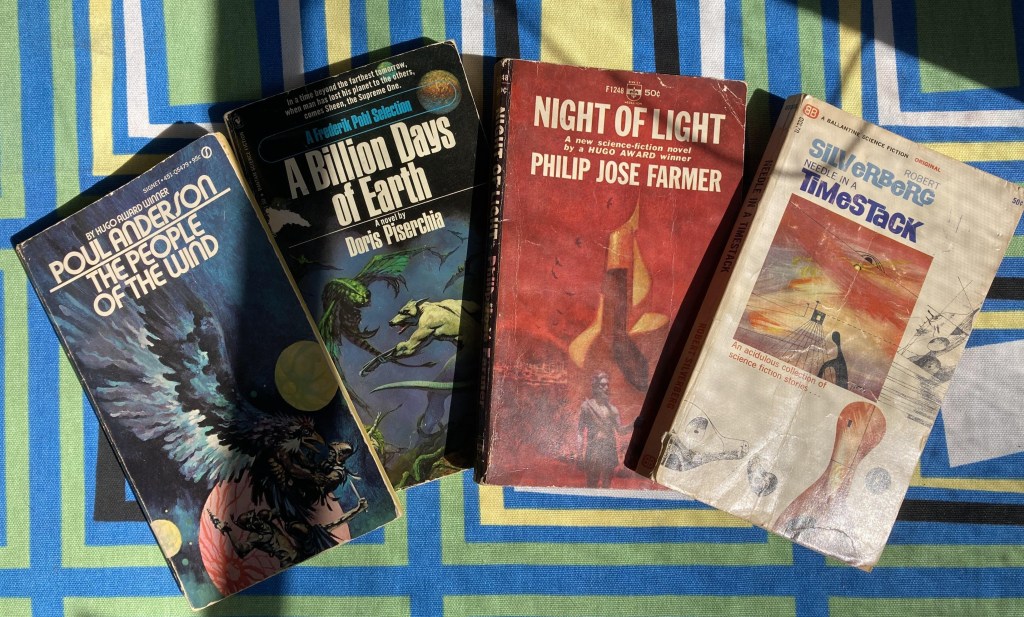
What pre-1985 science fiction are you reading? + Update No. XX

What pre-1985 science fiction are you reading or planning to read this month? Here’s the January installment of this column (sorry I missed a month).

Before John W. Campbell, Jr. (1910-1971) attempted to raise the “standards and thinking in magazine SF,” David Lasser (1902-1996) attempted his own brief (1929-1933) program to improve science fiction as managing editor of Hugo Gernsback’s Science Wonder Stories, Wonder Stories, and Wonder Stories Quarterly. According to Mike Ashley’s The Time Machine: The Story of the Science-Fiction Pulp Magazine from the Beginning to 1950 (2000), Lasser is a “much neglected revolutionary in science fiction” and through his efforts the genre “started to mature” (66).

Ashley highlights Lasser’s letter of instruction mailed to his regular contributors on the 11th of May, 1931, in which he “exhorted them to bring some realism to their fiction” (72). He also outlawed common tropes like the giant insect story and space opera (73). He emphasized the need to focus on characters that “should really be human” — not everything needs to be a “world-sweeping epic” (73). Stories in this vein, according to Ashley, include Clifford D. Simak’s religiously themed “The Voice in the Void” (1932), P. Schuyler Miller and Walter Dennis’ “The Red Spot on Jupiter” (1931) and “The Duel on the Asteroid” (1974), which featured a grim realism and character development (74).

Continue reading

Short Story Review: Poul Anderson’s “The Troublemakers” (1953)

This is the 20th post in my series of vintage generation ship short fiction reviews. You are welcome to read and discuss along with me as I explore humanity’s visions of generational voyage. And thanks go out to all who have joined already. I also have compiled an extensive index of generation ship SF if you wish to track down my earlier reviews on the topic and any that you might want to read on your own.

Previously: Fred Saberhagen’s “Birthdays” (1976)

Next Up: George Hay’s Flight of the “Hesper” (1952)

3.25/5 (Above Average)

Poul Anderson’s “The Troublemakers” (1953) first appeared in Cosmos Science Fiction and Fantasy Magazine, ed. L. B. Cole (September 1953). You can read it online here.

Anderson’s tale is a fascinating collision of two of my recurring interests in post-WWII science fiction: generation ships and organized labor. Due to my love of Ursula K. Le Guin’s “Paradises Lost” (2002) and Brian W. Aldiss’ Non-Stop (variant title: Starship) (1959), I started a review series on generation ship short fiction in 2019. The series has languished recently as I am running out of pre-1985 depictions of the theme available in English to read. I read Anderson’s vision last year but could not muster a review. However, my recent focus on organized labor caused me to reread Anderson’s account of generational conflict, the working class experience, and the contours of power and government.

Continue reading

What pre-1985 science fiction are you reading? + Update No. XVII

What pre-1985 science fiction are you reading or planning to read this month? Here’s the September installment of this column. I am a few days late with this post. We’ll pretend it appeared in October!

I’ve been reading the little scholarship on H. Beam Piper (1904-1964) in order to more adeptly understand his political views when I tackle his various union-related stories for my series. I was struck by the extreme poverty, impact of a memorable cover, and dependence on a responsive agent that he found himself mired in after he lost his railroad guard job and had to rely on writing. He kept himself alive by selling off his gun collection that he had accumulated over the years and eating pigeons his shot on his porch. While he doesn’t seem to have been the best with the little money that came his way, often blowing the majority of a paycheck from Campbell, Jr. on expensive suits, it’s shocking what he had to do to survive between story acceptances. Piper seems to have committed suicide in part due to his financial hardships.

Despite the fact that I can’t wholeheartedly recommend John F. Carr’s H. Beam Piper: A Biography (2008) or Typrewriter Killer (2015) as large sections take the form of haphazardly strung together journal entries with little larger historical analysis, I found Carr’s often unnervingly voyeuristic look into his life lay bare the financial realities of publishing SF, even in a moment when magazines paid well. Unfortunately, Carr leaves comments like Piper’s 1961 letter in which he states “John [Cambell, Jr.] is almost as big a fascist sonofabitch as I am — but he wants a couple of points hammered home a bit harder” un-analyzed.

And let me know what pre-1985 science fiction you’ve been reading!

Continue reading

Updates: Recent Science Fiction Purchases No. CCCXXXVII (Paul Cook, Poul Anderson, Jack Wodhams, and Penelope Gilliatt)

Which books/covers/authors in the post intrigue you? Which have you read? Disliked? Enjoyed?

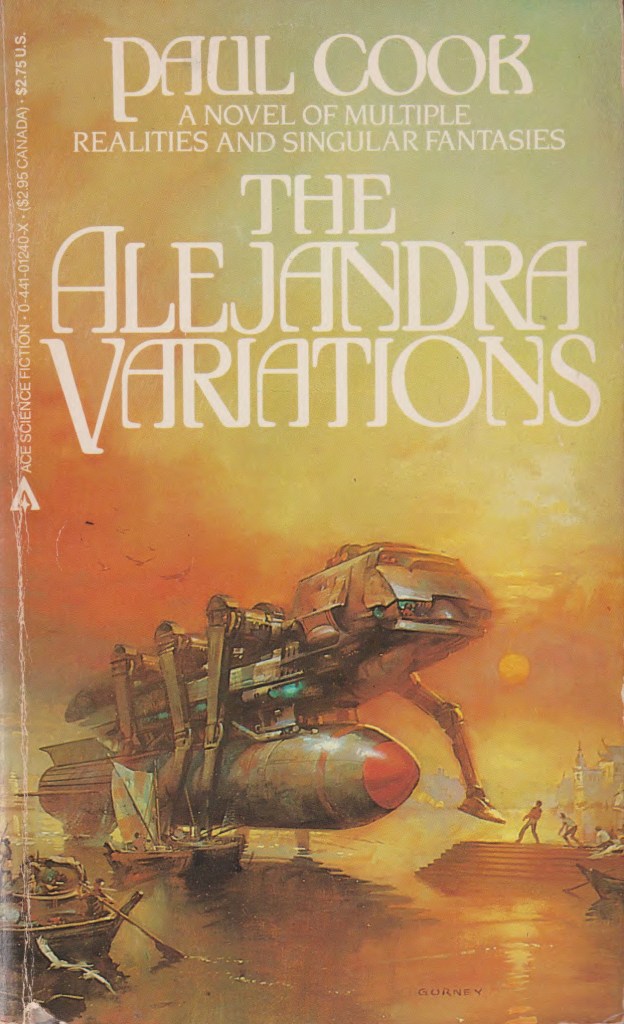
1. The Alejandra Variations, Paul Cook (1984)

From the back cover: “FIRST VARIATION

Nuclear Strategist Nicholas Tejada sees the end of the world.

SECOND VARIATION

One thousand years later, Nicholas wakes up in an underground civilization that lives only for drugs, sex, and thrills.

THIRD VARIATION

Continue reading

What pre-1985 science fiction are you reading? + Bimonthly Update No. I

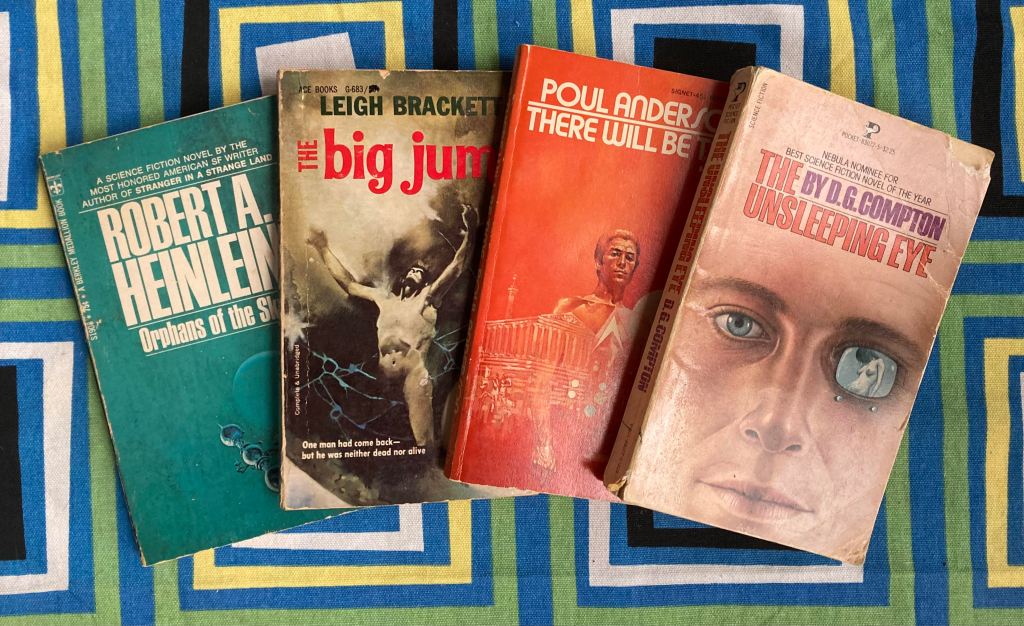
What pre-1985 science fiction are you reading this weekend?

Every Saturday for more than a year, I’ve asked this question on Twitter (and since February on Mastodon) with a photo of books I’ve read and reviewed on my website from my shelves. Due to the painful implosion of Twitter and the confused and frustrating “what platform do we go to next” panic, I’ve decided to move my weekly question and photo to my site. This community is always first and foremost in my mind. Thank you commenters and lurkers!

Continue reading

Updates: Recent Science Fiction Purchases No. CCCXXII (John Brunner, Leigh Kennedy, Poul Anderson, Salman Rushdie)

I’ve returned from my expedition abroad. It’s time to get back to writing about science fiction! But first, there are always new books that have accumulated at my doorstep…

Which books/covers/authors intrigue you? Which have you read? Disliked? Enjoyed?

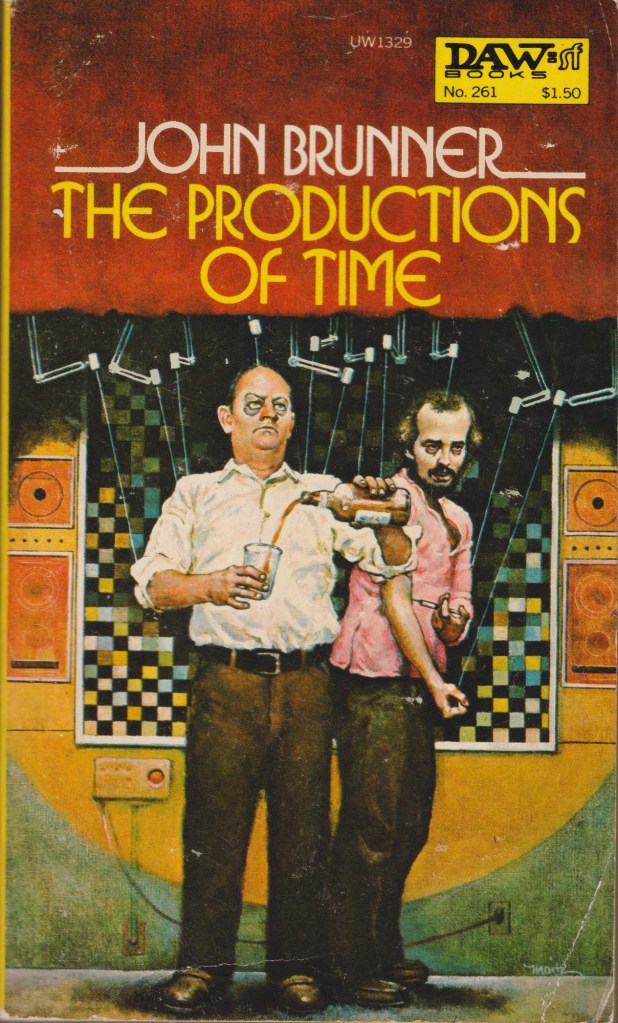
1. The Productions of Time, John Brunner (serialized 1966)

From the back cover: “Murray Douglas had been a theatrical star until he’d hit the bottle once too often. But now he had broken the habit, and, handsome and fit, was ready for a comeback. The most challenging opening available was an avant-garde play where the actors themselves would make up the drama as they went along.

But out at an isolated country estate where the rehearsals were going on, Murray found himself trapped on a real-life day-and-night stage in which nothing was as it seemed, in which inexplicable devices monitored everything and eerie lures attracted each actor’s psychological weakness.

Who then was the real sponsor of this terrifying play–and to what alien audience was it to be presented?

By the Hugo-winning author of STAND ON ZANZIBAR, this is the first unabridged American edition of this John Brunner classic.”

Continue reading

Updates: Recent Science Fiction Purchases No. CCXCVII (Poul Anderson, Kingsley Amis, Eleanor Arnason, Roger Elwood anthology of SF plays)

Which books/covers/authors intrigue you? Which have you read? Disliked? Enjoyed?

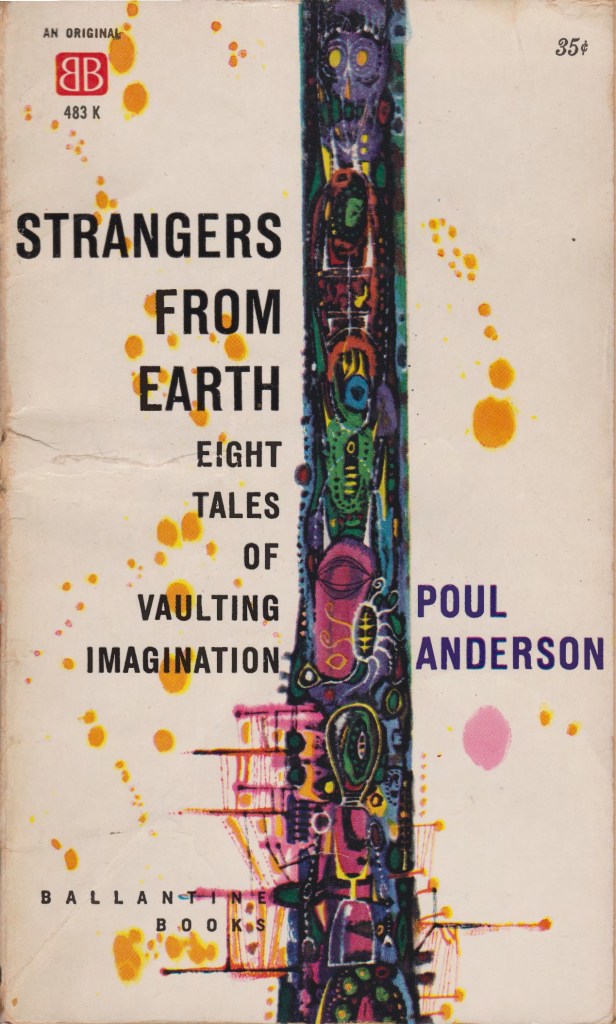
1. Strangers from Earth, Poul Anderson (1961)

From the back cover: “A SENTIENT ROBOT

THE COLONISTS WHO LEFT A PERFECT WORLD

A MADDENING HUNT FOR A MARTIAN

A MAN-MADE ANIMAL

A GALACTIC SWINDLER

These are some of the ingredients Poul Anderson chooses to mix and blend into this first-class collection of stories: and his ability is as wide as the range of his interests.”

Contents: “Earthman, Beware!” (1951), “Quixote and the Windmill” (1950), “Gypsy” (1950), “For the Duration” (1957), “Duel on Syrtis” (1951), “The Star Beast” (1950), “The Disintegrating Sky” (1953), “Among Thieves” (1957)

Continue reading

Updates: Recent Science Fiction Purchases No. CCLXXVII (Octavia E. Butler, Harlan Ellison, James White, Poul Anderson)

As always, which books/covers/authors intrigue you? Which have you read? Disliked? Enjoyed?

1. Dawn, Octavia E. Butler (1987)

From the back cover: “XENOGENESIS: The birth of something new—and foreign.

Lilith Iyapo awoke from a centuries-long sleep—and found herself aboard the vast living spaceship of the Oankali. Alien creatures covered in writhing tentacles, the Oankali had saved every surviving human from a dying, ruined Earth. They healed the planet, cured cancer, increased human strength and disease resistance, and were now ready to help Lilith lead her people back to Earth.

Continue reading