Short Fiction Reviews: George H. Smith’s “The Last Days of L.A.” (1959) and “In the Imagicon” (1966)

Back in 2021, I reviewed and adored George H. Smith’s “The Last Crusade” (1955), a scathing take-down of modern war (replete with confused soldiers in mech suits). While a good portion of Smith’s science fictional output was comedic smut with titles like Those Sexy Saucer People (1967) and Flames of Desire (1963), he clearly could craft an effective short fiction in the best genre magazines of the day.

I appeared recently on a podcast about Philip K. Dick’s masterpiece “Foster, You’re Dead” (1955) and felt the urge to track down story about nuclear terror. Smith’s drunk whirlwind of a story “The Last Days of L. A.” (1959) fits the bill. In addition, I selected “In the Imagicon” (1966), an intriguing take on a personal virtual reality machine, as the 34th story in my series on media landscapes of the future.

Previously in my future media series: Russell Bates’ “Hello, Walls and Fences” (1973) and “Warning: The Surgeon General Has Determined…:” (1977)

Up Next: Izumi Suzuki’s “Terminal Boredom” (1984)

Let’s get to the stories!


4/5 (Good)

“The Last Days of L. A.” first appeared in If, ed. Damon Knight (February 1959). You can read it online here.

Continue reading
Magazine Review: Galaxy Science Fiction, ed. H. L. Gold (November 1950) (Brown, Asimov, Boucher, Leiber, Knight, Simak)

Preliminary Note: I plan on reading all 116 issues of the influential, and iconic, SF magazine Galaxy under H. L. Gold’s editorship (October 1950-October 1961) in chronological order. How long this project will take or how seriously/systematically I will take it remain complete unknowns.

See my inaugural post in this series for my reasoning behind selecting Galaxy under H. L. Gold.

Previously: the October 1950 issue.

Up Next: the December 1950 issue.

Let’s get to the stories. We have the first Galaxy masterpiece!


You can read the entire issue here.

Fredric Brown’s “Honeymoon in Hell” (1950), 3/5 (Average): The year is 1962. The Cold War heats up. The race for a permanent presence on the Moon takes center stage. Each side “had landed a few men” and claimed it as their own (4). Each side races to construct a space station in orbit to facilitate the construction of a permanent base on the moon. But there’s another worrying world-wide trend–a massive gender imbalance in new births! Not enough boys! Riots. Cults. What’s the plan?

Continue reading

Generation Ship Short Story Review: Otto Binder’s “Son of the Stars” (1940)

This is the 8th post in my newly resurrected series of vintage generation ship short fiction reviews. As this series has a real chance to cover every pre-1985 generation ship short story available in English, I’ve bitten the bullet and stepped back to the pre-WWII SF landscape to track down a generation ship story by Otto Binder. I tend to be far more interested in post-WWII US and European SF history and have geared most of my site towards those decades.

As a reminder for anyone stopping by, all of the stories I’ll review in the series are available online via the link below in the review.

You are welcome to read and discuss along with me as I explore humanity’s visions of generational voyage. And thanks go out to all who have joined already. I also have compiled an extensive index of generation ship SF if you wish to track down my earlier reviews on the topic and any that you might want to read on your own.

Previously: Chad Oliver’s “Stardust” (1952) 

Next Up: Leigh Brackett’s “The Ark of Mars” (1953) 

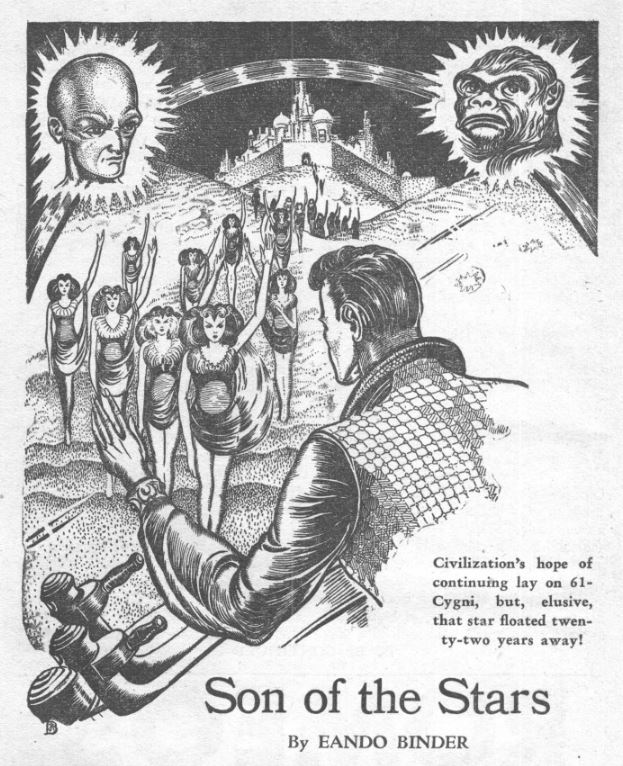
Otto Binder’s “Son of the Stars” first appeared in the February 1940 issue of  Famous Fantastic Mysteries, ed. Mary Gnaedinger. 2.75/5 (Vaguely Average). You can read the story online here. As always, I will have spoilers.

First, a note about authorship and pseudonyms: According to The Internet Speculative Fiction Database, Otto Binder is the sole author of “Son of the Stars.” “Eando Binder” was a joint pseudonym used by American brothers Earl Andrew Binder (1904-1966) and Otto Oscar Binder (1911-1975). After 1934, the elder brother Earl stopped writing SF and Otto continued to sign his work under the shared name. For more on their SF, check out their SF Encyclopedia entry.

Continue reading

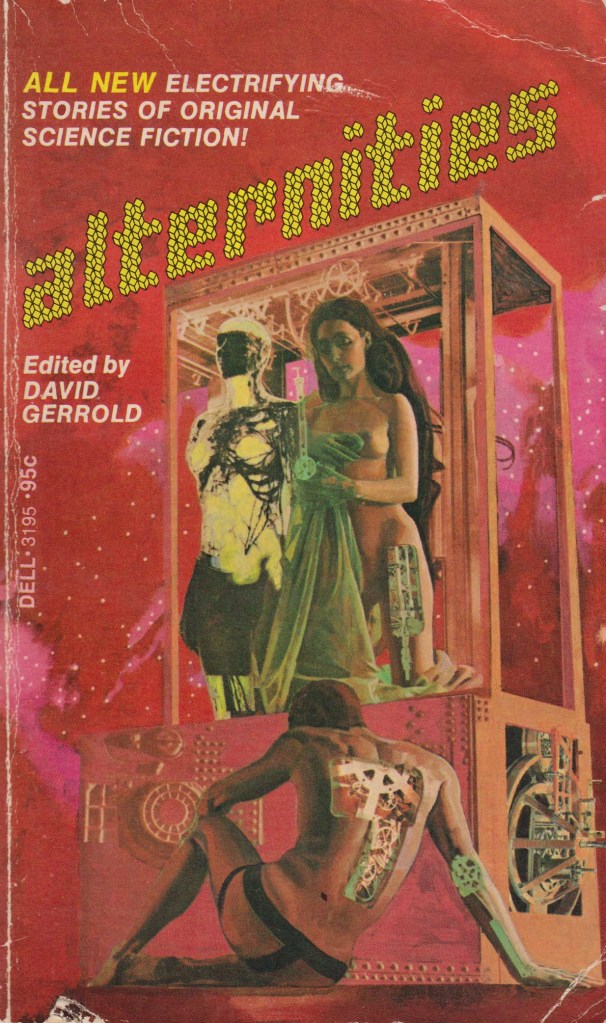
Book Review: Alternities, ed. David Gerrold and Stephen Goldin (1974) (Malzberg, McIntyre, Bunch, Bear, Sallis, et al.)

2.5/5 (collated rating: Bad)

David Gerrold and his associate editor Stephen Goldin collect a bizarre range of SF oddities including an epistolary nightmare from Vonda N. McIntyre’s pen and a one-sentence “sign” by Duane Ackerman. Gerrold argues that he wants “science fiction to be fun again” without “literary inbreeding and incestuous navel-studying” (8). With a more than pungent hint of hypocrisy, he spouts “I’m tired of the kind of bullshitting that creates false images in the readers’ minds” (8). Alternities (1974) reads like the cast off stories from a New Wave (i.e. deliberately literary) Judith Merril or Harlan Ellison anthology with heavy dose of erotic comedy and shock value. A few–including E. Michael Blake’s “The Legend of Lonnie and the Seven-Ten Split,” Vonda N. McIntyre’s “Recourse, Inc.,” and Edward Bryant’s “Cowboys, Indians”–rise above the dross.

To be clear, I enjoy devouring anthologies like Alternities. The stories are originals and few are anthologized elsewhere. I adore reading authors I wouldn’t otherwise encounter (Robert Wissner, E. Michael Blake, et al.). Gerrold’s nonsense of an introduction aside, the anthology with its deliberate attempts at the “literary” (Greg Bear’s “Webster” and James Sallis’ “The First Few Kinds of Truth”) and “edgy” (Steven Utley’s “Womb, with a View”) firmly fit in the passing mid-70s foam of the New Wave movement.

Continue reading

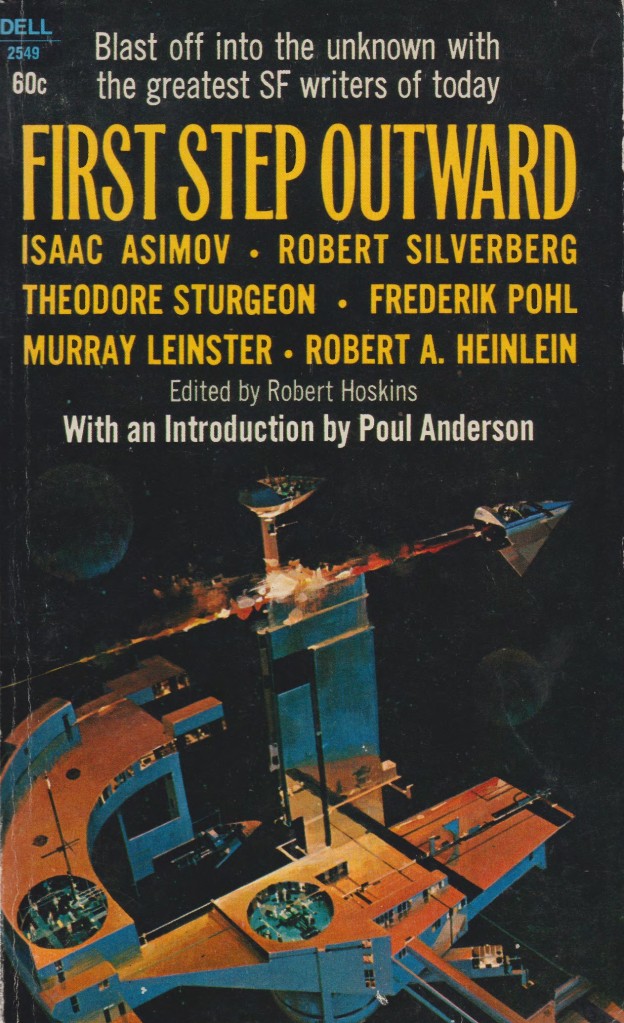
Book Review: First Step Outward, ed. Robert Hoskins (1969) (Asimov, Silverberg, Sturgeon, Heinlein, et al.)

3.25/5 (collated rating: Vaguely Good)

Published a few months before the Apollo 11 mission to the moon, Robert Hoskins’ anthology First Step Outward (1969) charts an imagined future history of humanity’s exploration of the galaxy. The stories, gathered from some of the big names of the day (Robert Heinlein, Robert Silverberg, Theodore Sturgeon, Isaac Asimov, Poul Anderson, etc.), are grouped as if part of the same future with headings such as “To the Planets” and “To the Stars.” As with most anthologies, this contains a range of gems (such as Sturgeon’s “The Man Who Lost the Sea”) and duds (Ross Rocklynne’s “Jaywalker”).

I’ve previously reviewed five of the thirteen stories in their own posts–linked for easy consultation.

Brief Plot Summary/Analysis

“Cold War” (1949), Kris Neville, 3/5 (Average): Previously reviewed in its own post here.

“Third Stage” (1963), Poul Anderson, 3.5/5 (Good): Previously reviewed in its own post here.

“Gentlemen, Be Seated!” (1948), Robert A. Heinlein, 2.75/5 (Vaguely Average): My first return to Robert A. Heinlein in around a decade is exactly like I thought it would be–thoroughly disappointing. Yes, yes, yes, I know this is far from what he was capable of. The number of reprints this misfire of a story receives mystifies (it appeared in the regularly reprinted The Green Hills of Earth and The Past Through Tomorrow).

Continue reading

Short Story Review: Anthony Boucher’s “Star Bride” (1951)

The following review is the 13th installment of my series searching for “SF short stories that are critical in some capacity of space agencies, astronauts, and the culture which produced them.” Some stories I’ll review in this series might not fit. And that is okay. I relish the act of literary archaeology.

As always, feel free to join the conversation.

Previously: J. G. Ballard’s “The Cage of Sand” (1962)

Up Next: Poul Anderson’s “Third Stage” (1962)

2/5 (Bad)

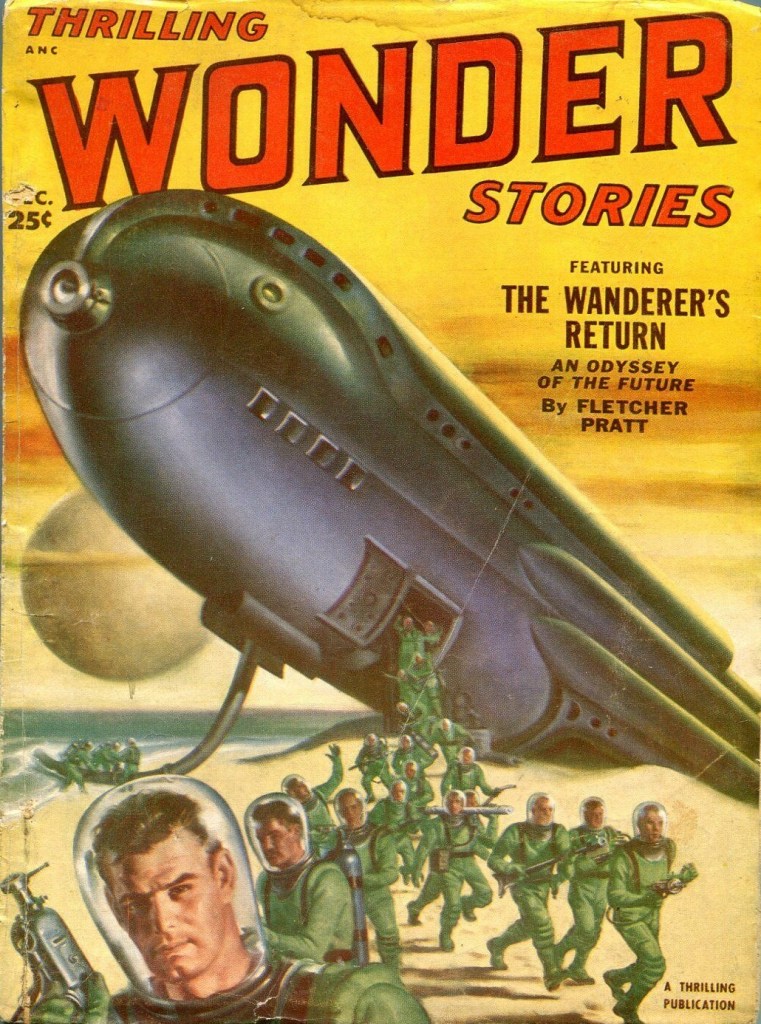
“Star Bride” (1951) first appeared in the December 1951 issue of Thrilling Wonder Stories, ed. Samuel Mines. You can read it online here.

Anthony Boucher’s short “Star Bride” is a tepid condemnation of colonialism written in the immediate post-WWII stages of decolonization (the Philippines gained its independence from the United States in 1946 and India from the British Empire in 1947). While a deeply problematic and forgettable story, a handful of Boucher’s themes and observations are worth teasing out due to later SF formulations I’ll be exploring in this series.

Continue reading

Short Story Review: J. G. Ballard’s “The Cage of Sand” (1962)

The following review is the 12th installment of my series searching for “SF short stories that are critical in some capacity of space agencies, astronauts, and the culture which produced them.” Some stories I’ll review in this series might not fit. And that is okay. I relish the act of literary archaeology.

As always, feel free to join the conversation.

Previously: Charles W. Runyon’s “First Man in a Satellite” (1958)

Up Next: Anthony Boucher’s “Star Bride” (1951)

4.5/5 (Very Good)

J. G. Ballard’s “The Cage of Sand” (1962) first appeared in New Worlds Science Fiction (June 1962), ed. John Carnell. You can read it online here.

Amidst the wreckage of Cape Canaveral, with its “old launch-gantries and landing ramps [..] like derelict pieces of giant sculpture” (140), three souls attempt to find meaning in the buried hotels and relics of a rapidly disappearing past.

Adrift, We Cast About

Continue reading

Updates: Recent Science Fiction Purchases No. CCLXXII (James Tiptree, Jr., Allen F. Wold, Nova Anthology, and non-fiction on Drugs, Esoterica, and Visionary Experience in the Seventies)

As always, which books/covers/authors intrigue you? Which have you read? Disliked? Enjoyed?

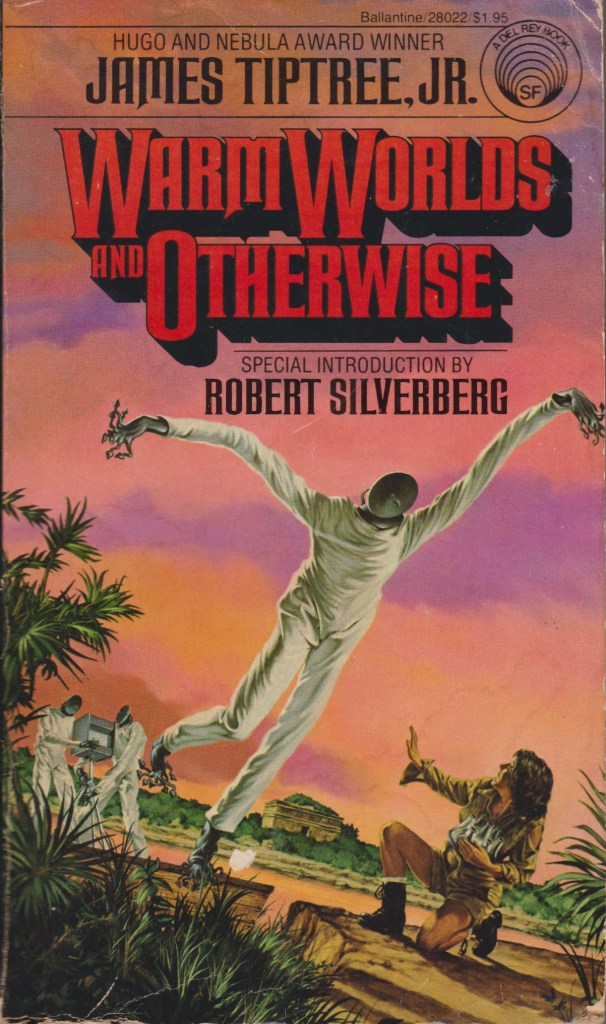
1. Warm Worlds and Otherwise, James Tiptree, Jr. (1975)

From the back cover: “A DOZEN FABULOUS TALES OF INNER VISIONS AND OUTER SPACE…

LOVE IS THE PLAN, THE PLAN IS DEATH (Nebula-Award Winner—Best Short Story 1973)

Courtship rites can easily run amok, especially when that’s what’s supposed to happen… especially when the creatures are color-coded for passion as well as for death!

THE GIRL WHO WAS PLUGGED IN

Continue reading

Short Story Review: Charles W. Runyon’s “First Man in a Satellite” (1958)

The following review is the 11th installment of my series searching for “SF short stories that are critical in some capacity of space agencies, astronauts, and the culture which produced them.” Some stories I’ll review in this series might not fit. And that is okay. I relish the act of literary archaeology.

Preliminary Note: I am getting a bit carried away by this project. The historian in me rears its obsessive head. I experience intense enjoyment reading any and all stories on the theme regardless of their quality. I know my readers might want me to feature some higher quality stories. Right? While I have a few average to solid stories in the docket read and waiting for reviews, I plan on tackling some harder-hitters in the near future (more Malzberg, Ballard, Sturgeon, etc.).

I had fun writing about this one! As always, feel free to join the conversation.

Previously: Roger Zelazny’s “Halfjack” (1979)

Up Next: J. G. Ballard’s “The Cage of Sand” (1962)

2.75/5 (Vaguely Average)

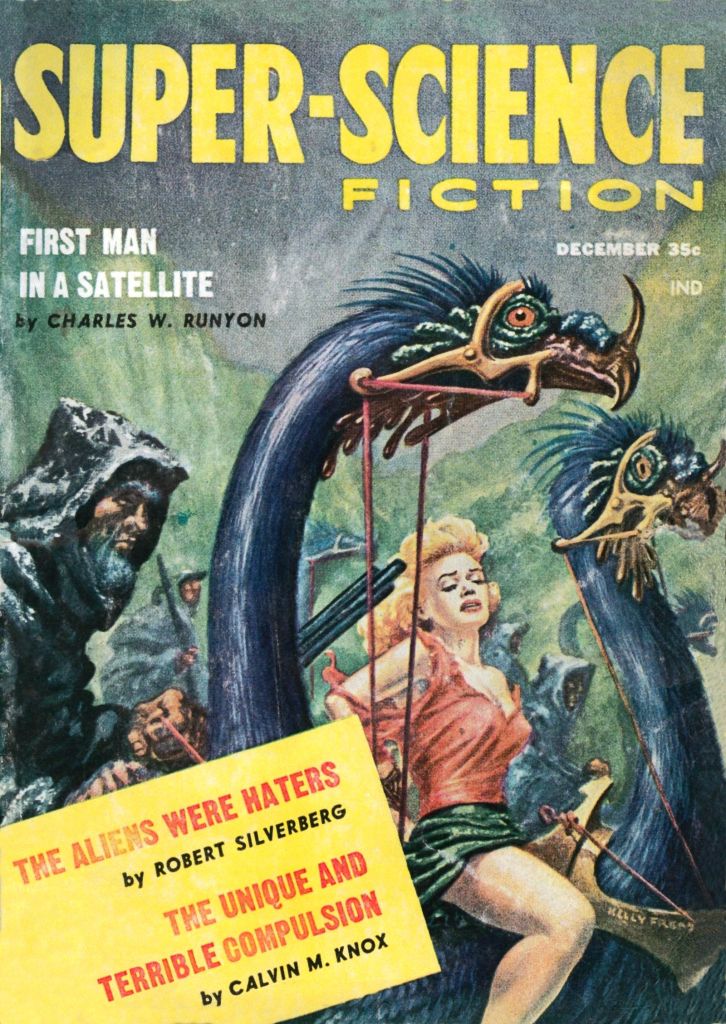
Charles W. Runyon’s “First Man in a Satellite” appeared in Super-Science Fiction (December 1958), ed. W. W. Scott. You can read it online here.

For two years of my youth in the early 1990s, I lived in Washington, D.C with the National Air and Space Museum a few blocks away from our tiny home in Dupont Circle. While I could not yet read, I knew how long it should take for my parents to read each and every exhibit label to me. And, agape at Able the monkey’s space couch and preserved body, I asked the predictable question: “did she survive the voyage into space?” “She did,” my mother would said, “she died soon after.” “And the monkeys before her?”

Continue reading