Short Story Reviews: Lee Killough’s “Caveat Emptor” (1970), “Caravan” (1972), and “Sentience” (1973)

While travelling to visit my family in Texas, I stopped at the original Half Price Books location in Dallas. I procured a giant pile of vintage SF that I’ll feature in the upcoming year in my acquisition posts, including a signed copy (for $3) of Lee Killough’s A Voice Out of Ramah (1979). I realized that I’ve only read Killough’s “Bête et Noir” (1980) and, as is my wont, decided to start with her first three published pieces of short fiction before diving into a novel. As these are her first published works, I suspect she has not found her best form.


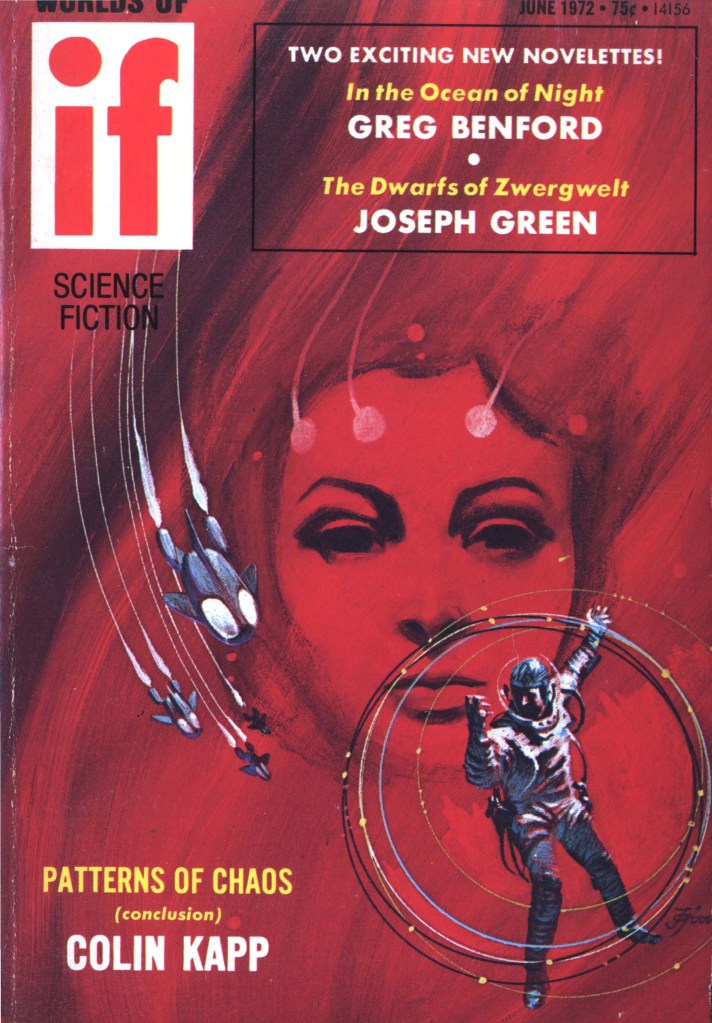
“Caveat Emptor” (1970), 2.5/5 (Bad): First appeared in Analog Science Fiction/Science Fact, ed. John Campbell, Jr. (May 1970). You can read it online here. Equine Andvarian aliens pilot a trading vessel across the Commonwealth. Soon after first contact, a young human woman named Danae learns their language and customs on board their vessel. Danae sets up a trade meeting with the business conglomerate Galiol, a member of the Federation, whom she represents (109). Killough posits that megacompanies, driven by profit, will drive humanity’s expansion outward. The climax of the story features economic gamesmanship as the head of Galiol attempts to take advantage of the newly contacted alien species. But both get what they want in the end. Business is business for humans and aliens…

Continue reading

Generation Ship Short Story Review: Vonda N. McIntyre’s “The Mountains of Sunset, The Mountains of Dawn” (1974)

This is the 13th post in my series of vintage generation ship short fiction reviews. Today I have a story that I’ve not seen described as generation ship take yet firmly fits the theme. That standard plot points are transposed to an alien society with captivating effect.

As a reminder for anyone stopping by, all of the stories I’ll review in the series are available online via the link below in the review.

You are welcome to read and discuss along with me as I explore humanity’s visions of generational voyage. And thanks go out to all who have joined already. I also have compiled an extensive index of generation ship SF if you wish to track down my earlier reviews on the topic and any that you might want to read on your own.

Previously: Michael G. Coney’s “The Mind Prison” (1971).

Next Up: Don Wilcox’s “The Voyage That Lasted 600 Years” (1940).


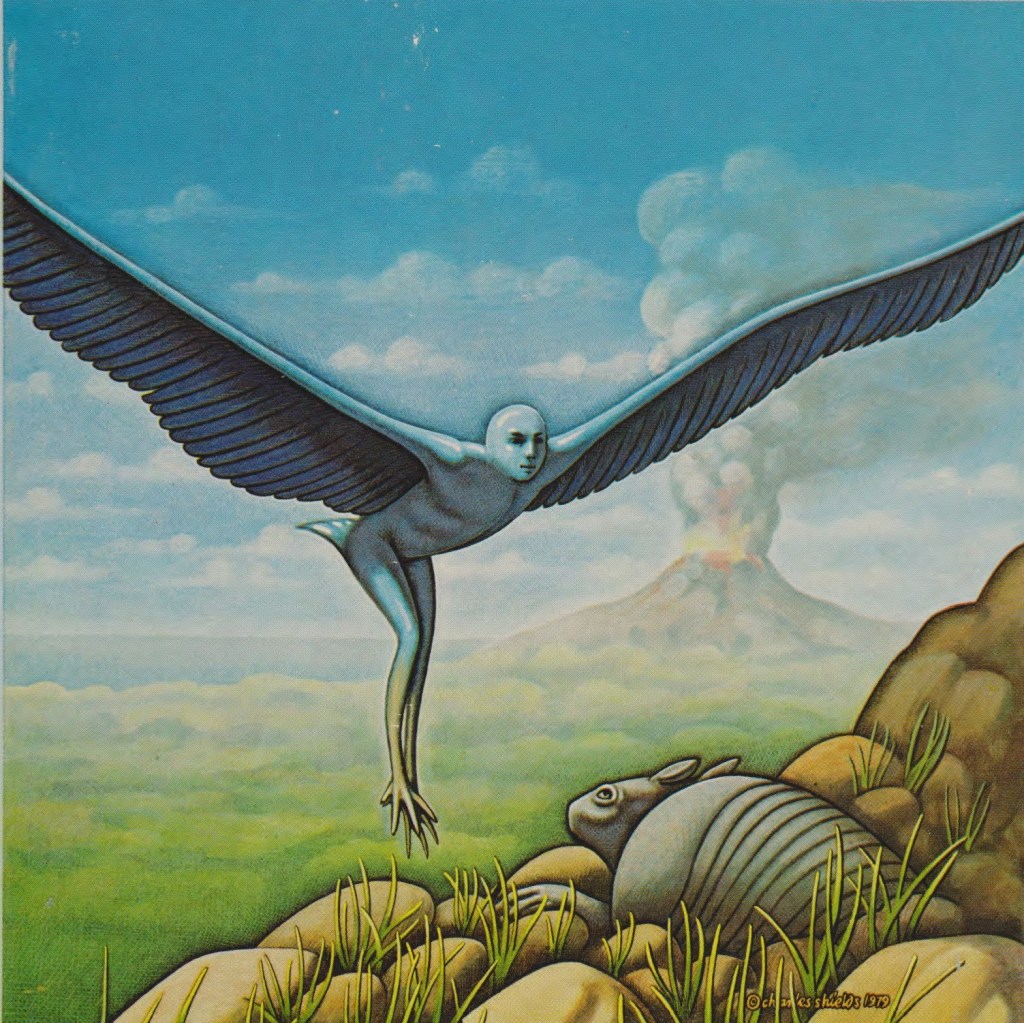
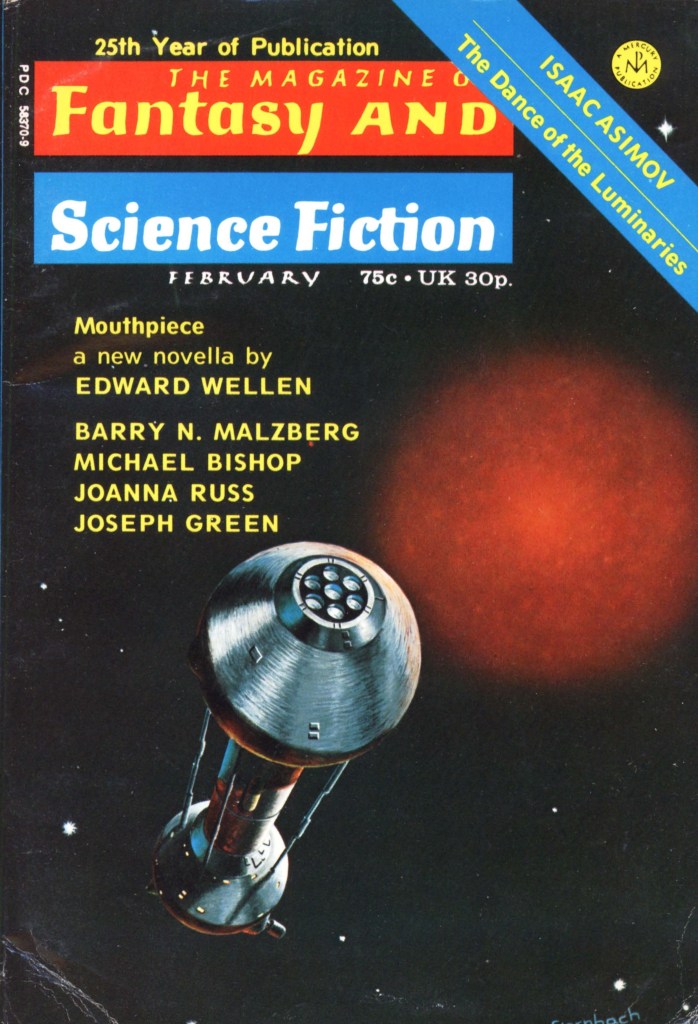
Vonda N. McIntyre’s “The Mountains of Sunset, the Mountains of Dawn” first appeared in The Magazine of Fantasy and Science Fiction (February 1974), ed. Edward L. Ferman. 4/5 (Good). You can read it online here. I read it in Best Science Fiction Stories of the Year: Fourth Annual Collection (1974), ed. Lester del Rey.

Continue reading

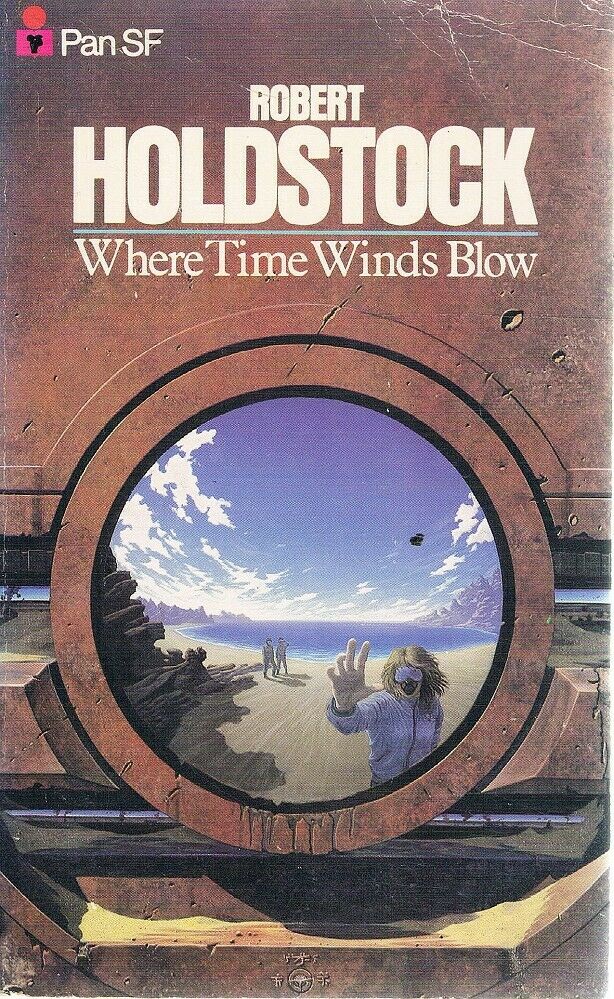
Short Book Reviews: Octavia E. Butler’s Dawn (1987), Robert Holdstock’s Where Time Winds Blow (1981), and Philippe Curval’s Brave Old World (1976, trans. 1981)

Note: My read but “waiting to be reviewed pile” is growing. Short rumination/tangents are a way to get through the stack before the new year and my memory/will fades. Unfortunately, I left two of my favorite reads of the year for last. Stay tuned for more detailed and analytical reviews.

1. Where Time Winds Blow, Robert Holdstock (1981)

5/5 (Masterpiece)

I cannot properly review Where Time Winds Blow (1981). Sometimes, while perambulating the interwebs, I encounter a singular encapsulation of a text’s brilliance that defeats all my own attempts to write constructively about a book. I blame Andrew Darlington’s brilliant review/article on Robert Holdstock contextualizing the novel within his early oeuvre. The short paragraph below–an attempt to convince you to procure a copy–is indebted to his review. Please read his review! There are fan writers and then there are fan writers. Darlington should receive a Hugo nod.

Continue reading

Book Review: To Die in Italbar, Roger Zelazny (1973)

3/5 (Average)

Roger Zelazny described To Die in Italbar (1973) as the one novel he would “kill off” if he could! Here’s a bit of context for his condemnatory statement. In early 1969, Zelazny quit his U.S. Social Security Administration job to become a full-time writer. Yes, he wrote Lord of Light (1967) and This Immortal (1966) among many others after work! He quickly wrote To Die in Italbar in May 1969 to complete a contract but the novel was rejected by the press. Years later Zelazny added new material and finally published the novel in 1973 (citation). Haste and filler characterize the final product. That said, if action-packed SF adventure with bizarre ideas is something you are looking for and you already enjoy Zelazny, pick this one up.

Continue reading

Book Review: The Neon Halo, Jean-Louis Curtis (1956, trans. 1958)

3.5/5 (collated rating: Good)

The French novelist Jean-Louis Curtis (1917-1995), best known for his Prix Goncourt-winning The Forests of the Night (1947), crafts a linked series of short stories in The Neon Halo (1956, trans. 1958) that chart the evolution of modern society between 1995-circa 2100. While the thematic influence of George Orwell’s 1984 (1949) and Aldous Huxley’s Brave New World (1932) permeates the pages (permanent warfare, reproductive technology, psychological and pharmaceutical conditioning, etc.), The Neon Halo contains genuine vibrancy and intriguing ruminations on persecution and martyrdom. Despite the frequent references to the French literary environment of Curtis’ day, The Neon Halo pulses with wit and levity despite the dour subject matter.

Continue reading

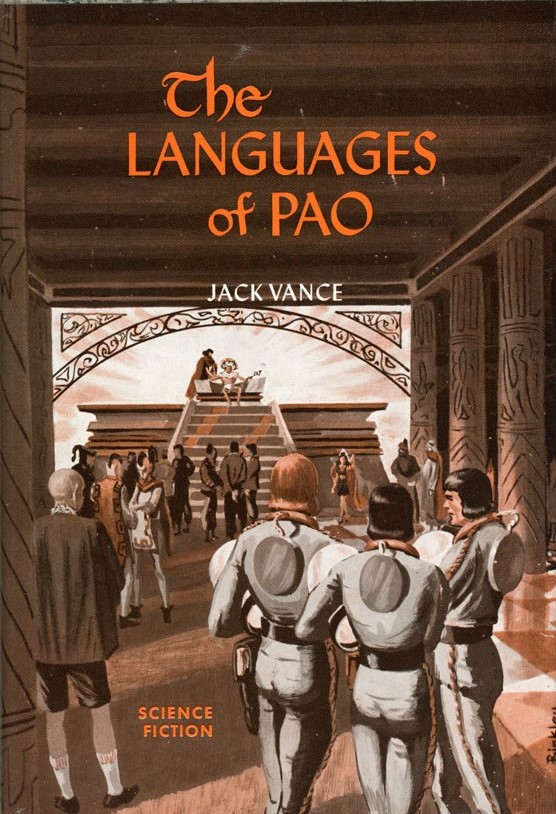
Short Book Reviews: Jack Vance’s The Languages of Pao (1958), Kit Reed’s Fort Privilege (1985), and John Shirley’s Transmaniacon (1979)

Note: My read but “waiting to be reviewed pile” is growing. Short rumination/tangents are a way to get through the stack before my memory and will fades. Stay tuned for more detailed and analytical reviews.


1. The Languages of Pao, Jack Vance (1958)

3.25/5 (Vaguely Good)

Since I started my site in 2011, I’ve soured a bit on Jack Vance’s brand of planetary adventure in richly realized and exotic worlds. I doubt I’d currently rate novels like Showboat World (1975) or The Blue World (1966) as highly as I did back then. One of more appealing elements of having a single project for so long is my ability to track my evolving views on genre. That said, I’d classify Wyst: Alastor 1716 (1978) and The Languages of Pao (1958) amongst his most conceptually ambitious novels I’ve read so far and worth tracking down. For a full list consult my index. Note: I read but never reviewed Dying Earth (1950).

Continue reading

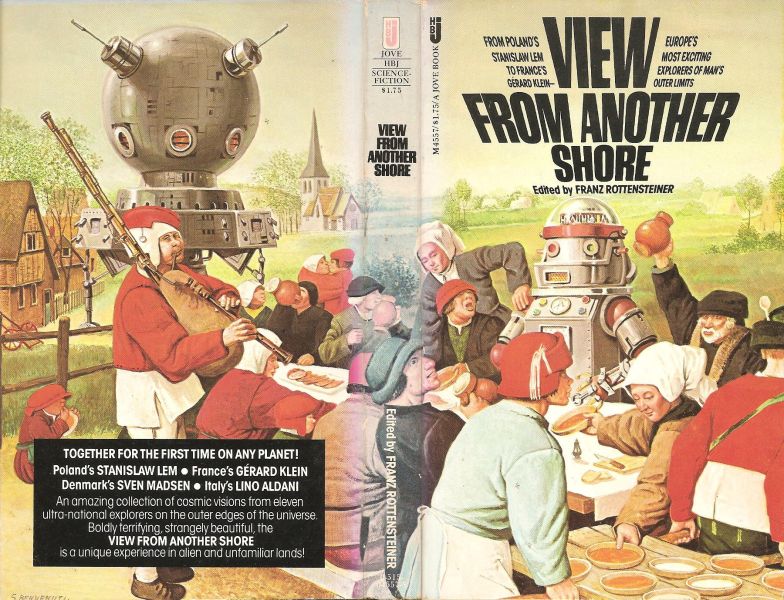
A SF “bande dessinée” Review: Enki Bilal’s La Foire aux immortels (trans. The Carnival of Immortals) (1980), vol. 1 of The Nikopol Trilogy (1980-2005)

Collated Rating: 4/5 (Good)

Art: 5/5 (Masterpiece) + Story: 3/5 (Average)

Enki Bilal’s La Foire aux immortels (trans. The Carnival of Immortals) (1980) is the first volume in The Nikopol Trilogy. All three bande dessinée received a 2016 single-volume English translation by Titan Comics. Due to the limited chronological reach of my site, I’ve chosen to only review the 1st volume as the sequels, Le Femme Piège (trans. The Woman Trap) and Froid Equateur  (trans. Equator Cold), were published in 2005.

Of the SF graphic novels I’ve read, The Carnival of Immortals proved by far the most successful. Bilal blends his terrifying depictions of decadence and decay with an oblique, if a bit clunky, story that hints at surrealism and otherworldliness. For what I’m comparing Bilal’s vision to, check out Howard V. Chaykin and Samuel R. Delany’s Empire (1978), Paul Gillon’s La survivante (1985), and Gene Day’s collection Future Day (1979).

Continue reading

Short Story Reviews: Melisa Michaels’ “In the Country of the Blind, No One Can See” (1979), “I Have a Winter Reason” (1981), and “I Am Large, I Contain Multitudes” (1982)

My 1000th post!

Every morning for the last few years, I post on Twitter the birthdays (pre-1955) of artists, authors, and editors involved in some way with science fiction. In the last year, a singular compulsion has hit and I’ve started to include even more obscure figures like Gabriel Jan (1946-) and Daniel Drode (1932-1984). On May 31st, while perusing the indispensable list on The Internet Speculative Fiction Database, I came across an author unknown to me–Melisa Michaels (1946-2019) (bibliography). She’s best known for the five-volume Skyrider sequence (1985-1988) of space operas “depicting the growth into maturity of its eponymous female Starship-pilot protagonist” (SF Encyclopedia).

As I’m always willing to explore the work of authors new to me, I decided to review the first three of her six published SF short stories. Two of the three stories deal with my favorite SF topics–trauma and memory.


In the Country of the Blind, No One Can See” (1979), 3.5/5 (Good): First appeared in Isaac Asimov’s Marvels of Science Fiction (1979). It was reprinted in Isaac Asimov’s Science Fiction Magazine (January 1979). You can read it online here.

On a terraformed Mars, Allyson Hunter and her two clone sisters, Rebecca and Kim, are societal outcasts. They spent their lives trying to be “real people” yet were “reminded, every day in a dozen little ways, that they weren’t real people” (87). Clones retain their first usage as replacement body parts. Permitted to live only due to indications of telepathic potential (needed to guide spaceships), the sisters attempt to live meaningful lives and develop useful skills. The sisters charter two identical twins, Frank and Todd, to convey them across the Martian landscape. A horrific crash kills Kim and forces the survivors to work together and move past the deep resentment and hatred the brothers hold.

Continue reading

Short Story Review: Theodore Sturgeon’s “Memorial” (1946)

I recently finished David Dowling’s Fictions of Nuclear Disaster (1987) and thought I’d review a handful of the short stories discussed in the monograph. The first on my list is Theodore Sturgeon’s haunting “Memorial” which first appeared in the April 1946 issue of Astounding Science Fiction, ed. John W. Campbell, Jr. You can read it online here.


“Memorial” (1946), Theodore Sturgeon, 4/5 (Good): Grenfell has a plan to create a war memorial to end all memorials—The Pit. It will writhe with lava. It will shine forth with a ghastly glow. Created by nuclear explosion a thousand times as powerful as the Hiroshima bomb (161). Like some grotesque manifestation of the Darvaza gas crater, it will be a “living reminder of the devastation mankind has prepared for itself” (161). And the message will be the most “useful thing in the history of the race—a never-ending sermon, a warning, an example of the dreadful” possibilities of nuclear war (161).

Continue reading