What pre-1985 science fiction are you reading this week?
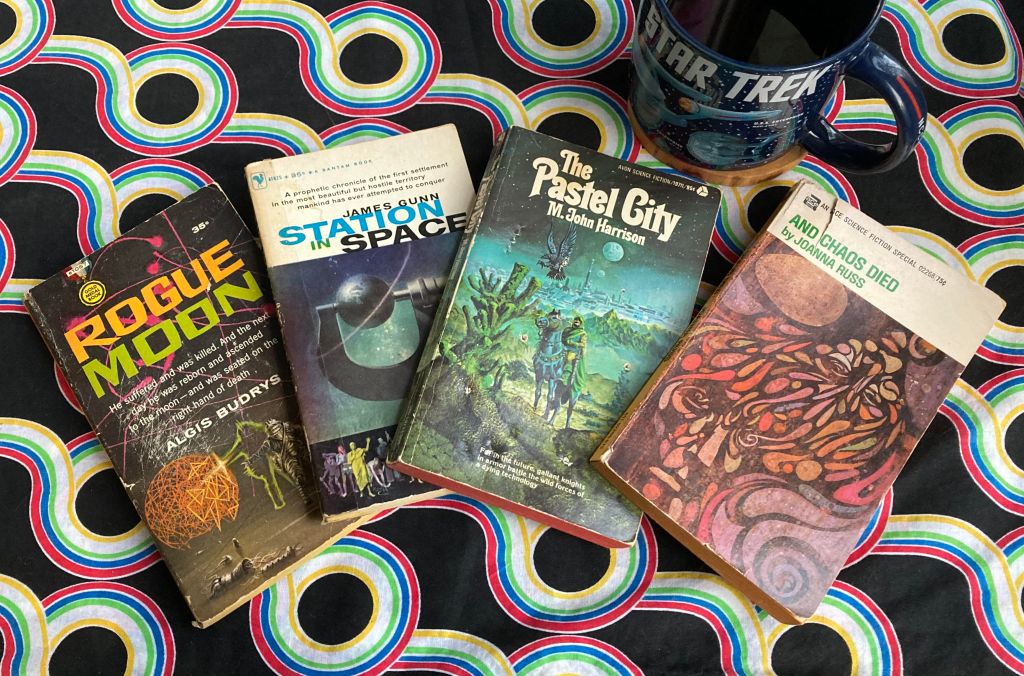
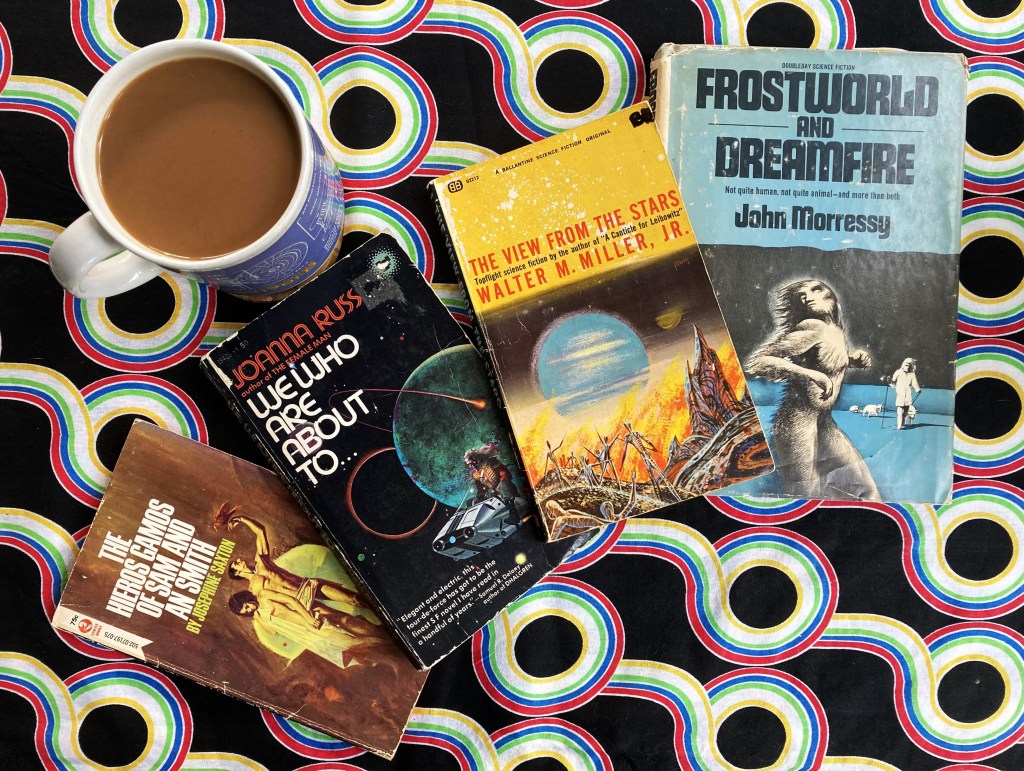
I’ve thoroughly enjoyed the conversations and connections you all have made in the comments over the last two months of this column. Make sure to check out the previous installment if you haven’t already. As before, I’ve included a bit about the books in the photograph, birthdays from the last two weeks, and brief ruminations on what I’ve been reading and writing.
The following review is the 27th and 28th installment of my series searching for “SF short stories that are critical in some capacity of space agencies, astronauts, and the culture which produced them.” Some stories I’ll review in this series might not fit. And that is okay. I relish the act of literary archaeology.
Kate Wilhelm’s “Planet Story” (1975) charts a planetary mystery that seems just out of reach of the cold, factual truth of scientific instruments. And Clark Ashton Smith’s “Master of the Asteroid” (1932) imagines the fragile minds of human explorers unable to grapple with the interplanetary gulf.
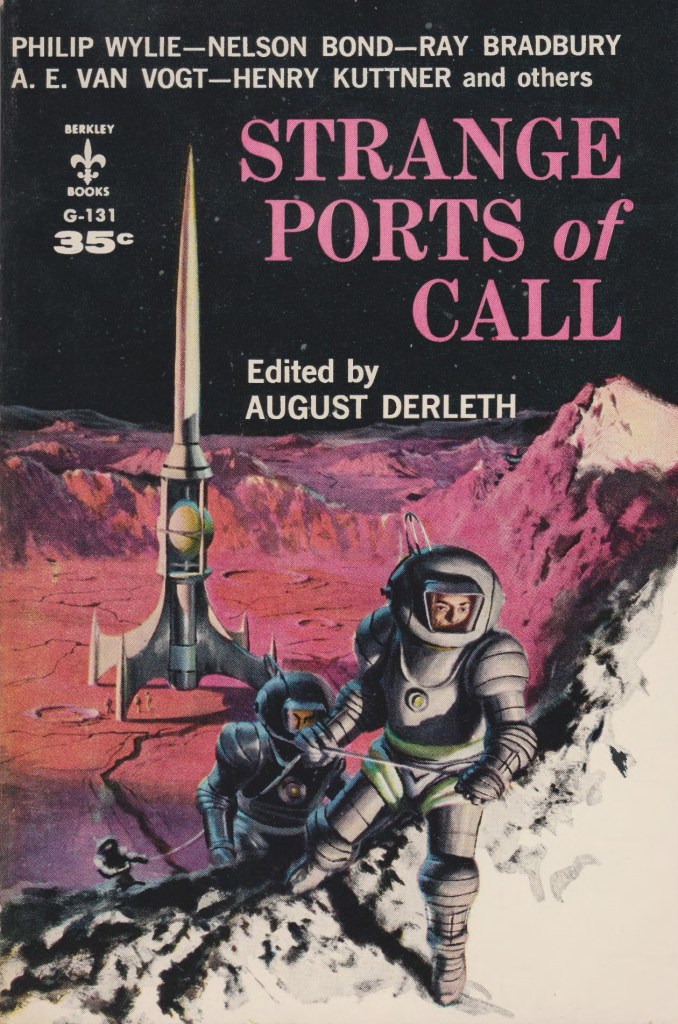
Clark Ashton Smith’s “Master of the Asteroid” first appeared in Wonder Stories, ed. Hugo Gernsback (October 1932). You can read it online here. I read it in the 1958 edition of Strange Ports of Call, ed. August Derleth (1948).
Cark Ashton Smith (1893-1961) is characterized as “one of the big three of Weird Tales, with Robert E. Howard and H. P. Lovecraft.” His fiction was deeply influenced by his psychological afflictions, “including intense agoraphobia,” and nightmares. Due to the Great Depression and the declining health of his parents, Smith wrote more than a hundred short stories between 1929-1934. “Master of the Asteroid” (1932), produced in this productive moment, reads like an unnerving catalog of manias.
Today I have the third post in my Exploration Logseries.
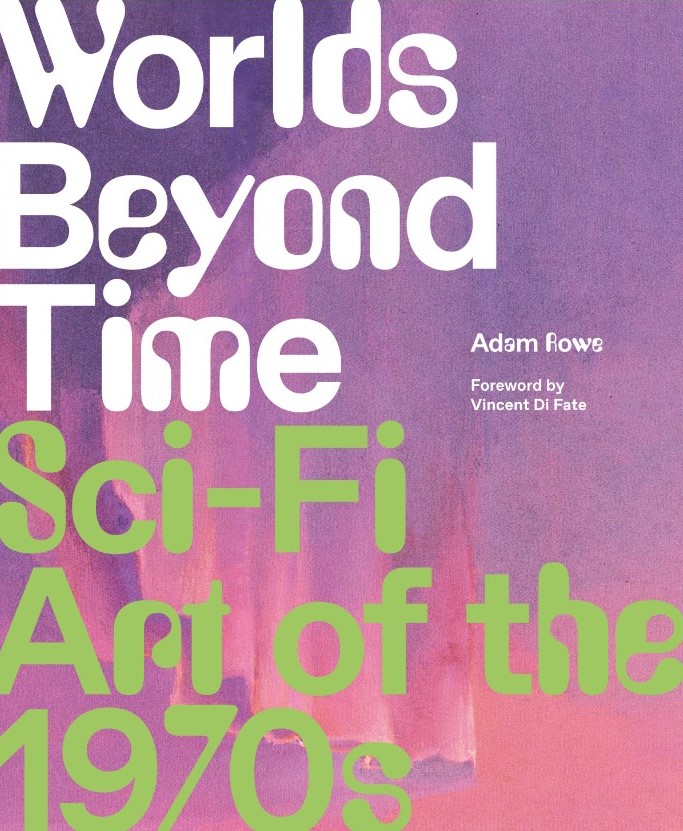
I would like to welcome Adam Rowe to Science Fiction and Other Suspect Ruminations. He is the author of a brand new book–Worlds Beyond Time: Sci-Fi Art of the 1970s (2023)–on 70s science fiction cover art with a foreword by artist Vincent Di Fate. You can follow Adam’s art account on Twitter and Tumblr. I also recommend subscribing to his free 70s SF art newsletter. You can buy Worlds Beyond Time on Amazon and Barnes and Noble.
Adam Rowe is a writer who has been collecting retro science fiction art online since 2013. He covers technology at Tech.co and has been a Forbes contributor on publishing and the business of storytelling. He has also written for iO9, Popular Mechanics, Tor.com, and the Barnes & Noble Sci-Fi & Fantasy Blog. Worlds Beyond Time: Sci-Fi Art of the 1970s (2023) is his first book.
What pre-1985 science fiction are you reading this weekend?
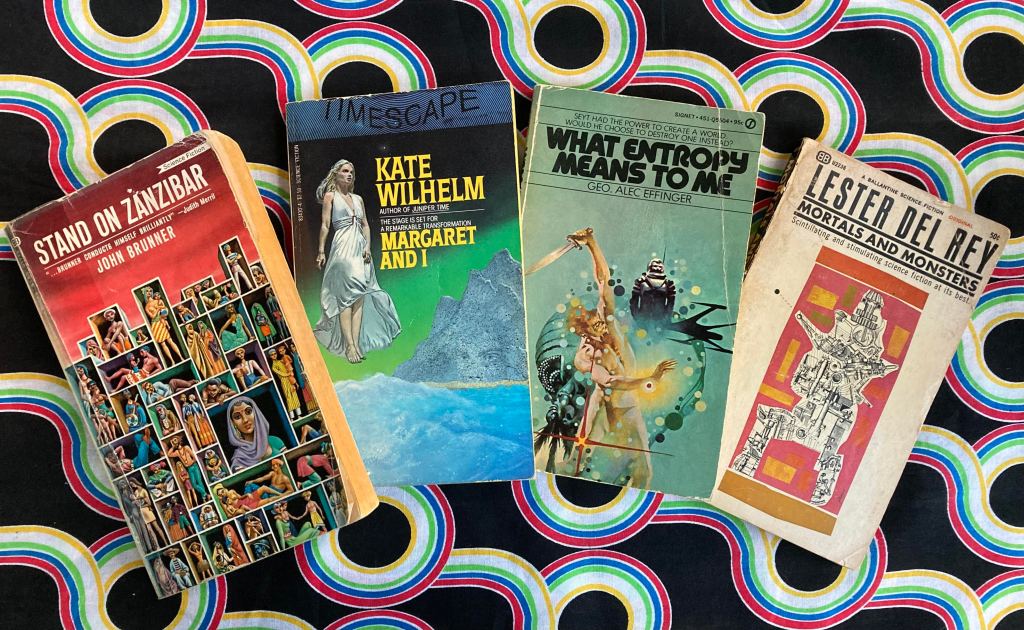
Thank you all for making this fanzine column a success! I’ve thoroughly enjoyed the conversations and connections you all have made in the comments. Make sure to check out the previous installment if you haven’t already. As before, I’ve included a bit about the books in the photograph, birthdays from the last two weeks, and brief ruminations on what I’ve been reading and writing.
Robert Foster’s cover for the 1st paperback edition
5/5 (Masterpiece)
Nominated for the 1965 Hugo Award for Best Novel [1]
Edgar Pangborn’s Davy (1964) takes place in a future devastated by a partially abortive nuclear war and the depravations of subsequent plagues (50). A powerful theocracy and perpetually warring microstates in the American Northeast emerged from the Years of Confusion. The novel takes the form of an autobiography. We follow a young orphan in love with life and desperate to escape his unfortunate circumstances.
What pre-1985 science fiction are you reading this weekend?
After the success of the previous installment, I’ve decided to make this a bimonthly post (“column”) for my site (“fanzine”). As before, I’ve included a bit about the books in the photograph, birthdays from the last two weeks, and brief ruminations on what I’ve been reading and writing.
Which books/covers/authors intrigue you? Which have you read? Disliked? Enjoyed?
1. The Saliva Tree and Other Strange Growths, Brian W. Aldiss (1966)
Les Edwards’ cover for the 1979 edition
Contents: “The Saliva Tree” (1965), “Danger: Religion!” (1962), “The Source” (1965), “The Lonely Habit” (1962), “One Role with Relish” (1966), “Legends of Smith’s Burst” (1959), “Day of the Doomed King” (1965), “Paternal Care” (1966), “Girl and Robot with Flowers” (1965)
The following reviews are the 25th and 26th installments of my series searching for SF short stories that are critical in some capacity of space agencies, astronauts, and the culture which produced them. Some stories I’ll review in this series might not fit. Many are far from the best. And that is okay. I relish the act of literary archaeology.
I’ve paired two stories, one by Philip K. Dick (1928-1982) and another by prolific but forgotten Henry Slesar (1927-2007), that puncture the grandiose illusion of humanity’s progress.
Thank you Richard Fahey, “Friend of the Site,” for the PKD recommendation.
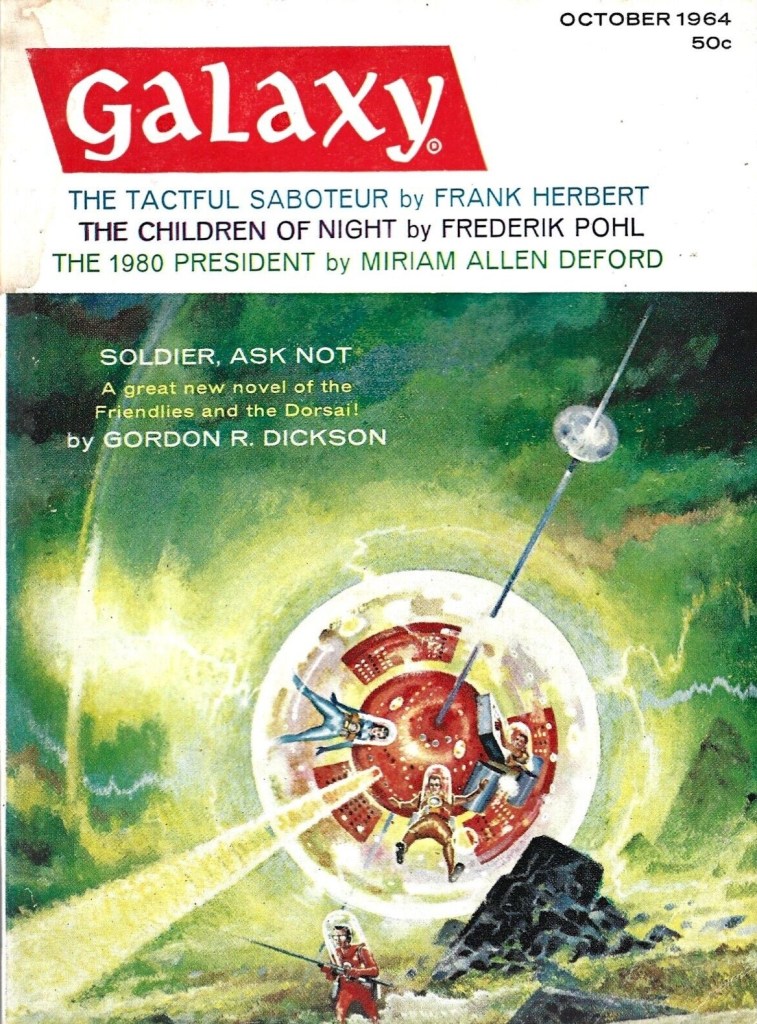
George Schelling’s cover for Galaxy, ed. Frederik Pohl (October 1964)
4/5 (Good)
Philip K. Dick’s “Precious Artifact” first appeared in Galaxy, ed. Frederik Pohl (October 1964). You can read it online here.
A vast array of scholarship charts the continuing allure Mars holds in the popular imagination [1]. David Seed writes that “since the late nineteenth century Mars has tantalized the literary imagination with the possibility that life might exist on that planet” [2]. The visions of Edgar Rice Burroughs, Leigh Brackett, Ray Bradbury, and countless others created a seductive and sometimes complex vista of longing and conquest. Brackett, for example, evocated a Mars that was “more complex and varied” than Burrough’s “imperial triumphalism” [3]. In Brackett’s “The Beast-Jewel of Mars” (1948) (scheduled for this series), Mars becomes the location for the revenge perpetrated by the colonized [4].
Today I’ve reviewed the 28th story in my series on the science fictional media landscape of the future. In Henry Kuttner’s masterpiece “Year Day” (1953), a couple attempts to rekindle their relationship in the midst of a sonic deluge of advertising that threatens to blot out their thoughts.
Richard Powers’ cover for the 1st paperback edition
5/5 (Masterpiece)
Henry Kuttner’s “Year Day” first appeared in his collection Ahead of Time (1953). Some of the other stories in the collection were co-written with his wife C. L. Moore. You can read the story online here.



 Science Fiction and Other Suspect Ruminations