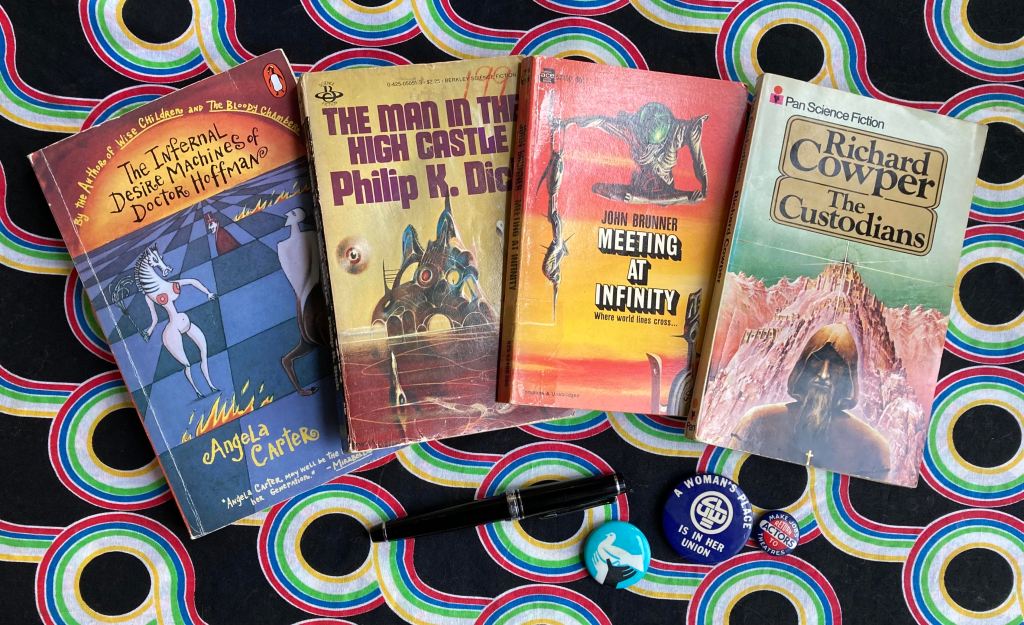
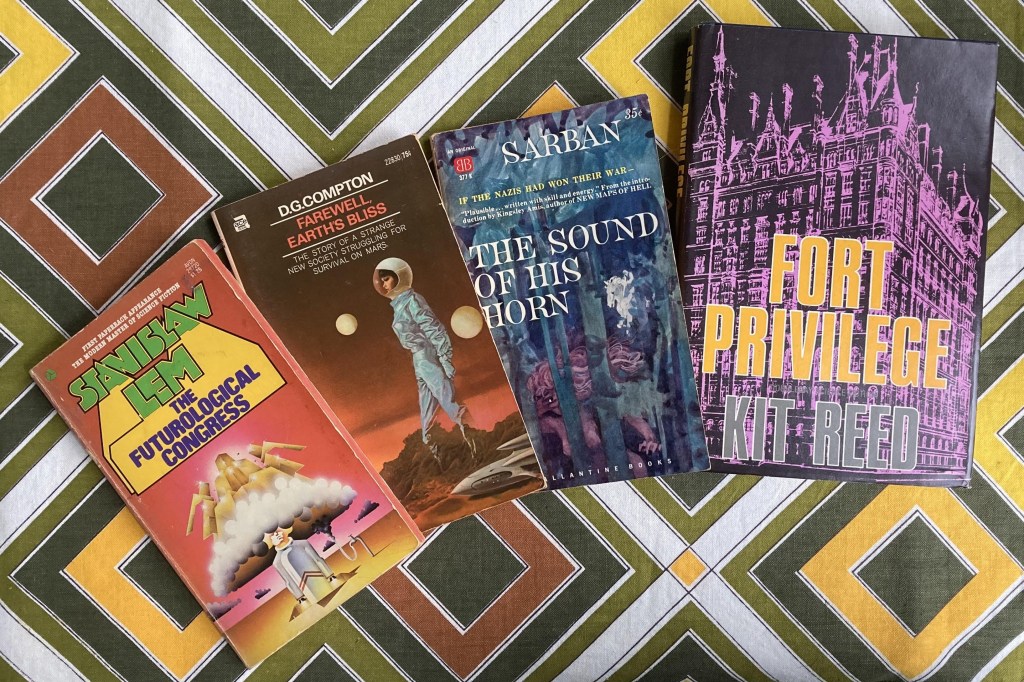
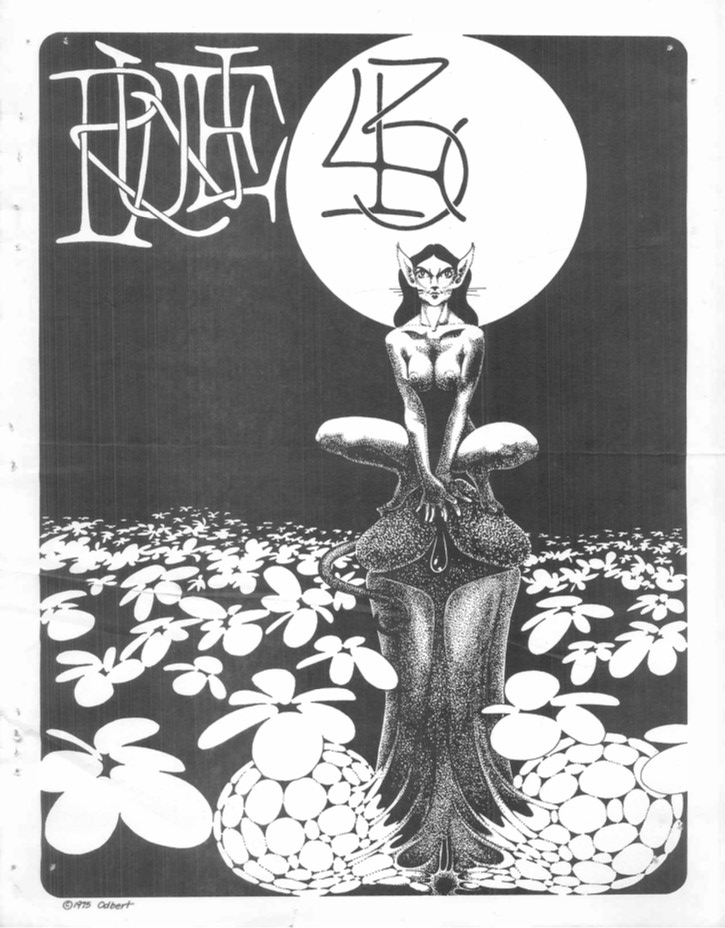
What pre-1985 science fiction are you reading or planning to read next month? Here’s the May installment of this column.
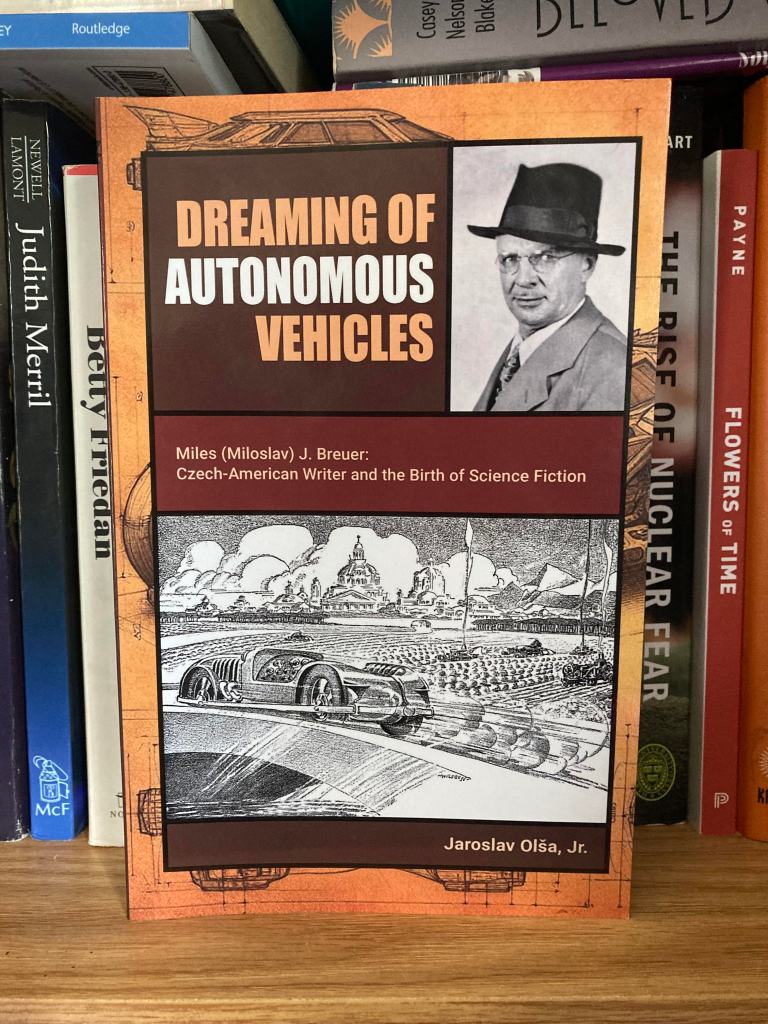
In my interview with Jaroslav Olša, Jr. about his book Dreaming of Autonomous Vehicles: Miles (Miroslav) J. Breuer: Czech-American Writer and the Birth of Science Fiction (2025), an interesting methodological question jumped out to me: what is the role of more ephemeral publications outside of Hugo Gernsback in the early history of genre? A bit of context: Miles J. Breuer also wrote in Czech. He published stories in Czech-language publications aimed at the immigrant community far earlier than their re-written versions appeared in Gernsback’s Amazing. In addition, he published in various medical journals (that occasionally ran SF) and university publications. As Olša points out in the interview, it obviously depends on the questions asked by the historian — and these publications had small audiences that make it hard to ascertain “influence” or “inspiration” for later authors. Food for thought.
Before we get to the photograph above and the curated birthdays, let me know what pre-1985 SF you’re currently reading or planning to read!
Over the last few years, I have incorporated a smattering of the vast range of spectacular scholarship on science fiction into my reviews and highlighted works with my Exploration Log series that intrigue me.1 Today I have an interview with Jaroslav Olša, Jr. about his brand-new book, Dreaming of Autonomous Vehicles: Miles (Miroslav) J. Breuer: Czech-American Writer and the Birth of Science Fiction (2025). In the book, he covers the life and career of Miles (Miroslav) J. Breuer (1889-1945), the first SF author to regularly write original stories for Hugo Gernsback’s Amazing. Breuer’s career also provides a fascinating window into the literary and cultural world of immigrants in late 19th and early 20th century America.
You can buy an inexpensive physical copy ($15.80 at last look) directly from Space Cowboy Books here (preferred) and on Amazon.
Thank you so much for agreeing to this interview. First, can you introduce yourself and your interests in science fiction?
Since childhood, I have loved reading science fiction, but — except for a short time — I have not been professionally attached to it. After studying Asian and African Studies and social sciences in Prague, Tunis and Amsterdam, I joined the Czech diplomatic three decades ago, and have served in various positions including Director of the African Dept. and the Head of the Policy Planning Dept. at the Czech Ministry of Foreign Affairs. I also served as a Czech Ambassador three times: to Zimbabwe for six years, to South Korea for another six years, and to the Philippines for four years. Since December 2020, I have served as Czech Consul General in Los Angeles in charge of the US West.
In the early 1980s, I became a part of a small but very active fandom when—in the then communist Czechoslovakia—the first science fiction club emerged. I started the SF fanzine Ikarie XB, which in 1990 turned into the first Czech-language professional SF magazine Ikarie, with monthly editions until 2024.
I have also translated many short stories and edited numerous SF anthologies, but never wrote fiction. But since the very beginning, the center of my interest in SF was to write about science fiction. I co-edited and authored entries in the only Czech SF encyclopedia, published in 1995. Thus my book about Miles (aka Miloslav) J. Breuer is somewhat of a culmination of my work on science fiction.
What drew you to the science fiction of Miles (Miloslav) J. Breuer (1889-1945)?
Which books/covers/authors intrigue you? Which have you read? Disliked? Enjoyed?
It’s the summer Joachim Boaz. Where are the reviews? I’m currently on a much needed vacation (Iceland). I will be back soon! In the meantime here are four recent purchases.
1. The Dancers of Noyo, Margaret St. Clair (1973)
Davis Meltzer’s cover for the 1st edition
From the back cover: “Like so many others before him, reluctant Sam MacGregor was sent on a pilgrimage for the Frail Vision by the Dancers: androids grown from the cells of one man, with the powers of hypnotism and illusion–androids who held the tribes of the Republic of California in thrall.
But soon Sam began to doubt his own identity, for he experienced, in close succession, extra-lives in different corridors of time and space.
Preliminary Note: I plan on reading all 116 issues of the influential, and iconic, SF magazine Galaxy under H. L. Gold’s editorship (October 1950-October 1961) in chronological order. How long this project will take or how seriously/systematically I will take it are complete unknowns. I am a reader of whim. I will choose whether to reread certain stories that I’ve previously covered. Serialized novels will only be reviewed after I complete the entire work and posted as separate reviews. Why Galaxy, you might ask?
First, I can’t escape the pull of 1950s science fiction focused on social commentary and soft science. Second, I am obsessed with 50s American politics during a time of affluence, the rise of TV and mass culture, and the looming terror of the Cold War. Third, there are a legion of well-known 50s authors I’ve yet to address in any substantial manner on the site who appeared behinds its illustrious covers. Fourth, H. L. Gold was interested in all different types of stories.
As SF Encyclopedia explains, Galaxy was an “immediate success” in part because “Astounding was at this time following John W Campbell Jr’s new-found obsession with Dianetics and was otherwise more oriented towards technology.” Gold’s interests, on the other hand, “were comparatively free-ranging: he was interested in psychology, sociology and satire and other humor, and the magazine reflected this.”
Clifford D. Simak’s Time Quarry (variant title: Time and Again) (1950). Serialized over three issues. I will post an individual review after I complete the serialization.
Note: My read but “waiting to be reviewed pile” is growing. Short rumination/tangents/impressions are a way to get through the stack before my memory and will fades. My website partially serves as a record of what I have read and a memory palace for future projects. Stay tuned for more detailed and analytical reviews.
1. Edgar Pangborn’s The Company of Glory (1975)
Vincent Di Fate’s cover for the 1st edition
3.5/5 (Good)
Edgar Pangborn is an unsung SF hero in my book. At his best, he’s a deeply humanistic writer interested in moments of effective metafictional play on the nature of narrative. The Company of Glory (serialized 1974, 1975) is the third novel in the Tales of Darkening World sequence. It forms a prequel to Pangborn’s masterpiece Davy(1964). As with Davy, The Company of Glory attempts to create multiple interlocking layers of narrative, stories within the stories, quotations from various diaries, and the interjections of the overarching narrator of the entire collection of texts who remains anonymous until the final pages.
What pre-1985 science fiction are you reading or planning to read next month? Here’s the April installment of this column.
As readers of the site know, I am obsessed with the machinations of Cold War nuclear logic—historical and science fictional. In Ira Chernus’ brilliant Apocalypse Management: Eisenhower and the Discourse of National Insecurity (2008), he dives into the Manichean ideoscape that dominated Eisenhower’s thinking. In short, he posits that Eisenhower interpreted the Soviet threat as an apocalyptic struggle in which the traditional outcome, eliminating the treat, is impossible. Instead the best hope is “to contain and manage it forever” (2)–hence “apocalypse management.” This “new linguistic paradigm” profoundly influenced their policymaking process and dominated American public discourse.
According to Chernus, Eisenhower was obsessed with Americans practicing voluntary self-control in their consumption in order shoulder the taxes needed to fund the perpetual struggle. With this paradigm, Eisenhower’s gestures towards peace–for example his “The Chance for Peace” (April 16th, 1953) speech–were acts of calibrated psychological warfare designed to put the burden of action on the Soviets and score points with the American public and American allies. The United States, on the other hand, could wage the conflict with perpetual, safe, and managed inaction in which peace is never the ultimate objective.
In the past few years, I’ve put together a series on the first three published short fictions by female authors who are completely new to me or whose most famous SF novels fall mostly outside the post-WWII to mid-1980s focus of my reading adventures. To be clear, I do not expect transformative or brilliant things from first stories. Rather, it’s a way to get a sense of subject matter and concerns that first motivated authors to put pen to paper.
Today I’ve selected the first three science fiction short stories by New Zealander author Cherry Wilder (1930-2002). Here’s her bibliography. In the past I’ve picked up her best-known novel Second Nature (1982) and gazed at the evocative Tony Roberts cover! But never managed to get past the first few pages… According to SF Encyclopedia, Wilder’s work is “notable for its narrative skill, evocative style and rounded characterization, should have long since given her a higher reputation.” My general sense from her first three stories is that they’re relatively well-told, traditional, and a bit on the slight side of things. I still look forward to reading Second Nature (1982).
Which books/covers/authors intrigue you? Which have you read? Disliked? Enjoyed?
1. Deus Irae, Philip K. Dick and Roger Zelazny (1976)
Richard Corben’s cover for the 1980 edition
From the back cover: “One their own, they have written landmarks works that have added whole new dimensions of wonder to the field of science fiction. Now, in Deus Irae, they have created what ALA Booklist calls “the most successful collaboration in years!”–set in in bizarre world where you will encounter…
A bunch of backwoods farmers who happen to be lizards…
Back in July 2024, I posted six interviews with Clifford D. Simak (1904-1988). Since then I’ve tracked down three more. As in that post, I’ll provide a rundown of each interview and provide quotes of interesting passages. In the interviews, Simak comes across as an author deeply suspicious of rigorous generic distinctions, passionate about all life, and open to science fiction as an ever-changing and evolving entity.
Enjoy! And if you know of more interviews (or are able to update the Internet Speculative Fiction Database entry as it only includes five of the nine interviews I’ve covered) let me know.





 Science Fiction and Other Suspect Ruminations