Book Review: To Die in Italbar, Roger Zelazny (1973)

3/5 (Average)

Roger Zelazny described To Die in Italbar (1973) as the one novel he would “kill off” if he could! Here’s a bit of context for his condemnatory statement. In early 1969, Zelazny quit his U.S. Social Security Administration job to become a full-time writer. Yes, he wrote Lord of Light (1967) and This Immortal (1966) among many others after work! He quickly wrote To Die in Italbar in May 1969 to complete a contract but the novel was rejected by the press. Years later Zelazny added new material and finally published the novel in 1973 (citation). Haste and filler characterize the final product. That said, if action-packed SF adventure with bizarre ideas is something you are looking for and you already enjoy Zelazny, pick this one up.

Continue reading
Updates: Recent Science Fiction Purchases No. CCLXXXV (Arkady and Boris Strugatsky, Lester Del Rey, Peter George, and Adrien Stoutenburg)

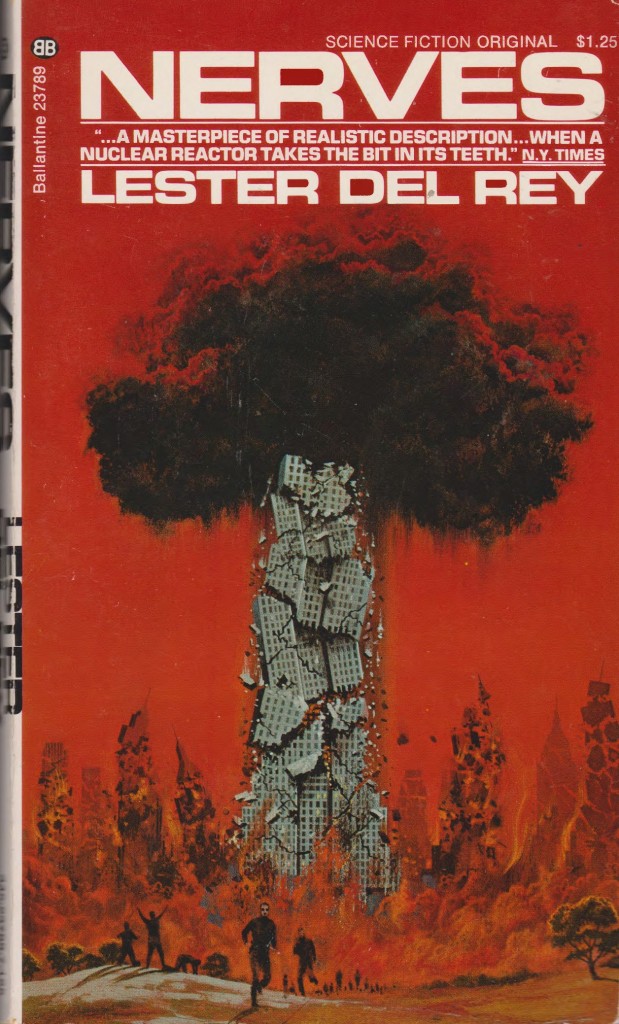
1. Nerves, Lester Del Rey (1956)

From the back cover: “THIS IS NO STORY OF SPACE SHIPS AND MARTIANS. THIS IS A STORY ABOUT OUR WORLD RIGHT NOW.

‘In 1942, three years before the general public had ever heard of nuclear fission. Lester del Rey wrote a brilliantly detailed novella of disaster in an atomics plant, which now appears, skillfully expanded to book length, as NERVES. A wholly admirable blend of prophetic thinking (in medicine as well as atomics), warm human values and powerful narrative suspense, this novel is strongly recommended…’ –N.Y. Herald Tribune.”

Continue reading

Updates: Recent Purchases No. CCLXXXIV (Ray Bradbury, H. R. F. Keating, Judith Moffett, New Dimensions anthology)

Which books/covers/authors intrigue you? Which have you read? Disliked? Enjoyed?

1. The Martian Chronicles, Ray Bradbury (1950)

From the back cover: “A MAGNIFICANCTLY ILLUSTRATED EDITION OF THE MARTIAN CHRONICLES WHICH MASTERFULLY ENHANCES THE CLASSIC WONDER AND TERROR BY THE WORLD-RENOWNED AUTHOR OF THE ILLUSTRATED MAN RAY BRADBURY.

Continue reading

The Introduction to Dangerous Visions and New Worlds: Radical Science Fiction, 1950-1985, ed. Andrew Nette and Iain McIntyre (2021)

I’ve recently conducted a binge read of my ARC of Dangerous Visions and New Worlds: Radical Science Fiction, 1950-1985, ed. Andrew Nette and Iain McIntyre (2021). It is a must buy for any SF fan of the era interested in exploring the larger world behind the texts. Considering the focus of my website and most of my reading adventures over the last decade, I can unabashedly proclaim myself a fan of the New Wave SF movement–and this edited volume is the perfect compliment to my collection and interests.

The editors and PM Press have graciously provided me with the introduction to the volume. Perhaps it’ll convince you to purchase your own copy!

Relevant links: Amazon USA, Amazon UK, and the publisher website.


Dangerous Visions and New Worlds

An Introduction

The “long sixties,” an era which began in the late 1950s and extended into the 1970s, has become shorthand for a period of trenchant social change, most explicitly demonstrated through a host of liberatory and resistance movements focused on class, racial, gender, sexual, and other inequalities. These were as much about cultural expression and social recognition as economic redistribution and formal politics. While the degree to which often youthful insurgents achieved their goals varied greatly, the global challenge they presented was a major shock to the status quo.

Continue reading

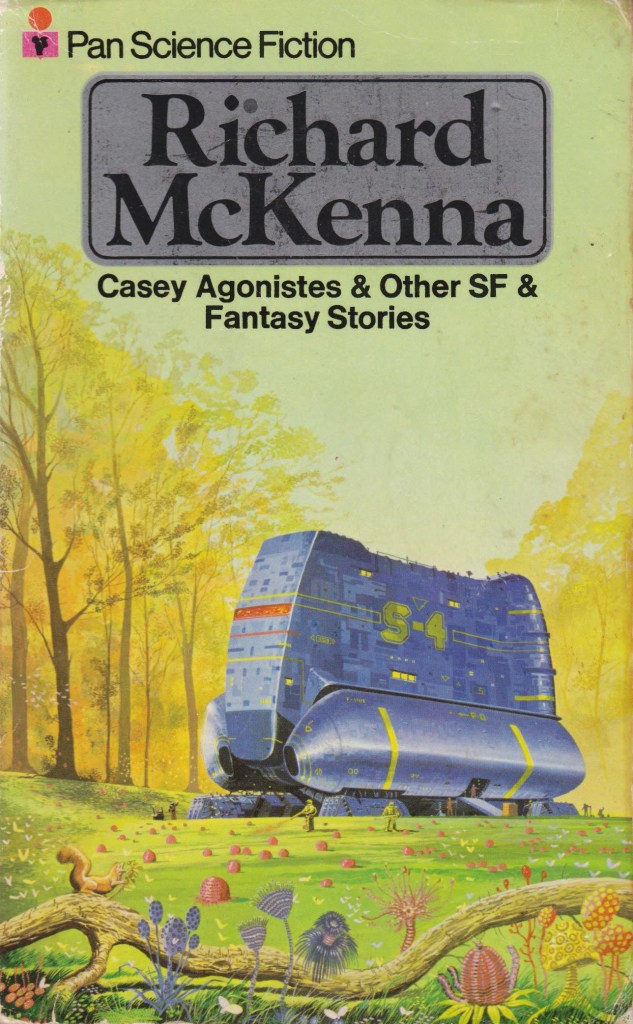
Book Review: Casey Agonistes and Other Science Fiction and Fantasy Stories, Richard McKenna (1973)

4/5 (collated rating: Good)

Richard McKenna (1913-1964) spent the majority of his adult career (1931-1953) “not very happily” in the US Navy. He was forced to leave college and join the service due to his lack of opportunities in rural Idaho during the Great Depression. Many of his science fiction stories explore the homosocial world of the military–the comradery through shared trauma and battle, the corrosive effect on those who struggle to fit in, and the destructive culture of machoism. After his military service, he enrolled at the University of North Carolina in English. Only a handful of SF short stories appeared during his lifetime, the majority were published posthumously. McKenna considered SF to be his “training ground” before a planned career in mainstream literature. Right before his early death in 1964, he hit it big with the non-SF novel The Sand Pebbles (1962), which was turned into a famous 1966 movie by the same name.

Continue reading

Updates: Recent Science Fiction Purchases No. CCLXXXII  (Isaac Asimov, Mary Vigliante, Algis Budrys, and Vladimir Voinovich)

Which books/covers/authors intrigue you? Which have you read? Disliked? Enjoyed?

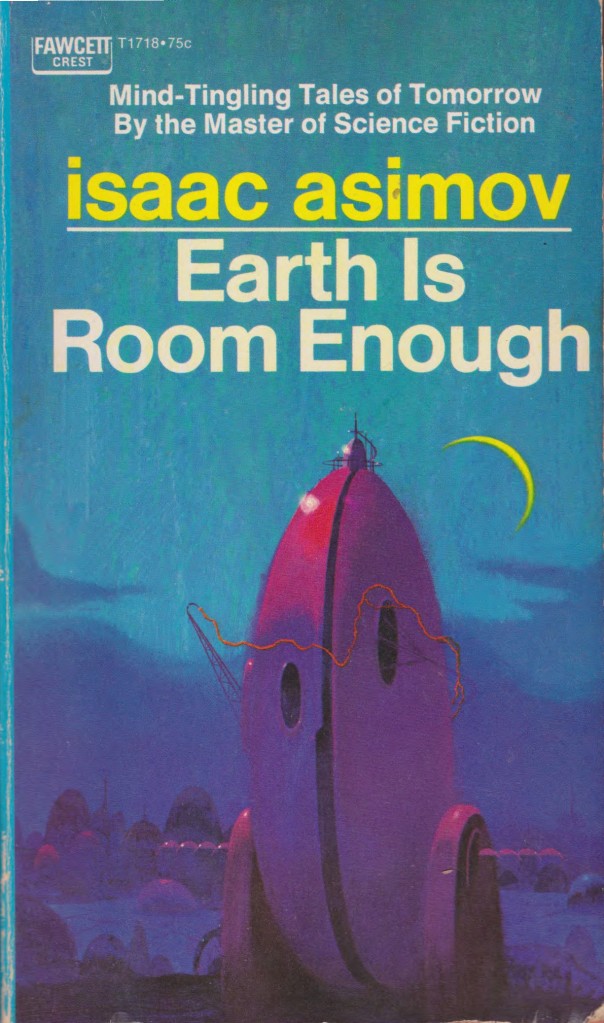
1. Earth Is Room Enough, Isaac Asimov (1957)

From the back cover: “ANYTHING CAN HAPPEN and probably will RIGHT HERE ON EARTH.

You don’t have to rent a spaceship or sign up for a singles cruise to Saturn or spend your weekends star-hopping along the Milky Way because EARTH IS ROOM ENOUGH.

Earth is where the action is and each tomorrow unleashes new discoveries.

Here are brilliant, witty, frightening, and fascinating stories of the future by the greatest science fiction master of them all. Just hitch your mind to these weird and wonderful tales for a spin around the world of tomorrow that will take you right to the center of your wildest dreams.”

Contents: “The Dead Past” (1956), “Franchise” (1955), “Gimmicks Three” (1956), “Kid Stuff” (1953), “The Watery Place” (1956), “Living Space” (1956), “The Message” (1956), “Satisfaction Guaranteed” (1951), “Hell-Fire” (1956), “The Last Trump” (1955), “The Fun They Had” (1951), “Jokester” (1956), “The Immortal Bard” (1954), “Someday” (1956), “The Author’s Ordeal” (1957), “Dreaming Is a Private Thing” (1955)

Continue reading

Book Review: Only Lovers Left Alive, Dave Wallis (1964)

4/5 (Good)

The scene: Early 60s London. Conjure displays of cool style at local discothèques. Youthful insolence and wit. Frivolous consumerism. Into this swirling myth/reality of the “Swinging” city in the early 60s, Dave Wallis’ Only Lovers Left Alive (1964) weaves its own petulant “image making.” The youth attempt to create a world in the ashes of their forefathers who commit suicide in droves.

Continue reading

Updates: Recent Science Fiction Purchases No. CCLXXXI (Brian W. Aldiss, Michael Swanwick, Anita Mason, Robert C. O’Brien)

Which books/covers/authors intrigue you? Which have you read? Disliked? Enjoyed?

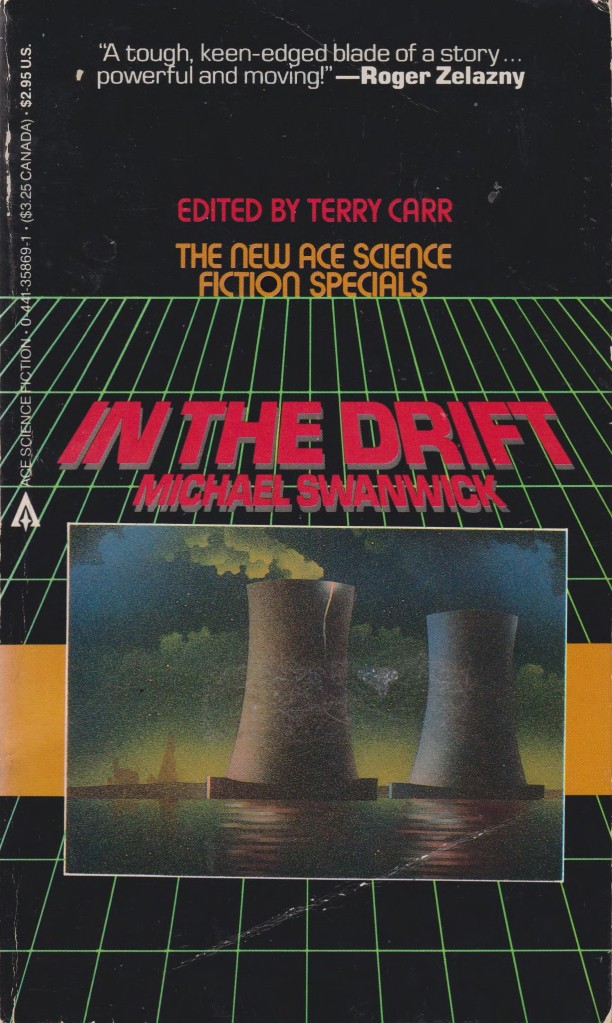
1. In the Drift, Michael Swanwick (1985)

From the back cover: “The meltdown at Three Mile Island created the death zone known as the Drift, where the sky burned dark blue and pink and where boneseekers destroyed bodies within.

Continue reading

Updates: Recent Science Fiction Purchases No. CCLXXX (Brian W. Aldiss, Judith Merril, Brian M. Stableford, and Chad Oliver)

Which books/covers/authors intrigue you? Which have you read? Disliked? Enjoyed?

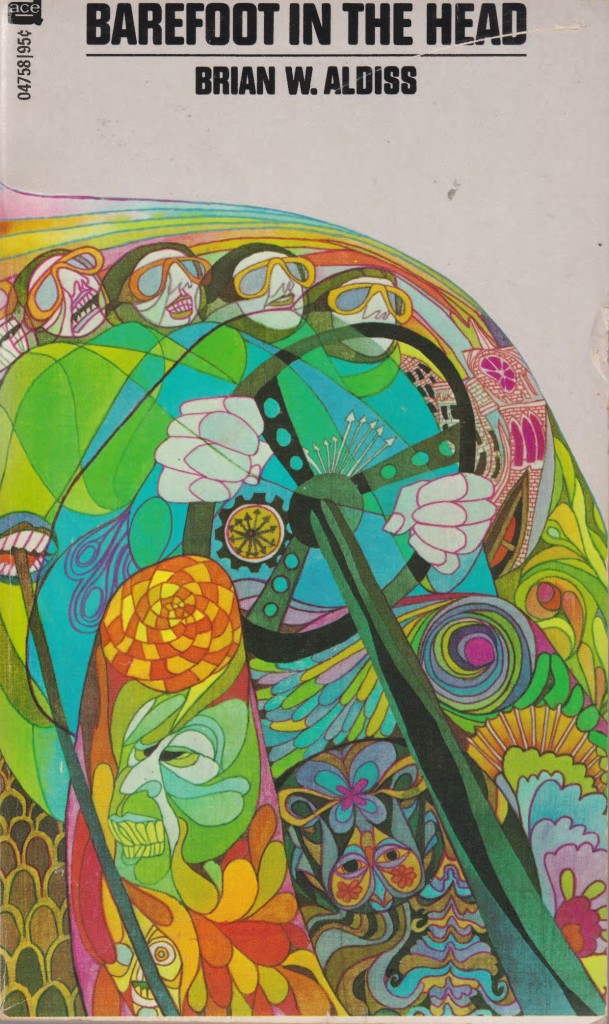
1. Barefoot In the Head, Brian W. Adliss (1969)

From the back cover: “AFTER THE ACID WAR…. Rising from the dust and ashes of a Europe still reeling from the effects of the great Acid War comes Colin Charteris, a futuristic Don Quixote riding the mechanized brontosaurus of the times.

Charteris tries desperately to make sense of the drugged, chaotic world he lives in, and finds himself hailed as the new Messiah. Stranger still, Charteris himself comes to believe this.

His adventures as he tries to save the world from its insanity are brilliantly told, a satiric science fiction comment on the future of mankind.”

Continue reading