Which books/covers/authors intrigue you? Which have you read? Disliked? Enjoyed?
1. When Gravity Fails, George Alec Effinger (1986)
Jim Burns’ cover for the 1988 edition
From the back cover: “In a decadent world of cheap pleasures and easy death, Marîd Audran has kept his independence and his identity the hard way. Still, like everything else in the Budayeen, he is available …for a price.
Here’s to a happy 2024! I hope you had a successful reading year. Maybe you pulled down some dusty tome that you’ve wanted to dive into for a decade. I’d like to imagine you finally picked up a book I raved about in years past that you acquired with great anticipation but never opened. Whether you are a lurker, occasional visitor, or a regular commenter, thank you for your continued support and wonderful conversation.
What were your favorite vintage SF reads–published pre-1985–of 2023? Let me know in the comments.
Continuing a trend, I read only a handful of novels this year. Instead, my obsessions focused on my science short story review initiatives (listed below), collections, and histories of the science fiction genre. Without further ado, here are my favorite novels and short stories I read in 2023 with bonus categories. I made sure to link my longer reviews where applicable if you want a deeper dive into the rich seam of science fictional gems.
Check out last year’s rundown if you haven’t already for more spectacular reads. I have archived all my annual rundowns on my article index page if you wanted to peruse earlier years.
My Top 5 Science Fiction Novels of 2023
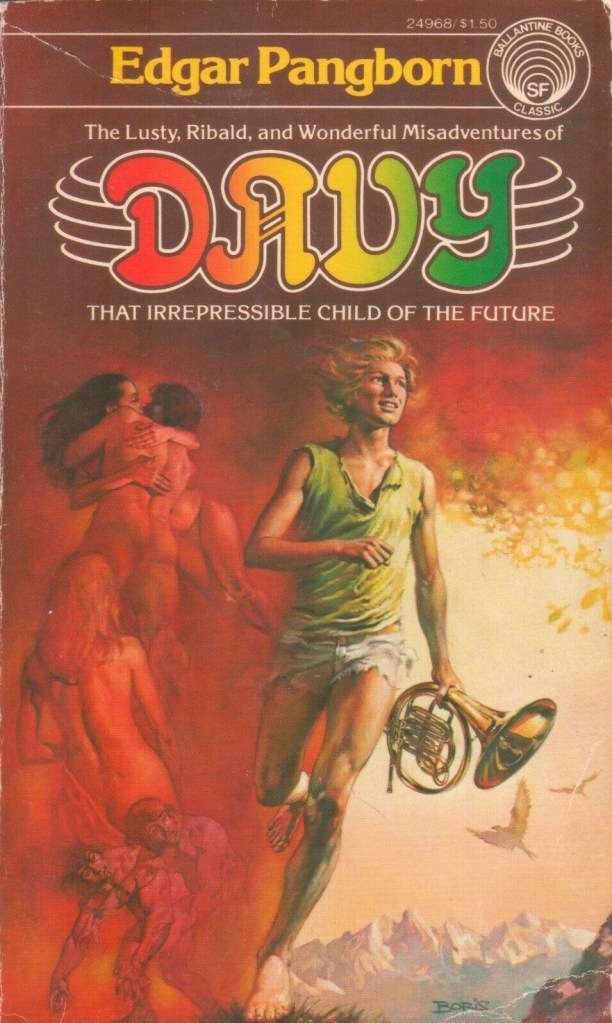
Boris Vallejo’s cover for the 1976 edition
1. Edgar Pangborn’s Davy(1964), 5/5 (Masterpiece): Nominated for the 1965 Hugo Award for Best Novel. Full review.
Happy holidays. I hope you’ve been able to squeeze in a bit of science fiction reading.
Which books/covers/authors intrigue you? Which have you read? Disliked? Enjoyed?
1. Those Who Watch, Robert Silverberg (1967)
Gene Szafran’s cover for the 1971 edition
From the back cover: “CRASH LANDING FROM THE STARS.
Only three humans would ever know that the blinding flash in the sky on that night in 1982 was an exploding flying saucer. Only they would learn the truth about THOSE WHO WATCH–about the alien beings who came into this world in a crash landing from the stars. THOSE WHO WATCH is the strange, seductive novel of three accidental colonists from outer space whose chance encounter with Earth triggers interplanetary conflict. It is also the most unusual love story ever written.”
What pre-1985 science fiction are you reading this week?
I’ve settled on a monthly schedule for this column. Check out the previous installment!
If you’re new and curious about my rationale for the perimeters of my site, check out this recent interview and podcast. And follow me on Mastodon if you don’t already as I no longer post on my Twitter account.
And, most importantly, let me know what pre-1985 SF you’ve been reading!
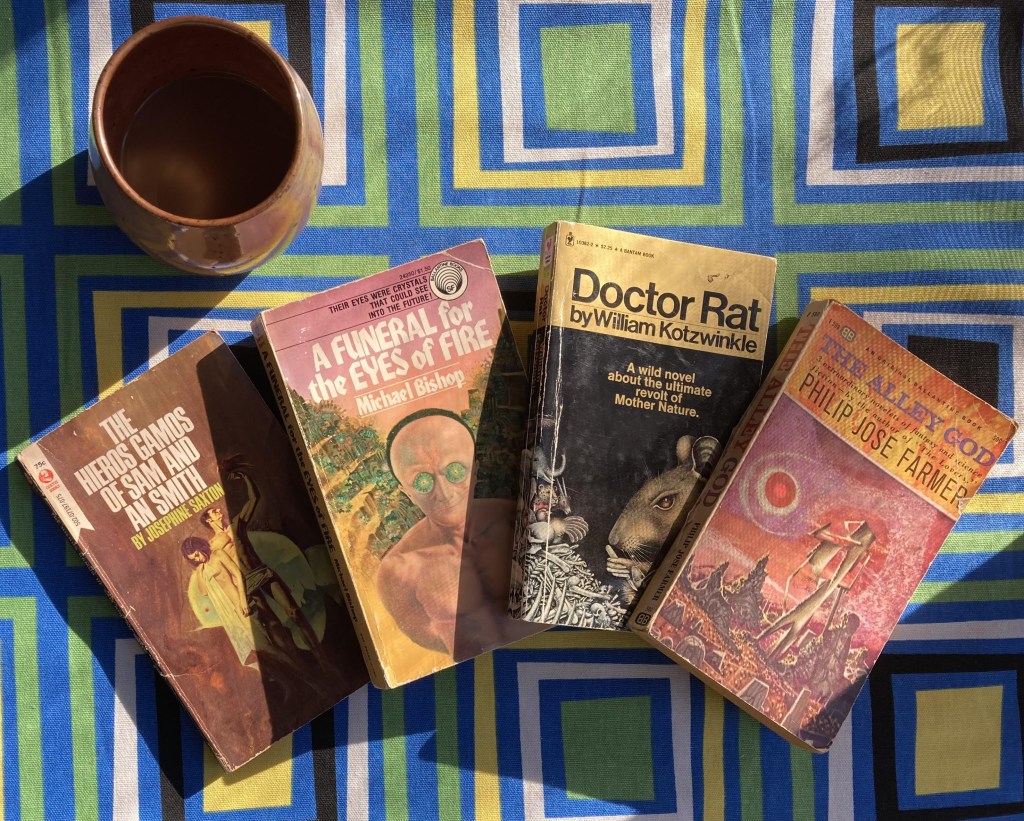
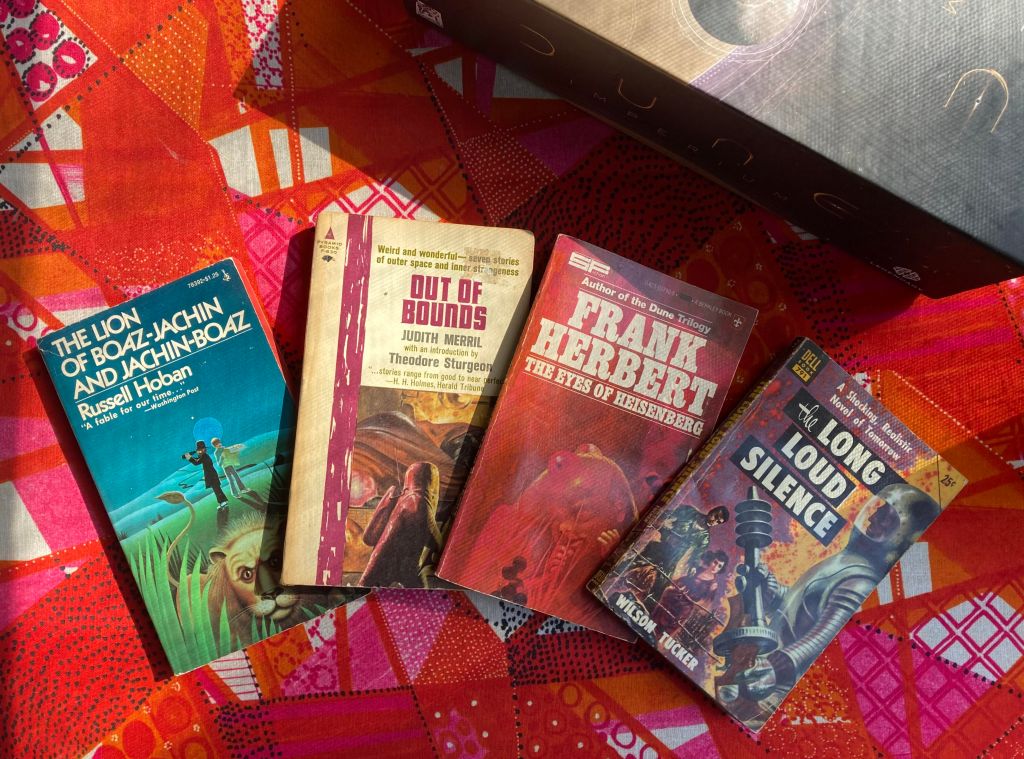
The Photograph (with links to reviews and brief thoughts)
Judith Merril’s collection contains one of the feminist visions of the 50s — “Daughters of Earth” (1952). Reworking a standard pulp plot of alien contact, Merril recasts the encounter through multiple generations of women in one family. She adeptly inverts the Old Testament trope of tracing generations through fathers. Simultaneously, the story itself is a metatextual collection of rewritten family documents containing the lessons necessary for future daughters in the family. Brilliant and heady stuff.
Barry N. Malzberg’s The Men Inside(1973) remains one of his strangest works. A perverse (and Freudian) metafictional (and literary) retelling of Otto Klement and Jerome Bixby’s Fantastic Voyage replete with filmic flashbacks… For Malzberg fans only — if you’ve missed this one, track it down.
And now for something completely different: Murray Leinster’s S.O.S From Three Worlds (1967). I am unsure why I enjoy Leinster’s Med Service so much. Sometimes positivist stories about spacemen devoted to selfless service solving medical crises–and reigning in rampant unchecked capitalism–with their friendly tormals (think furry mobile petri dishes) bring a bit of warmth to my bitter heart.
I sneakily consumed Joe Haldeman’s masterpiece The Forever War (1975) while working my first job as an oil change cashier. In-between angry customers and running domestic incidents, I relished every moment of Haldeman’s defiant Vietnam War satire. As I’ve only reviewed Mindbridge (1976) on the site (I’ve read a bunch more), I’ve been meaning to return his work — maybe a resolution for 2024.
Today I’ve reviewed the 30th and 31st story in my series on the science fictional media landscape of the future. In Edmond Hamilton’s “Requiem” (1962), the newsmen and women of the far future descend en masse to witness Earth’s death. And in John Anthony West’s snarky satire “George” (1961), the titular character’s body slowly atrophies while ensconced in the living room watching TV.
Lloyd Birmingham’s cover for Amazing Stories, ed. Cele Goldsmith (April 1962)
3.5/5 (Good)
Edmond Hamilton’s “Requiem” first appeared in Amazing Stories, ed. Cele Goldsmith (April 1962). You can read it online here.
In 2020, I read Hamilton’s brilliant “What’s It Like Out There?” (1952) which obliterated my ignorant view of his fiction. I asked some of my readers for other ruminative Hamilton works (i.e. not the pulp cosmos-exploding adventures he’s best known for) and “Friend of the Site” Brian Collins mentioned “Requiem.” And onto the queue, it went as it fit this series. Thank you!
What pre-1985 science fiction are you reading this week?
It’s been over a month since the previous installment. Sorry! While I’d like to keep a schedule, I find myself pathologically unable to do so. As with so much on my site, I’ll post continue to post these updates when I feel the inclination.
As these posts seem to bring in new readers, if you’re curious about my rationale for the perimeters of my site, check out this recent interview and podcast. And follow me on Mastodon if you don’t already as I no longer post on my Twitter account.
Let me know what pre-1985 SF you’ve been reading!
The Photograph (with links to reviews and brief thoughts)
What pre-1985 science fiction are you reading this week?
I apologize for the break in my update schedule. It’s been a month since the previous installment. Alas. As I say week after week, thank you for all the great conversation. The community that’s emerged over the years is one of the main reasons I keep writing. I’ve included a bit about the books in the photograph, birthdays from the last two weeks, and brief ruminations on what I’ve been reading and writing.
Note: My read but “waiting to be reviewed pile” is growing. Short rumination/tangents are a way to get through the stack before my memory and will fades. My website partially serves as a record of what I have read and a memory apparatus for future projects. Stay tuned for more detailed and analytical reviews.
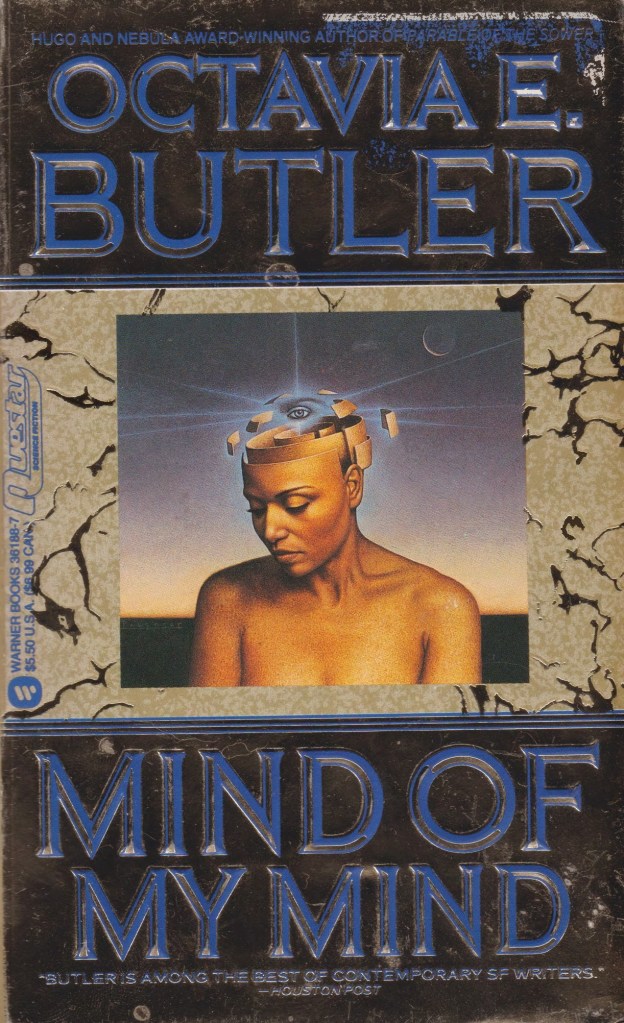
1. Mind of My Mind, Octavia E. Butler (1977)
John Jude Palencar’s cover for the 1994 edition
4/5 (Good)
Octavia E. Butler’s Mind of My Mind (1977) is the second-published and second chronological installment of her Patternist series of novels (1976-1984), that chart the dystopic and hyper-violent development (and destruction) of a telepathic society. The series also contains her disowned (and hard-to-afford without selling a child) novel Survivor (1978). I wish I had read Wild Seed (1980) first!
The immortal Doro, able to hone into those with telepathic talent and shift his essence into new human bodies at will, oversees a generations-old telepathic breeding project. The harrowing story follows one his many daughters, Mary, a rare active telepath (vs. latent), as she comes of age and begins to understand the role that she is designed to play. Doro preys on the downtrodden and abandons the majority of latent telepaths to live miserable lives, unable to filter out the emotions they sponge up. Doro pairs Mary with another active telepath named Karl in order to guide her through her transition. But something new appears in her mind, she seems to have created a pattern that compulsively draws in actives from across the country. And Doro begins to feel threatened by his own creation.



 Science Fiction and Other Suspect Ruminations