Updates: My 7 Favorite Metafictional Science Fiction Novels

Here are my seven favorite metafictional science fiction novels. By metafiction I’m referring to devices such as breaking the fourth wall (characters addressing the audience), the author addressing the reader, a story about a writer writing a story, a story containing another work of fiction within it, a work where the narrator reveals himself or herself as the author of the story, narrative footnotes, etc….

I’d love to hear your favorites (they don’t have to be novels)!

Obviously, these types of experimental works only appeal to some readers (especially fans of the sci-fi New Wave movement of the late 60s and early 70s) but I personally love seeing experimentation in an often — dare I say — stylistically stale genre.  Often, the metafictional aspects do not prevent authors from deploying traditional narratives.

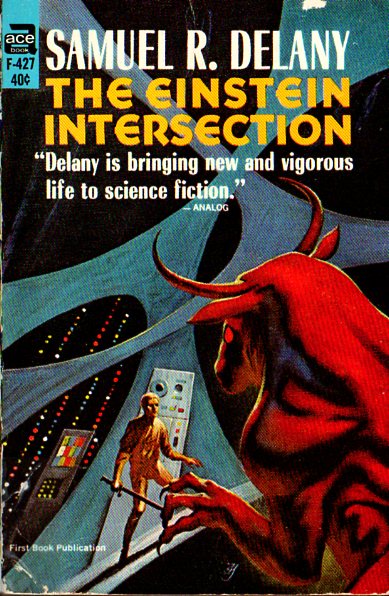
 71nOA-QfpuL NSTNINT1967 RVLTNSXKSK1977

 THIRNDRM1972 MNINTHCST1974

My top seven (and an honorable mention):

1. Beyond Apollo, Brian N. Malzberg (1972) (REVIEW) — what you read is most likely the novel written by the main character. However, he’s most likely insane so attempting to get AT the true nature of his voyage to Venus is purposefully layered… Complicating the matter is how unreliable of a narrator he is and the fact that he’s tells many versions of the same story. Malzberg pokes fun at pulp science fiction throughout — which he clearly enjoyed as a child.

2. Stand on Zanzibar, John Brunner (1968) — the metafictional aspects are rather hidden in this New Wave masterpiece (my single favorite sci-fi novel).  Brunner’s vast (in scope and depth) mosaic of invented book fragments, advertising jingles, and narrative portions are interspersed with news articles taken from his own day — including the school shooting at the University of Texas in 1966.  Of course, as readers we’re geared to imagining that everything Continue reading

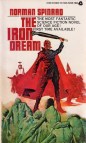
Book Review: The Iron Dream, Norman Spinrad (1972)

(Uncredited cover for the 1972 edition)

4.75/5 (Very Good)

Nominated for the 1973 Nebula Award

Simply put, Norman Spinrad’s The Iron Dream (1972) is a fantastic alternate history novel.  However, unlike a standard “what if this happened instead and now let’s write a traditional narrative” alternate history, The Iron Dream is organized around a powerful metafictional conceit which explicitly serves to satirize pulp science fiction and fantasy and condemn its lurid nature and Spinrad would argue, racist inclinations.

The premise is straightforward: after the Great War (WWI) Hitler comes to the United States (and thus WWII never happens) and becomes a science fiction illustrator.  Eventually he starts writing science fiction and articles in fanzines.  However, he’s considered by the establishment to be little more than a hack writer and lives the rest of his life in squalor.  It is only after he dies (from symptoms related to syphilis) that he receives any critical success. What you read is Hitler’s 1954 posthumous Hugo-winning novel (which he wrote in six weeks), The Lord of the Swastika,  along with a short pseudo-scholarly “afterward to the Continue reading

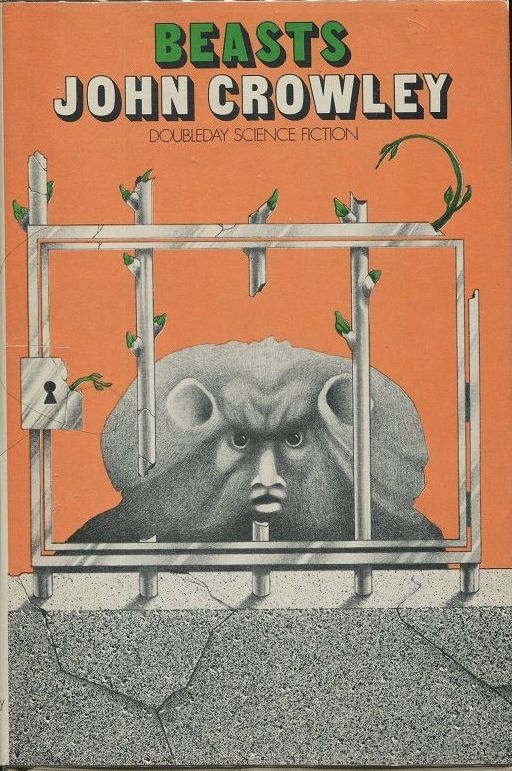
Book Review: Beasts, John Crowley (1976)

s-l1600-2.jpg

(John Cayea’s cover for the 1976 edition)

4.5/5 (Very Good)

“‘They want to kill us all, you know.  They’re trying […].  The government.  Men.  You.’  Still his eyes searched hers. ‘We’re no use to them.  Worse than useless.  Poachers.  Thieves.  Polygamists.  We won’t be sterilized.  There’s no good in us.  We’re their creation, and they’re phasing us out.  When they can catch us'” (33).

While reading John Crowley’s Beasts (1976) I was reminded of the life of Stephan Bibrowski (1891-1932) à la Lionel the Lion-faced Man.  Stephan was afflicted with hypertrichosis (most likely) which caused his entire body to be covered with hair.  His mother was so horrified at his appearance  — which she believed was caused because she saw her husband mauled by a lion while she was pregnant Continue reading

Adventures in Science Fiction Cover Art: On the Cross and Other Prophetic Imagery

Screen shot 2012-11-21 at 1.36.13 PM(Michael Whelan’s cover for the 1977 edition of The Gameplayers of Zan (1977), M. A. Foster)

On the cross, a future prophet (or false one)?  A martyr for a lost cause?  Or, some future priestly emissary of the Catholic church dispensing law on those gathered…. Perhaps some transformation of man to a godly state all hallowed and arrayed with religious accouterments of faith?  I’ve gathered a fun collection of science fiction prophets mostly decked out / depicted in distinctly Christian style.  

My favorite is Robert Foster’s cover for the 1970 edition of Behold the Man (1969) by Michael Moorcock…. And Gray Morrow’s cover for the 1970 edition of This Immortal (variant title: And Call Me Conrad) (1965) contains a fascinating color scheme — although there isn’t any mold on the figure’s face as Zelazny Continue reading

Book Review: The Second Trip, Robert Silverberg (serialized: 1971)

(Uncredited cover for the 1973 edition)

4.5/5 (Very Good)

Robert Silverberg’s late 60s and early 70s science fiction novels were often well-wrought ruminations on acute social alienation.   For example, in Dying Inside (1972) a man slowly loses his telepathic abilities and thus, a core component of his identity.  In  The Man in the Maze (1969), a man rendered incapable of interacting with other humans, goes into self-imposed exile.  In Thorns (1967), two manipulated/modified souls (a man surgically altered by aliens and a young girl who’s the virgin mother of hundreds of children), find strange solace in each other’s company.  In The World Inside (1971), our heroes feel disconnected from the unusual world they’ve grown up in — and rebel in their own ways.

The Second Trip (1971) subverts this theme.  Instead, our hero desperately attempts to re-integrate himself into society (as his persona has been designed to do), to come to grips with his laboratory Continue reading

Adventures in Science Fiction Cover Art: The Composite Cover (illustrating a multiplicity of scenes, stories, thematic elements) Part II

THTHRSDFTM1975

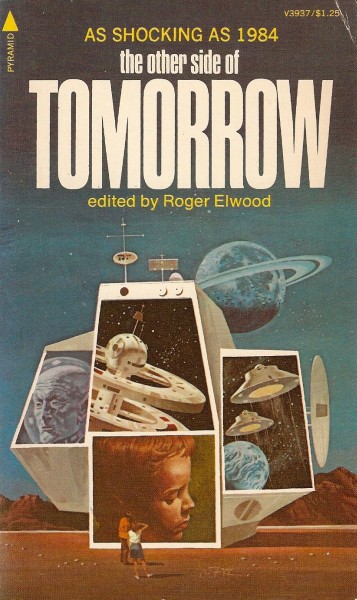
(Vincent di Fate’s cover for the 1975 edition of The Other Side of Tomorrow (1973), ed. Roger Elwood)

My second composite cover post — here’s a link to Part I if you missed it.  I’ve included a few covers by Vincent di Fate who has always been one of my favorite illustrators of the 1970s.  His cover for The Other Side of Tomorrow (1973) is top-notch.  A conglomerations of screens are placed on a barren stylized landscape where two figures gaze intently at them.  Each screen shows a different scene, a space station, spaceships, a boy’s contemplative face, an old man — and, a ringed planet looms in the background.  Whether or not the screens illustrate individual stories in the collection is unclear — regardless, the composite nature of the illustration is  Continue reading

Book Review: We Who Are About To…, Joanna Russ (1976)

(The hideous uncredited cover for the 1977 edition)

5/5 (Masterpiece: *caveats below*)

We Who Are About To… (1976) is the third of Joanna Russ’ science fiction novels I’ve read over the past few years. For some reason I was unable gather the courage to review The Female Man (1975) and might have been too enthusiastic about And Chaos Died (1970).  We Who Are About To… is superior to both (although, not as historically important for the genre as The Female Man).  This is in part because Russ refines her prose — it is vivid, scathing, and rather minimalist in comparison to her previous compositions — and creates the perfect hellish microcosm for her ruminations on the nature of history, societal expectation, memory,  and death.

Highly recommended for fans of feminist + literary Continue reading

Updates: Recent Science Fiction Acquisitions No. LVIII (Tiptree, Jr. + Shaw + Bamber + Rossiter)

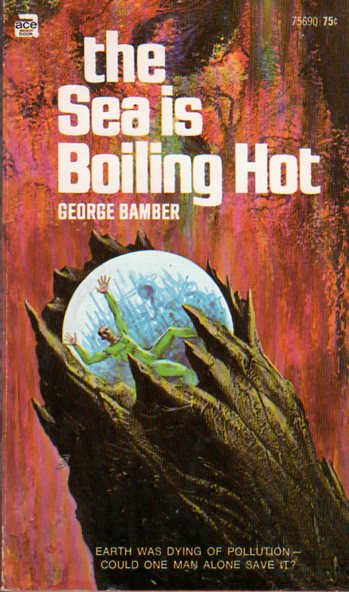
An eclectic grab bag of books…  The last remaining gifts from 2thD… And a few from bookstores I’ve visited over the past few months.  Two are complete mysteries — Bamber’s The Sea is Boiling Hot (1971) and Rossiter’s Tetrasomy Two (1974) — both author’s only published sci-fi novel.  I don’t have high hopes — although, the premise of the former is fantastic — domed cities and over pollution!

My second collection of Tiptree shorts — was impressed with a handful of stories in her most famous collection Ten Thousand Light-Years from Home (1973).  I find her work hit or miss…  Unfortunately, there are some books that I can never convince myself to review.  Although published in the 80s, Byte Beautiful (1985) contains mostly 70s stories so it is firmly within my era….

And Shaw, well, Shaw is Shaw — utterly average but always (at least so far) suprisingly satisfying…

1. The Sea is Boiling Hot, George Bamber (1971) (MY REVIEW)

(Jack Gaughan’s cover for the Continue reading

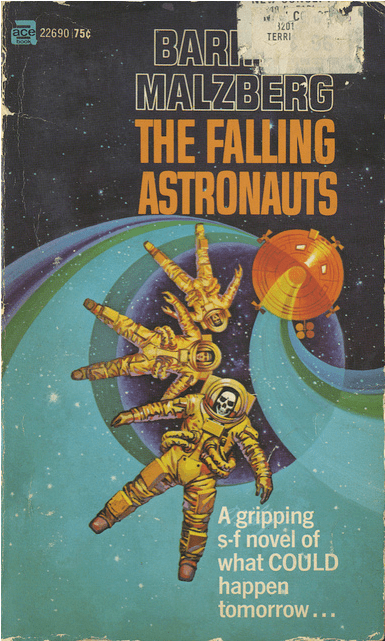
Book Review: The Falling Astronauts, Barry N. Malzberg (1971)


(Davis Meltzer’s cover for the 1971 edition)

4.25/5 (Good)

The Falling Astronauts (1971) (from now on FA) is the first in Barry N. Malzberg’s thematic trilogy on the American space program.  Although not as engaging or experimental as the other two masterpieces in the sequence — Beyond Apollo (1972) and Revelations (1972), FA is highly readable and a notable work in Malzberg’s extensive corpus.  FA attempts to debunk the so-called cult (in part propagated by the media) of the astronaut (and his ideal family) and in so doing questions the ultimate purpose of the space Continue reading