Short Story Reviews: Nancy Kress’ “The Earth Dwellers” (1976), “A Delicate Shade of Kipney” (1978), and “And Whether Pigs Have Wings” (1979)

Back in December 2019, I read An Alien Light (1987), my first science fiction work by Nancy Kress (1948-). I was so impressed with the novel, a “bleak and powerful rumination on violence” within a “new alien architecture,” that I placed it on my Best Reads of 2019 list. Like my recent rumination on Melisa Michaels’ first three published short stories, I thought I’d do the same with Kress. I relentlessly seek to map another feature in the fascinating territory of 50s-70s SF.

Let me know which Kress fictions–perhaps from much later in her career–resonate with you.


3.5/5 (Good)

“The Earth Dwellers” first appeared in Galaxy Science Fiction, ed. James Baen (December 1976). You can read it online here.

Continue reading

Future Media Short Story Reviews: Fritz Leiber’s “The Girl with the Hungry Eyes” (1949) and “A Bad Day for Sales” (1953)

The fifth and sixth story in my series on the science fictional media landscape of the future. Fritz Leiber imagines a sinister conjuration of the Girl behind the advertisement and a robot who wanders a post-nuclear landscape selling soda to the charred victims.

Previously: Brian W. Aldiss’ “Panel Game” (December 1955).

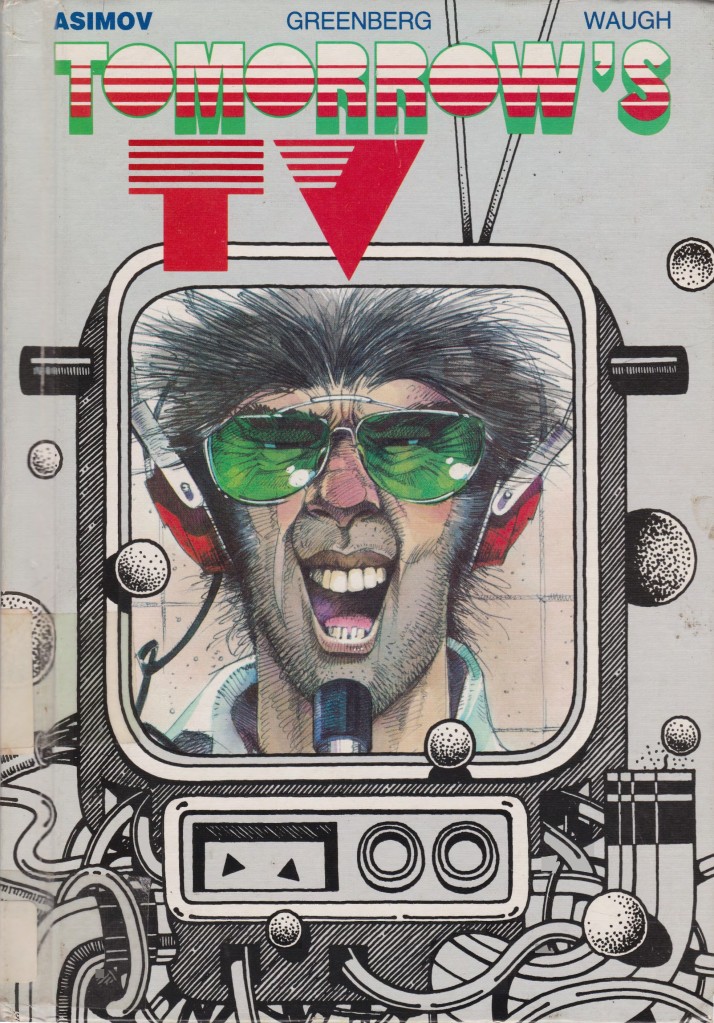
Next Up: Tomorrow’s TV (1982). Stories by Isaac Asimov, Jack C. Haldeman II, Ray Bradbury, Robert Bloch, and Ray Nelson.

4.5/5 (Very Good)

Fritz Leiber’s “The Girl with the Hungry Eyes” (1949) first appeared in The Girl with the Hungry Eyes, and Other Stories (1949). I read it in his collection The Secret Songs (1968). You can read it online here.

“The Girl with the Hungry Eyes” explores the post-WWII economic boom as television and rapidly growing suburbs expanded the reach and power of advertising. Cold War rhetoric promoted consumerism as a key component of the American Way of Life (source).

A tale of erotic obsession and terror, “The Girl with the Hungry Eyes” imagines a fantastical conjuration of the archetypal advertising Girl selling every conceivable product. Her face appears on billboards across the urban expanse. Her torso or limb holds the object to be marveled at. And her eyes, “the hungriest eyes in the world” (131), tear into the soul and take something away with their gaze. Fritz Leiber’s terrified narrator, the “poor damned photographer” (129) who unleashed her on the world and fell for her spell, confesses “there are vampires and vampires, and not all of them suck blood” (128).

Continue reading

Future Media Short Story Review: Brian W. Aldiss’ “Panel Game” (1955)

The fourth story in my series on the science fictional media landscape of the future. Aldiss spins a wild satire of a television screen that views you!

Previously: Avram Davidson and Sidney Klein’s “The Teeth of Despair” (May 1961).

Next up: Two Fritz Leiber stories!

“The Girl with the Hungry Eyes” (1949) and “A Bad Day for Sales” (July 1953).

3.75/5 (Good)

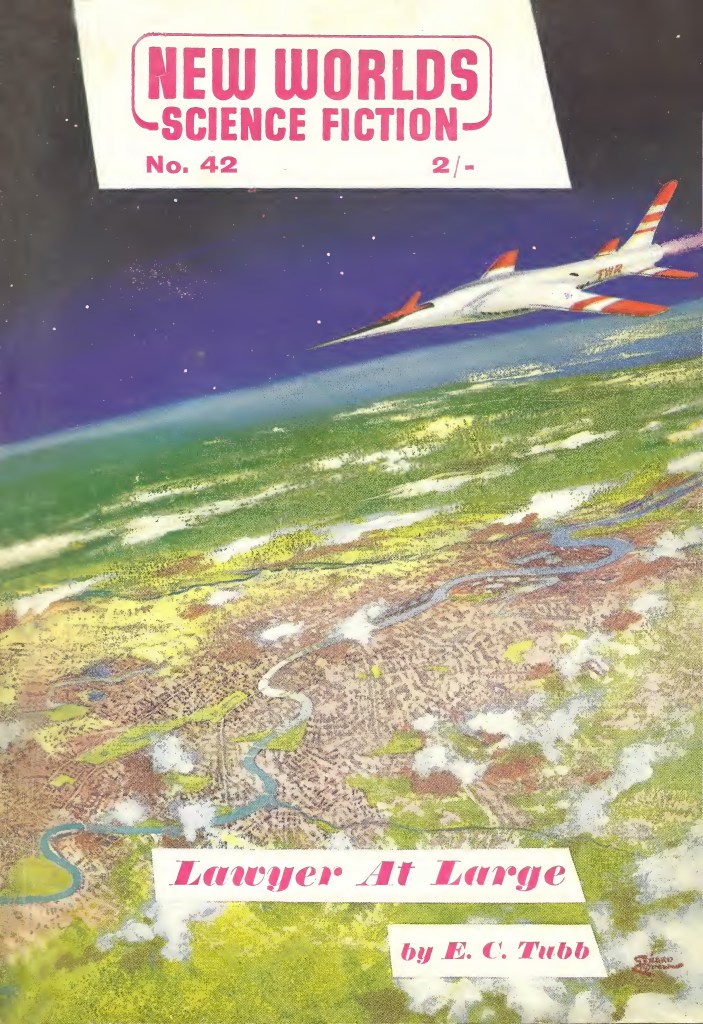
Brian W. Aldiss’ “Panel Game” first appeared in New Worlds Science Fiction, ed. John Carnell (December 1955). You can read it online here.

At 8:12 pm on September 22nd, 1955 the UK’s first TV advertisement–for Unilever’s Gibb’s S. R. [Sodium ricinoleate] toothpaste–aired on ITV (source). You can watch the commercial here with its toothpaste tube suspended in ice, a model excitedly brushing, and a hilarious graph that does not even pretend to convey data. Just a year earlier, the Television Act of 1954 allowed the formation–to great debate–of ITV, the first commercial television network in the UK.

Continue reading

Updates: Recent Science Fiction Purchases No. CCLXXXVI (Vonda N. McIntyre, Thomas Burnett Swann, William Melvin Kelley, and a World’s Best Science Fiction Anthology)

Which books/covers/authors intrigue you? Which have you read? Disliked? Enjoyed?

1. Where is the Bird of Fire?, Thomas Burnett Swann (1970)

From the back cover: “Were the mythical monsters our ancestors spoke of so often more than fantasy? Is it not probable that these semi-human races existed–and that only human vanity has blurred their memory?

Continue reading

Updates: My 2021 in Review (Best SF Novels, Best SF Short Fiction, and Bonus Categories)

2021 was the best year in the history of my site for visits and unique viewers! I suspect this increasingly has to do with my twitter account where I actively promote my site vs. a growing interest in vintage SF. I also hit my 1000th post–on Melisa Michaels’ first three published SF short stories–in December.

As I mention year after year, I find reading and writing for the site—and participating in all the SF discussions it’s generated over the year—a necessary and greatly appreciated salve. Thank you everyone!

I read very few novels this year. Instead, I devoted my attention to various science short story reviews series and anthologies. Without further ado, here are my favorite novels and short stories I read in 2021 (with bonus categories).

Tempted to track any of them down?

And feel free to list your favorite vintage (or non-vintage) SF reads of the year. I look forward to reading your comments.


My Top 7 Science Fiction Novels of 2021 (click titles for my review)

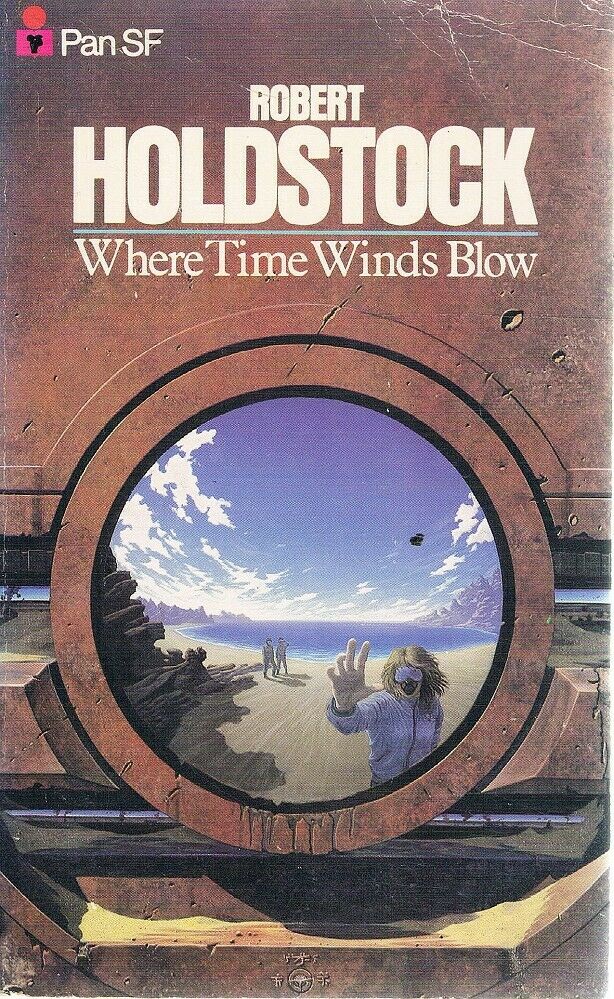
1. Where Time Winds Blow (1981), Robert Holdstock, 5/5 (Masterpiece): Holdstock’s vision is a well-wrought cavalcade of my favorite SF themes–the shifting sands of time, the pernicious maw of trauma that threatens to bite down, unreliable narrators trying to trek their own paths, a profoundly alien planet that compels humanity to construct an entirely distinct society… It’s a slow novel that initially masquerades as something entirely different. Just like the planet itself.

Continue reading

Short Book Reviews: Octavia E. Butler’s Dawn (1987), Robert Holdstock’s Where Time Winds Blow (1981), and Philippe Curval’s Brave Old World (1976, trans. 1981)

Note: My read but “waiting to be reviewed pile” is growing. Short rumination/tangents are a way to get through the stack before the new year and my memory/will fades. Unfortunately, I left two of my favorite reads of the year for last. Stay tuned for more detailed and analytical reviews.

1. Where Time Winds Blow, Robert Holdstock (1981)

5/5 (Masterpiece)

I cannot properly review Where Time Winds Blow (1981). Sometimes, while perambulating the interwebs, I encounter a singular encapsulation of a text’s brilliance that defeats all my own attempts to write constructively about a book. I blame Andrew Darlington’s brilliant review/article on Robert Holdstock contextualizing the novel within his early oeuvre. The short paragraph below–an attempt to convince you to procure a copy–is indebted to his review. Please read his review! There are fan writers and then there are fan writers. Darlington should receive a Hugo nod.

Continue reading

Book Review: To Die in Italbar, Roger Zelazny (1973)

3/5 (Average)

Roger Zelazny described To Die in Italbar (1973) as the one novel he would “kill off” if he could! Here’s a bit of context for his condemnatory statement. In early 1969, Zelazny quit his U.S. Social Security Administration job to become a full-time writer. Yes, he wrote Lord of Light (1967) and This Immortal (1966) among many others after work! He quickly wrote To Die in Italbar in May 1969 to complete a contract but the novel was rejected by the press. Years later Zelazny added new material and finally published the novel in 1973 (citation). Haste and filler characterize the final product. That said, if action-packed SF adventure with bizarre ideas is something you are looking for and you already enjoy Zelazny, pick this one up.

Continue reading

Updates: Recent Purchases No. CCLXXXIV (Ray Bradbury, H. R. F. Keating, Judith Moffett, New Dimensions anthology)

Which books/covers/authors intrigue you? Which have you read? Disliked? Enjoyed?

1. The Martian Chronicles, Ray Bradbury (1950)

From the back cover: “A MAGNIFICANCTLY ILLUSTRATED EDITION OF THE MARTIAN CHRONICLES WHICH MASTERFULLY ENHANCES THE CLASSIC WONDER AND TERROR BY THE WORLD-RENOWNED AUTHOR OF THE ILLUSTRATED MAN RAY BRADBURY.

Continue reading

Short Book Reviews: Jack Vance’s The Languages of Pao (1958), Kit Reed’s Fort Privilege (1985), and John Shirley’s Transmaniacon (1979)

Note: My read but “waiting to be reviewed pile” is growing. Short rumination/tangents are a way to get through the stack before my memory and will fades. Stay tuned for more detailed and analytical reviews.


1. The Languages of Pao, Jack Vance (1958)

3.25/5 (Vaguely Good)

Since I started my site in 2011, I’ve soured a bit on Jack Vance’s brand of planetary adventure in richly realized and exotic worlds. I doubt I’d currently rate novels like Showboat World (1975) or The Blue World (1966) as highly as I did back then. One of more appealing elements of having a single project for so long is my ability to track my evolving views on genre. That said, I’d classify Wyst: Alastor 1716 (1978) and The Languages of Pao (1958) amongst his most conceptually ambitious novels I’ve read so far and worth tracking down. For a full list consult my index. Note: I read but never reviewed Dying Earth (1950).

Continue reading