Book Review: Of All Possible Worlds, William Tenn (1955)

This collection contains the third post in a loose series on SF short stories that are critical in some capacity of space agencies, astronauts, and the culture which produced them. After reading today’s installment, I decided to review the entire collection!

Previously: Edmond Hamilton’s “What’s It Like Out There?” (1952).

Up next: Katherine MacLean’s “Echo” (1970).

Richard Powers’ cover for the 1955 edition

3.25/5 (collated rating: Vaguely Good)

In the early days of my website, I reviewed two volumes by William Tenn–his sole novel Of Men and Monsters (1968) and his collection The Human Angle (1956). Of All Possible Worlds (1955) is his first published collection. The presence of “Down Among the Dead Men” (1954), “The Liberation of Earth” (1953), and “The Custodian” (1953) make this a must purchase (despite the handful of duds that drag down the overall rating) for fans of polished 50s satires in wrecked future worlds. Tenn’s narrators Continue reading

Updates: My 2020 in Review (Best SF Novels, Best SF Short Fiction, and Bonus Categories)

I’m not sure what I can add about the general sentiment of 2020. It was awful in every way. Here’s to a better 2021.

Reading and writing for the site—and participating in all the SF discussions it’s generated over the year—was a necessary and greatly appreciated salve. Thank you everyone!

I also have one (hopefully more) review coming out in The Magazine of Fantasy and Science Fiction (the Curiosities column) in the spring. I’ve not included my reviews of those esoteric SF novels in this particular post.

Without further ado, here are my favorite novels and short stories I read in 2020 (with bonus categories). Tempted to track any of them down?

And feel free to list your favorite vintage (or non-vintage) SF reads of the year. As always, I look forward to reading your comments.


My Top 10 Science Fiction Novels (click titles for my review)

Tim White’s cover for the 1983 edition

1. Electric Forest, Tanith Lee (1979), 5/5 (Masterpiece): Tanith Lee spins a gauzy, sinister, and terrifying tale of manipulative resurrection. A brilliant inventor projects the mind of a grotesque social outcast into a new transcendent Continue reading

Short Book Reviews: M. John Harrison’s A Storm of Wings (1980), Algis Budrys’ Some Will Not Die (1961, rev. 1978), and William Greenleaf’s The Tartarus Incident (1983)

James Gurney’s cover art detail for the 1st edition of William Greanleef’s The Tartarus Incident (1983)

Note: My read but “waiting to be reviewed pile” is growing. Short rumination/tangents are a way to get through the stack. Stay tuned for more detailed and analytical reviews.

1. A Storm of Wings, M. John Harrison (1980)

Michael Whelan’s cover for the 1982 edition

4.5/5 (Very Good)

A Storm of Wings (1980) is the second volume, after The Pastel City (1971), of the Viriconium sequence. Far more dense and oblique than its predecessor, A Storm of Wings revels in the creation of a surreal urban tapestry–redolent with decay and decadent excess. Two Reborn Men (Fay Glass and Alstath Fulthor) attempt to animate the somnolent city of Viriconium Continue reading

Short Story Review: Edmond Hamilton’s “What’s It Like Out There?” (1952)

This is the second post in a loose series on SF short stories that are critical in some capacity of space agencies, astronauts, and the culture which produced them.

Thank you “Friend of the Site” Jennifer Jodell for alerting me to the existence of this gem, our discussion, and for providing a summary  of  Damon Knight’s 1962 introduction.

Previously: Walter M. Miller, Jr.’s “Death of a Spaceman” (variant title: “Memento Homo”) (1954).

Up Next: William Tenn’s “Down Among the Dead Men”  (1954)

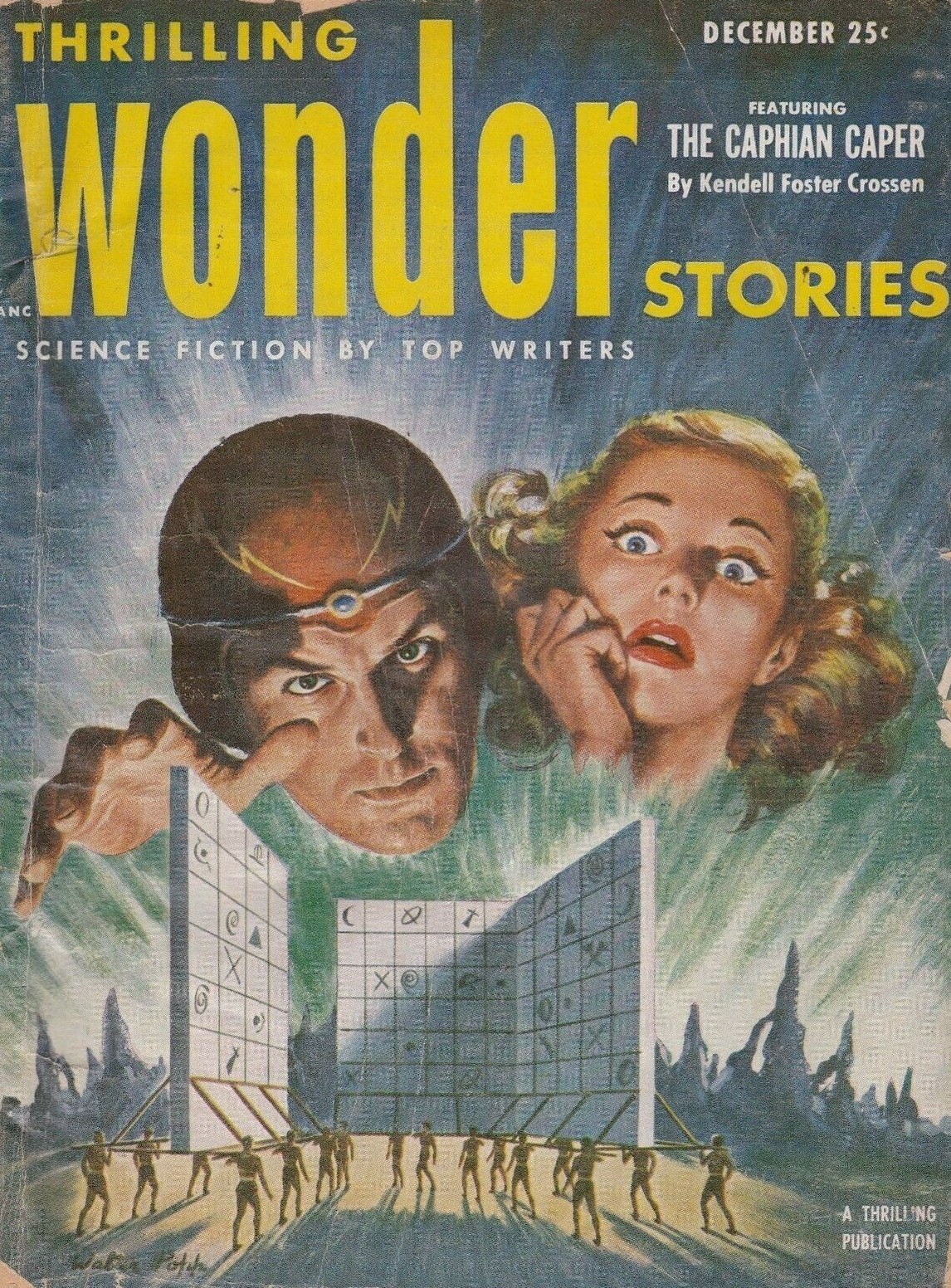
Walter Popp’s cover for the December 1952 issue

5/5 (Masterpiece)

In the December 1952 issue of Thrilling Wonder Stories, Samuel Hines (the editor) presents “What’s It Like Out There?” as the culmination of Edmond Hamilton’s Phoenix-like evolution from a “primitive period” of writing extravagant pulps to Continue reading

Updates: Recent Science Fiction Purchases No. CCLXIV (Ben Bova, Marjorie Bradley Kellogg, Robert Wilfred Franson, Barry N. Malzberg and Edward L. Ferman edited anthology)

As always which books/covers/authors intrigue you? Which have you read? Disliked? Enjoyed?

Ben Bova (1932-2020) passed away a few weeks ago due to Covid-19 complications (and a stroke) (Tor Remembrance Article). While I haven’t had the best luck with his work, if you have any fond memories of him or reading his SF, let me know in the comments. I purchased his first collection Forward in Time (1973) (below) in his honor.

1. Final Stage: The Ultimate Science Fiction Anthology, ed. Barry N. Mazlberg and Edward L. Ferman (1974)

David Pelham’s cover for the 1975 edition

From the back cover: “Thirteen fantastic new stories on the classic themes of Science Fiction.” See Continue reading

Book Review: Albion! Albion! (variant title: Singleton’s Law), Dick Morland (aka Reginald Hill) (1974)

KRUDDART’s cover for the 1986 edition

3.25/5 (Vaguely Good)

Reginald Hill (1936-2012), best known for his crime and mystery novels, wrote two science fiction works under the name Dick Morland. Albion! Albion! (1974) charts the rise of fascism in the UK. The twist to the standard formula? The four main football clubs (Athletic, Wanderers, United and City) depose the government.  The football games are long disbanded. Instead, each team’s supporter groups, managers, insignia, and chants become vehicles of fascist ideology. 

As England devolves into tribalism and turns away from its European neighbors, the Continue reading

Short Story Review: Mari Wolf’s “The Statue” (1953)

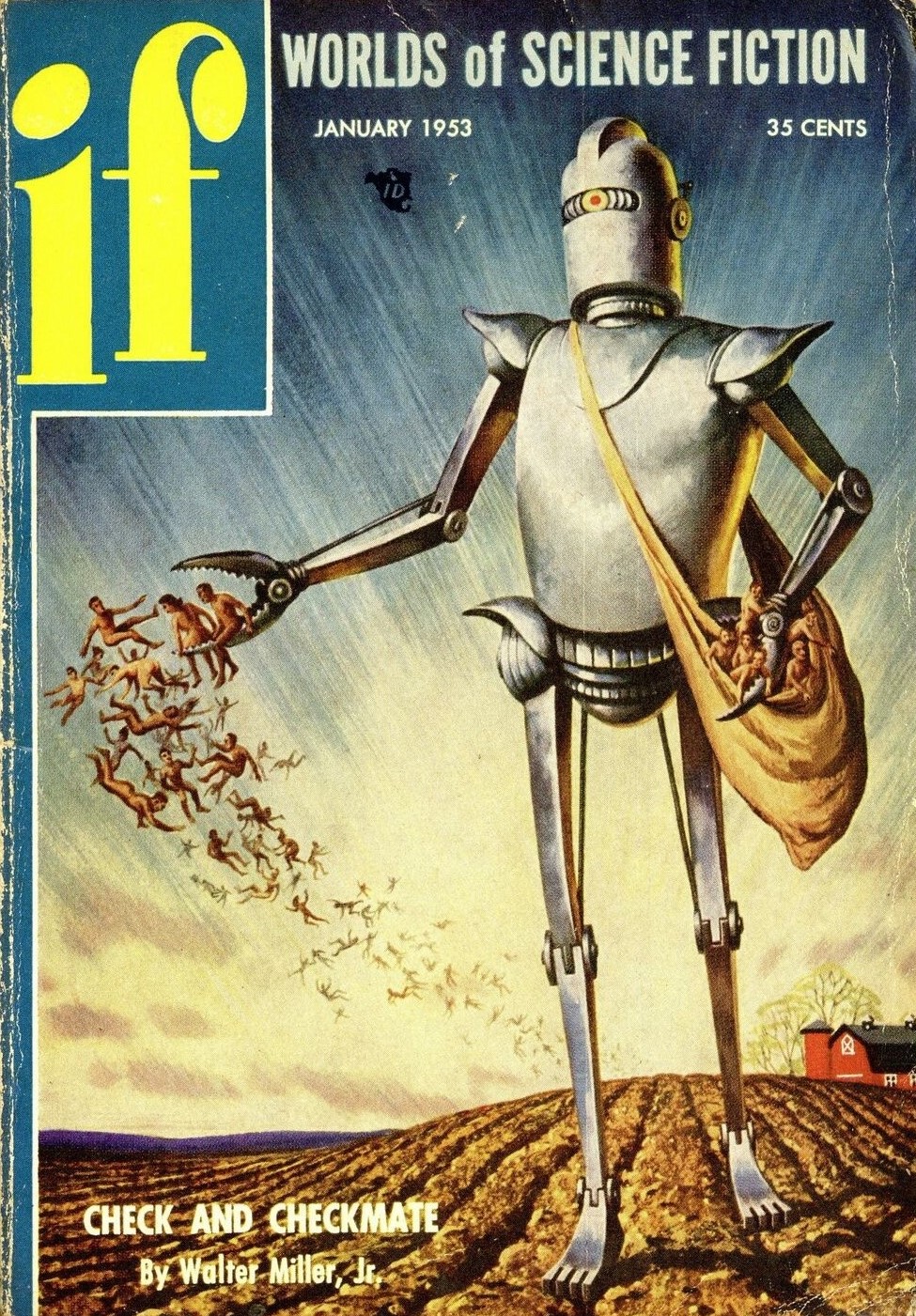
Anton Kurka’s cover for the January 1953 issue

I thought Mari Wolf’s “The Statue” (1953), a rumination on mortality, might find a home in my series on SF stories that are critical in some capacity of space agencies, astronauts, and the culture which produced them. However, due to its overall positivism–despite the blue-collar grit and focus on death–it didn’t fit. I would like to thank “Friend of the Site” Mark Louis Baumgart (see comments) for pointing me towards a new author!


Mari Wolf (1927-), best known for her contributions to fandom including the Fandora’s Box column (1951-1956) in Imagination, published seven short stories between 1952 and 1954, six of which appeared in If. Unfortunately, after her divorce in 1955 from fellow SF author Rog Phillips (1909-1966), she stopped publishing SF. Here is a brief bibliographic blurb on her life, career, and SF endeavors. Ted White Continue reading

Short Story Review: Walter M. Miller, Jr.’s “Death of a Spaceman” (variant title: “Memento Homo”) (1954)

This is the first post in a loose series on SF short stories I’ll be reviewing that are critical in some capacity of space agencies, astronauts, and the culture which produced them.

If you know any stories that might fall into this category published before 1980, let me know in the comments! I have compiled an extensive list (from Barry N. Malzberg to John Sladek) but my encyclopedic tendencies are mere delusions of completeness…

Up next: Edmond Hamilton’s “What’s It Like Out There?” (1952).


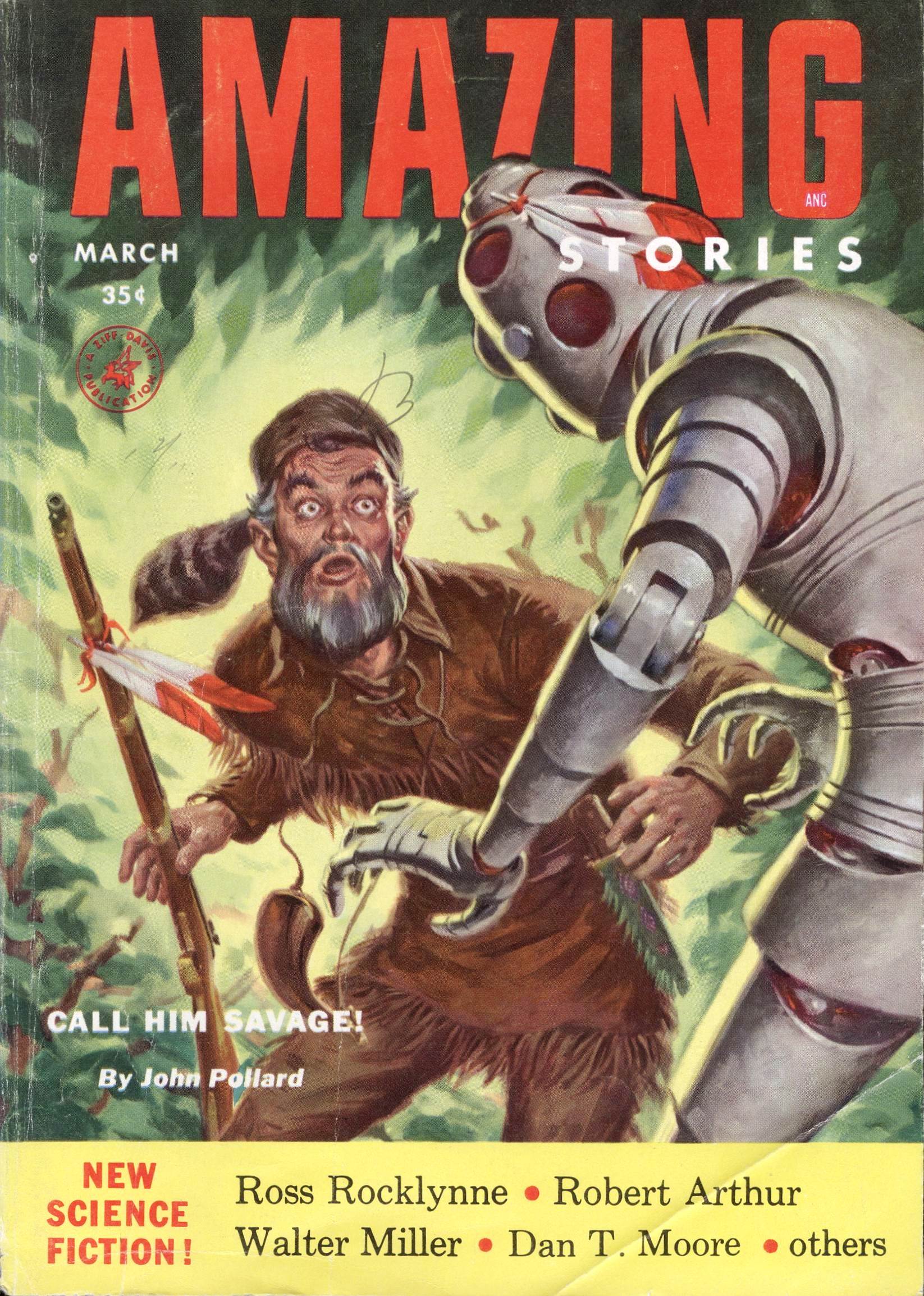
Amazing Stories, March 1954

Clarence Doore’s cover for the March 1954 issue

5/5 (Masterpiece)

Walter M. Miller, Jr. (1923-1996), best known for his Hugo-winning fix-up novel A Canticle for Leibowitz (1959), wrote a fascinating range of short fictions between 1951-1957. I’ve previously reviewed a handful in The View From the Stars (1965). However, “Death of a Spaceman” (1954), a complex exploration of death and the delusions we tell ourselves and ones we love, might be the best of his I’ve Continue reading

Updates: Recent Science Fiction Purchases No. CCLXIII (Elizabeth A. Lynn, Romanian SF Anthology, Eastern European SF Anthology, and Barry N. Malzberg)

As always which books/covers/authors intrigue you? Which have you read? Disliked? Enjoyed?

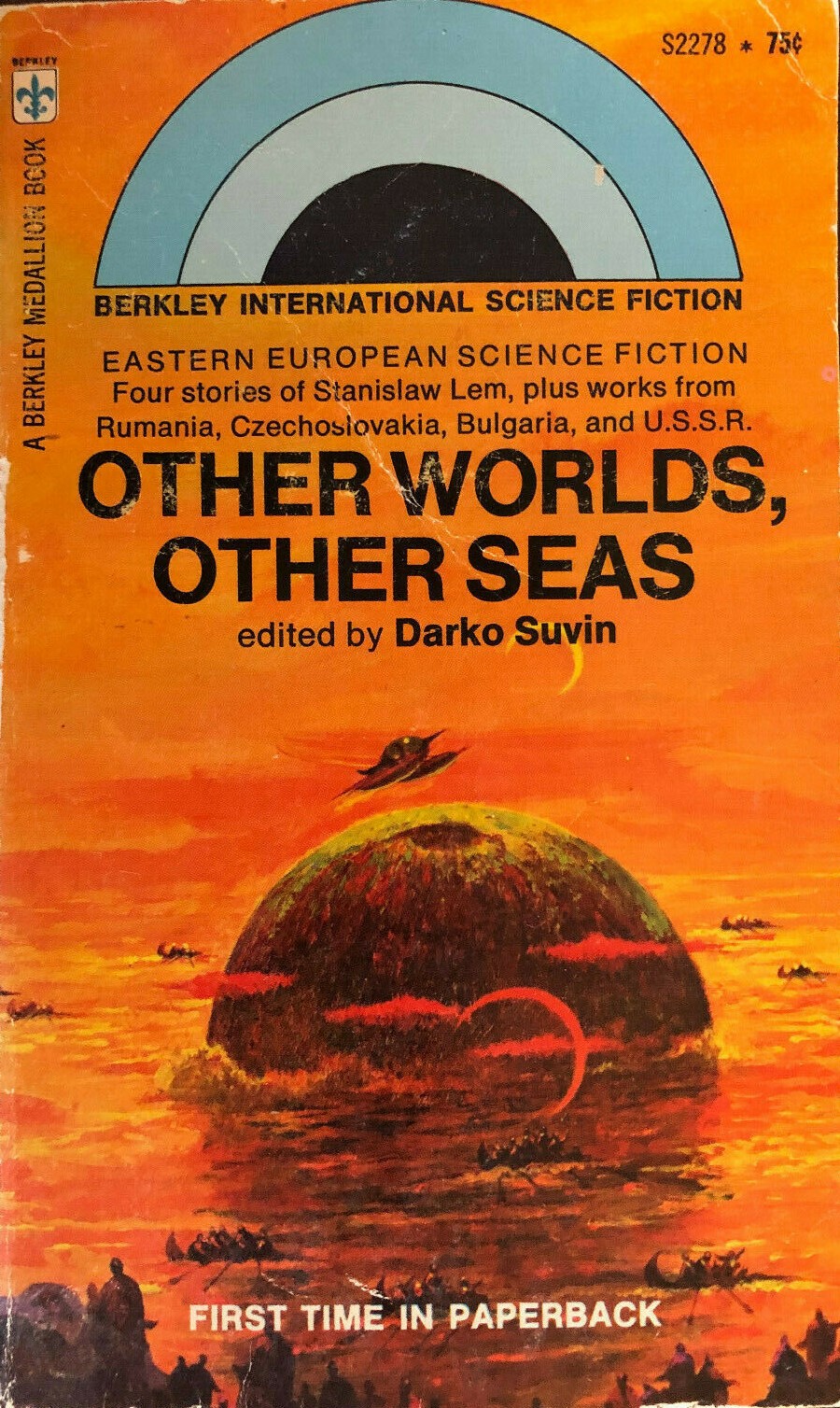
1. Other Worlds, Other Seas, ed. Darko Suvin (1970)

Paul Lehr’s cover for the 1972 edition

From the back cover: “Darko Suvin was born in Zagreb, Yugoslavia in 1930. An internationally known critic of literature and theater, he is the author of seven books of criticism including POSSIBLE WORLDS—An outline of Science-Fiction and Utopias.

Stanislaw Lem of Poland, author of SOLARIS, is only the most famous of a burgeoning group of Eastern European writers. His contribution to OTHER WORLDS, OTHER SEAS—four brilliant stories—is a treat to his hundreds of thousands of American admirers. But a whole body of first rate s-f is now being produced in the socialist countries by equally gifted writers such as Josef Nesvadba, Anatoliy Dneprov, and Anton Continue reading