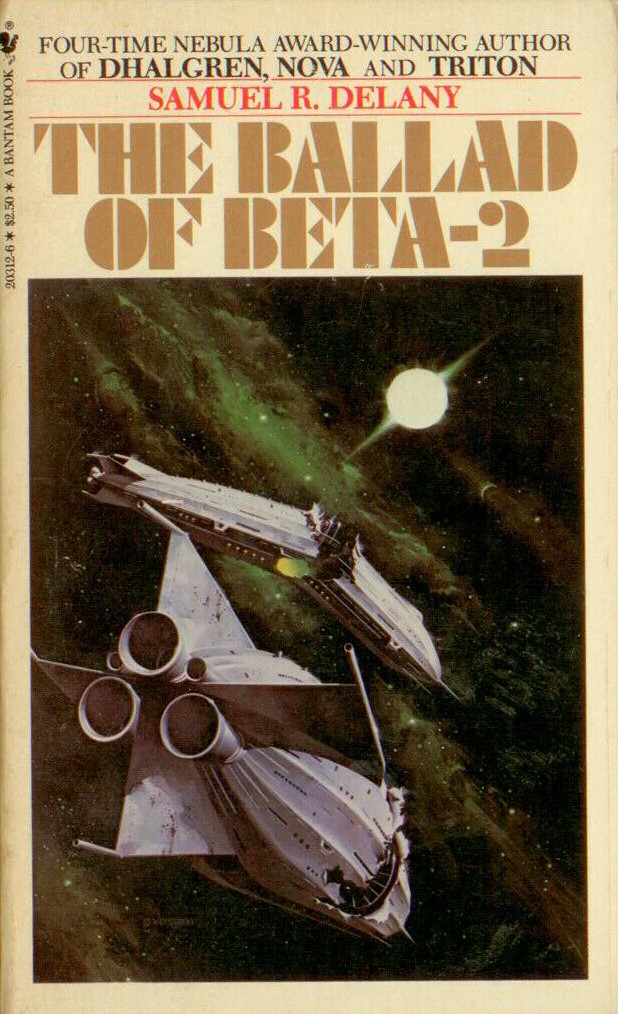
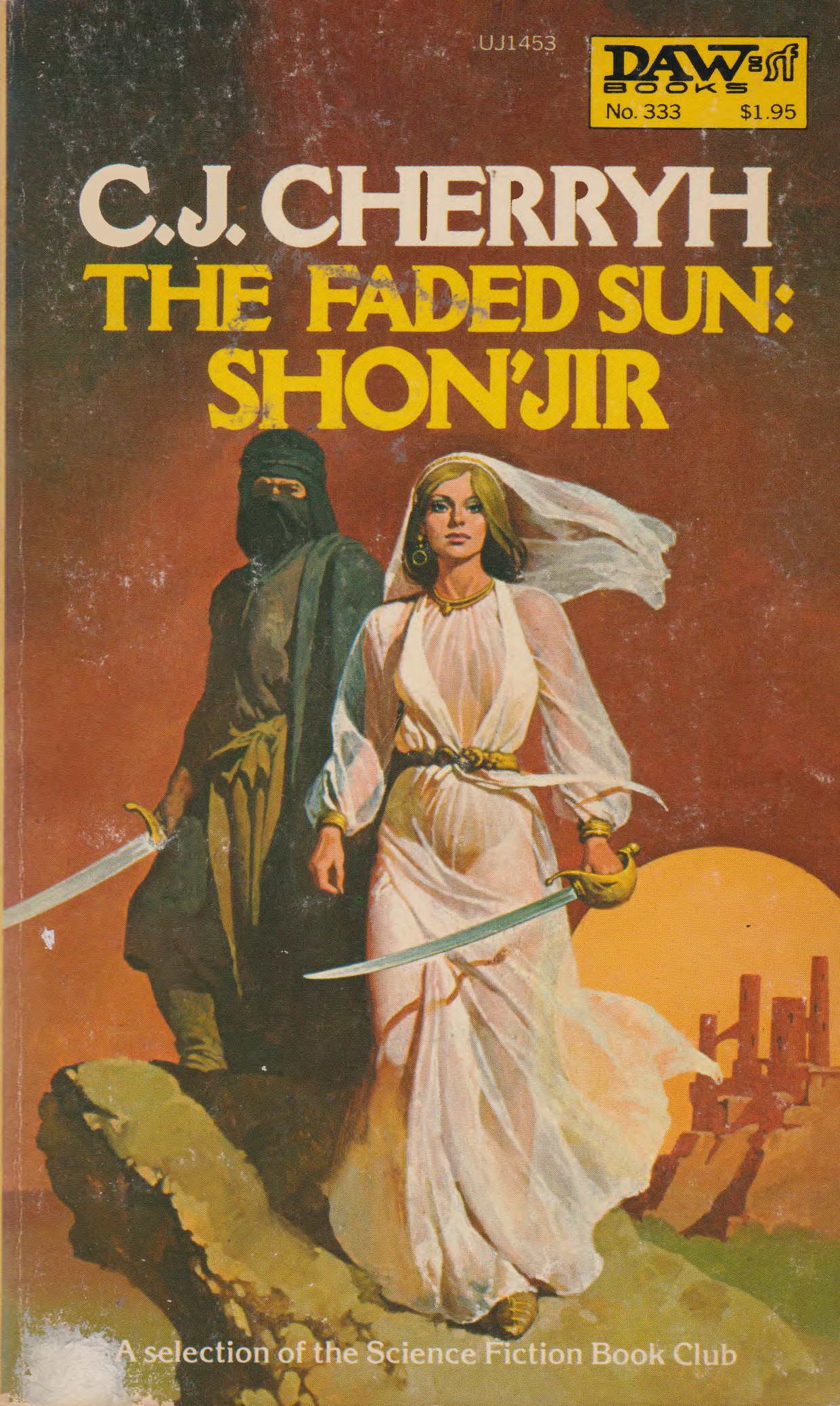
Book Review: The Night of Kadar, Garry Kilworth (1978)

(Paul Alexander’s cover for the 1980 edition)

4/5 (Good)

At first glance, Garry Kilworth’s The Night of Kadar (1978) tells the familiar tale of colonization on an alien planet filled with mysterious and hostile forces. Beneath the surface, Kilworth explores the evolution of a religious society separated from its sacred landscape  (the planet Earth) that gave birth to the first followers of the religion. This is an odd novel in the best sense of the word. I’ve discovered few 70s works that tackle Islamic religion and faith (yet alone any religion) in a non-judgmental manner. Continue reading

Updates: My 2019 in Review (Best SF Novels, Best SF Short Fiction, and Bonus Categories)

(Chis Foss’ cover for the 1976 French edition of The Inverted World (1974), Christopher Priest)

2019, the tenth year of my site, proved to be a renaissance of sorts. While I managed to read a lot in 2018, I wrote few posts—mostly acquisition and art posts (which take the least effort and time). I have returned, almost, to my earlier levels of productivity and I hope that continues into 2020. Thank you all for reading and commenting be it on the site or on twitter.  It’s greatly appreciated.

And here are my favorite novels and short stories I read in 2019 Continue reading

Short Book Reviews: Harry Harrison’s Captive Universe (1969), John Christopher’s The Death of Grass (1956), Nancy Kress’ An Alien Light (1987), and Joe Haldeman’s Mindbridge (1976)

My “to review” pile is growing and my memory of them is fading… hence short—far less analytical—reviews.

1. Mindbridge, Joe Haldeman (1976)

(Josh Kirby’s cover for the 1977 edition)

4.5/5 (Very Good)

Nominated for the 1977 Hugo Award

Joe Haldeman never struck me as an author who experimented with New Wave methods of telling. Mindbridge (1976) shatters my misconception. Imagine the basic plot of his masterpiece The Forever War (1975) combined with a fascinating experimental structure. The latter intrigued me far more than the former.

The Basic Plot: The Levant-Meyer Translation allows humans to instantaneously travel across the galaxy. The Tamer Agency sends its agents to investigate alien worlds. Continue reading

Updates: Recent Science Fiction Acquisitions No. CCXXXIV (Anne McCaffrey, Lester del Rey, Poul Anderson, and Philip Wylie)

1. In my youth Anne McCaffrey’s Pern novels received a privileged place on my shelf. I have yet to explore her other SF in any great detail. The Ship Who Sang (1969) is a fix-up novel of six earlier short fictions from the 60s. I’ve put this one near the top of my to-read list!

2. Another epic series of tales of space exploration from Poul Anderson! I hope it’s better than Tau Zero (1970).

3. A post-apocalyptical novel from Philip Wylie—14 survivors in the bomb shelter of a millionaire. Thoughts on this one?

4. I’ve never cared for Lester del Rey, The only work of his I’ve somewhat enjoyed was The Eleventh Commandment (1962, rev. 1970) as I’m a sucker for overpopulation-themed SF.

Let me know what you think of the books and covers in the comments!

~

1. The Ship Who Sang, Anne McCaffrey (1969) (MY REVIEW)

(Greg and Tim Hildebrandt’s cover for the 1976 edition) Continue reading

Generation Ship Short Story Review: J. G. Ballard’s “Thirteen to Centaurus” (1962)

Preliminary note: This is the fifth post in a series of vintage generation ship short fiction reviews. All of the stories I’ll review are available online (see links below). You are welcome to read and discuss along with me as I explore humanity’s visions of generational voyage. And thanks go out to all who have joined already.

Previously: John Brunner’s “Lungfish” (1957)

Next up: We’re stepping back almost two decades! A. E. van Vogt’s “Centaurus II” (1947).

I’ve compiled a helpful list on the theme.

(Lloyd Birmingham’s cover for the April 1962 issue, ed. Cele Goldsmith)

5/5 (Masterpiece)

J. G. Ballard’s “Thirteen to Centaurus” (1961) first appeared in the April 1962 issue of Amazing Stories, ed. Cele Goldsmith. Due to the twists in Ballard’s short story, I feel the need to indicate spoilers. My reviews are uninterested in avoiding spoilers as I am here to analyze and uncover secrets, and secretive commentaries, and metaphoric layers—and there are a lot of fascinating and unnerving elements in “Thirteen to Continue reading

Generation Ship Short Story Review: Judith Merril’s “Wish Upon A Star” (1958)

Preliminary note: This is the third post in a series of vintage generation ship short fiction reviews. All of the stories I’ll review are available online. You are welcome to read and discuss along with me as I explore humanity’s visions of generational voyage. And thanks go out to all who have joined already!

Previously: Clifford D. Simak’s “Spacebred Generations” (variant title: “Target Generation”) (1953).

Next up: John Brunner’s “Lungfish” (1957)

I’ve compiled a helpful list on the theme.

(Ed Emshwiller’s cover for the December 1958 issue of The Magazine of Fantasy and Science Fiction, ed. Robert P. Mills)

4.25/5 (Good)

In Judith Merril’s “Daughters of Earth” (1952), she refashions the classic pulp SF tale of male exploration of the galaxy by tracing, in biblical fashion, one family of female explorers. In “Wish Upon A Star” (1958), Merril reworks another trope—the male hero on a generation ship who discovers the true Continue reading

Updates: Recent Science Fiction Acquisitions No. CCXXXIII (J. G. Ballard, Fred Saberhagen, Richard A. Lupoff, Garry Kilworth)

1. I have yet to read any of J. G. Ballard’s late 70s and early 80s short fiction.  Myths of the Near Future (1982) seems to contain some fascinating gems. I’ve previously reviewed two collections of his 50s and 60s fiction on the site—both are highly recommended!

2. My exploration of 60s/70s SF takes me to an another author I’ve only read about– Fred Saberhagen. I enjoy post-apocalyptical landscapes and balkanized and decayed far future societies–but, is there anything original in this take on the theme?

3. I’m proud owner (*cough*) of one of the worst vintage covers ever created. The premise was the sole reason I snatched up Kilworth’s The Night of Kadar (1978)—malfunctions create unusual growth in the seeded human colonists on an alien planet.

4. A fix-up novel (with substantial rewritten and added material) from Richard A. Lupoff…. not an author I’m too familiar with, but this one is endorsed by Harlan Ellison and definitely screams 70s!

~

1. Myths of the Near Future, J. G. Ballard (1982)

(James Marsh’s cover for the 1984 edition) Continue reading

Book Review: The Texts of Festival, Mick Farren (1973)

(Peter Jones’ cover for the 1975 edition)

2.5/5 (Bad)

Mick Farren (1943-2013)—science fiction author, counterculture musician, underground newspaper journalist—spins a wild drug-tinged adventure, replete with innumerable musical references, across a devastated, decadent, and depopulated future United Kingdom. The Texts of Festival (1973), dolled up with half-baked attempts at philosophy (counterculture becomes mainstream and loses its radical and society-transforming meaning), careens forth  with extensive sequences of action-packed exploitative sleaze. A sword-and-fantasy plot unfolds Continue reading

Generation Ship Short Story Review: Clifford D. Simak’s “Spacebred Generations” (variant title: “Target Generation”) (1953)

Preliminary note: This is the second post in a series of vintage generation ship short fiction reviews. You are welcome to read and discuss along with me–all of the stories I’ll review will be available online–as I explore humanity’s visions of generational voyage!

Previously: Chad Oliver’s fantastic “The Wind Blows Free” (1957).

Next up: Judith Merril’s “Wish Upon a Star” (1958).

I’ve compiled a helpful list on the theme.

(Tom O’Reilly’s interior art for the Science-Fiction Plus, August 1953)

3.5/5 (Good)

Clifford D. Simak’s “Spacebred Generations” (variant title: “Target Generation”) appeared in the August 1953 issue of Science-Fiction Plus, ed. Hugo Gernsback (Internet Archive link). The story is lavishly illustrated with evocative art by Tom O’Reilly. The story itself posits that religion is required to satiate the Continue reading