
My 2023 in Review (Best SF Novels, Best SF Short Fiction, and Bonus Categories)

Here’s to a happy 2024! I hope you had a successful reading year. Maybe you pulled down some dusty tome that you’ve wanted to dive into for a decade. I’d like to imagine you finally picked up a book I raved about in years past that you acquired with great anticipation but never opened. Whether you are a lurker, occasional visitor, or a regular commenter, thank you for your continued support and wonderful conversation.

What were your favorite vintage SF reads–published pre-1985–of 2023? Let me know in the comments.

Continuing a trend, I read only a handful of novels this year. Instead, my obsessions focused on my science short story review initiatives (listed below), collections, and histories of the science fiction genre. Without further ado, here are my favorite novels and short stories I read in 2023 with bonus categories. I made sure to link my longer reviews where applicable if you want a deeper dive into the rich seam of science fictional gems.

Check out last year’s rundown if you haven’t already for more spectacular reads. I have archived all my annual rundowns on my article index page if you wanted to peruse earlier years.


My Top 5 Science Fiction Novels of 2023 
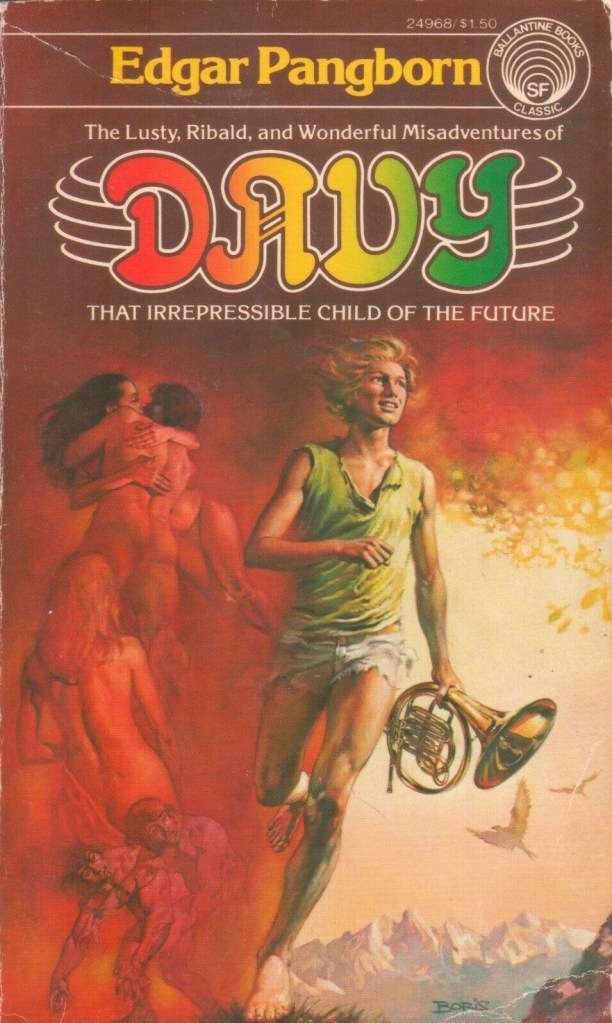
1. Edgar Pangborn’s Davy (1964), 5/5 (Masterpiece): Nominated for the 1965 Hugo Award for Best Novel. Full review.

Continue reading
Update: Recent Science Fiction and Fantasy Purchases No. CCCXXVI (Octavia E. Butler, Henry Kuttner, C. L. Moore, Clark Ashton Smith, F. Paul Wilson)

Which books/covers/authors intrigue you? Which have you read? Disliked? Enjoyed?

1. Tales of Science and Sorcery, Clark Ashton Smith (1964)

From the back cover: “A universe of remote and paralyzing fright–jungles of poisonous and iridescent blossoms on the moons of Saturn, evil and grotesque temples in forgotten elder worlds and dark-morasses of spotted death-fungi in spectral countries beyond the earth’s rim. Who else has seen such gorgeous, luxuriant and feverishly distorted visions and lived to tell the tale?” — H. P. Lovecraft

Continue reading

Short Story Review: Kate Wilhelm’s “Planet Story” (1975) and Clark Ashton Smith’s “Master of the Asteroid” (1932)

The following review is the 27th and 28th installment of my series searching for “SF short stories that are critical in some capacity of space agencies, astronauts, and the culture which produced them.” Some stories I’ll review in this series might not fit. And that is okay. I relish the act of literary archaeology.

Kate Wilhelm’s “Planet Story” (1975) charts a planetary mystery that seems just out of reach of the cold, factual truth of scientific instruments. And Clark Ashton Smith’s “Master of the Asteroid” (1932) imagines the fragile minds of human explorers unable to grapple with the interplanetary gulf.

As always, feel free to join the conversation.

Previously: Philip K. Dick’s “The Precious Artifact” (1964) and Henry Slesar’s “Mr. Loneliness” (1957)

Up Next: Clifford D. Simak’s “Conditions of Employment” (1960).

4/5 (Good)

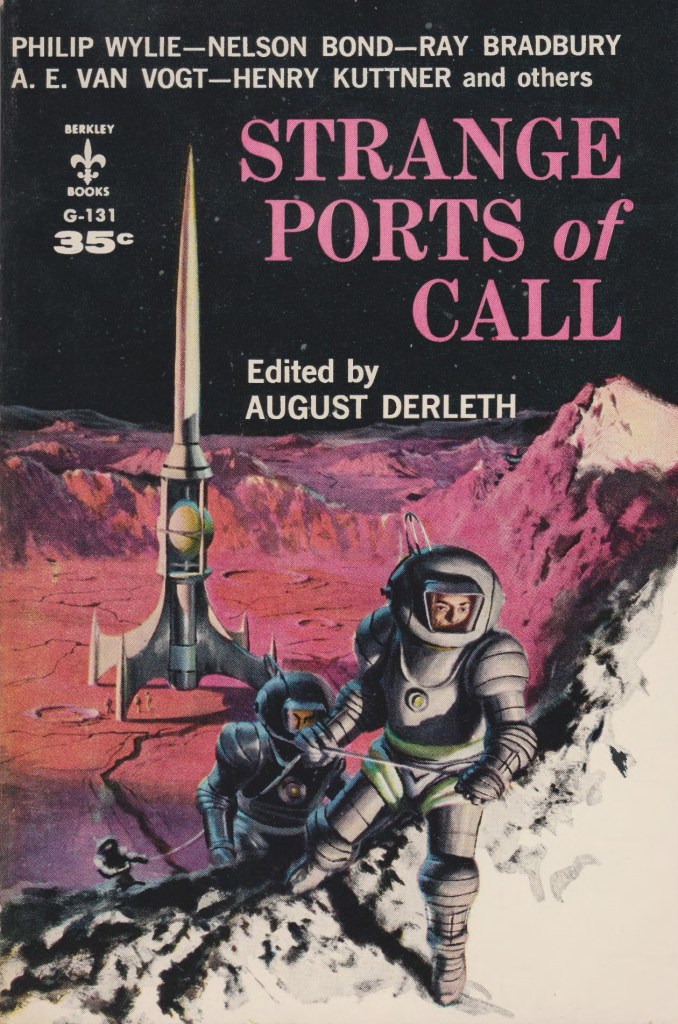
Clark Ashton Smith’s “Master of the Asteroid” first appeared in Wonder Stories, ed. Hugo Gernsback (October 1932). You can read it online here. I read it in the 1958 edition of Strange Ports of Call, ed. August Derleth (1948).

Cark Ashton Smith (1893-1961) is characterized as “one of the big three of Weird Tales, with Robert E. Howard and H. P. Lovecraft.” His fiction was deeply influenced by his psychological afflictions, “including intense agoraphobia,” and nightmares. Due to the Great Depression and the declining health of his parents, Smith wrote more than a hundred short stories between 1929-1934. “Master of the Asteroid” (1932), produced in this productive moment, reads like an unnerving catalog of manias.

Continue reading

Updates: Recent Science Fiction Purchases No. CCCX (R. A. Lafferty, Jan Morris, Star anthology, and an August Derleth anthology)

Which books/covers/authors intrigue you? Which have you read? Disliked? Enjoyed?

1. Strange Ports of Call, ed. August Derleth (1948)

From the back cover: “‘Begotten of Imagination, on the body of Technology, there springs forth the wild child Science Fiction.’ –Clifton Fadiman

The above is one of the many attempts that have been made to describe a department of fiction which, in spite of some sniping critics, continues to increase its followers. Recently Bertrand Russell observed that science fiction consists of ‘intelligent anticipation–much more intelligent than the expectations of statesmen.’

Continue reading