Magazine Review: Galaxy Science Fiction, ed. H. L. Gold (November 1950) (Brown, Asimov, Boucher, Leiber, Knight, Simak)

Preliminary Note: I plan on reading all 116 issues of the influential, and iconic, SF magazine Galaxy under H. L. Gold’s editorship (October 1950-October 1961) in chronological order. How long this project will take or how seriously/systematically I will take it remain complete unknowns.

See my inaugural post in this series for my reasoning behind selecting Galaxy under H. L. Gold.

Previously: the October 1950 issue.

Up Next: the December 1950 issue.

Let’s get to the stories. We have the first Galaxy masterpiece!


You can read the entire issue here.

Fredric Brown’s “Honeymoon in Hell” (1950), 3/5 (Average): The year is 1962. The Cold War heats up. The race for a permanent presence on the Moon takes center stage. Each side “had landed a few men” and claimed it as their own (4). Each side races to construct a space station in orbit to facilitate the construction of a permanent base on the moon. But there’s another worrying world-wide trend–a massive gender imbalance in new births! Not enough boys! Riots. Cults. What’s the plan?

Continue reading

What pre-1985 science fiction are you reading? + Update No. XXI

What pre-1985 science fiction are you reading or planning to read this month? Here’s the March installment of this column.

Recently I came across John Boston and Damien Broderick’s three-volume series examining each and every story and non-fiction article in the pre-Michael Moorcock New Worlds and Science Fantasy/SF Impulse magazines in the UK. John Boston is a valued member of my site’s community — frequently stopping by in the comment sections. I thought for this mini-editorial I’d list a handful of active community members with websites, books, and worthwhile SF-related fanzine articles. I, of course, could be missing a few. Community matters more than you might think. I enjoy the discussion. I enjoy reading reviews that others write — even if it’s on science fiction that might not be within my more narrow focus (the historian in me). I always want to learn and share what’s worth reading and/or historically interesting. Thank you one and all.

Continue reading

My 2023 in Review (Best SF Novels, Best SF Short Fiction, and Bonus Categories)

Here’s to a happy 2024! I hope you had a successful reading year. Maybe you pulled down some dusty tome that you’ve wanted to dive into for a decade. I’d like to imagine you finally picked up a book I raved about in years past that you acquired with great anticipation but never opened. Whether you are a lurker, occasional visitor, or a regular commenter, thank you for your continued support and wonderful conversation.

What were your favorite vintage SF reads–published pre-1985–of 2023? Let me know in the comments.

Continuing a trend, I read only a handful of novels this year. Instead, my obsessions focused on my science short story review initiatives (listed below), collections, and histories of the science fiction genre. Without further ado, here are my favorite novels and short stories I read in 2023 with bonus categories. I made sure to link my longer reviews where applicable if you want a deeper dive into the rich seam of science fictional gems.

Check out last year’s rundown if you haven’t already for more spectacular reads. I have archived all my annual rundowns on my article index page if you wanted to peruse earlier years.


My Top 5 Science Fiction Novels of 2023 

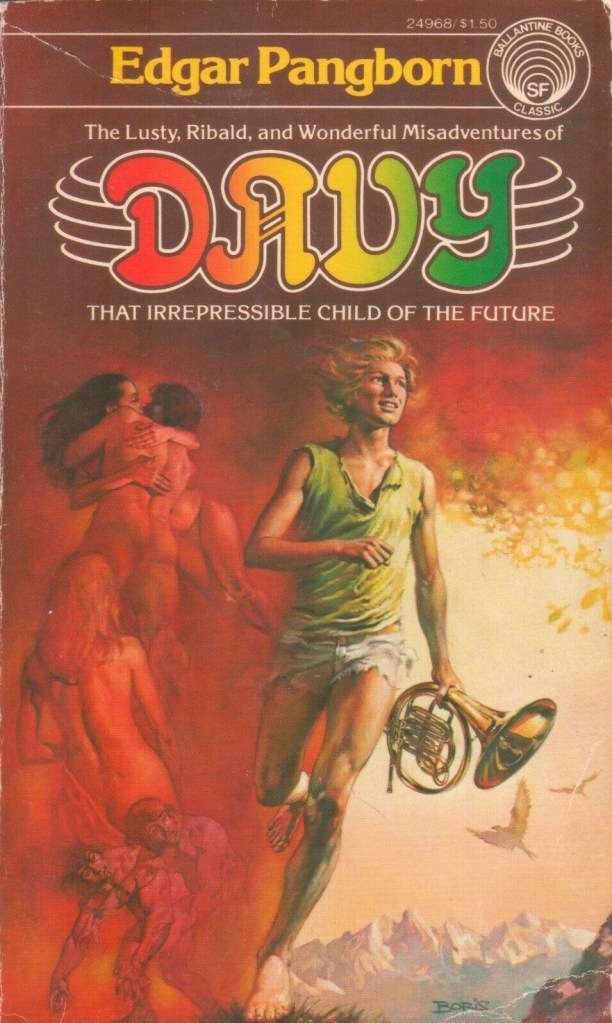
1. Edgar Pangborn’s Davy (1964), 5/5 (Masterpiece): Nominated for the 1965 Hugo Award for Best Novel. Full review.

Continue reading

Updates: Recent Science Fiction Purchases No. CCCXXVII (Thomas M. Disch, Doris Piserchia, Ian Watson, and an anthology)

Which books/covers/authors intrigue you? Which have you read? Disliked? Enjoyed?

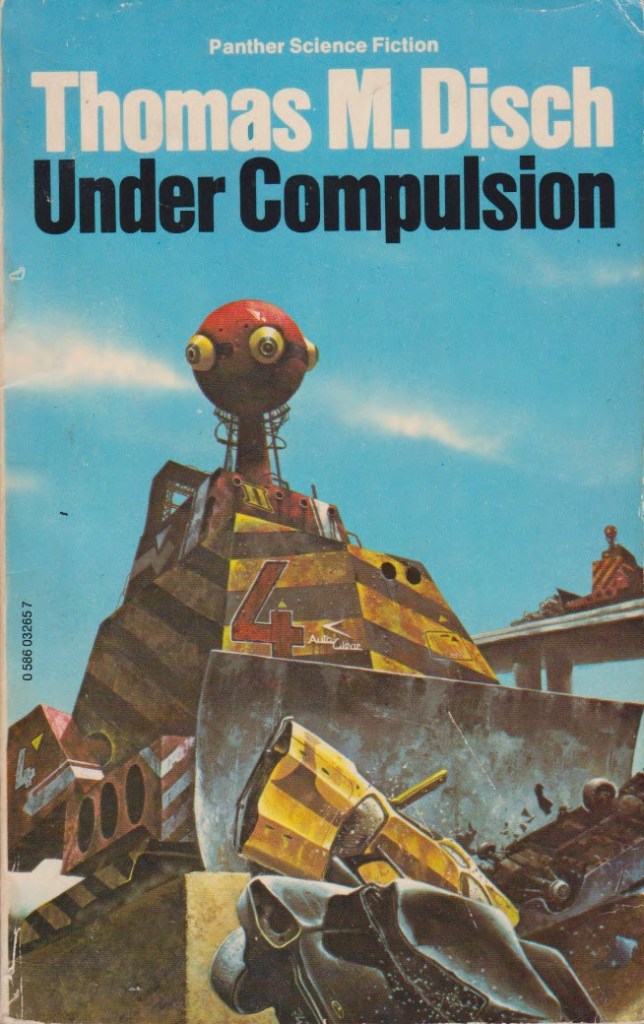
1. Under Compulsion (variant title: Fun with Your New Head), Thomas M. Disch (1968)

From the back cover: “A BLACK BANQUET OF PURE DISCH

A part-human, part-electronic brain going slowly mad in the Venus jungle.

The last man on earth rejecting the last woman.

A Russian astronaut looking for a good reason to die on the moon.

A chilling glimpse of a 21st century America where war is peace, freedom is slavery and ignorance is strength–and they like it like that.

Continue reading

Updates: New Books! No. CCCXXIV (Octavia E. Butler, Edgar Pangborn, Piers Anthony, Themed Anthology)

Which books/covers/authors intrigue you? Which have you read? Disliked? Enjoyed?

1. The Company of Glory, Edgar Pangborn (serialized 1974, novel 1975)

From the back cover: “BEHOLD DEMETRIOS! With the same rich imagination and dazzling insights that won him the International Fantasy award, Edgar Pangborn weaves a magical tapestry set far in man’s future.

It is a time when man, struggling to rise above the ashes of nuclear holocaust, has returned to the simpler values and lifestyles of medieval times. And in this society, Demetrios the storyteller is revered among men for his captivating tales of the Old Time, with its miraculous Telephones, and Jet Planes, and TV, and Automobiles. But Demetrios is also feared–for one storyteller with a head full of ancient truth can be dangerous.

So Demetrios is forced to flee, with six compatriots, and together they embark on a journey full of unexpected sorrows, and unimagined delights, a journey through realms of fantasy, philosophy, and rich human possibility, which the reader will be delighted and privileged to share.”

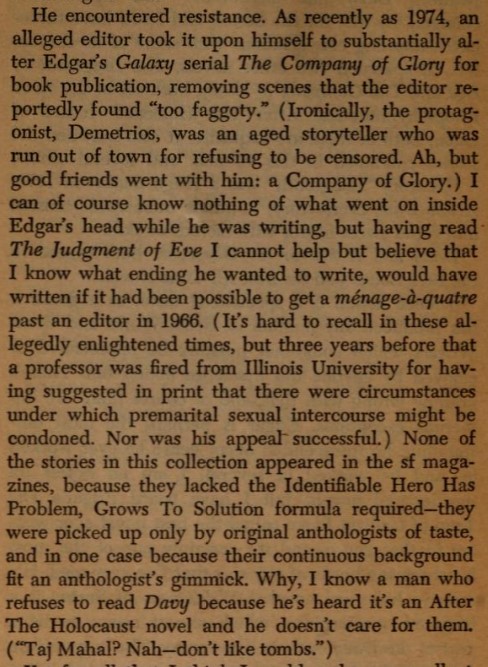
Initial Thoughts: After reveling in Pangborn’s masterpiece Davy (1964), I decided to acquire everything in the Tales of a Darkening World sequence I didn’t own already. According to Spider Robinson, the editor at Pyramid Books cut portions of the novel that was serialized in Galaxy… Inset image is from Robinson’s intro to Still I Persist in Wondering (1978).

Continue reading

Book Review: Far Out, Damon Knight (1961)

Today I’ve reviewed the twenty-second and twenty-third story in my series on the science fictional media landscape of the future. In “Thing of Beauty” (1958) Damon Knight speculates on something very similar to AI art. And in “You’re Another” (1960) Knight conjures a delirious manifestation of reality TV unlike any other. I’ve gone ahead and included reviews of the rest of the stories in Knight’s collection Far Out (1961).

Previously: Ray Bradbury’s “Almost the End of the World”  (1959).

Up Next: Richard Matheson’s “Through Channels” (April 1951).

Robert F. Young’s “Audience Reaction” (February 1954).


3.5/5 (Collated rating: Good)

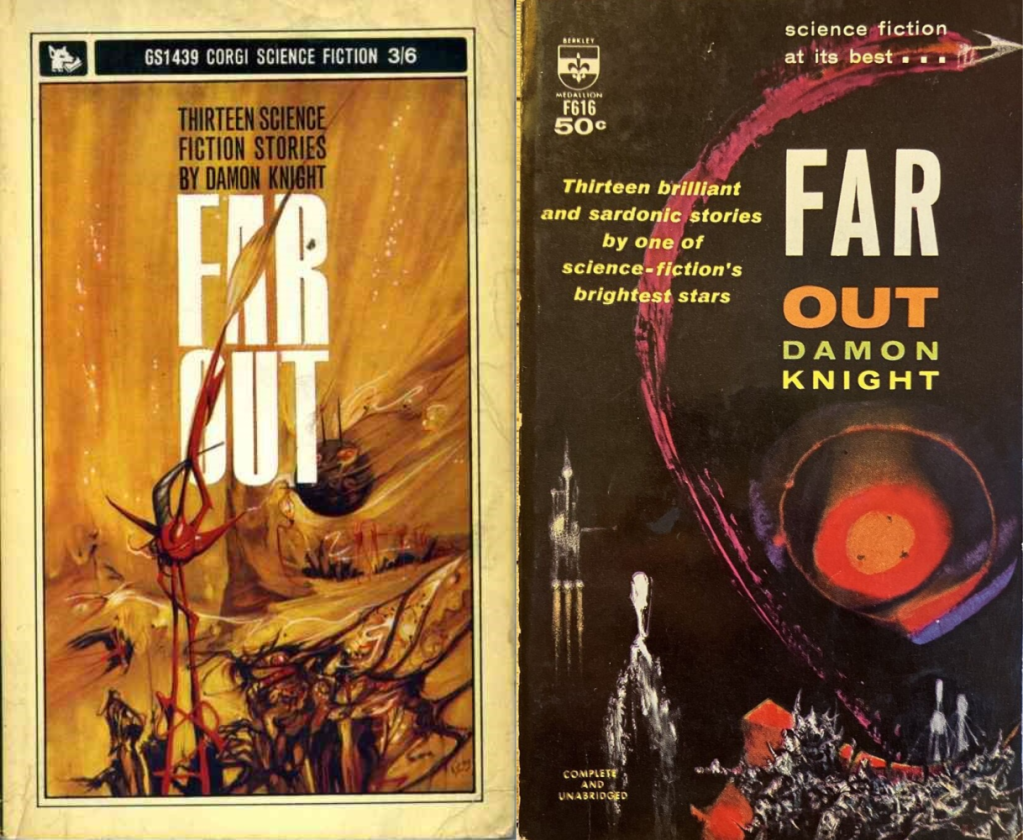
Damon Knight’s impact on the science fiction field can be felt to this day. He founded the Science Fiction and Fantasy Writers of America and co-founded two influential science fiction workshops (Milford and Clarion). Knight also edited the Orbit series of anthologies, notable for their larger-than-average number of female science fiction authors and overall quality–I’ve reviewed Orbit 1 (1966), Orbit 3 (1968), Orbit 4 (1968), and Orbit 8 (1970) so far. I can’t help but notice that his fiction, on the other hand, has faded a bit from popular knowledge. I struggle to identify a masterpiece Knight novel. Did he write one?

I’ve enjoyed his short fiction, notably “Down There” (1973) and “I See You” (1976), immensely. With that in mind, I consumed my first collection of his short stories. I can add “The Enemy” (1958), “You’re Another” (1955), and “Cabin Boy” (1951) to my list of favorite Knight visions.

Continue reading

Updates: Recent SF Purchases No. CCXCVI (Harry Harrison, Carole Nelson Douglas, Terry Bisson, Star Anthology)

Which books/covers/authors intrigue you? Which have you read? Disliked? Enjoyed?

1. Planet of the Damned, Harry Harrison (serialized 1961)

From the back cover: “Brion Brandd of the Galactic CRF had a problem. It was the planet Dis. Brion’s assignment was to salvage it.

Dis was a harsh, inhospitable, dangerous place and the Disans made it worse. They might have been a human once–but they were something else now.

The Disans had only one desire–kill! Kill everything, themselves, their planet, the universe if they could–

BRION HAD MINUTES TO STOP THEM–IF HE COULD FIND OUT HOW!”

Initial Thoughts: Smells like a variation of Harrison’s Deathworld (1960), which I never managed to review, from a year earlier. Which isn’t a good sign… Planet of the Damned was a finalist for the 1962 Hugo for Best Novel. It lost to Robert A. Heinlein’s Stranger in a Strange Land (1961).

Continue reading

Updates: Recent Science Fiction Acquisitions No. CCXXX (Ben Bova, Suzette Haden Elgin, Louis Trimble, Josephine Saxton, Orbit Anthology)

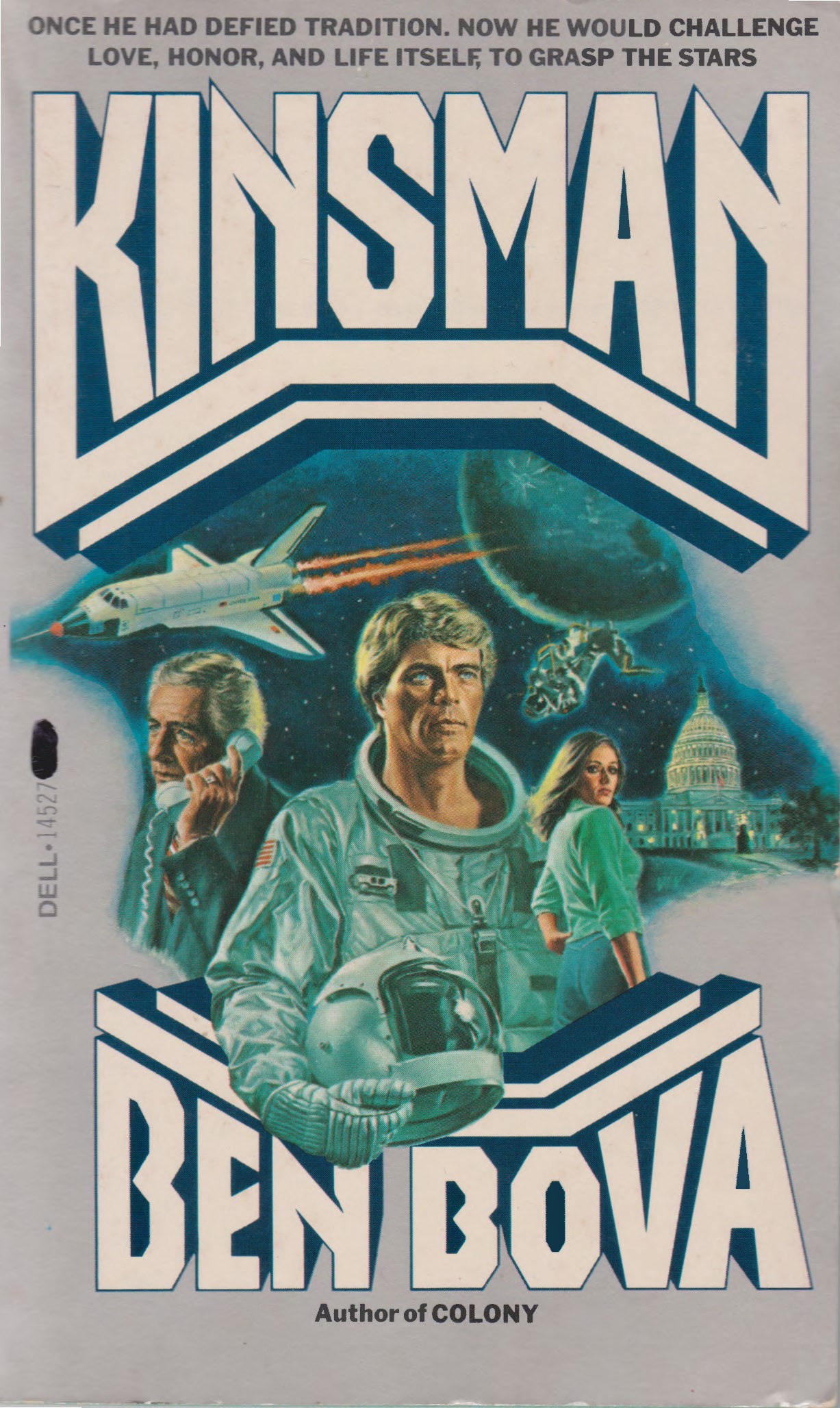
1. Ben Bova is not a site favorite…. But I’m willing to give a handful of his better known novels a shot. Here is the first (in the internal chronology) of the Kinsman sequence. Low hopes.

If you want to know why I have low hopes check out these three reviews:

2. Side 1 of an Ace Double. Suzette Haden Elgin’s The Communipaths is the first in her Coyote Jones sequence. I had mixed views on the third volume: At the Seventh Level (1972).

3. Side 2 of an Ace Double. Back in 2012 I reviewed Louis Trimble’s intriguing SF allegorical city tale The City Machine (1972). It was a competent work that, in the hands of a more polished writer, could have been so much more. Not sure what to expect from this one…. the zany nature of the blurb is off-putting.

4. Josephine Saxton’s The Hieros Gamos of Sam and An Smith (1969) still haunts me. I need to read more of her short fiction.

5. And finally, my Orbit anthology series collection grows!

Previous reviews:

Let me know what books/covers intrigue you. Which have you read? Disliked? Enjoyed?

~

1. Kinsman, Ben Bova (1979)

(Uncredited cover for the 1981 edition) Continue reading

Book Review: The 1977 Annual World’s Best SF, ed. Arthur W. Saha and Donald A. Wollheim (1977)

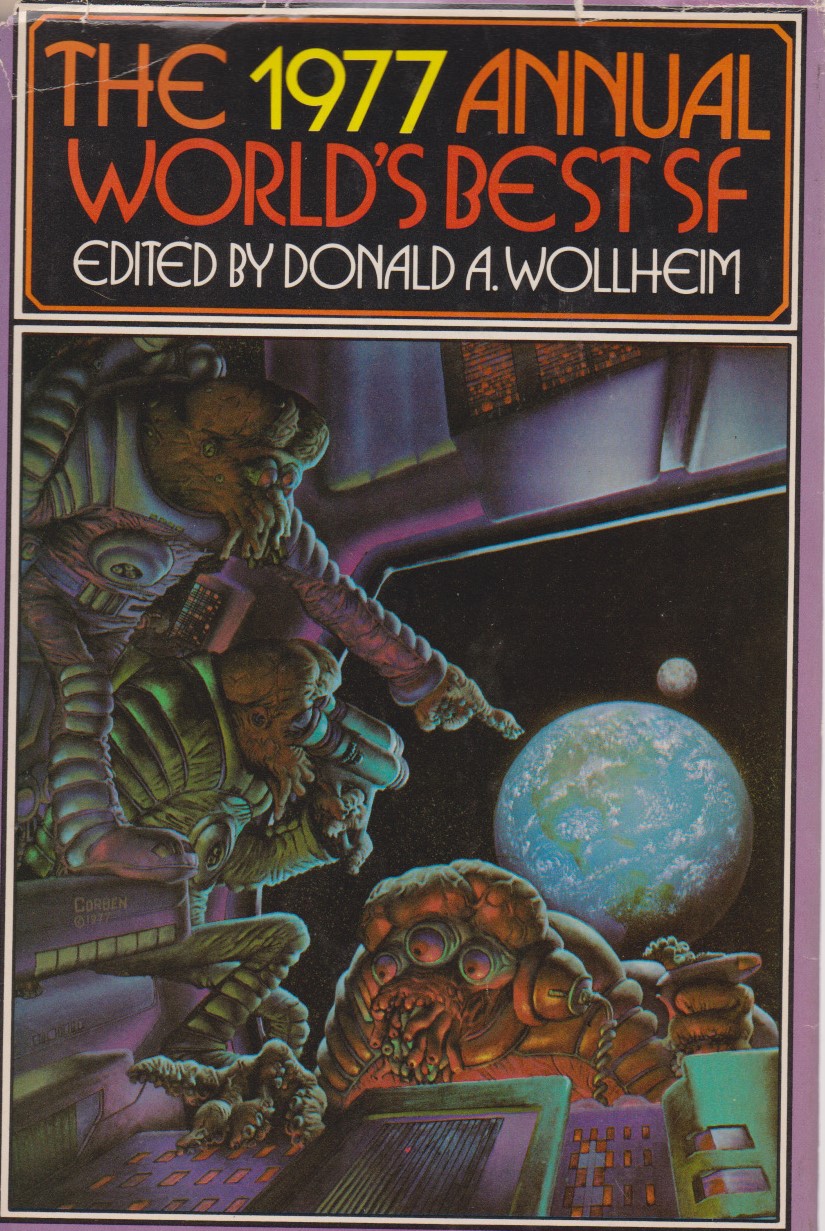
(Richard Corben’s cover for the 1977 edition)

4.25/5 (collated rating: Very Good)

The 1977 Annual World’s Best SF, ed. Donald A. Wolheim and Arthur S. Saha (1977) is a glorious anthology of SF published from the year before containing rousing works by the established masters (Isaac Asimov and Brian W. Aldiss), philosophical gems from New Wave icons (Barrington J. Bayley), and gritty and disturbing commentaries on masculinity by the newer voices (James Tiptree, Jr.). While Richard Cowper and Lester del Rey misfire, the overall quality is high for a large Continue reading