What pre-1985 science fiction are you reading? + Update No. XXIV

What pre-1985 science fiction are you reading or planning to read next month? Here’s the June installment of this column.

I adore teaching American History for college credit. Every summer I ponder what to change and improve. And this year, I want to integrate a few science fiction stories!

My 1950s unit in the spring semester could be modified with a few science fiction short stories. Considering my ongoing fascination with media landscapes of the future, I want to integrate one story on fears over television and one on nuclear horror (which would fit nicely with a group of assignments I have using song lyrics about atomic panic). Feel free to suggest a story that you would include or wish was included in your own US college course (or advanced high school course). No novels unfortunately. I have access to a range of syllabi and a TON of ideas but I always love to hear your selections.

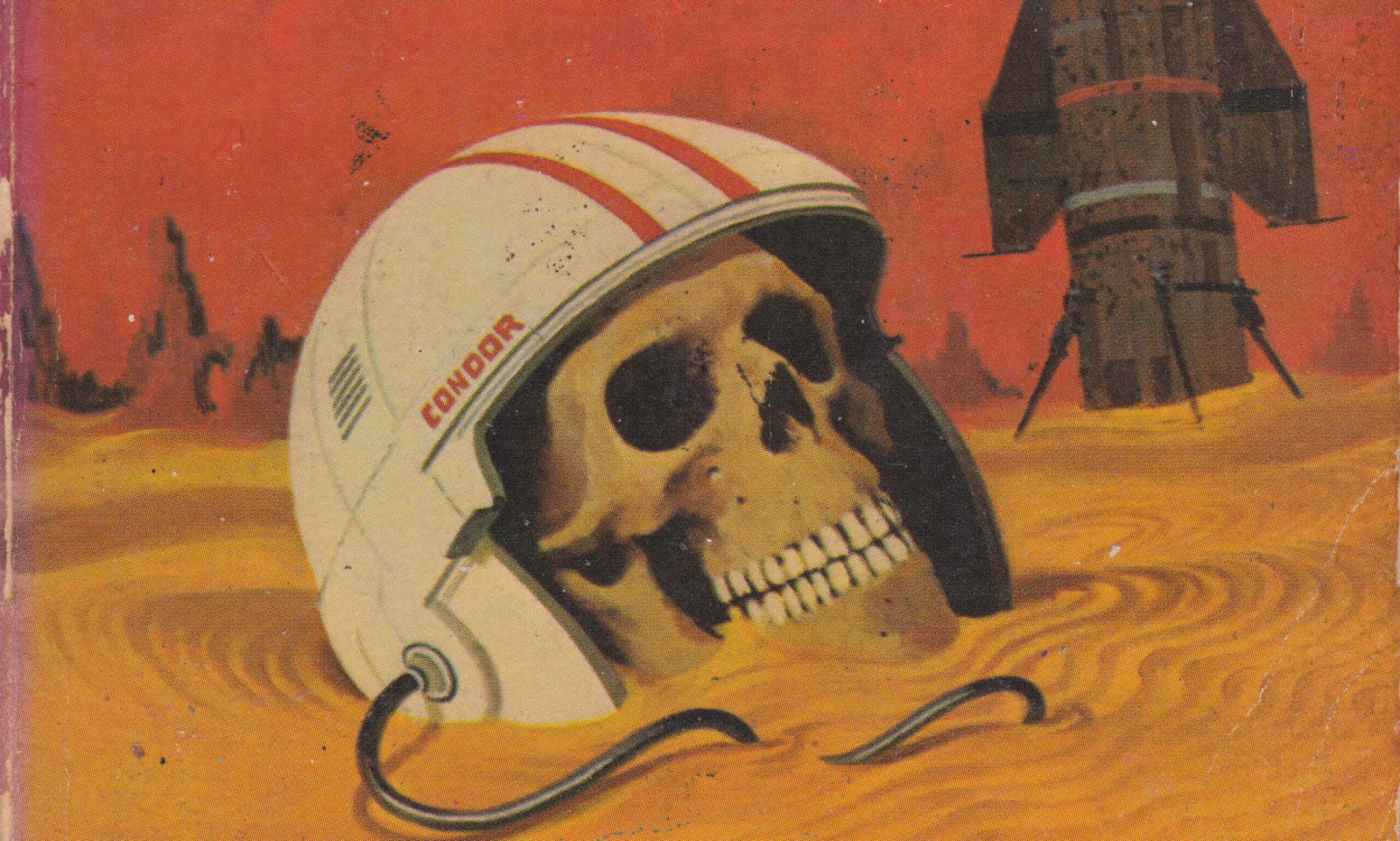
Before we get to the photograph above and the curated birthdays, let me know what pre-1985 SF you’re currently reading or planning to read! 

Continue reading
Updates: New Books! No. CCCXXIV (Octavia E. Butler, Edgar Pangborn, Piers Anthony, Themed Anthology)

Which books/covers/authors intrigue you? Which have you read? Disliked? Enjoyed?

1. The Company of Glory, Edgar Pangborn (serialized 1974, novel 1975)

From the back cover: “BEHOLD DEMETRIOS! With the same rich imagination and dazzling insights that won him the International Fantasy award, Edgar Pangborn weaves a magical tapestry set far in man’s future.

It is a time when man, struggling to rise above the ashes of nuclear holocaust, has returned to the simpler values and lifestyles of medieval times. And in this society, Demetrios the storyteller is revered among men for his captivating tales of the Old Time, with its miraculous Telephones, and Jet Planes, and TV, and Automobiles. But Demetrios is also feared–for one storyteller with a head full of ancient truth can be dangerous.

So Demetrios is forced to flee, with six compatriots, and together they embark on a journey full of unexpected sorrows, and unimagined delights, a journey through realms of fantasy, philosophy, and rich human possibility, which the reader will be delighted and privileged to share.”

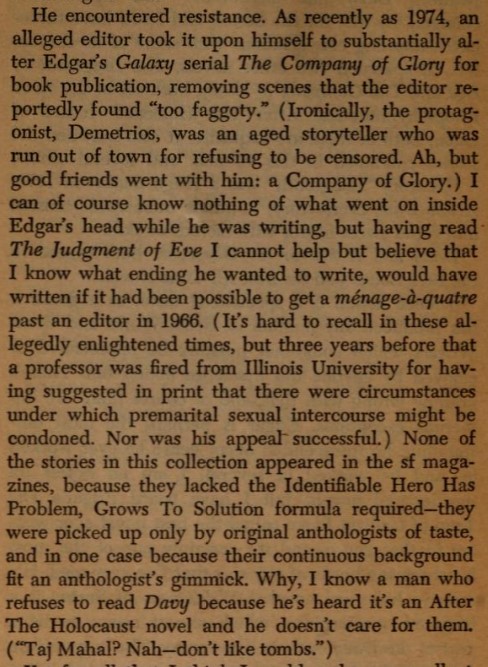
Initial Thoughts: After reveling in Pangborn’s masterpiece Davy (1964), I decided to acquire everything in the Tales of a Darkening World sequence I didn’t own already. According to Spider Robinson, the editor at Pyramid Books cut portions of the novel that was serialized in Galaxy… Inset image is from Robinson’s intro to Still I Persist in Wondering (1978).

Continue reading

Updates: Recent Science Fiction Purchases No. CCXCVIII (Harlan Ellison, Edward Bryant, Murray Constantine, Sayko Komatsu, and an automobile-themed anthology)

Which books/covers/authors intrigue you? Which have you read? Disliked? Enjoyed?

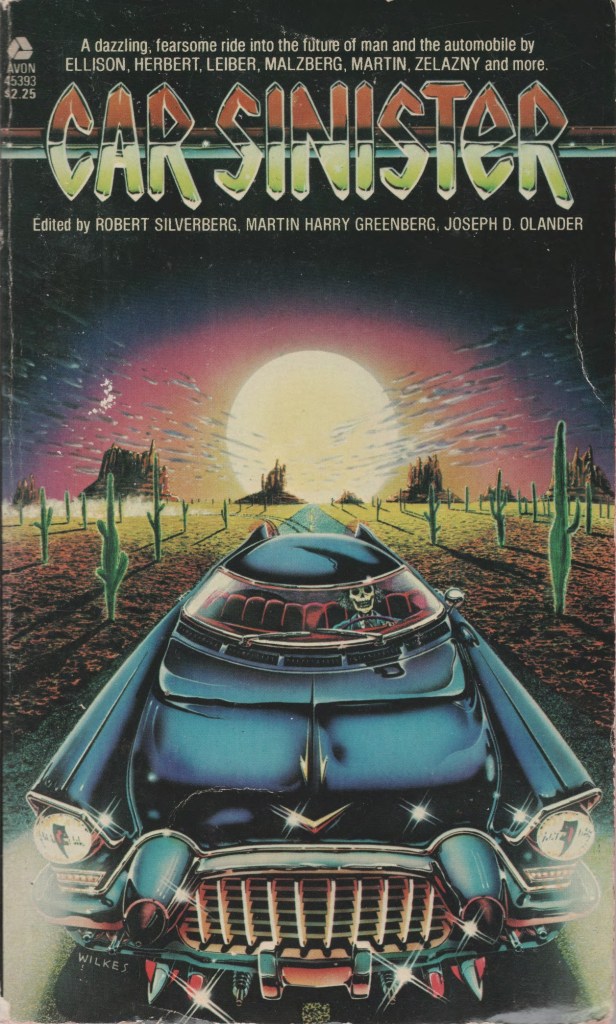
1. Car Sinister, ed. Robert Silverberg, Martin Harry Greenberg, and Joseph D. Olander (1979)

From the back cover: “MAN AND HIS MACHINE. The car is man’s most personalized machine; for teenagers it is a rite of passage and a statement of freedom; for adults it is a reflection of success, taste, and hopes; and for an entire culture it is a great and industrious mode of transportation–driving, perhaps, on the road of destruction. And the automobile–thrilling, honking, speeding, nerve-shattering–haunts us with the dark possibility that when our age of motoring innocence is over, we may no longer be the masters… CAR SINISTER–a splendid, imaginative vision of what lies down the road for all of us.”

Continue reading

Updates: My 2021 in Review (Best SF Novels, Best SF Short Fiction, and Bonus Categories)

2021 was the best year in the history of my site for visits and unique viewers! I suspect this increasingly has to do with my twitter account where I actively promote my site vs. a growing interest in vintage SF. I also hit my 1000th post–on Melisa Michaels’ first three published SF short stories–in December.

As I mention year after year, I find reading and writing for the site—and participating in all the SF discussions it’s generated over the year—a necessary and greatly appreciated salve. Thank you everyone!

I read very few novels this year. Instead, I devoted my attention to various science short story reviews series and anthologies. Without further ado, here are my favorite novels and short stories I read in 2021 (with bonus categories).

Tempted to track any of them down?

And feel free to list your favorite vintage (or non-vintage) SF reads of the year. I look forward to reading your comments.


My Top 7 Science Fiction Novels of 2021 (click titles for my review)

1. Where Time Winds Blow (1981), Robert Holdstock, 5/5 (Masterpiece): Holdstock’s vision is a well-wrought cavalcade of my favorite SF themes–the shifting sands of time, the pernicious maw of trauma that threatens to bite down, unreliable narrators trying to trek their own paths, a profoundly alien planet that compels humanity to construct an entirely distinct society… It’s a slow novel that initially masquerades as something entirely different. Just like the planet itself.

Continue reading

Book Review: Infinity One, ed. Robert Hoskins (1970) (Poul Anderson, Anne McCaffrey, Gene Wolfe, Robert Silverberg, Miriam Allen deFord, et al.)

This anthology contains the 4th post in a loose series on SF short stories that are critical in some capacity of space agencies, astronauts, and the culture which produced them. I decided to review the entire anthology!

Previously: William Tenn’s “Down Among the Dead Men” (1954).

Up Next: Theodore Sturgeon’s “The Man Who Lost the Sea” (1959)

Jim Steranko’s cover for the 1st edition

3/5 (Collated rating: Average)

Robert Hoskins “resurrected” Infinity Science Fiction magazine (1955-1958) as a five volume anthologies series between 1970-1973. The first volume, Infinity One (1970), contains sixteen original stories and one reprint from the original magazine–Arthur C. Clarke’s “The Star” (1955). SF Encyclopedia describes the anthology series as “a competent but not outstanding series.”

Eight of the seventeen stories fall into the “good” category. While none are masterpieces, Robert Silverberg, Arthur C. Clarke, Barry N. Malzberg co-writing with Kris Neville, Katherine MacLean, Gene Wolfe, and Poul Anderson Continue reading

Updates: Recent Science Fiction Acquisitions No. CCXXV (C. J. Cherryh, Gene Wolfe, Jane Palmer, Chris Boyce)

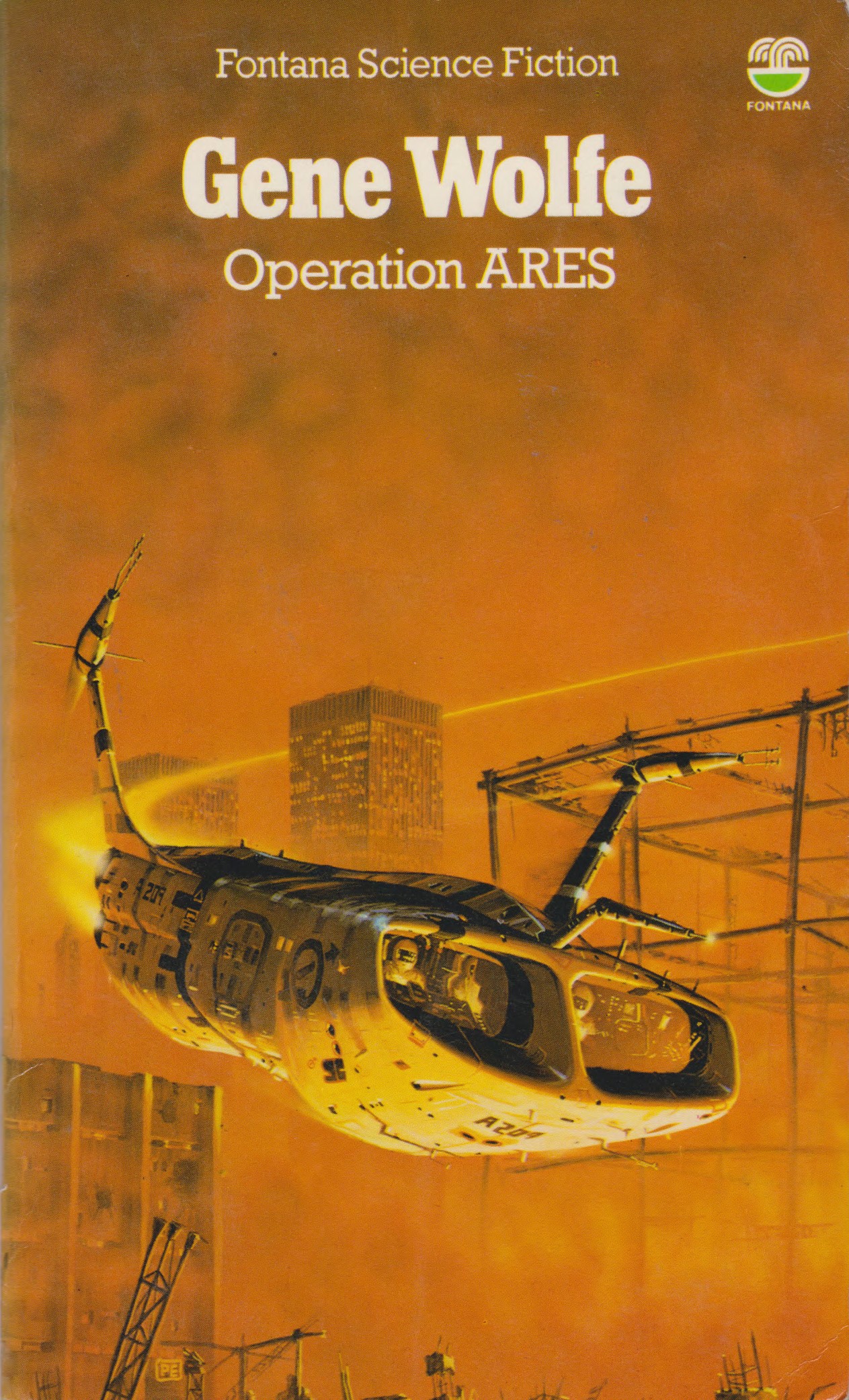
1. Gene Wolfe’s first novel—purchased for the Peter Elson cover alone…. Wolfe disowned the book, which apparently underwent substantial editorial amputation.

SF Encyclopedia‘s description: “Wolfe’s first novel, Operation ARES (1970), where a twenty-first-century America which has turned its back on Technological advance is propagandized and benignly infiltrated by its abandoned Martian colony, was heavily cut by the publisher, and reads as apprentice work. Nevertheless it is very characteristic of Wolfe that his protagonist, having pretended membership of the pro-Mars underground called ARES, should unwillingly become its effective leader.”

2. Another The Women’s Press publication joins my shelf.

3. The unknown quantity of the post…. Clute over at SF Encyclopedia describes it as follows: “[Chris] Boyce’s most important work was the sf novel Catchworld (1975), joint winner […] of the Gollancz/Sunday Times SF Novel Award. Catchworld is an ornate, sometimes overcomplicated tale combining sophisticated brain-computer interfaces […] and Space Opera; the transcendental bravura of the book’s climax is memorable.”

4. I recently read (but haven’t yet reviewed) C. J. Cherryh’s Port Eternity (1982). My exploration of her early 80s novels continues!

Let me know what books/covers intrigue you. Which have you read? Disliked? Enjoyed?

~

1. Operation ARES, Gene Wolfe (1970)

gene wolfe, operation ares

(Peter Elson’s cover for the 1978) Continue reading

Updates: Recent Science Fiction/Fantasy Acquisitions No. CCXVIII (Wolfe + Saxton + Tilley + New Worlds Anthology)

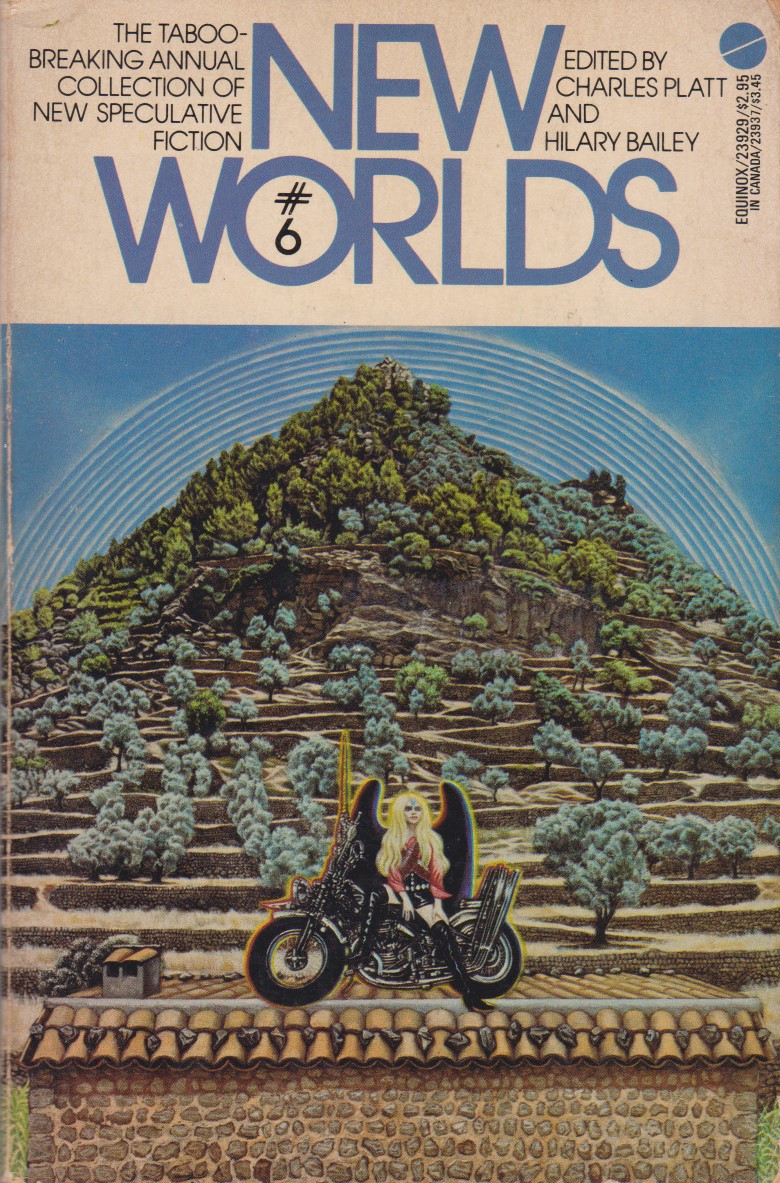
1. This looks like a splendid New Worlds Quarterly anthology replete with book reviews, articles, and interior art by John Clute and James Cawthorn. When I review it (hopefully soon), I’ll include a few examples of the art. The quantity of authors I’ve not read in this anthology is high—for example, A.A. Attanasio, Harvey Jacobs, Rachel Pollack, among many others. See content lists below.

For more fantastic Mati Klarwein covers check out my recent art post.

2. Gene Wolfe’s novels are a major hole in my SFF knowledge. Here is an early fantasy work that I might in the near future. I tend to take perambulatory paths before tackling an author’s great works. Thoughts on this lesser known one?

I’ve read quite a few of his 60s and 70s short stories. For example, the spectacular “Silhouette” (1975) and “The Changeling” (1968).

3. It’s been a while since I raved about Josephine Saxton’s delightful The Hieros Gamos of Sam and An Smith (1969). An author I must return to….

4. Silly early 80s post-apocalyptical adventure anyone? Sometimes you need a break from Christopher Priest and J. G. Ballard! hah.

Let me know what books/covers intrigue you. Which have you read? Enjoyed? Hated?

~

1. New Worlds #6 (variant title: New Worlds #7), ed. Charles Platt and Hilary Bailey (1974)

(Mati Klarwein’s cover for the 1975 edition) Continue reading

Updates: New Website Look and New Projects (Towards a Favorite SF Novels of the 1970s List, Barry N. Malzberg Resource, Guest Post Series Ideas)

(From the uncredited cover for the 1975 edition of The Invincible (1964), Stanislaw Lem)

I’ve updated the website template (and purchased the domain name) and would like to know if it is easy to navigate (especially on mobile devices). Obviously I can’t please everyone but hope that it is more streamlined and 2017 than before.

I started Science Fiction and Other Suspect Ruminations way back in 2010. My first post bashed John Brunner’s Born Under Mars (1967) in vaguely substantive terms (sometimes I think about deleting my earliest reviews). Since then I have written some 300 odd review reviews, 114 cover art posts, and various film reviews, indices, lists, guest post series, an interview, etc. With all of this in mind, I thought I’d give you a sense of what is on the horizon.

Reminder: If you’re the emailing rather than commenting sort I can be reached at ciceroplatobooks (at) gmail (dot) com.

The Three Major Projects

1) I’m in the process of compiling a resource page for Barry N. Malzberg that would include links to reviews/interviews/academic articles from around the web. Let me know if there are any links you would like me to include. Even if you aren’t a Barry N. Malzberg fan, if you happen to come across in your SF perambulations any relevant information I’d be very appreciative if you’d send them my way.

Resource/article INDEX 

2) This will appeal to far more readers. Over the last few years I’ve been slowly working my way towards a “My Favorite 1970s SF Novels List.” Continue reading

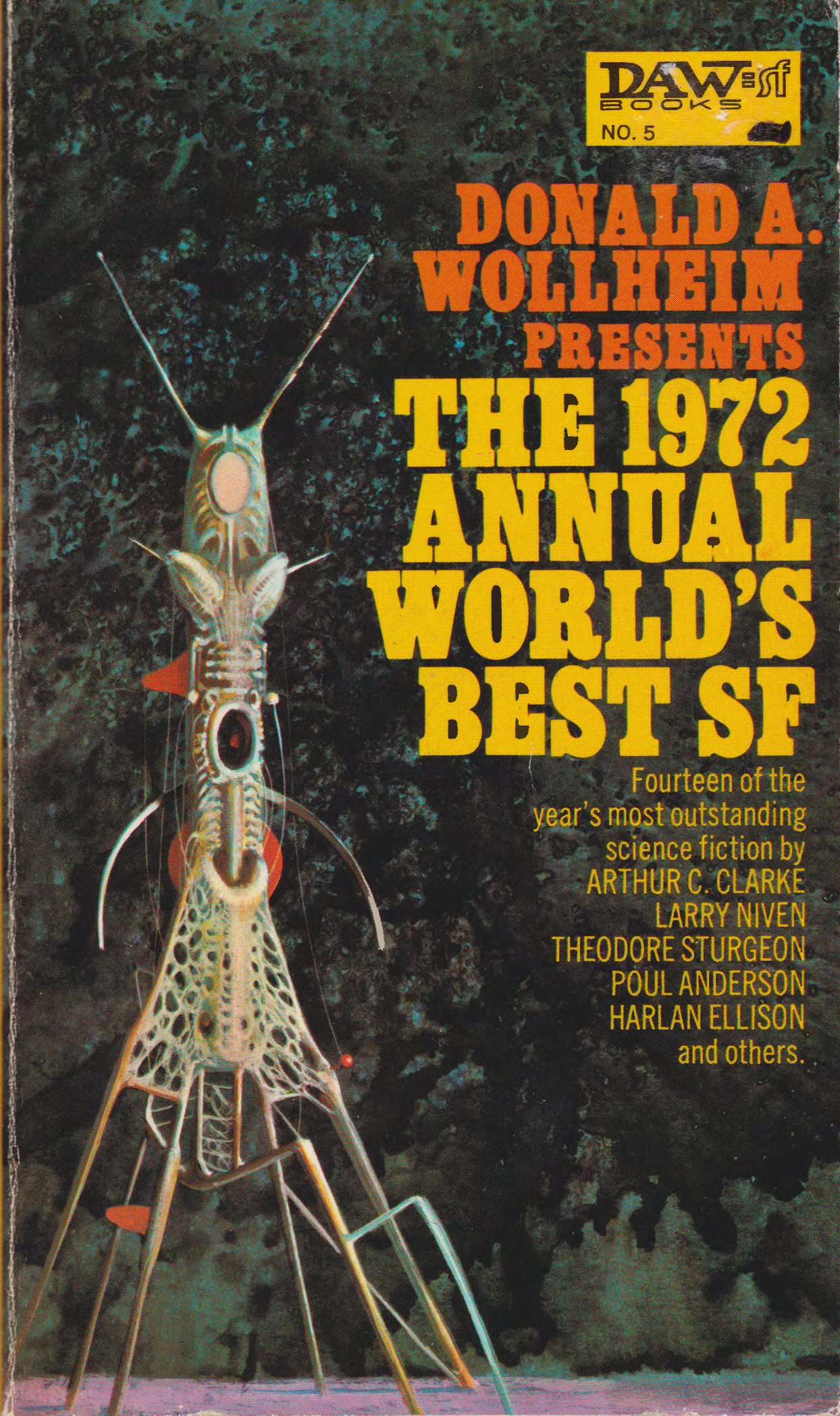
Updates: Recent Science Fiction Acquisitions No. CLXXXII (The Anthology Edition) (Best SF Stories from New Worlds 5, Orbit 6, Alpha 3, Best SF 1972)

Little pleases me more than reading the fascinating cross-section of the genre presented by anthologies from my favorite era of SF (1960s/70s). After the success that was World’s Best Science Fiction: 1967 (variant title: World’s Best Science Fiction: Third Series) (1967), ed. Donald A. Wollheim and Terry Carr, I decided to browse my “to post” pile of recent acquisitions and share a handful with you all. As is often the case, the collections are peppered with stories I’ve already read—I’ve linked the relevant reviews.

Filled with authors I haven’t read yet—Stephen Tall, Robin Scott, Roderick Thorp, Jean Cox, Christopher Finch, etc.

…and of course, many of my favorites including Gene Wolfe, Ursula Le Guin, Barry N. Malzberg, and Kate Wilhelm (among many many others).

Scans are from my collection.

1. The 1972 Annual World’s Best SF, ed. Donald A. Wollheim (1972)

(John Schoenherr’s cover for the 1972 edition) Continue reading