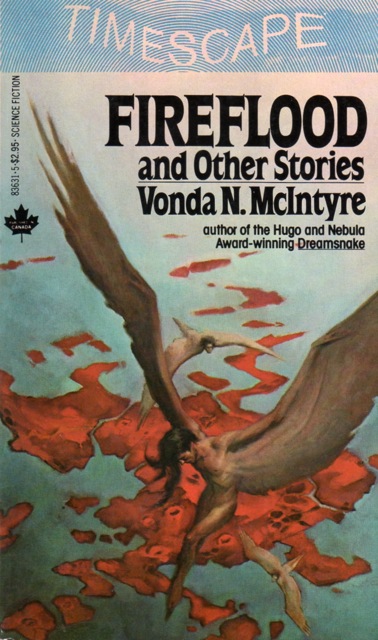
A question for my fellow SF fans: Which SF writer without a single author collection published within the last 10 years should receive a reprint?

THDPFNCY401962 FRFLDNDTHB1981

On twitter [my account here — please follow!  I post interesting things!] I posed the following question:

Which SF author—for the purposes of this site’s focus, an author starting pre-1980—deserves a new (or reprint) single author collection?

GUIDELINES (please read): Said author cannot have a single author collection published within the last 10 years (you can fudge this a bit).   It also should be noted that many eBooks aren’t available in the United States (SF Gateway for example).  If the recent eBook edition isn’t available in the US, I guess the author fits the bill (*cough* — John Sladek).

XNGNSS4D1969Note: If you are thinking about doing some checking before you make your choice (see guidelines) I recommend using isfdb.org as it has mostly up to date publication histories for all but self-published authors.

My vote: Miriam Allen deFord (active from — SF Encyclopedia LINK

Published collections: Xenogenesis (1969) and Elsewhere, Elsewhen, Elsehow (1971)

Reason: Miriam Allen deFord (1888-1975) was one of the major voices in SF magazines from 1946 – 1978.   She never made the transition to novels and thus might have lost some readership as a result.  The stories in Xenogenesis (1969) shows an often radical voice right from her first story in 1946.  Although they might not be as polished as some of her more Continue reading

Updates: My Top 10 SF works (pre-1980) for inclusion in the Gollancz Masterwork series

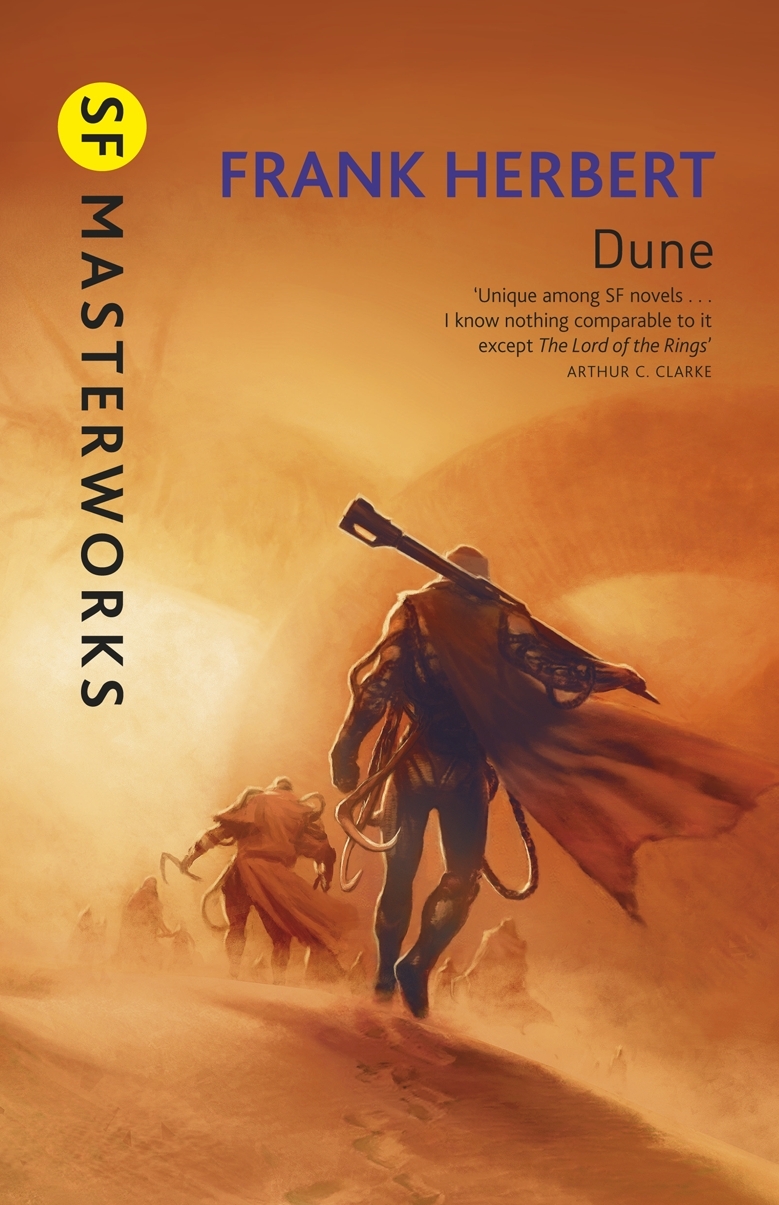
Long-Tomorrow dune

The Gollancz Masterwork series [list] ranges from famous novels such as Ursula Le Guin’s The Left Hand of Darkness (1969) to lesser known short story collections such as The Caltraps of Time (1968) by David I. Masson.  The Masterwork series has the power to introduce readers to the canonical “best of SF” and works that should be considered classics.  Many of the second group have not seen print for decades.  Although I have some qualms about certain inclusions, I was genuinely blown away that they recently chose one of my favorite novels The Continuous Katherine Mortenhoe (variant title: The Unsleeping Eye) (1973) by D. G. Compton—an underread and unjustly forgotten author.

Over the course of the next week or so a handful of my fellow SF bloggers (most of whom have a focus on earlier SF) will release lists on their sites of SF they would like to see featured by Gollancz.  I have not given them any guidelines so the lists should be varied and hopefully will generate some discussion.  I highly recommend you head over to their sites (I will post the links as they come in) and comment.

Thoughts + comments are always welcome (as well as your own lists!).

More “What to Include in the Gollancz Masterwork Series” Lists (blog friends)

Chris over at Battered, Tattered, Yellowed, and Creased 

Megan over at From Couch to Moon

2theD over at Potpourri of Science Fiction Literature

Ian Sales over at It Doesn’t Have to be Right…

Jesse over at Speculiction…

2theD over at Tongues of Speculation (his votes regarding translated SF)

Martin over at Martin’s Booklog

My guidelines for inclusion

1. My frequent readers know that I prefer (passionately) SF from the 50s-70s Continue reading

Updates: Recent Science Fiction Acquisitions No. XCI (Ballard + MacLean + Aldiss + Watson)

One of the better groups of acquisitions in a while!  After Katherine MacLean’s masterpiece Missing Man (1975) I was very excited to come across a collection of her late 40s and 50s short stories.  Unfortunately, my edition — from 1973— had such an awful cover that I couldn’t put in on this post.  Instead, I put the first edition cover by Paul Lehr which is simply gorgeous….

Ballard collections are always welcome!  I have all of his short works in a single volume but the Powers cover is top-notch.

One of Ian Watson’s most famous novels…

And an unknown work by Brian Aldiss,  Enemies of the System (1978)…  Has anyone read it?  I suspect it will be the weakest book of the bunch.

1. The Diploids, Katherine MacLean (1962)

(Uncredited — but looks like Lehr — cover for the 1962 edition) Continue reading