Updates: My 2022 in Review (Best SF Novels, Best SF Short Fiction, and Bonus Categories)

2022 was the single best year in the history of my site for visits and unique viewers!

As I mention year after year, I find reading and writing for the site—and participating in all the SF discussions generated over the year—a necessary and greatly appreciated salve. Whether you are a lurker, occasional visitor, or a regular commenter, thank you for your continued support.

Continuing a trend from 2021, I read only a handful of novels this year. Instead, I devoted my obsessive attention to various science short story review initiatives (listed below), anthologies, and histories of the science fiction genre. Without further ado, here are my favorite novels and short stories I read in 2022 with bonus categories. Descriptions are derived from my linked reviews.

Check out last year’s rundown if you haven’t already for more spectacular reads. I have archived all my annual rundowns on my article index page if you wanted to peruse earlier years.


My Top 5 Science Fiction Novels of 2022 [TITLES LINK TO FULL REVIEWS]
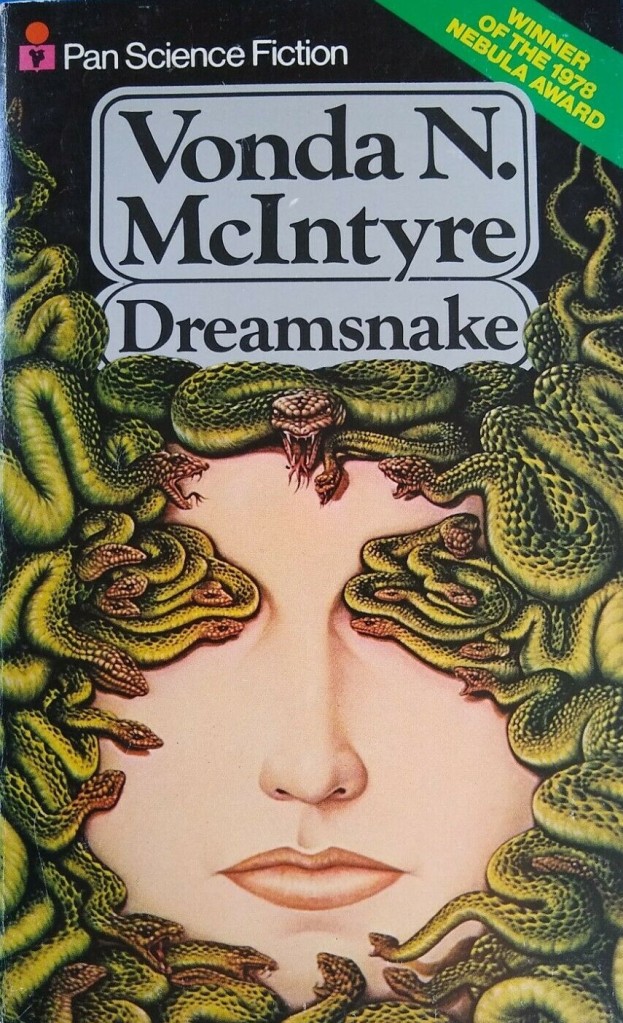
1. Vonda N. McIntyre’s Dreamsnake (1978), 4.75/5 (Near Masterpiece): Won the 1979 Hugo, Locus, and Nebula Award for Best Novel. Snake journeys across the post-apocalyptic wastes of a future Earth with three serpents healing the sick and caring for the dying. She is a member of the healers, who adopt orphans and rescue the oppressed and train them how to use the serpents. Mist and Sand are genetically modified vipers of terrestrial origin. But Grass comes from another alien world. Snake uses Mist and Sand’s venom to create vaccines, treat diseases, and cure tumors. Grass, the rare dreamsnake, with its alien DNA is the most important of them all–it provides therapeutic pleasure and dreams that facilitate conquering one’s fear and healing in the ill. In Snake’s voyages, she encounters prejudice and violence. A joyous sense of sexual freedom permeates the proceedings. A powerful and different take on a post-apocalyptic worldscape in every possible way.

Continue reading
Future Media Short Story Review: Lino Aldani’s “Good Night, Sophie” (1963, trans. 1973)

In the history of my website, I’ve reviewed and adored countless fictions that tackled future formations of the media landscape. Spurned in part by the explosion of television ownership in the 50s, pop art’s obsession with filmic iconography, and popular studies on advertising, science fiction compulsively explored futuristic formulations of media performance and manipulation, exploitation and paranoia (SF Encyclopedia). I’ve decided to put together a review series of short fiction that will continue my exploration of the theme.

It is devilishly difficult to organize all that I’ve reviewed so far but here are a few of the highlights that suggest different routes I might traverse. As I do not plan on rereading stories I’ve covered in the past, feel free to track down some of the gems below.

Christopher Priest’s “The Head and the Hand” (1972), John Brunner’s “Nobody Axed You” (1965), Robert Sheckley’s “The Prize of Peril” (1958), D. G. Compton’s The Continuous Katherine Mortenhoe (variant title: The Unsleeping Eye) (1973), and Robert Silverberg’s “The Pain Peddlers” (1963) explore the intersection of media and the spectacle of suffering. Pain recorded. Deaths televised. Media as death blow.

Kate Wilhelm’s “Baby, You Were Great” (1967), Carol Emshwiller’s “This Thing Called Love” (1955), and James Tiptree, Jr.’s “The Girl Who Was Plugged In” (1973) scrutinize the emotional bifurcation between the audience and their love of the starlet or influencer as presented and constructed. And the ways in which the audience controls the construction…. and by extension the performer.

Lloyd Biggle, Jr.’s “Well of the Deep Wish” (1961), Keith Roberts’ “Sub-Lim” (1965), and Kit Reed’s “At Central” (1967) speculate on the methods media can be used as social control. Of course, in the both the Biggle and Reed, the real world outside has utterly transformed since the audience has slipped into new worlds.

And, of course, I have to include Barry N. Malzberg’s extensive oeuvre–such as Revelations (1972) and Screen (1968). His work often demonstrates the pernicious addiction and desperation audiences and participants project into the media landscape hoping for truth and real experience. The media landscape is yet another mechanized artifice pandering to our obsession with dark spectacle.

I hope you enjoy this series. Feel free to join in (I include a link to the first story below)!

And we have a doozy to start with!

Up Next: Ray Bradbury’s “The Pedestrian” (August 1951).


4.75/5 (Near Masterpiece)

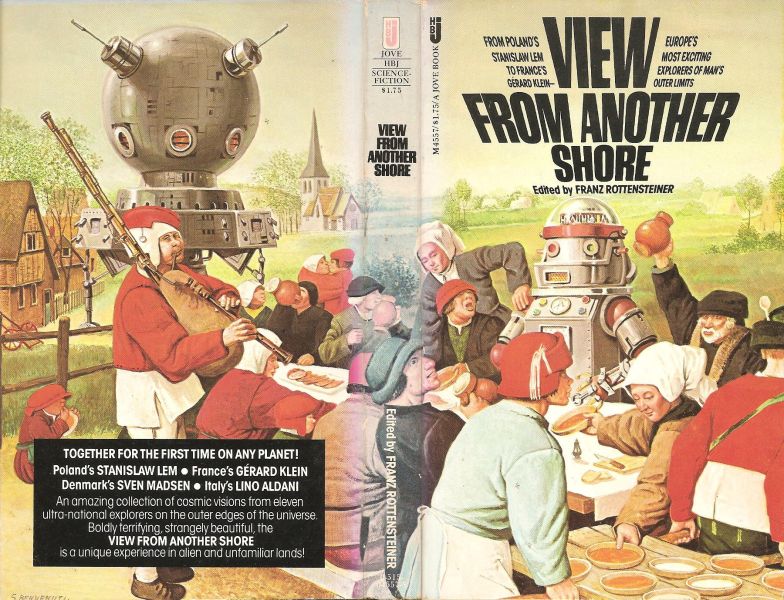
Lino Aldani’s short story “Good Night, Sophie” first appeared under the pseudonym N. L. Janda in Futuro, no. 1 (March/April 1963). Futuro, edited by Aldani along with Giulio Raiola and Massimo Lo Jacono, was the first entirely Italian science fiction magazine (it contained some translations of Polish SF) (contents). I read it in Franz Rottensteiner’s anthology of European science fiction in translation View from Another Shore (1973). You can read it online here.

Continue reading