Updates: Recent Science Fiction Acquisitions No. CLXXXV (Tiptree, Jr. + Lynn + Carey + Best of SF 1968 Anthology)

1. James Tiptree, Jr.’s first novel is not considered one of her better works. But, as my appreciation of her fiction grows, it was hard to pass up (especially at $1). Have you read it?

2. I recently read and reviewed World’s Best Science Fiction: 1967 (1967), ed. Terry Carr and Donald A. Wollheim and was thoroughly impressed. Enough to track down the following year’s anthology….  And, as an avowed D. G. Compton fan (for example, his underrated/underread 1966 novel Farewell, Earth’s Bliss), I was thrilled to see this volume contains one of his few short stories. It also contains the original novella version of one of my favorite SF novels–Robert Silverberg’s Hawksbill Station (1968).

Love the Jack Gaughan cover!

3. A novel by Elizabeth A. Lynn, an author I’ve never read — I approach it with trepidation… But, as I always say, I love exploring lesser known works.

4. Peter Carey, another author I’ve never read. His stories (the publisher attempts to distance them from SF) seem my cup of tea.

As always, thoughts and comments are welcome.

~

1. Up the Walls of the World, James Tiptree, Jr. (1978)

(Uncredited cover for the 1979 edition) Continue reading
Updates: Links from the Vintage SF Blogsphere No. 2 (Soviet SF + Michael Moorcock + Hannes Bok + 70s UK Anthology + Allen Adler)

As a number of my favorite vintage SF sites have either gone into temporary hiatus or stopped posting completely, I’ve decided to make my Links from the Vintage SF Blogsphere a semi-regular feature (Part I). I will also include links to various articles that I’ve encountered that might be older as well.

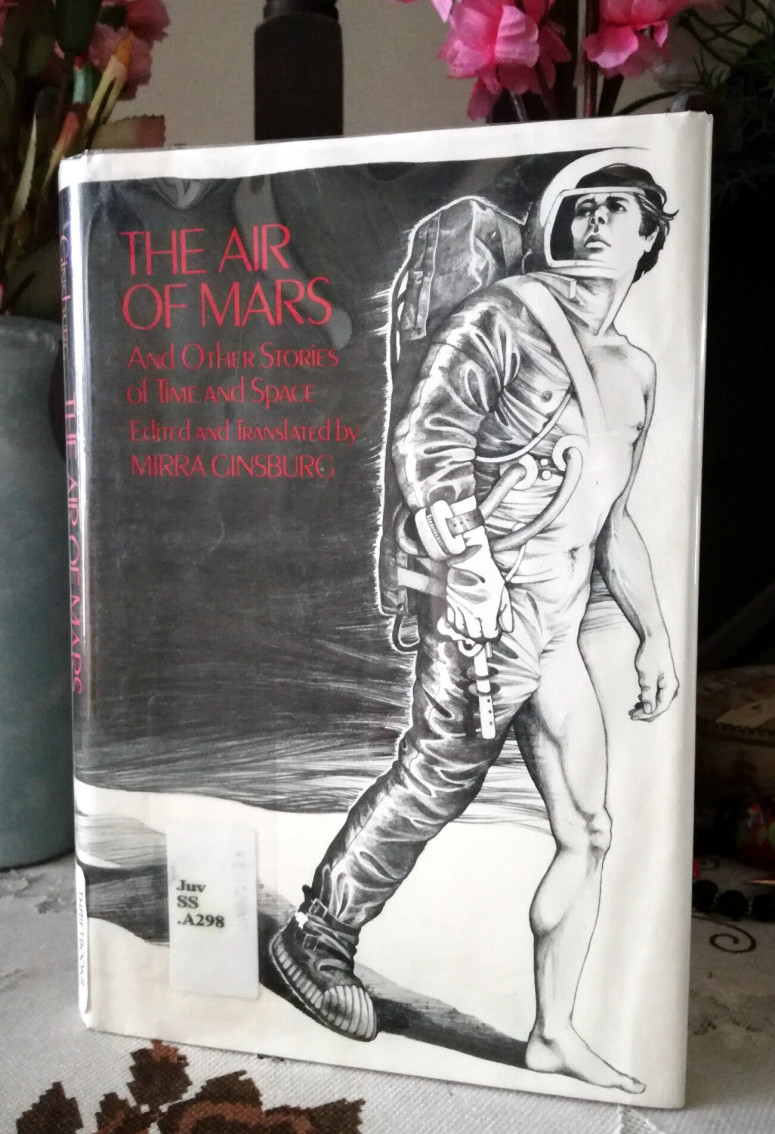
1) Kaggsy, over at Kaggsy’s Bookish Ramblings, reviewed what appears to be an unmissable collection of Soviet SF: The Air of Mars and Other Stories of Time and Space (1976), translated and edited by Mirra Ginsburg. From her review:

“Normally when I read Soviet sci-fi I end up looking for hidden messages or subtexts, as so many authors living under repressive regimes have turned to sci-fi as a way of hiding up their ideas and their dissent. Certainly, there were elements in some of the stories here, most obviously in “We Are Not Alone”, when any heresy against the dominant ideology is harshly punished. And in “Twelve Holidays” the clever trick used to get rid of a ruler could have been wishful thinking on the part of an author living with the cult of great leaders. However, whether or not there are hidden messages, all of these stories sparkled and entertained and made me look at the world and universe around me with fresh eyes – which for me is what I look for in science fiction writing.”

(Image via Kaggsy. Charles Mikolaycak’s cover for the 1976 edition) Continue reading

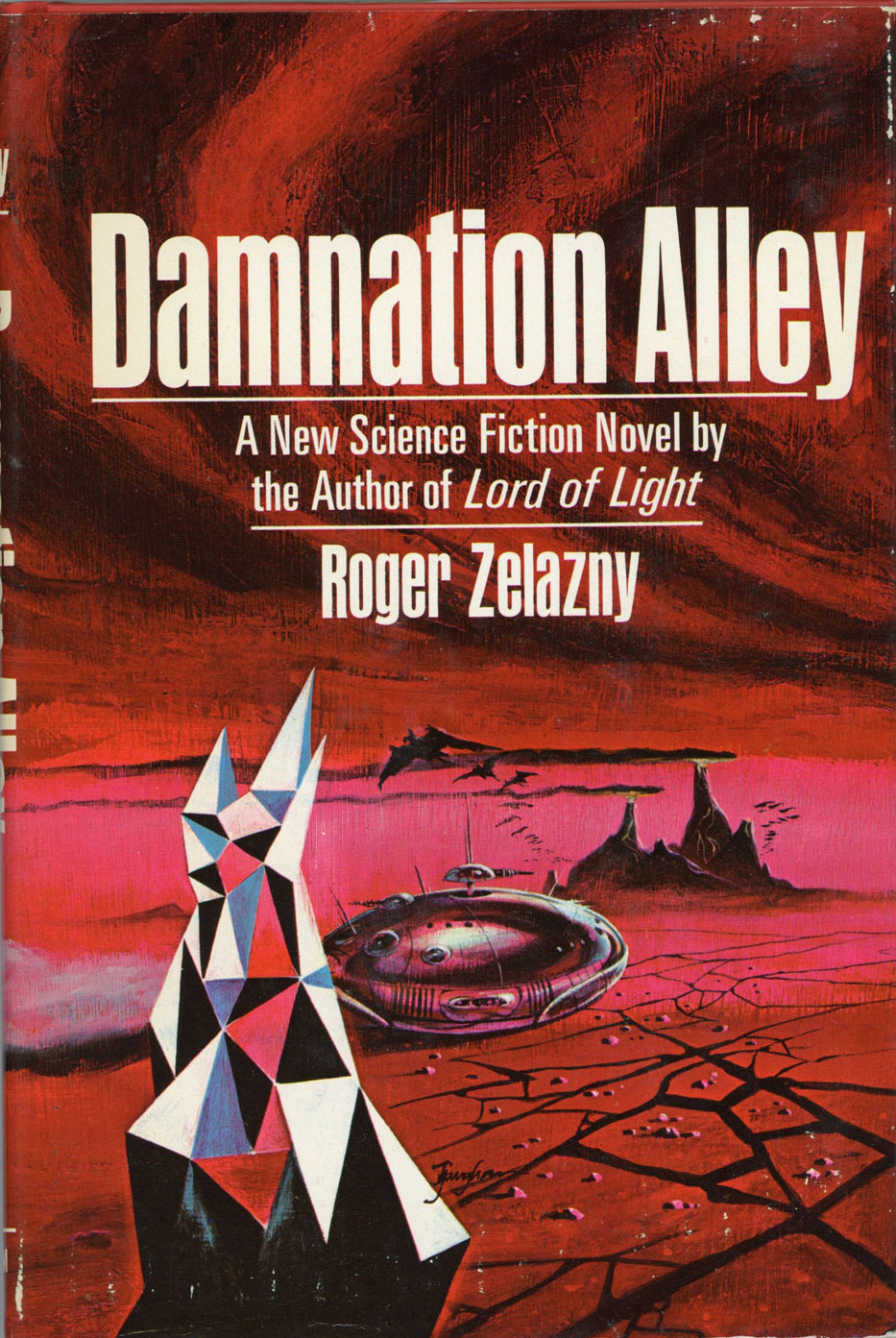
Book Review: Damnation Alley, Roger Zelazny (1969)

(Jack Gaughan’s cover for the 1969 edition)

3/5 (Average)

As I read Roger Zelazny’s post-apocalyptical adventure Damnation Alley (1969), the relentless throbbing of Hawkwind’s 1977 song inspired by the novel along with cringeworthy lines of dialogue from the 1977 film version kept interjecting themselves into my reading experience.

First, a snippet from the song….

I’ve got the serum and I’m going to take it
All the way to Boston, oh I’ve got to get through
The going won’t be easy, but I’m going to make it
It’s the only thing that I’m cut out to do
Ride the post-atomic radioactive trash
The sky’s on fire from the nuclear flash
Driving through the burning hoop of doom,
In an eight wheeled anti-radiation tomb
Thank you Dr. Strangelove for going doolally,
and leaving me the heritage of Damnation Alley […].

Absent from Hawkwind’s interpretation that Continue reading

Updates: Links from the Vintage SF Blogsphere No. 1 (Philip K. Dick + Ward Moore + Michael Moorcock + and others)

For my readers who do not have twitter I’ve decided to post every few weeks links to articles/reviews/and other resources that particularly interested me. Predominately vintage SF/F related, a few might dally in more diverse directions—German avant-garde art for example.

It’s always worth supporting fellow bloggers!

As always, I’d love to hear your thoughts on the books/articles.

(New Worlds, #197 January 1970, ed. Charles Platt)

1) A fascinating article: SF New Worlds and Savoy Books: Michael Butterworth via Andrew Darlington on his indispensable site Eight Miles Higher.

“Michael Butterworth was an integral part of the ‘New Worlds’  SF New Wave, just as he was perpetrator of the sensationally iconoclastic ‘Savoy Books’ revolution in Manchester, and his fiction is never less than challenging. Andrew Darlington charts his evolution as a literary activist…”
2) Andrew Darlington reviews The Twilight Man, Michael Moorcock (1966).

Continue reading

Updates: Recent Science Fiction Acquisitions No. CLXXXIV (Kornbluth + Goldin + Charnock + Harrison edited Anthology)

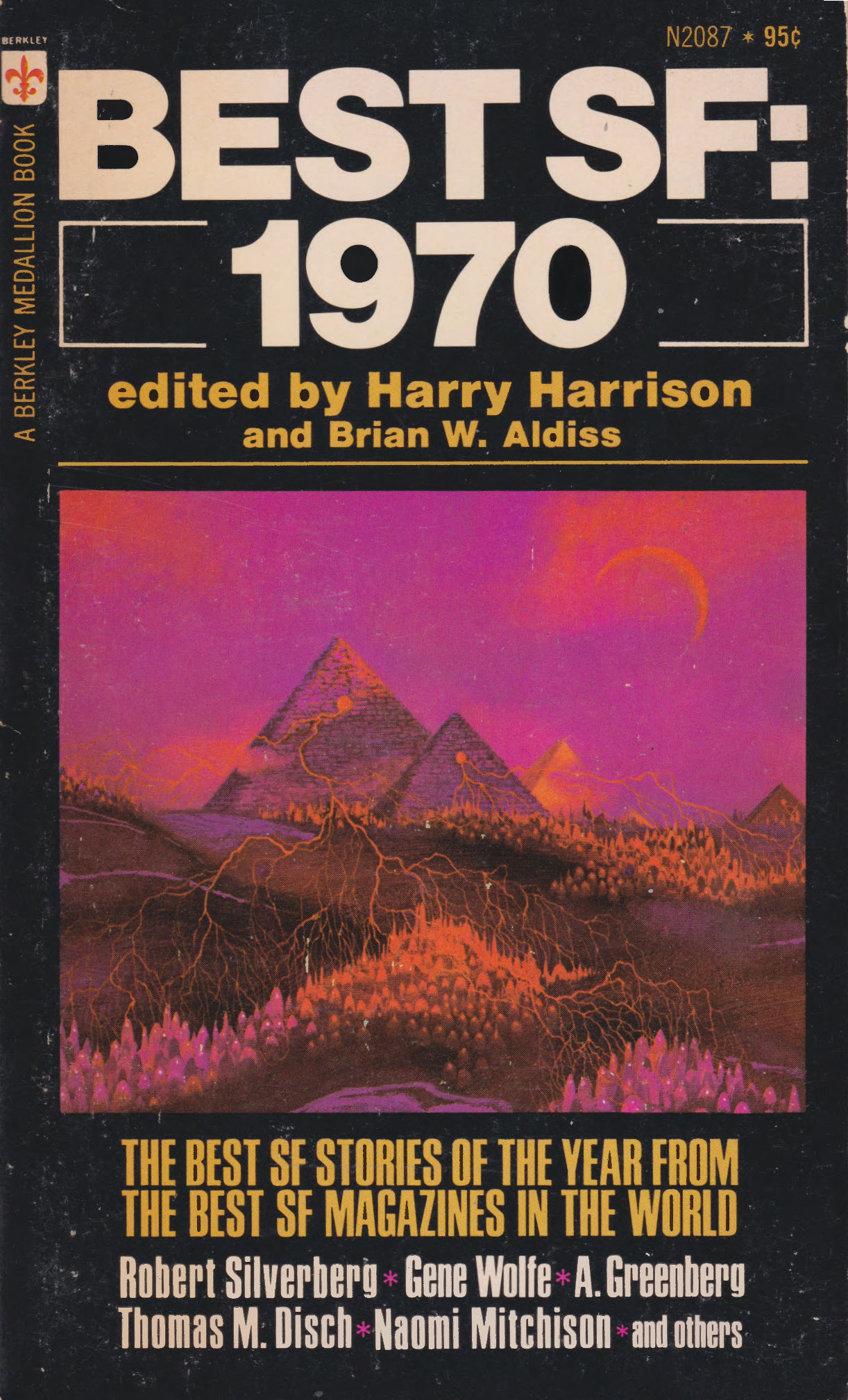
1) A 1970s SF short story anthology. How could I resist? Could you? As with Judith Merril’s anthology I posted recently, Harry Harrison applies a very wide-ranging lens (publication venue, non-English language authors, etc) to the notion of “SF.”

2) Occasionally I procure (but more often than not, fail to review) a handful of newer SF novels by authors who haven’t yet received the spotlight they deserve. I listened to Anne Charnock’s A Calculated Life (2013) as an audible audiobook and found it rather brilliant. In a recent trip to Edinburgh, Scotland I went out for beers with Mike at Transreal Fiction and snagged a copy of Charnock’s newest novel from his store. I apologize in advance if no review appears—I must have a mental block when comes to reviewing books published in the last three decades. hah.

3) Today (July 23rd) is C.M. Kornbluth’s birthday! He’s long been one of my favorite 50s short fiction authors—I’ve reviewed The Marching Morons and Other Famous Short Stories (1959)The Explorers (1954), and Gladiator-At-Law (magazine publication 1954) with Frederik Pohl.

Another one of his short fiction collections — edited after his death by James Blish.

4) I’ve never read anything by Stephen Goldin. MPorcius over at MPorcius’ Fiction Log spoke highly of Goldin’s Assault on the Gods (1977). I don’t know what to expect.

As on any and all posts, thoughts and comments are welcome.

1. Best SF: 1970 (variant title: The Year’s Best Science Fiction No. 4), ed. Harry Harrison (1971)

(Paul Lehr’s cover for the 1971 edition) Continue reading

Adventures in Science Fiction Cover Art: French comic book style 70s SF art by Serge Clerc

(Serge Clerc’s cover for the 1977 edition of The Dramaturges of Yan (1972), John Brunner)

Joachim Boaz compiling a post about SF comic book art? Wait. Wait. That can’t be, I remember reading in a comment months ago that he hasn’t opened a comic book once in his entire life. Oh, that makes more sense, the French artist Serge Clerc, who worked for Métal Hurlant early in his career, also created SF covers….

…and they are quite fun in their wacky way. In 1977 for the French Presses de la Cité – Futurama, Serge Clerc created eight covers–gracing works by Brunner, Octavia Butler, E. C. Tubb, and James Gunn–of which I’ve included seven in this post. My favorite is his 1977 edition of John Brunner’s  Continue reading

Updates: Recent Science Fiction Acquisitions No. CLXXXIII (Huxley + Vance + Sherred + Merril edited Anthology)

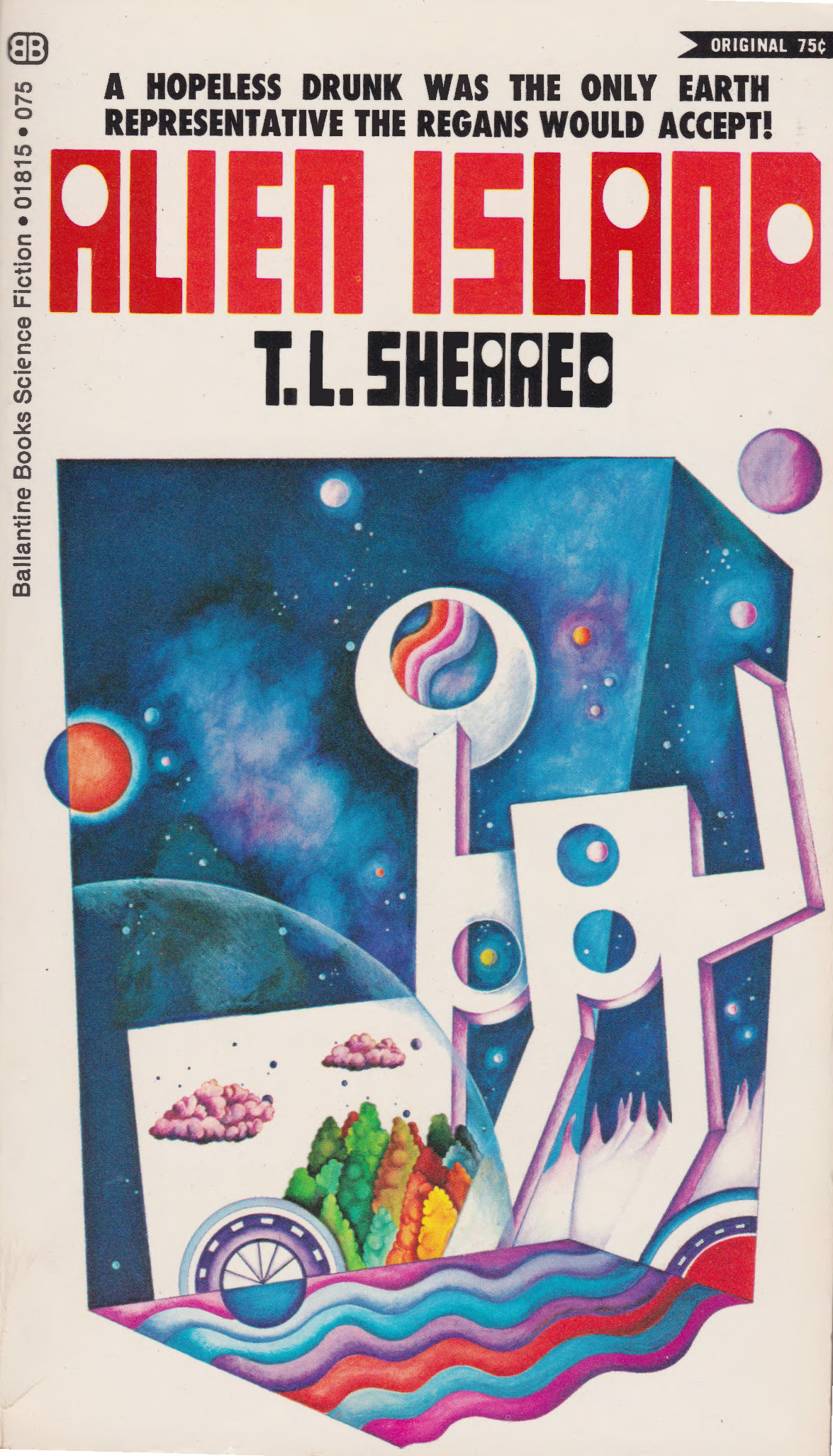
1) What a bonkers cover from Carol Inouye (her only credited piece according to The Internet Speculative Fiction Database)! I do not have high hopes for the novel. T. L. Sherred published little SF in his career–he was a technical writer for the Detroit auto industry. Clute over at SF Encyclopedia describes Alien Island (1970) as “comic but fundamentally melancholy.”

2) Another SF novel from Aldous Huxley. I’ve wanted a copy of Ape and Essence (1948) for a long time. I’ve always preferred Brave New World (1931) to both Orwell’s Nineteen Eighty-Four (1949) and Yvengy Zamyatin’s We (1921). Excited! Thoughts?

3) A wide-ranging SF anthology from Judith Merril. I am especially interested in reading her intro… and Ward Moore’s “The Fellow Who Married the Maxill Girl” (1960) as Admiral.Ironbombs has been reviewing and enjoying a lot of his work as of late: Bring the Jubilee (1953), “Lot” (1953), and “Lot’s Daughter” (1954).

4) A Jack Vance fix-up novel/short story collection containing seven additional stories in the Dying Earth sequence. Confession time: I read half of the stories in The Dying Earth (1950) recently and could not finish it. There was a certain half-hearted attempt to create a future mythology that slips all too easily into bland fantasy mode. Conflicted.

As always, thoughts and comments are welcome.

Note: I’ve finally settled on a new look for my site. There are a few minor issues (not showing comment numbers at the top of the post etc.) but I think the look is more professional and focuses on showcasing content.

~~

1. Alien Island, T. L. Sherred (1970)

(Carol Inouye’s cover for the 1970 edition of Alien Island (1970), T. L. Sherred) Continue reading

Updates: Evan Lampe’s Philip K. Dick Read-Through Podcast (and Cover Gallery)

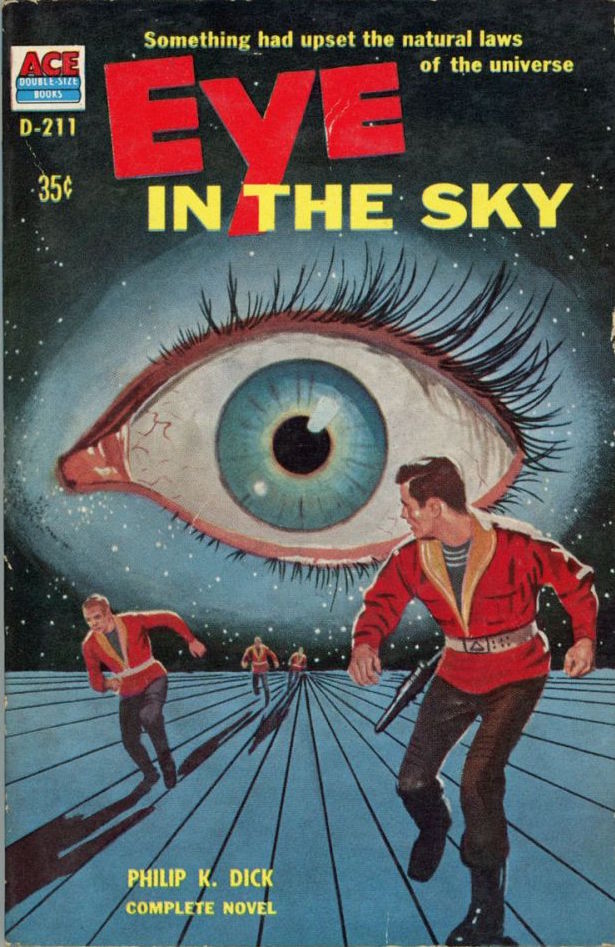
(Ed Valigursky’s cover for the 1957 edition of Eye in the Sky (1957), Philip K. Dick)

As the mapmaker in Russell Hoban’s The Lion of Boaz-Jachin and Jachin-Boaz (1973) who creates a map that shows the places of inspiration, I too like to guide people towards voices that are worth the listen. I encountered the writings of Evan Lampe (@EvanLampe1) while perusing various SF articles on WordPress—his site gave an encyclopedic look at the stories and thought of Philip K. Dick. And now he’s following up with a podcast read-through (mostly chronological) of PKD’s fiction.

Evan described the podcast to me as follows:

“My main podcast is based on the idea of looking at American writers. I just wanted to podcast. I would have done it on Youtube but I do not really have the video editing skills to pull that off. Mostly, in that series I am driven to make a full-throated defense of America in these bizarre times. Perhaps its therapy. I guess you are more interested in my Philip Dick series. I think I talk about my motivations for that in my episode on “Stability”. It comes down to Dick being more culturally relevant than ever, with new TV series and a new Blade Runner film. I also never stopped believing that his writing is a useful tool in talking about many of our contemporary political and social dilemmas. The systematic approach will ensure that the stories and early novels will get the love that they deserve. There are a handful of aspects of Dick’s writing that need special attention (the frontier, post-scarcity, work, automation). I am trying to keep these most contemporary questions in mind as I re-read these works.”

Continue reading

Adventures in Science Fiction Cover Art: Italian Covers for Philip K. Dick’s Novels and Short Story Collections

(Karel Thole’s cover for the 1986 edition of The Divine Invasion (1981), Philip K. Dick)

Following close on the heels of my post on European (Italy, France, and Spain) editions of Robert Silverberg’s SF I present fifteen Italian covers for Philip K. Dick’s novels and short story collections. Karel Thole, as always, puts in the best shift. But there are some other gems—for example Libero Vitali’s cover for the 1974 edition of PKD’s wonderful (and terrifying) novel A Maze of Death (1970).  My favorite Thole cover of the bunch is for Urania #897 (1981), which contains contains various PKD short stories gathered by the Italian editors. Thole’s delightful ability to interject uncanny surrealist elements in his art matches perfectly PKD’s own stylistic tendencies.

Note: There’s a fantastic (but incomplete) resource that gathers thumbnail images of many of the PKD’s foreign editions. I have tried to find higher quality ones that also appealed to me for the sake of this post. But check Continue reading