Updates: Recent Science Fiction Purchases No. CCXCVIII (Harlan Ellison, Edward Bryant, Murray Constantine, Sayko Komatsu, and an automobile-themed anthology)

Which books/covers/authors intrigue you? Which have you read? Disliked? Enjoyed?

1. Car Sinister, ed. Robert Silverberg, Martin Harry Greenberg, and Joseph D. Olander (1979)
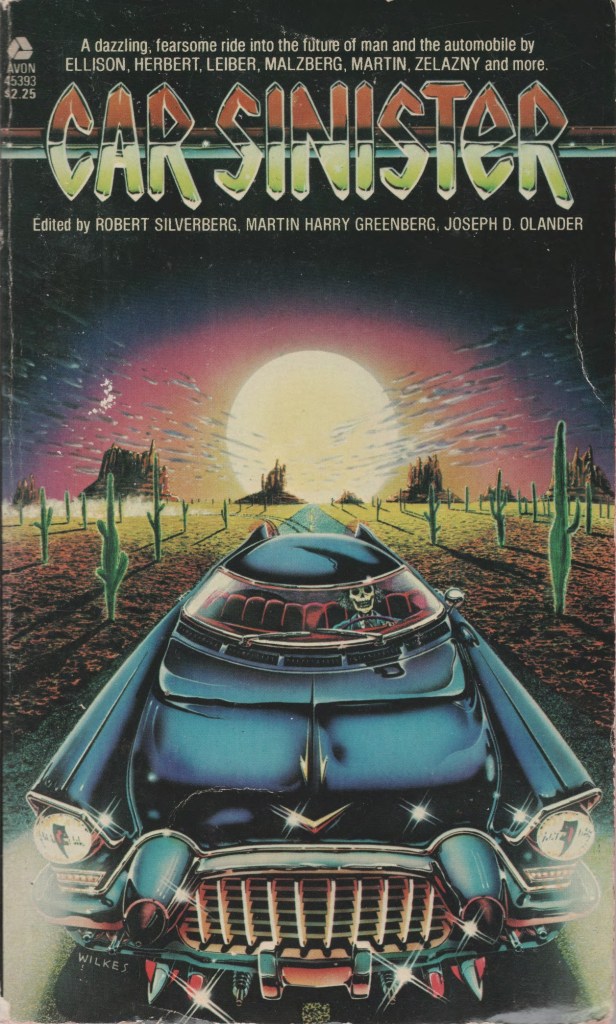
From the back cover: “MAN AND HIS MACHINE. The car is man’s most personalized machine; for teenagers it is a rite of passage and a statement of freedom; for adults it is a reflection of success, taste, and hopes; and for an entire culture it is a great and industrious mode of transportation–driving, perhaps, on the road of destruction. And the automobile–thrilling, honking, speeding, nerve-shattering–haunts us with the dark possibility that when our age of motoring innocence is over, we may no longer be the masters… CAR SINISTER–a splendid, imaginative vision of what lies down the road for all of us.”

Continue reading
Book Review: The Grain Kings, Keith Roberts (1976)

4/5 (collated rating: Good)

Keith Roberts (1935-2000) was an influential, if underread and underappreciated, English author (and cover artist) best known for his alternate history fix-up novel Pavane (1968) and powerful short fictions evocative of the English countryside. He won four BSFA awards in various categories (novel, short story, and artist) yet did not achieve the same critical success in the United States. According to his obituary, his difficult personality, like his common male main characters unable to form steady professional or personal relationships, and propensity to refuse to deal with major publishers impacted his popularity.

Continue reading

Book Review: After the Flood, P. C. Jersild (1982, trans. 1986)

4.75/5 (Near Masterpiece)

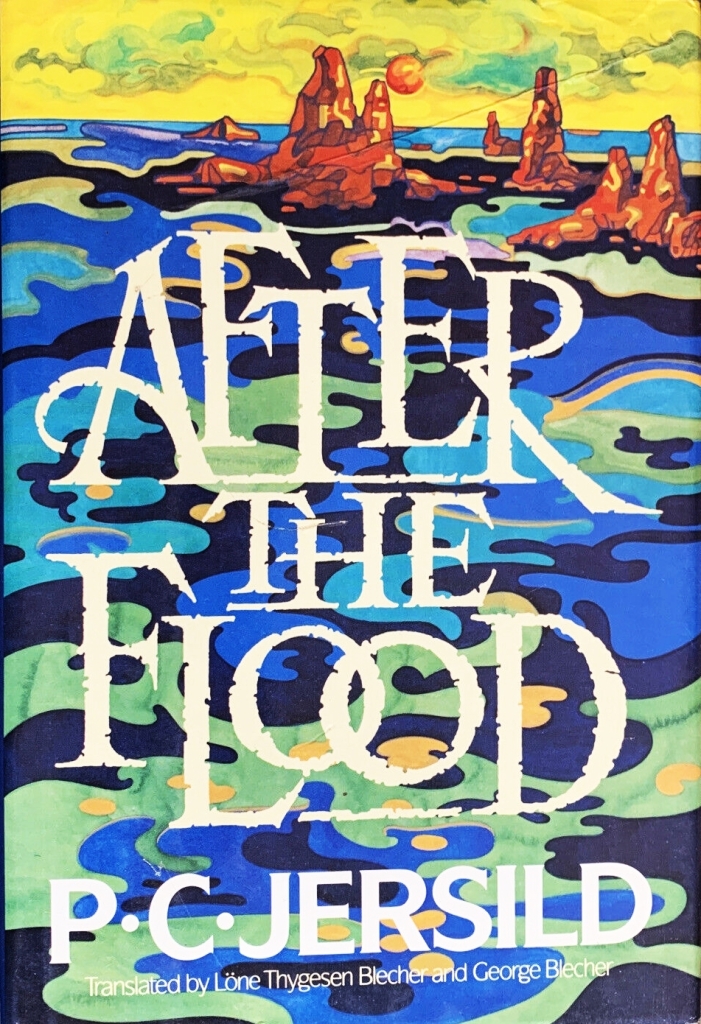
P. C. Jersild’s After the Flood (1982, trans. 1986), a relentlessly bleak and incisive analysis of humanity’s death drive after a nuclear event, hits harder than Cormac McCarthy’s The Road (2006). Possessed by a deceptively powerful prose, Jersild maps out the apocalyptic bodyscapes of this new and dying world with merciless strokes.

P.C. Jersild (1935-), a Swedish physician and author, wrote a handful of novels that can be classified as science fiction. According to SF Encyclopedia, he’s “a central figure in modern Swedish literature, both a favorite among critics and, with some of his novels, a major bestseller.” Until recently, as is typical for many mainstream authors, Jersild tried to distance himself from SF despite writing a range of works that are set in the future. Of these works, unfortunately only three have been translated into English–The Animal Doctor (1973, trans. 1975), A Living Soul (1980, trans. 1988), and After the Flood (1982, trans. 1986).

Continue reading

Future Media Short Story Review: Barry N. Malzberg’s “The Idea” (1971) (as K. M. O’Donnell)

Today I’ve reviewed the thirteenth story in my series on the science fictional media landscape of the future. Here, I finally return to the nightmarish embrace of Barry N. Malzberg.

Previously: Pat Cadigan’s “Rock On” (1984).

Up Next: Walter F. Moudy’s “The Survivor” (May 1965).

3.5/5 (Good)

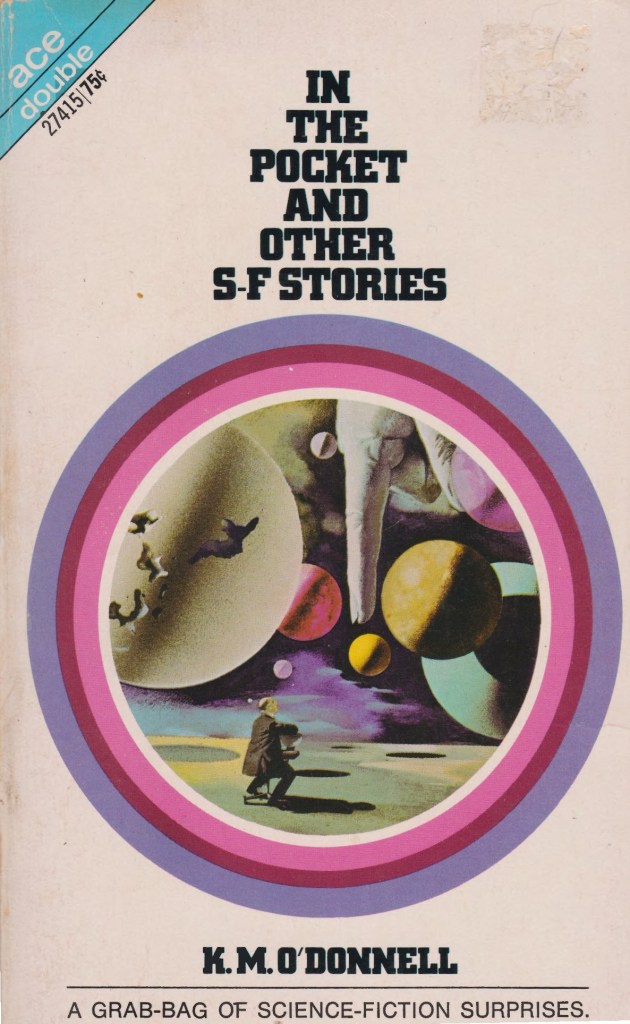
Barry N. Malzberg’s “The Idea” first appeared in In the Pocket and Other S-F Stories (1971) (as K. M. O’Donnell). I cannot find the story online. Please contact me if you do not own a copy and want a PDF of the story. I recommend you procure the fantastic anthology TV: 2000, ed. Isaac Asimov, Martin H. Greenberg, Charles G. Waugh (1982) which “The Idea” also appears in. I’ll be returning to this volume in coming weeks for this series.

Reading a Barry N. Malzberg story is like returning to a familiar embrace–an embrace of the blackest satire conveyed via terrifying existential traps. Ever since I read his masterpiece Beyond Apollo (1972), a metafictional destruction of America’s obsession with space exploration, Malzberg joined the pantheon of my favorite authors.

Continue reading

Short Fiction Reviews: Algis Budrys’ “Forever Stenn” (variant title: “The Ridge Around the World”) (1957), Basil Wells’ “Sole Survivor” (1957), Helen McCloy’s “The Unexpected” (1957), and John D. Odom’s “The Word is Law” (1957)

Preliminary note: I never can pinpoint exactly why I read what I read when I read it as I am a creature of impulse and whim. While browsing lesser known authors, I came across Helen McCloy (1904-1994). She’s best known for her post-apocalyptic novel The Last Day (1959) (as Helen Clarkson)—which you read online as paper copies are incredibly scarce and expensive–and wrote a handful of speculative short stories of which three appear to be science fiction. Mysteries and non-genre fiction made up the majority of her output.

The Last Day led me to McCloy’s “The Unexpected” (1957) and that in turn lead me to the December 1957 issue of Satellite Science Fiction, ed. Cylvia Kleinman. As I recently read the short novel in the issue, Jack Vance’s solid The Languages of Pao (1957), I decided that I might as well read the rest of the stories in the magazine. And I hadn’t read a Budrys short in a bit… And I’d never heard of Basil Wells (1912-2003) or John D. Odom (unknown dates).

Continue reading

Updates: Recent SF Purchases No. CCXCVI (Harry Harrison, Carole Nelson Douglas, Terry Bisson, Star Anthology)

Which books/covers/authors intrigue you? Which have you read? Disliked? Enjoyed?

1. Planet of the Damned, Harry Harrison (serialized 1961)

From the back cover: “Brion Brandd of the Galactic CRF had a problem. It was the planet Dis. Brion’s assignment was to salvage it.

Dis was a harsh, inhospitable, dangerous place and the Disans made it worse. They might have been a human once–but they were something else now.

The Disans had only one desire–kill! Kill everything, themselves, their planet, the universe if they could–

BRION HAD MINUTES TO STOP THEM–IF HE COULD FIND OUT HOW!”

Initial Thoughts: Smells like a variation of Harrison’s Deathworld (1960), which I never managed to review, from a year earlier. Which isn’t a good sign… Planet of the Damned was a finalist for the 1962 Hugo for Best Novel. It lost to Robert A. Heinlein’s Stranger in a Strange Land (1961).

Continue reading

Short Book Reviews: Michael G. Coney’s Monitor Found in Orbit (1974) and Ron Goulart’s After Things Fell Apart (1970)

Note: My read but “waiting to be reviewed pile” is growing. Short rumination/tangents are a way to get through the stack before my memory and will fades. Stay tuned for more detailed and analytical reviews.


1. Monitor Found in Orbit, Michael G. Coney (1974)

3/5 (collated rating: Average)

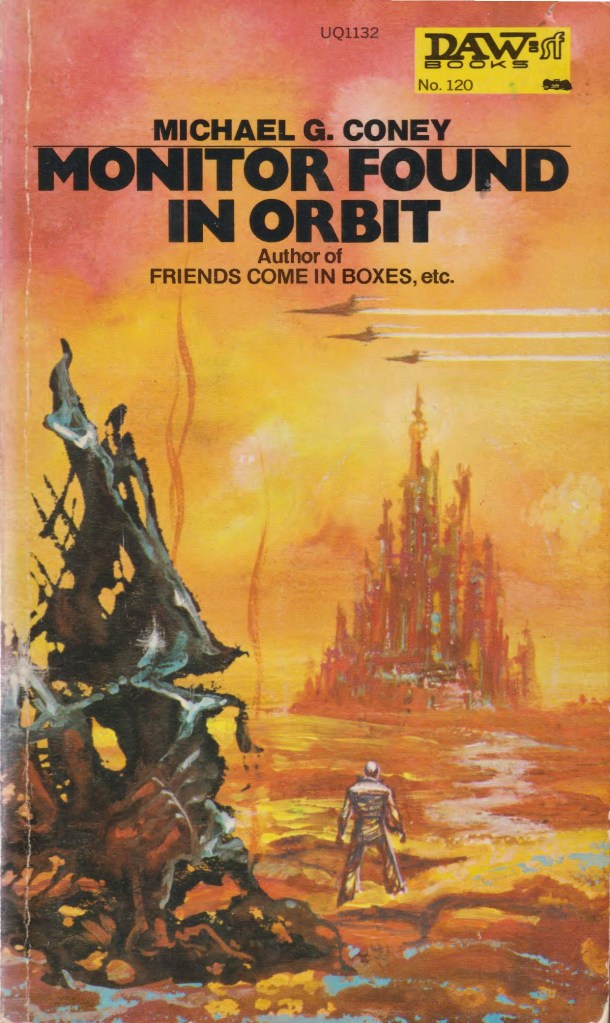
I’ve long enjoyed Michael G. Coney’s science fiction–check out Friends Come in Boxes (1973), Hello Summer, Goodbye (variant title: Rax) (1975), “Those Good Old Days of Liquid Fuel” (1977), and my recent rumination on “The Mind Prison” (1971) (which appears in this collection) for my Generation Ship Short Story Review series. Unfortunately, the majority of the stories in Monitor Found in Orbit (1974), his only published short story collection, are middling at best. I waited far too long to review this one! Despite the presences of some solid to good stories, I can only provide brief summaries at this point without a reread.

Continue reading

Updates: Recent Science Fiction Purchases No. CCXCV (Andre Norton, Alfred Bester, Kendell Foster Crossen, Mark Clifton, Frank Riley)

Which books/covers/authors intrigue you? Which have you read? Disliked? Enjoyed?

1. They’d Rather Be Right, Mark Clifton and Frank Riley (1954)

Inside page blurb: “They’d rather be right!

They tried to smash ‘Bossy’ the super-computer. Joe Carter and his strange friends saved the machine–but that really wasn’t necessary. You can’t smash an idea–and the idea was bound to grow again anyway. But people can hate an idea….

They’d rather be right!

Continue reading

Book Review: Universe 12, ed. Terry Carr (1982) (Kim Stanley Robinson, Howard Waldrop, Nancy Kress, R. A. Lafferty, et al.)

3.5/5 (collated rating: Good)

My fifth sojourn to Terry Carr’s Universe series of original anthologies (17 volumes published between 1971-1987) embodies the reasons I gravitate towards the medium: I discover new authors, I reassess old opinions, and deepen my understanding of my favorites. Recommended for Nancy Kress’ rumination on a childhood wrecked by insanity; Kim Stanley Robinson’s character piece on Mars transforming; Howard Waldrop’s account of obsession in an apocalyptic past; and Bruce McAllister’s tale of an astronaut returning home and the lies we tell.

Recommended for fans of more introspective early 80s SF.

Brief Plot Summary/Analysis

“A Pursuit of Miracles” (1982), George Turner, 3/5 (Average): The Australian author and SF critic George Turner (1916-1997) published his first science fiction at 62! It’s never too late to start. A few years ago I read Turner’s first novel Beloved Son (1978) in the Ethical Culture trilogy. While the details have faded from memory as I never got around to writing a review, I remember how fascinated I was by the exploration of a post-Holocaust world by a returning expedition in the first half of the novel. The second half faded and grew increasingly ponderous and I’m not sure I finished….

Continue reading