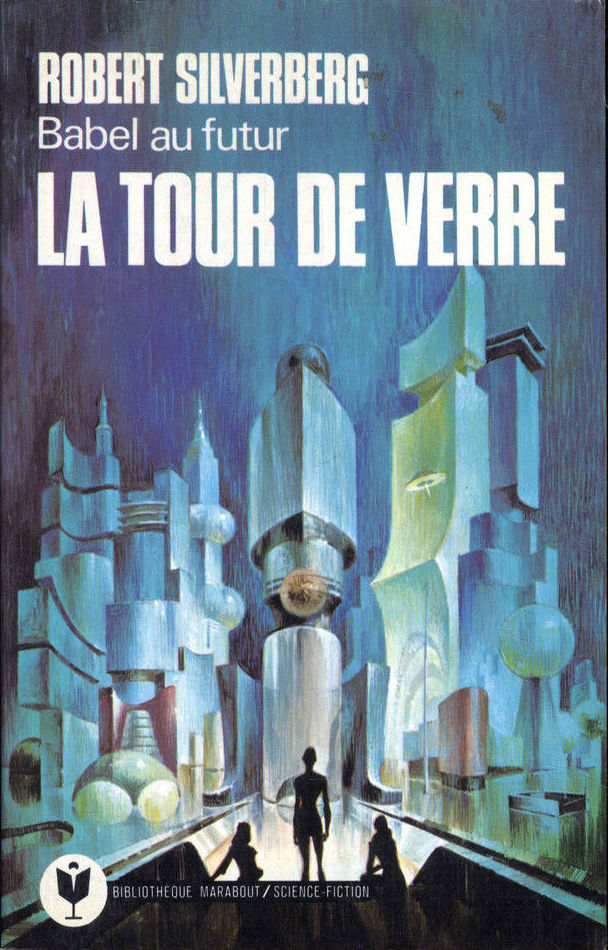
Adventures in Science Fiction Cover Art: A Handful of French, Italian, and Spanish Editions of Robert Silverberg’s Science Fiction

(Uncredited cover for the 1977 French edition of Tower of Glass (1970), Robert Silverberg)

Robert Silverberg (b. 1935) has long been one of my favorite SF authors. Especially between 1967-1975 (i.e. his shift away from pulp and before his momentary retirement), Silverberg produced a prodigious and thought-provoking corpus of writing. The sheer number of brilliant works crammed into those few years is only rivaled by Barry N. Malzberg (1969-1976) and Kate Wilhelm (1967-c. 1976).

As I’ve been exploring other less known authors, I’ve not read a lot of Silverberg’s novel-length works recently. Tower of Glass (1970), Nightwings (1969), A Time of Changes (1971), The Stochastic Man (1975), Son of Man (1971), and Up the Line (1969) among others remain unread on my shelf. Rather, I’ve restricted my focus to a few wonderful short stories in various collections here and there—“Passengers” (1968), a haunting masterpiece story of alien possession; “When We Went to See the End of the World” (1972), suburban banter Continue reading

Book Review: World’s Best Science Fiction: 1967 (variant title: World’s Best Science Fiction: Third Series), ed. Donald A. Wollheim and Terry Carr (1967)

(Jack Gaughan’s cover for the 1970 edition)

3.75/5 (collated rating: Good)

Philip K. Dick. Roger Zelazny. Bob Shaw. Michael Moorcock. R. A. Lafferty. Seldom do I say that a “best of” anthology includes a large number of the best stories of the year. From PKD’s artificial memories to Bob Shaw’s slow glass,  World’s Best Science Fiction: 1967 (1967) contains both fascinating technological marvels and serious character-centered storytelling. While not all the stories are successful, I highly recommend this collection for fans of 60s SF.

Note: I reviewed both Roger Zelazny stories elsewhere—I have linked and quoted my original reviews.

Brief Analysis/Plot Summary

“We Can Remember It for You Wholesale” (1966) Continue reading

Updates: Recent Science Fiction Acquisitions No. CLXXXI (Harrison + Sturgeon + Moorcock + Buzzati)

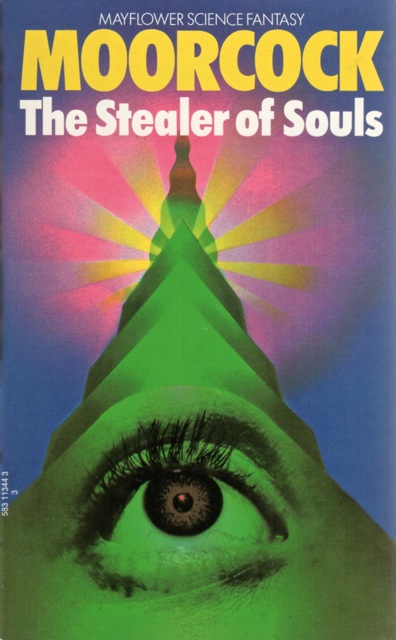
1) Early Elric stories from Michael Moorcock’s pen. Confession: I bought it in Scotland due to the disquieting cover rather than any love of heroic fantasy—albeit M. John Harrison’s The Pastel City (1971) was pretty darn good.

The fantastic cover is uncredited: thoughts regarding the artist?

2) I adored Dino Buzzati’s magical realist novel The Tartar Steppe (1940). And the movie adaptation The Desert of the Tartars, dir. Valerio Zurlini (1976) inspired by the aesthetics of Giorgio de Chirico —I even wrote a half-baked and cursory review of the movie many years ago. While browsing I discovered that Buzzati wrote what is considered the first serious Italian SF novel—Larger than Life (1960). I can’t wait to read it!

3) More Theodore Sturgeon short stories….

Relevant reviews: A Way Home (1956), The Cosmic Rape (1958) and Venus Plus X (1960).

4) A while back I watched, and struggled to enjoy, the 1975 film adaptation of William Harrison’s short story “Roller Ball Murder” (1973). Time to read the source material. Copy snagged in Edinburgh, Scotland.

As always, I look forward to your thoughts.

1. The Stealer of Souls, Michael Moorcock (1963)

(Uncredited cover for the 1968 edition) Continue reading

Updates: Recent Science Fiction Acquisitions No. CLXXX (The Scotland Edition No. 2) (Ballard + Wyndham + Shaw + Aldiss)

Still abroad. Need my desk and familiar surroundings to write book reviews. Alas.

That said, more books from my Scotland travels. Here’s Part I in my Scotland series.

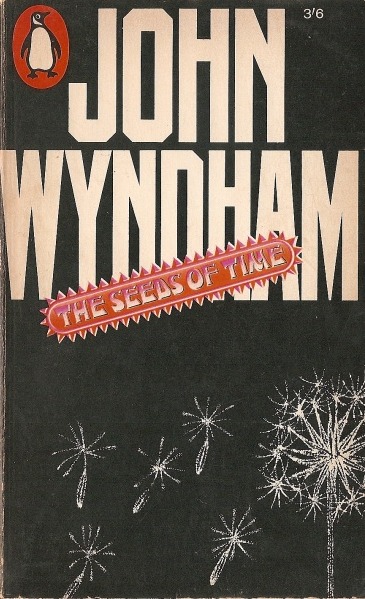
1) I need to read more John Wyndham. I often find short stories are the best place to start. And as I was journeying around the UK, Penguin editions are plentiful!

2) One of J.G. Ballard’s best known novels. The one Cronenberg got his hands on…. Relevant reviews: Billenium (1962), High-Rise (1975), and The Voice of Time and Other Stories (1962).

3) A late 70s Brian W. Aldiss collection. He’s long been a favorite on this site—especially his short fiction. I’ve reviewed the following collections: Starswarm (1964), No Time Like Tomorrow (1959), Galaxies Like Grains of Sand (1960), and Who Can Replace a Man? (variant title: Best Science Fiction Stories of Brian W. Aldiss) (1965).

4) And finally, another Bob Shaw novel. I’ve heard that The Palace of Eternity (1969) is one strange read.

Note: As I am still abroad and without my handy scanner, I’ve had to include cover images of two of the books which I do not own. At some later point I might replace the images with high-res scans.

As always, I look forward to your thoughts and comments!

1. The Seeds of Time, John Wyndham (1956)

(Uncredited cover for the 1966 edition) Continue reading

Updates: Recent Science Fiction Acquisitions No. CLXXIX (The Scotland Edition) (Moorcock + Cowper + Dozois + Raphael)

My perambulations through Scotland (Edinburgh–> castles–> castles–> Aberdeen–> Orkney Islands–> broch–> chambered cairn –> haggis meat pie) has not provided the most suitable opportunities to sit down and put in the hours necessary to review books. However it has given me the opportunity to acquire a range of UK editions.

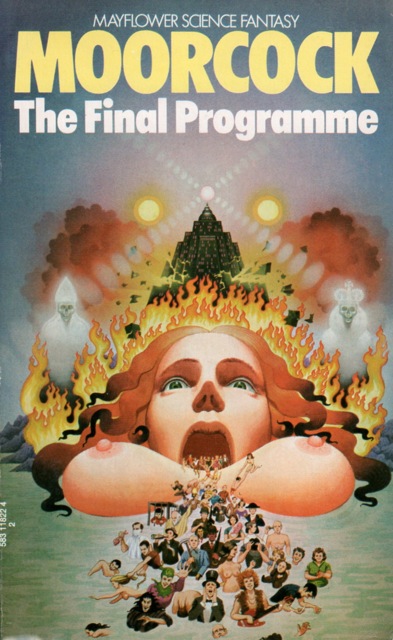
1) Michael Moorcock’s first Jerry Cornelius novel. Count me intrigued (but filled with trepidation)! I look forward to reading The Final Programme (1968) when I finally get home to the States.

A bizarre Bob Haberfield cover!

Relevant recent review: An Alien Heat (1972)

2) Gardner Dozois blew me away with his short story “Horse of Air” (1970) and I look forward to trying one of his novel length works. Strangers (1978) was nominated for the 1979 Nebula Award.

3) Rick Raphael’s slice of life fix-up novel–about life patrolling the streets of the future–Code Three (1967) was not without merits. I’m eager to read more of his short fiction.

4) Richard Cowper’s Profundis (1979) mixed humor and a wicked streak of satire to create a SF parable that made me want more. And the short stories in The Custodians (1976) were middling to good. Kuldesak (1972) takes on a far more standard theme…

Note: as I am not home with my handy scanner these are cover images I found online rather than high resolution images of my own copies.

I look forward to your thoughts! Any favorite covers?

1. The Final Programme, Michael Moorcock (1968)

(Bob Haberfield’s cover for the 1971 edition) Continue reading

Updates: Recent Science Fiction Acquisitions No. CLXXVIII (Carter + Boyd + Platonov + Anthology with Sturgeon, Bradbury, Budrys, et al.)

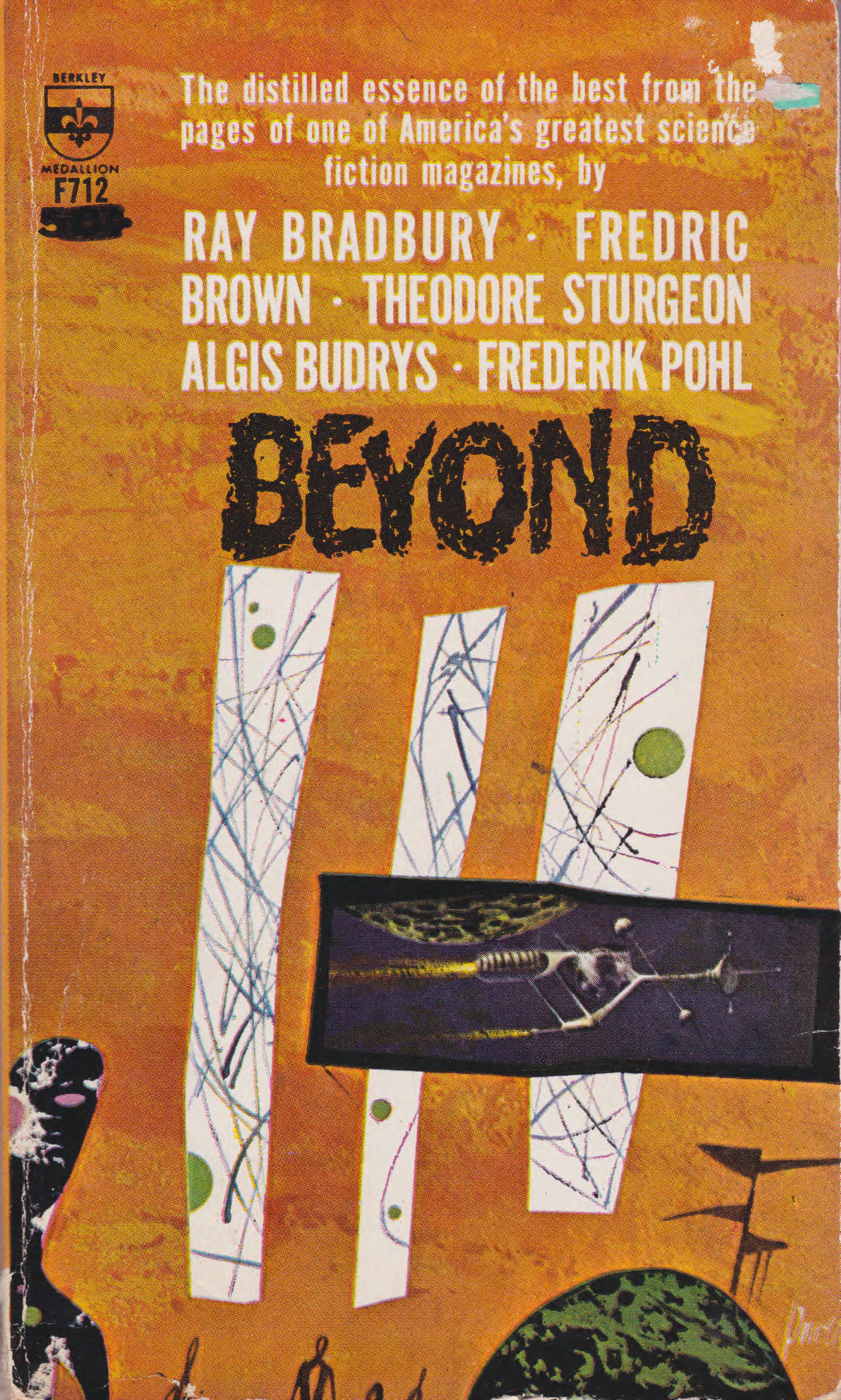
1) Can’t resist a beautiful Richard Powers cover even on a rather standard 60s anthology of short stories—includes Ray Bradbury, Fredric Brown, Theodore Sturgeon, Wyman Guin, Algis Budrys, etc.

Relevant reviews: Algis Budrys’ collection Budrys’ Inferno (1963) and Wyman Guin’s superb collection Living Way Out (variant title: Beyond Bedlam) (1967).

2) A SF novel by Angela Carter — enough said…

3) One of the great (and lesser read) Soviet dystopias! Can’t wait!

4) Another bargain bin find by John Boyd… with some incredibly hyperbolic cover blurbs on the back about his earlier (and lackluster) novel The Last Starship from Earth (1968).

As always, thoughts/comments are welcome!

1. Beyond, ed. Thomas A. Dardis (1963)

(Richard Powers’ cover for the 1963 edition) Continue reading

Adventures in Science Fiction Cover Art: Pierre Faucheux’s 1970s covers for La grande anthologie de la Science-Fiction (robots, the end of the world, aliens, etc)

(Cover for the 1974 edition of Histoires de robot)

While researching the French SF author Gérard Klein, I discovered that he edited a themed anthology series La grande anthologie de la Science-Fiction with Jacques Goimard and Demètre Ioakimidis. This series covered SF stories on themes such as robots, aliens, machines, the galactic, the end of the world, time travel, etc. If you’re curious about the contents of any of the volumes in my post check out the handy Internet Speculative Fiction Database listing.

The famous French typographer, graphic artist, urbanist, and architect Pierre Faucheux—who worked primarily for the publishers Club Français du Livre and Le Livre de Poche—created the covers for Klein, Goimard, and Ioakimidis’ SF anthology series. And they are a varied and fascinating bunch…

I am not convinced I like all of them — but the 1974 edition of Histoires de machines, the 1974 edition of Histoires de fins du monde, and the 1975 edition of Histoires de voyages dans le temps certainly appeal to my artistic Continue reading

Book Review: Bedlam Planet, John Brunner (1968)

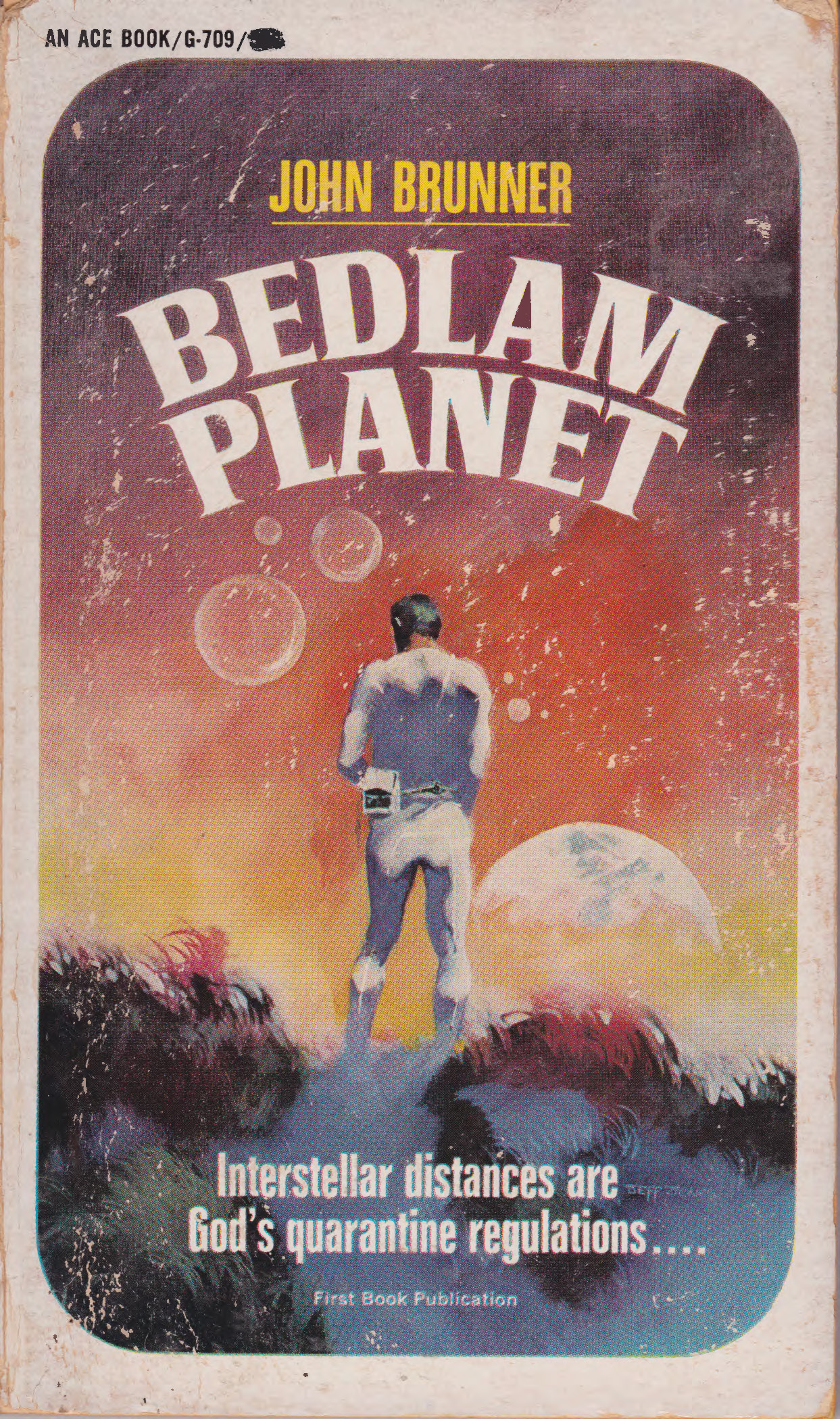
(Jeff Jones’ cover for the 1968 edition)

3.25/5 (Vaguely Good)

To move past my variegated obsessions regarding William Kotzwinkle’s Doctor Rat (1976) (review + list of imaginary scientific articles), I decided to reread a lesser known John Brunner novel. I cannot pinpoint exactly when I first read Bedlam Plant (1968), other than before I started my site, but it holds up as a moody biological mystery with mythological undertones as colonists confront their deceptive new world.

This isn’t Stand on Zanzibar (1968), Shockwave Rider (1975), The Sheep Look Up (1972), or The Jagged Orbit (1969), but it left me wishing that Brunner applied his Continue reading

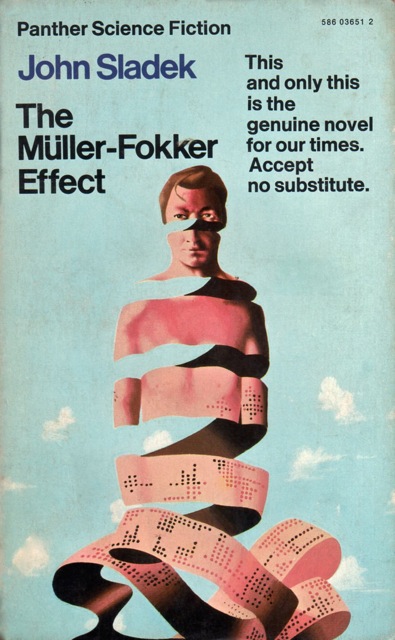
Short Book Reviews: Jeff VanderMeer’s Annihilation (2014), John Sladek’s The Müller-Fokker Effect (1970), Robert Sheckley’s Options (1975)

Yes (I see inquisitive phantom stares), I listened to an audiobook written in this decade. And it was good. Very good. Brilliant actually. As it was an audiobook, I’m unable to write an in-depth review. However there are plenty online for the curious–in part because it won the 2015 Nebula Award. I added two additional novels that have been waiting patiently in a “to review” pile that are more my standard territory…

Think of these short reviews as tantalizing fragments rather than my normal analysis. The books that reside in these short review posts often defeated my reviewing capabilities.

1. The Müller-Fokker Effect, John Sladek (1970)

(McInnery’s cover for the 1972 edition)

4.25/5 (Very Good)

In my 2016 in review I promised to read more of Sladek’s work, and for once I’m holding true to my reading goals.

That said, I find Sladek’s novels notoriously difficult to parse into cohesive reviews—his SF (and my reviews by extension) stretch satirically in all directions, unfolding in fascinating experiments that jest with layered wordplay and (often) diagrammatic dalliances (see example below). There’s a humorous Continue reading