What pre-1985 science fiction are you reading this weekend?
Thank you all for making this fanzine column a success! I’ve thoroughly enjoyed the conversations and connections you all have made in the comments. Make sure to check out the previous installment if you haven’t already. As before, I’ve included a bit about the books in the photograph, birthdays from the last two weeks, and brief ruminations on what I’ve been reading and writing.
2022 was the single best year in the history of my site for visits and unique viewers!
As I mention year after year, I find reading and writing for the site—and participating in all the SF discussions generated over the year—a necessary and greatly appreciated salve. Whether you are a lurker, occasional visitor, or a regular commenter, thank you for your continued support.
Continuing a trend from 2021, I read only a handful of novels this year. Instead, I devoted my obsessive attention to various science short story review initiatives (listed below), anthologies, and histories of the science fiction genre. Without further ado, here are my favorite novels and short stories I read in 2022 with bonus categories. Descriptions are derived from my linked reviews.
Check out last year’s rundown if you haven’t already for more spectacular reads. I have archived all my annual rundowns on my article index page if you wanted to peruse earlier years.
My Top 5 Science Fiction Novels of 2022 [TITLES LINK TO FULL REVIEWS]
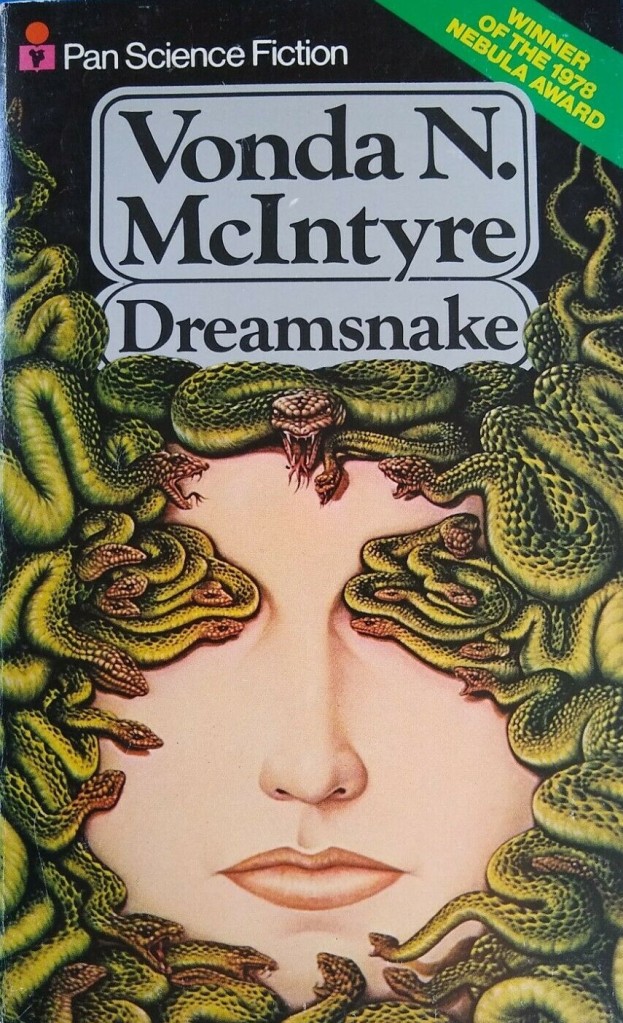
George Underwood’s cover for the 1979 edition
1. Vonda N. McIntyre’s Dreamsnake(1978), 4.75/5 (Near Masterpiece): Won the 1979 Hugo, Locus, and Nebula Award for Best Novel. Snake journeys across the post-apocalyptic wastes of a future Earth with three serpents healing the sick and caring for the dying. She is a member of the healers, who adopt orphans and rescue the oppressed and train them how to use the serpents. Mist and Sand are genetically modified vipers of terrestrial origin. But Grass comes from another alien world. Snake uses Mist and Sand’s venom to create vaccines, treat diseases, and cure tumors. Grass, the rare dreamsnake, with its alien DNA is the most important of them all–it provides therapeutic pleasure and dreams that facilitate conquering one’s fear and healing in the ill. In Snake’s voyages, she encounters prejudice and violence. A joyous sense of sexual freedom permeates the proceedings. A powerful and different take on a post-apocalyptic worldscape in every possible way.
Which books/covers/authors intrigue you? Which have you read? Disliked? Enjoyed?
1. The Darfsteller and Other Stories, Walter M. Miller, Jr. (1982)
Peter Jones’ cover for the 1st edition
From the back cover: “Walter M. Miller, Jr., wrote A CANTICLE FOR LEIBOWITZ, and changed the nature of science fiction, forever. Now, collected together for the first time are some of his most gripping masterpieces, including the Hugo Award-winning ‘The Darfsteller’ and ‘Crucifixius Etiam.'”
This is the first post in a loose series on SF short stories I’ll be reviewing that are critical in some capacity of space agencies, astronauts, and the culture which produced them.
If you know any stories that might fall into this category published before 1980, let me know in the comments! I have compiled an extensive list (from Barry N. Malzberg to John Sladek) but my encyclopedic tendencies are mere delusions of completeness…
Walter M. Miller, Jr. (1923-1996), best known for his Hugo-winning fix-up novel A Canticle for Leibowitz (1959), wrote a fascinating range of short fictions between 1951-1957. I’ve previously reviewed a handful in The View From the Stars (1965). However, “Death of a Spaceman” (1954), a complex exploration of death and the delusions we tell ourselves and ones we love, might be the best of his I’ve Continue reading →




 Science Fiction and Other Suspect Ruminations