Future Media Short Story Reviews: Tomorrow’s TV, ed. Isaac Asimov, Martin Harry Greenberg, and Charles Waugh (1982) (Isaac Asimov, Jack C. Haldeman II, Ray Bradbury, Robert Bloch, Ray Nelson)

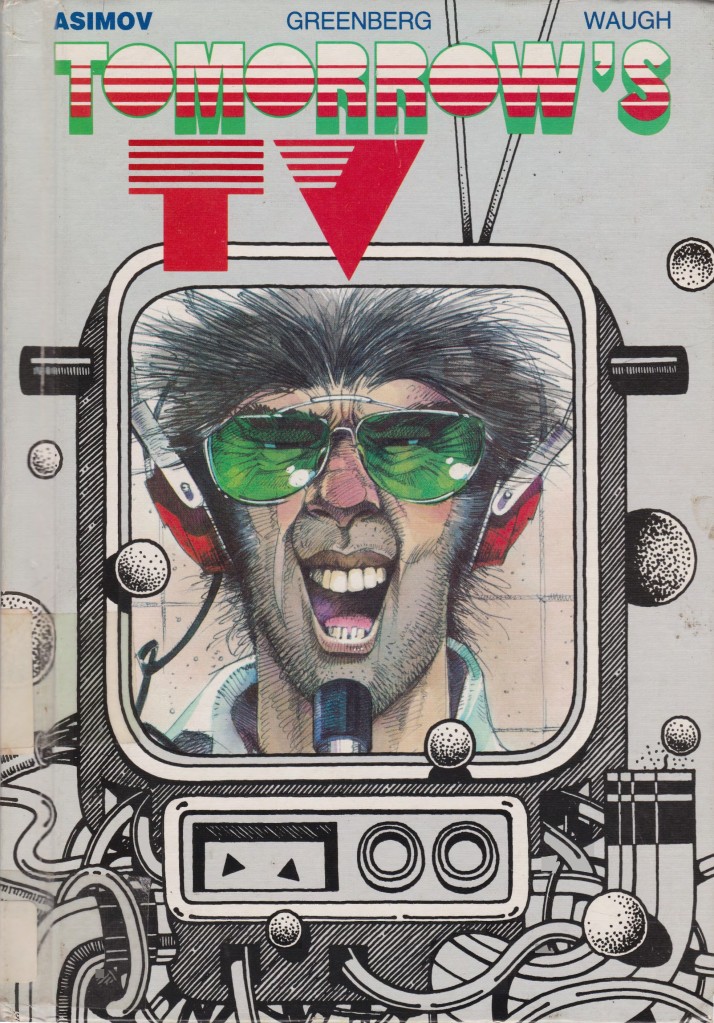
The seventh, eighth, ninth, and tenth stories in my series on the science fictional media landscape of the future appear in the anthology Tomorrow’s TV, ed. Isaac Asimov, Martin Harry Greenberg, and Charles Waugh (1982).

Previously: Two short stories by Fritz Leiber.

“The Girl with the Hungry Eyes” (1949) 

“A Bad Day for Sales” (July 1953).

Up Next: Ann Warren Griffith’s “Captive Audience” (August 1953).

3.25/5 (collated rating: Above Average)

Tomorrow’s TV (1982) gathers together five short stories published between 1951 and 1979 on future speculations and disturbing manifestations of the tube of the future. The extensive number of TV-related science fiction from these decades (especially the 50s and early 60s) should not come as a surprise. According to Gary R. Edgerton’s magisterial monograph The Columbia History of American Television (2007), no “technology before TV every integrated faster into American life” (xi). Isaac Asimov speculates on the nature of education and the role of the “teacher” if every kid goes to school on their TV. Ray Bradbury imagines a frosty world where everyone turns inward towards the hypnotic glow of their TV sets. Robert Bloch explores the intersection of programming as escape and its collision with the real world. Ray Nelson narrates a hyperviolent expose of the alien entities behind subliminal messaging. And Jack Haldeman II imagines what will happen when the human mind reaches a moment of information overload.

Continue reading

Short Story Reviews: Nancy Kress’ “The Earth Dwellers” (1976), “A Delicate Shade of Kipney” (1978), and “And Whether Pigs Have Wings” (1979)

Back in December 2019, I read An Alien Light (1987), my first science fiction work by Nancy Kress (1948-). I was so impressed with the novel, a “bleak and powerful rumination on violence” within a “new alien architecture,” that I placed it on my Best Reads of 2019 list. Like my recent rumination on Melisa Michaels’ first three published short stories, I thought I’d do the same with Kress. I relentlessly seek to map another feature in the fascinating territory of 50s-70s SF.

Let me know which Kress fictions–perhaps from much later in her career–resonate with you.

3.5/5 (Good)

“The Earth Dwellers” first appeared in Galaxy Science Fiction, ed. James Baen (December 1976). You can read it online here.

Continue reading

Future Media Short Story Reviews: Fritz Leiber’s “The Girl with the Hungry Eyes” (1949) and “A Bad Day for Sales” (1953)

The fifth and sixth story in my series on the science fictional media landscape of the future. Fritz Leiber imagines a sinister conjuration of the Girl behind the advertisement and a robot who wanders a post-nuclear landscape selling soda to the charred victims.

Previously: Brian W. Aldiss’ “Panel Game” (December 1955).

Next Up: Tomorrow’s TV (1982). Stories by Isaac Asimov, Jack C. Haldeman II, Ray Bradbury, Robert Bloch, and Ray Nelson.

4.5/5 (Very Good)

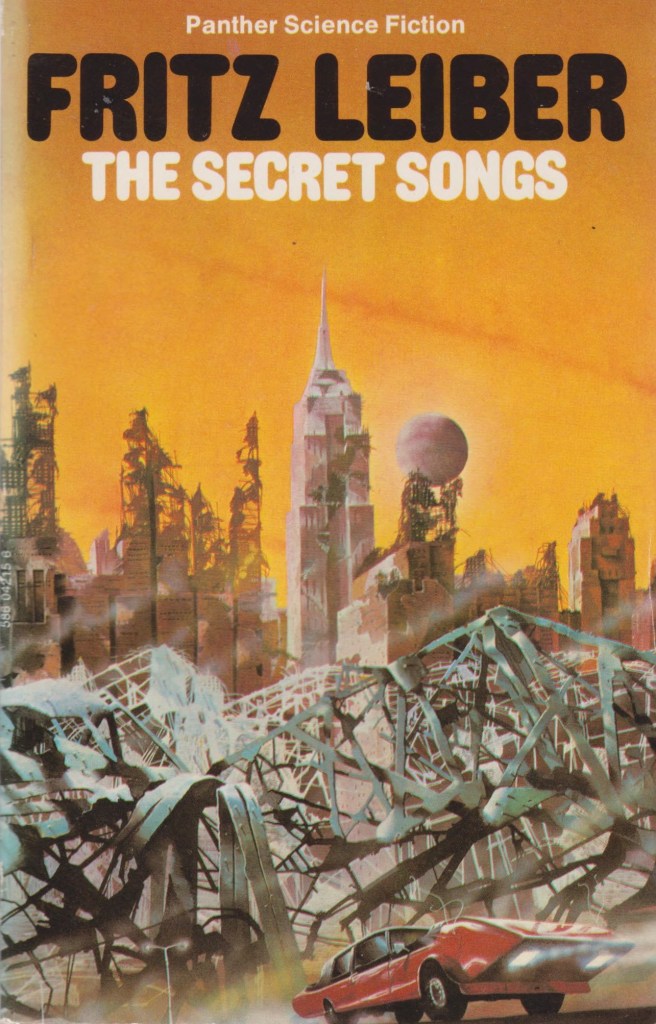
Fritz Leiber’s “The Girl with the Hungry Eyes” (1949) first appeared in The Girl with the Hungry Eyes, and Other Stories (1949). I read it in his collection The Secret Songs (1968). You can read it online here.

“The Girl with the Hungry Eyes” explores the post-WWII economic boom as television and rapidly growing suburbs expanded the reach and power of advertising. Cold War rhetoric promoted consumerism as a key component of the American Way of Life (source).

A tale of erotic obsession and terror, “The Girl with the Hungry Eyes” imagines a fantastical conjuration of the archetypal advertising Girl selling every conceivable product. Her face appears on billboards across the urban expanse. Her torso or limb holds the object to be marveled at. And her eyes, “the hungriest eyes in the world” (131), tear into the soul and take something away with their gaze. Fritz Leiber’s terrified narrator, the “poor damned photographer” (129) who unleashed her on the world and fell for her spell, confesses “there are vampires and vampires, and not all of them suck blood” (128).

Continue reading

Future Media Short Story Review: Brian W. Aldiss’ “Panel Game” (1955)

The fourth story in my series on the science fictional media landscape of the future. Aldiss spins a wild satire of a television screen that views you!

Previously: Avram Davidson and Sidney Klein’s “The Teeth of Despair” (May 1961).

Next up: Two Fritz Leiber stories!

“The Girl with the Hungry Eyes” (1949) and “A Bad Day for Sales” (July 1953).

3.75/5 (Good)

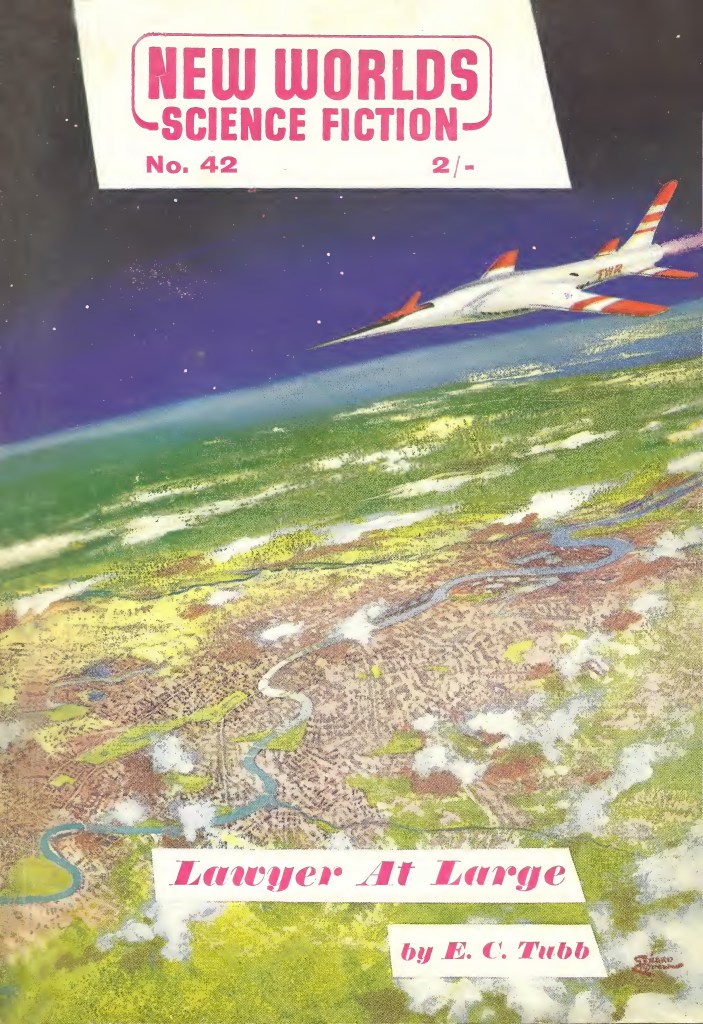
Brian W. Aldiss’ “Panel Game” first appeared in New Worlds Science Fiction, ed. John Carnell (December 1955). You can read it online here.

At 8:12 pm on September 22nd, 1955 the UK’s first TV advertisement–for Unilever’s Gibb’s S. R. [Sodium ricinoleate] toothpaste–aired on ITV (source). You can watch the commercial here with its toothpaste tube suspended in ice, a model excitedly brushing, and a hilarious graph that does not even pretend to convey data. Just a year earlier, the Television Act of 1954 allowed the formation–to great debate–of ITV, the first commercial television network in the UK.

Continue reading

Future Media Short Story Review: Avram Davidson and Sidney Klein’s “The Teeth of Despair” (1961)

The third story in my series on the science fictional media landscape of the future! In the wreckage of the 1950s Quiz Show scandals, Avram Davidson and Sidney Klein conjure a “secret history” of the real events.

Previously: Ray Bradbury’s “The Pedestrian” (August 1951).

Next up: Brian W. Aldiss’ “Panel Game” (December 1955).

2/5 (Bad)

Avram Davidson and Sidney Klein’s “The Teeth of Despair” first appeared in The Magazine of Fantasy and Science Fiction, ed. Robert P. Mills (May 1961). I read it in Science Fiction Oddities, ed. Groff Conklin (1966). You can read it online here.

I suspect most of you have seen Robert Redford’s Quiz Show (1994), a dramatization of the 1950s Quiz Show scandals. In the film, John Turturro, as Herbie Stempel, turns whistleblower after a three-month run on NBC’s Twenty-One where he was compelled to allow his opponent, Ralph Fiennes as Charles Van Doren, to win. In the early weeks of Twenty-One, corporate sponsors of the program grew increasingly frustrated with the poor quality of the contestants. In response, the producers increasingly choreographed the rise and fall of America’s fact-regurgitating heroes.

Continue reading

Future Media Short Story Review: Ray Bradbury’s “The Pedestrian” (1951)

The second story in my series on the science fictional media landscape of the future!

Today: Ray Bradbury’s “The Pedestrian” (August 1951).

Previously: Lino Aldani’s “Good Night, Sophie” (March/April 1963).

Next up: Avram Davidson and Sidney Klein’s “The Teeth of Despair” (May 1961).

4/5 (Good)

You can read “The Pedestrian” in the February 1952 issue of The Magazine of Fantasy and Science Fiction, ed. Anthony Boucher and J. Francis McComas here.

Scenes and fragments from Fahrenheit 451 (1953), The Martian Chronicles (1951), Dandelion Wine (1951), The Illustrated Man (1951), and I Sing the Body Electric! (1969) percolate through my memories like embers that refuse to flicker out. The oppressive Venusian rains in “All Summer in a Day” (1954) and the carcasses consumed by lions in “The Veldt” (1951) remain the most distinct. Beacons of cryptic violence and sadness that continue to guide my reading adventures. All were from my first years of reading SF. Some were from cassette audiobooks with my family on long travels into the west. Others read in distant pastures surrounded by the sounds of creeks and roving cows. Until today, he was firmly an author of my youth. Yes, I’d seen (and enjoyed) the 1966 François Truffaut adaptation of Fahrenheit 451 in college but I’d never returned to the texts…

Continue reading

Short Fiction Review: Walter M. Miller, Jr.’s “The Hoofer” (1955)

The following review is the 15th installment of my series searching for “SF short stories that are critical in some capacity of space agencies, astronauts, and the culture which produced them.” Some stories I’ll review in this series might not fit. And that is okay. I relish the act of literary archaeology.

I read this story in celebration of Walter M. Miller, Jr.’s birthday (1/23). While best known for his masterful A Canticle for Leibowitz (fixup 1959) novellas, I’ve thoroughly enjoyed his other short fictions, including his previous appearance in this series “Death of a Spaceman” (variant title: “Memento Homo”) (1954).

As always, feel free to join the conversation and read along with me on the search for the depressed astronaut.

Previously: Poul Anderson’s “Third Stage” (1962)

Up Next: John D. MacDonald’s “Flaw” (1949)

4.5/5 (Very Good)

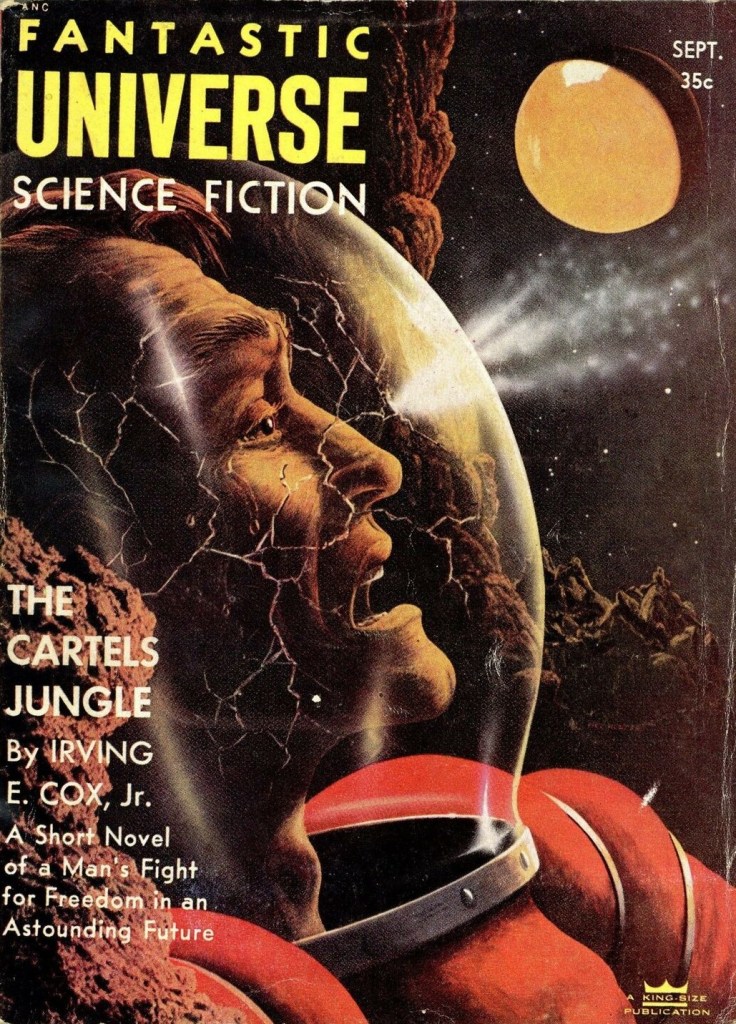
Walter M. Miller, Jr.’s “The Hoofer” first appeared in the September 1955 issue of Fantastic Universe, ed. Leo Margulies. You can read it online here. I read it in S-F: The Year’s Greatest Science-Fiction and Fantasy, ed. Judith Merril (1956).

“The Hoofer” inhabits a similar future as “Death of a Spaceman” (1954) where space travel is a dangerous blue-collar occupation and coming home from the “Big Bottomless” parallels the traumas of a wartime veteran. With deceptive and powerful simplicity, “The Hoofer” follows Big Hogey Parker, with bottle of gin in hand that aggravates the physical symptoms of space travel–“glare-blindness, gravity-legs, and agoraphobia” (77), on his bus journey home a “week late” (79). He has a secret he fears to share with his wife. And the effects of space travel only explain some of his deep sadness within.

Continue reading

Future Media Short Story Review: Lino Aldani’s “Good Night, Sophie” (1963, trans. 1973)

In the history of my website, I’ve reviewed and adored countless fictions that tackled future formations of the media landscape. Spurned in part by the explosion of television ownership in the 50s, pop art’s obsession with filmic iconography, and popular studies on advertising, science fiction compulsively explored futuristic formulations of media performance and manipulation, exploitation and paranoia (SF Encyclopedia). I’ve decided to put together a review series of short fiction that will continue my exploration of the theme.

It is devilishly difficult to organize all that I’ve reviewed so far but here are a few of the highlights that suggest different routes I might traverse. As I do not plan on rereading stories I’ve covered in the past, feel free to track down some of the gems below.

Christopher Priest’s “The Head and the Hand” (1972), John Brunner’s “Nobody Axed You” (1965), Robert Sheckley’s “The Prize of Peril” (1958), D. G. Compton’s The Continuous Katherine Mortenhoe (variant title: The Unsleeping Eye) (1973), and Robert Silverberg’s “The Pain Peddlers” (1963) explore the intersection of media and the spectacle of suffering. Pain recorded. Deaths televised. Media as death blow.

Kate Wilhelm’s “Baby, You Were Great” (1967), Carol Emshwiller’s “This Thing Called Love” (1955), and James Tiptree, Jr.’s “The Girl Who Was Plugged In” (1973) scrutinize the emotional bifurcation between the audience and their love of the starlet or influencer as presented and constructed. And the ways in which the audience controls the construction…. and by extension the performer.

Lloyd Biggle, Jr.’s “Well of the Deep Wish” (1961), Keith Roberts’ “Sub-Lim” (1965), and Kit Reed’s “At Central” (1967) speculate on the methods media can be used as social control. Of course, in the both the Biggle and Reed, the real world outside has utterly transformed since the audience has slipped into new worlds.

And, of course, I have to include Barry N. Malzberg’s extensive oeuvre–such as Revelations (1972) and Screen (1968). His work often demonstrates the pernicious addiction and desperation audiences and participants project into the media landscape hoping for truth and real experience. The media landscape is yet another mechanized artifice pandering to our obsession with dark spectacle.

I hope you enjoy this series. Feel free to join in (I include a link to the first story below)!

And we have a doozy to start with!

Up Next: Ray Bradbury’s “The Pedestrian” (August 1951).


4.75/5 (Near Masterpiece)

Lino Aldani’s short story “Good Night, Sophie” first appeared under the pseudonym N. L. Janda in Futuro, no. 1 (March/April 1963). Futuro, edited by Aldani along with Giulio Raiola and Massimo Lo Jacono, was the first entirely Italian science fiction magazine (it contained some translations of Polish SF) (contents). I read it in Franz Rottensteiner’s anthology of European science fiction in translation View from Another Shore (1973). You can read it online here.

Continue reading

Book Review: The Siege of Harlem, Warren Miller (1964)

2/5 (Bad)

Over the last year, I acquired three near-future SF novels exploring issues of race conflict in New York City written by authors of different racial backgrounds (White, African American, and Chicano): Warren Miller’s The Siege of Harlem (1964); John A. Williams’ Sons of Darkness, Sons of Light: A Novel of Some Probability (1969); and Enrique Hank Lopez’s Afro-6 (1969). I’ve decided to review them in chronological order.

Warren Miller (1921-1966), best known for The Cool World (1959) and Looking for The General (1964), wrote fiction that often dealt with issues of race. The Cool World attempted to “capture the argot of the streets of Harlem in the late 50s” and give a sympathetic look at the realities of black urban life. Considering his output, I was excited to track down a copy of The Siege of Harlem (1964), his final novel before his premature death.

Continue reading