Book Review: Under a Calculating Star, John Morressy (1975)

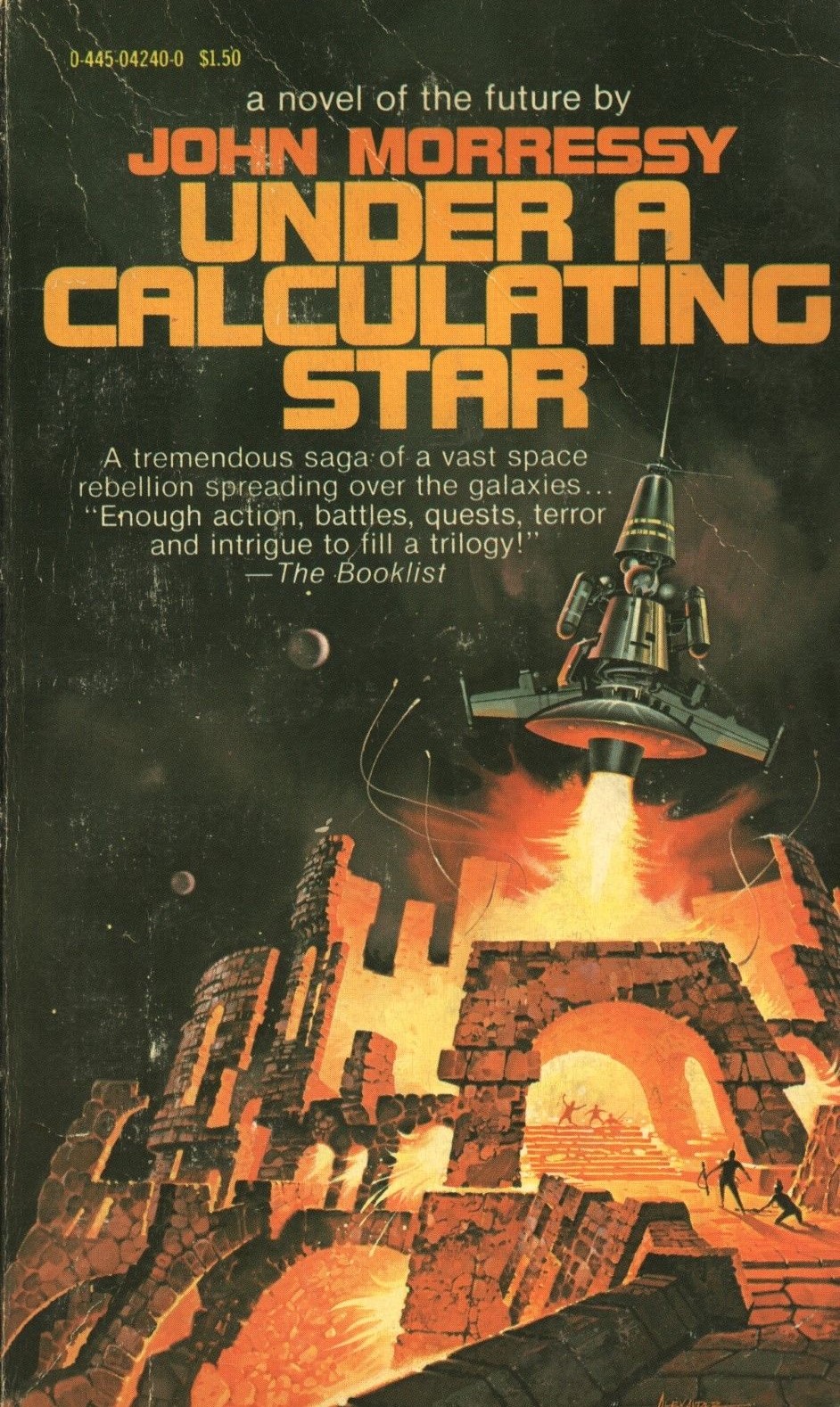
(Paul Alexander’s cover for the 1978 edition)

3/5 (Average)

After finishing John Morressy’s Frostworld and Dreamfire (1977), I tracked down another volume of his Del Whitby sequence. Although far from as engaging and emotionally affective as the former, Under a Calculating Star (1975) provides the historical background to the Morressy’s weirdly primitive far future world: the origins of the Sternverein (the dominant business polity), the explanation of why swords and knives are the weapons of choice while high-tech spaceships roam the interstellar expanses, and the role of Old Earth in the colonization of the far flung reaches. Historical content aside, Under a Calculating Star‘s plot and characters fail to engage and the worlds and societies are one-dimensional in comparison to Frostworld and Dreamfire‘s metamorphic Onhla and the planet Hraggellon, locked in its unusual orbit. Continue reading
Updates: Recent Science Fiction Acquisitions No. CCVII (Moorcock + Pohl + Leinster + Morressy)

1. Frederik Pohl short stories? I’ve collected volumes and volumes and volumes for years—I suspect I should get around to reading one!

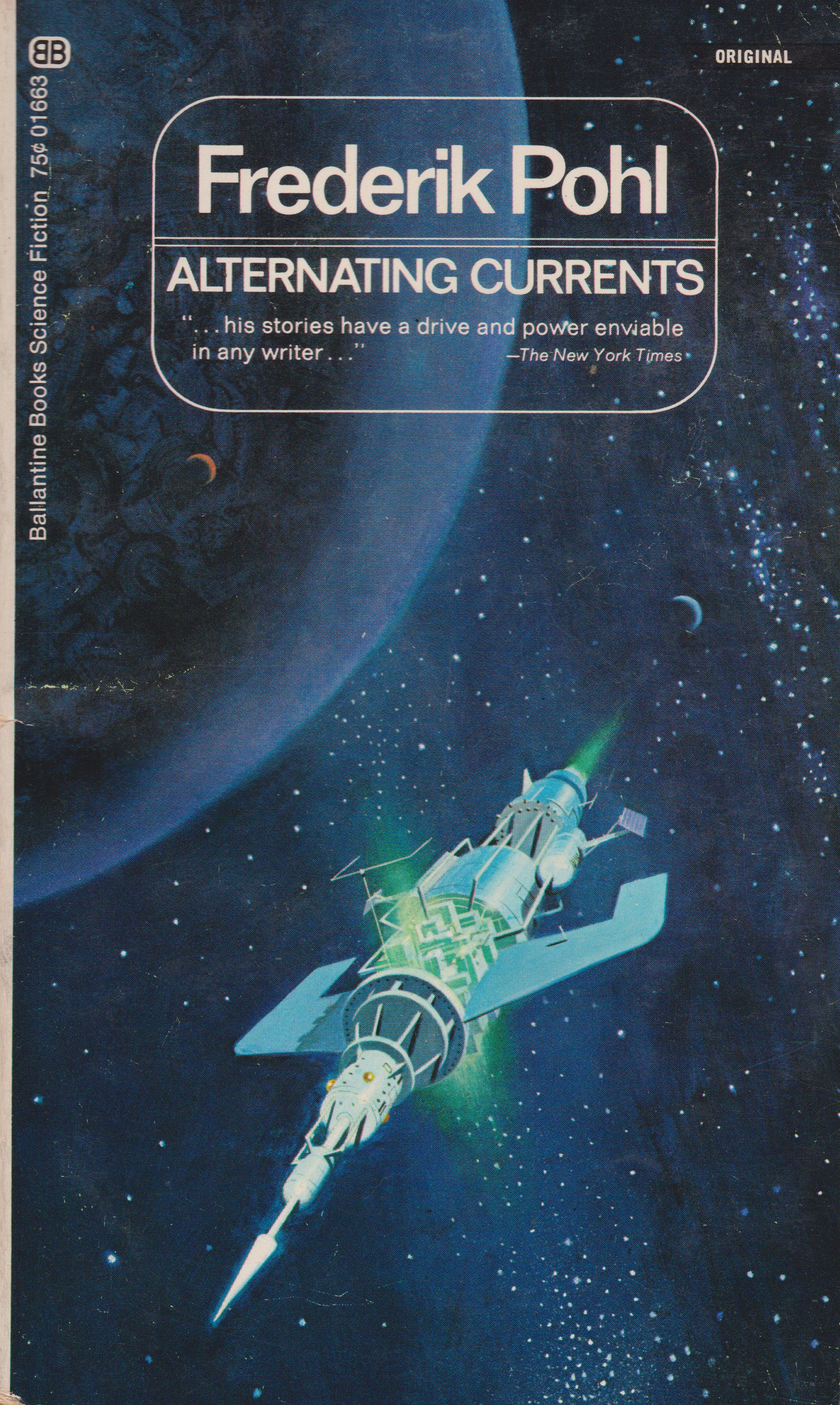
An effective Dean Ellis cover….

2. I acquired the second volume in Michael Moorcock’s Dancers at the End of Time sequence at my local used bookstore down the street. I read An Alien Heat (1972) in 2016.

3. A few days ago I reviewed John Morressy’s wonderful Frostworld and Dreamfire (1977) — I was intrigued enough that I tracked down another volume in the Del Whitby sequence—Under a Calculating Star (1975). I’ll have a review up in the next few days.

4. The second Murray Leinster Med Service collection I’ve acquired–as a huge fan of medical-themed SF…. I should put together a list.

Other lists: Immortality in SF, Generation Ships, and Overpopulation in SF.

Do you have a favorite cover?

As always, I look forward to your comments!

~

1.  Alternating  Currents,  Frederik  Pohl  (1956)

(Dean Ellis’ cover for the 1969 edition) Continue reading

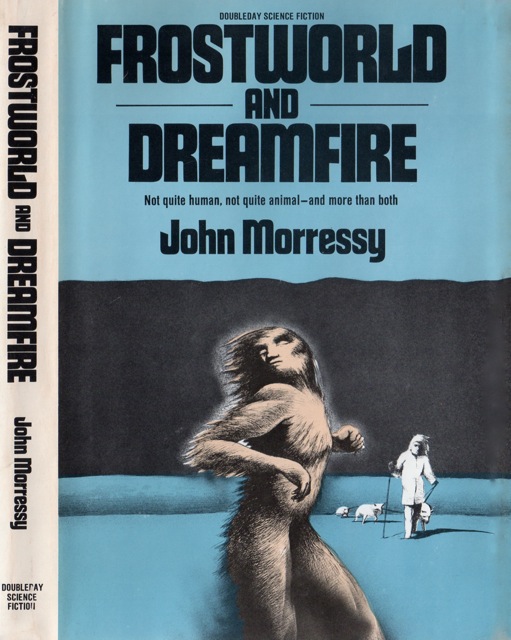
Book Review: Frostworld and Dreamfire, John Morressy (1977)

(David Wilhelmsen’s cover for the 1977 edition)

4.25/5 (Very Good)

John Morressy’s moving SF epic Frostworld and Dreamfire (1977) is set in the Del Whitby sequence (1972-1983) of novels which explore conflict and colonialism (humans and humanoid aliens) within the loose human Sternverein polity.  Conceptually the sequence, which does not have to be read in order, fascinates: the first three novels–Starbrat (1972), Nail Down the Stars (1973), and Under a Calculating Star (1975)–analyze the same conflict from three different perspectives (SF Encyclopedia entry). Continue reading

Updates: New Science Fiction Acquisitions No. CCVI (Norton + Hodder-Williams + Zimpel + New Dimensions Anthology)

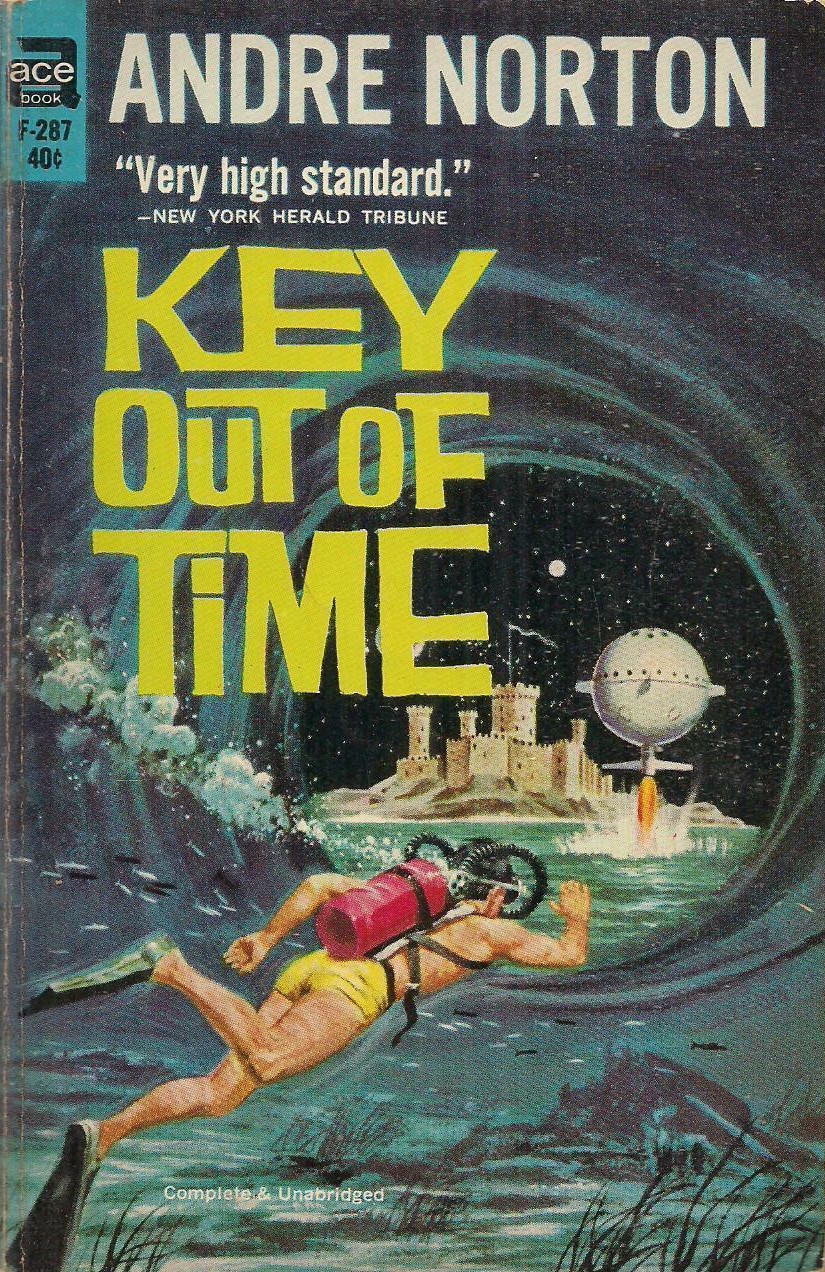
1. Andre Norton wrote the breezy sort of juvenile SF that appealed to me more than a decade ago (late teens)–every now and then I pick one up. I reviewed Norton’s Sargasso of Space (1955) back in 2012.

I’ve always enjoyed this Ed Valigursky cover!

2. The risky purchase! I can find very little about this book online. And it’s Lloyd Zimpel’s only SF novel. As with so many 70s novels, it posits a war between the races….

3. The strangest back cover blurb ever? I’ve not read any of Christopher Hodder-Williams’ SF. Have you? Apparently he wrote quite a few novels (bibliography).

Ian Sales put the novel on his British SF Masterpieces list but didn’t appear to agree with the placement (review).

4. A further volume in the New Dimension series of original anthologies edited by Robert Silverberg…. I purchased this one in part because it was one of Marta Randall’s earliest short stories. I reviewed Randall’s solid A City in the North (1976) recently.

Also, it has TWO Michael Bishop short stories (he’s one of my favorite SF authors) — my first guest post series covered his SF visions.

Do you have a favorite cover? Thoughts on a particular work? An illuminating tangent? As always, I look forward to your comments!

~

1. Key Out of Time, Andre Norton (1963)

(Ed Valigursky’s cover for the 1964 edition) Continue reading

Updates: Vonda N. McIntyre (August 28, 1948 – April 1, 2019)

Vonda N. McIntyre (August 28, 1948 – April 1, 2019) passed away yesterday from pancreatic cancer. McIntyre, best known for her Hugo and Nebula-winning SF novel Dreamsnake (1978) and her Star Trek Novels and film adaptations (1981-2004) (bibliography), published her first SF story “Breaking Point” in in the February 1970 issue of Venture Science Fiction Magazine. John Clute in SF Encyclopedia describes her two best-known SF novels: Continue reading

Book Review: The Road to Corlay, Richard Cowper (1978)

(Gary Viskupic’s cover for the 1979 edition)

3.75/5 (Good)

Nominated for the 1980 Nebula Award for Best Novel

Richard Cowper’s The Road to Corlay (1978) charts the ethereal pastoral wanderings and religious musings of the followers of The White Bird of Kinship, an anti-institutional pseudo-Christian religion at odds with the oppressive Church Militant that holds sway over what remains of Europe. Continue reading

Book Review: Secret Rendezvous, Kobo Abe (1977, trans. 1979)

(Tadanoi Yokoo’s cover for the 1979 edition)

5/5 (Masterpiece)

In Kobo Abe’s Secret Rendezvous (1977, trans. 1979) the hospital stretches like a recumbent body, leaking fluids through its membranes and undefined in its expansiveness, across the urban landscape. Within its labyrinthine interior, humans (agents of “disease”) animate various functions of the hospital for their own purposes–some sinister, some scientific, some sinisterly scientific. The hospital body lurches and vibrates with the sounds of its doctors and orderlies as they rewire the building’s organs and nerves in order to experiment on themselves and their patients. Within this veritable entity lacking a functional guiding agent, a harrowing, existential, and surreal Freudian mystery unfolds. Continue reading

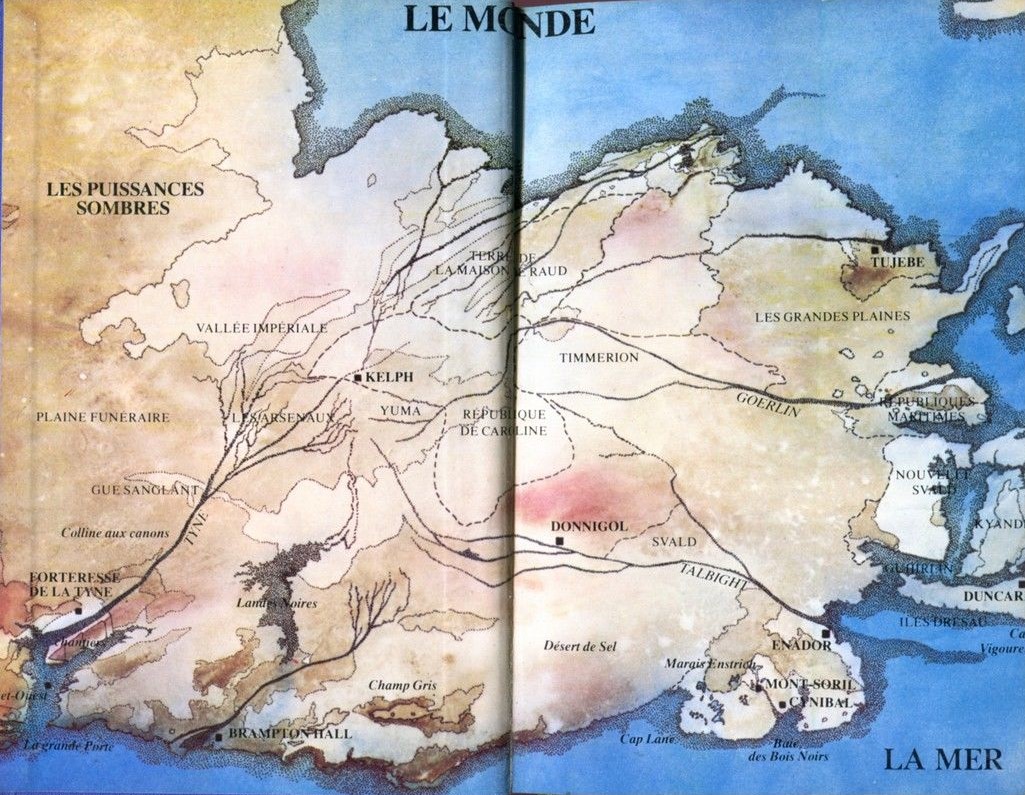
Adventures in Science Fiction Interior Art: Monday Maps and Diagrams (Science Fiction) 3/25/19: A French edition of Mark S. Geston’s Lords of the Starship (1967) and Out of the Mouth of the Dragon (1969)

Today’s installment of Monday Maps and Diagrams returns to the worlds of Mark S. Geston. In 1980 French publisher OPTA released the first two volumes of Geston’s The Wars series, Lords of the Starship (1967) and Out of the Mouth of the Dragon (1969), in a handsome volume with a striking interior map by Claude Fritsch. The series charts the slow climb out of a Dark Age, where the landscape is littered with unusual mutants and the relics of past technologically superior empires and peoples…. I find the map and cover try to evoke more “medieval” imagery than the actual novels (I mean, even in the first one, the technology exists to “construct” a spaceship).

Enjoy! And, as always, comments are welcome and appreciated!

My review of Lords of the Starship (1967).

Citation: Claude Fritsch’s interior map (above) and cover art (below) for the 1st French OPTA edition of Les seigneurs du navire-étoile / Hors de la bouche du dragon (1980). Continue reading

Adventures in Science Fiction Cover Art: Crashed Spaceships, Part III

(Detail from Alan Daniels’ cover for the 1980 German edition of Open Prison (1964), James White)

The crashed spaceship — a wrecked hulk spinning in the emptiness of space, shattered metal struts strewn across an alien landscape…. I find few SF scenarios more nostalgic than this one as a younger me was obsessed with books about the societies formed from the survivors of such cataclysms (Anne McCaffrey’s Acorna Universe sequence, of dubious quality now, was a cornerstone of my youth).

I have selected a range of fascinating covers which add to a series I made in 2012 (Part I) and 2013 (Part II). My favorite of the bunch is Tibor Csernus’ cover for the 1973 French edition of Clifford D. Simak’s Time and Again (1951) due to the verdant and wet landscape the spaceship finds itself in. My second favorite is Dean Ellis’ “descriptive” cover for the 1974 edition of Alan Dean Foster Icerigger (1974). It doesn’t try to be surreal but rather depicts a scene straight from novel. I usually prefer when the artist takes a more unusual approach but in this case Ellis narrows in on the wonder of the premise. Continue reading