Updates: Recent Science Fiction Acquisitions No. CCXXXVI (Eric Frank Russell, Cherry Wilder, Tim Powers, and Kevin O’Donnell, Jr.)

1. I adore the SF Rediscovery series published by Avon (full listing with covers here): the large size, the font and formatting, the framing of the art, and the general feel of the volume in my hand. If there’s a downside it’s the so-so quality of the art itself. I own and have reviewed two in the series previously: Barry N. Malzberg’s brilliant Revelations (1972) and E. C. Tubb’s generation ship novel The Space-Born (1955).

I have yet to read any of Eric Frank Russell’s SF—The Great Explosion (1962) seems to fit the satirical anti-Imperialism mode… we shall see!

2. A book an author whom I know little about…. Tony Roberts’ cover and the back-cover blurb intrigue!

3. Tim Powers’ first two novels were science fiction for the Laser Books imprint. I do not have high hopes (the imprint was notoriously low quality) but always enjoy exploring the early visions of authors. Miserable cover aside, it has a fun (if silly) premise!

4. A generation ship novel! (with a few unusual twists?)

Let me know what you think of the books and covers in the comments!

1. The Great Explosion, Eric Frank Russell (1962) (MY REVIEW)

(Chris Foss’ cover for the 1975 edition) Continue reading

Updates: Recent Science Fiction Acquisition No. CCXXXV (M. A. Foster, Garry Kilworth, Cary Neeper, and Anthology)

1. A fascinating, and disturbing, themed anthology edited by Thomas M. Disch. Of the stories in the anthology (see contents below), I look forward to Gene Wolfe’s “Three Million Square Miles” (1971) the most.

Richard Powers’ cover is gorgeous.

2. I recently read and enjoyed Garry Kilworth’s The Night of Kadar (1978) so I pulled the trigger and purchased a handful of his other early SF works. I’m also for ambivalent takes on revolutions…. In Solitary (1977) is Kilworth’s first published novel. According to  SF Encyclopedia, the novel “is set on an Earth whose few remaining humans have for over 400 years been dominated by birdlike Aliens, and deals with a human rebellion whose moral impact is ambiguous; the novel is the first of several combining generic adventurousness – indeed opportunism, for Kilworth seldom accords his full attention to the raw sf elements in his tales – and an identifiably English dubiety about the roots of human action. Consequences of such action in a Kilworth novel are seldom simple, rarely flattering, usually ironized.”

Will read this one soon.

3. I know little about M. A. Foster’s SF other than a few articles I’ve read here and there–The Gameplayers of Zan (1977) included. In 2009 Jo Walton wrote a positive article about the novel on tor.com.

4. A completely unknown author (Cary Neeper) and novel (A Place Beyond Man)…. I don’t have a lot to go on for this one!

Let me know what you think of the books and covers in the comments!

~

1. The Ruins of Earth: An Anthology of the Immediate Future, ed. Thomas M. Disch (1971)

(Richard Powers’ cover for the edition) Continue reading

Short Book Reviews: Harry Harrison’s Captive Universe (1969), John Christopher’s The Death of Grass (1956), Nancy Kress’ An Alien Light (1987), and Joe Haldeman’s Mindbridge (1976)

My “to review” pile is growing and my memory of them is fading… hence short—far less analytical—reviews.

1. Mindbridge, Joe Haldeman (1976)

(Josh Kirby’s cover for the 1977 edition)

4.5/5 (Very Good)

Nominated for the 1977 Hugo Award

Joe Haldeman never struck me as an author who experimented with New Wave methods of telling. Mindbridge (1976) shatters my misconception. Imagine the basic plot of his masterpiece The Forever War (1975) combined with a fascinating experimental structure. The latter intrigued me far more than the former.

The Basic Plot: The Levant-Meyer Translation allows humans to instantaneously travel across the galaxy. The Tamer Agency sends its agents to investigate alien worlds. Continue reading

Updates: Recent Science Fiction Acquisitions No. CCXXXIV (Anne McCaffrey, Lester del Rey, Poul Anderson, and Philip Wylie)

1. In my youth Anne McCaffrey’s Pern novels received a privileged place on my shelf. I have yet to explore her other SF in any great detail. The Ship Who Sang (1969) is a fix-up novel of six earlier short fictions from the 60s. I’ve put this one near the top of my to-read list!

2. Another epic series of tales of space exploration from Poul Anderson! I hope it’s better than Tau Zero (1970).

3. A post-apocalyptical novel from Philip Wylie—14 survivors in the bomb shelter of a millionaire. Thoughts on this one?

4. I’ve never cared for Lester del Rey, The only work of his I’ve somewhat enjoyed was The Eleventh Commandment (1962, rev. 1970) as I’m a sucker for overpopulation-themed SF.

Let me know what you think of the books and covers in the comments!

~

1. The Ship Who Sang, Anne McCaffrey (1969) (MY REVIEW)

(Greg and Tim Hildebrandt’s cover for the 1976 edition) Continue reading

Updates: Recent Science Fiction Acquisitions No. CCXXXIII (J. G. Ballard, Fred Saberhagen, Richard A. Lupoff, Garry Kilworth)

1. I have yet to read any of J. G. Ballard’s late 70s and early 80s short fiction.  Myths of the Near Future (1982) seems to contain some fascinating gems. I’ve previously reviewed two collections of his 50s and 60s fiction on the site—both are highly recommended!

2. My exploration of 60s/70s SF takes me to an another author I’ve only read about– Fred Saberhagen. I enjoy post-apocalyptical landscapes and balkanized and decayed far future societies–but, is there anything original in this take on the theme?

3. I’m proud owner (*cough*) of one of the worst vintage covers ever created. The premise was the sole reason I snatched up Kilworth’s The Night of Kadar (1978)—malfunctions create unusual growth in the seeded human colonists on an alien planet.

4. A fix-up novel (with substantial rewritten and added material) from Richard A. Lupoff…. not an author I’m too familiar with, but this one is endorsed by Harlan Ellison and definitely screams 70s!

~

1. Myths of the Near Future, J. G. Ballard (1982)

(James Marsh’s cover for the 1984 edition) Continue reading

Updates: Recent Science Fiction Acquisitions No. CCXXXI (Sheri S. Tepper + Paul H. Cook + Robert Merle + Anthology)

1. I bought this themeless hodgepodge anthology for two reasons–the UK 1980 edition has a cool spaceship! And second, it contains Chad Oliver’s generation ship short story “The Wind Blows Free” (1957). MPorcius calls it one of Oliver’s best. As I’ve not been enamored with his brand of SF, I’m eager to try a short story on a favorite theme far outside of his normal anthropological-focused oeuvre.

I’ve previously reviewed Oliver’s The Shores of Another Sea (1971).

2. Sheri S. Tepper is a glaring hole in my SF knowledge. I often explore the back catalog before plunging into the best known novels of an author—The Revenants, her first published novel, is “a long, complex work of SF” according to SF Encyclopedia. I wish it would be a tad more descriptive…. the novel has a fun map which I’ll feature in a Monday Maps and Diagrams post.

3. French post-apocalyptic SF in translation! With an awful cover…

4. Paul Cook is another unknown author to me. His first novel, Tintangel (1981) has a bizarre premise (see blurb below). This might be my next SF read.

Let me know what books/covers intrigue you. Which have you read? Disliked? Enjoyed?

~

1. A Sea of Space, ed. William F. Nolan (1970)

(Bob Layzell’s cover for the 1980 edition) Continue reading

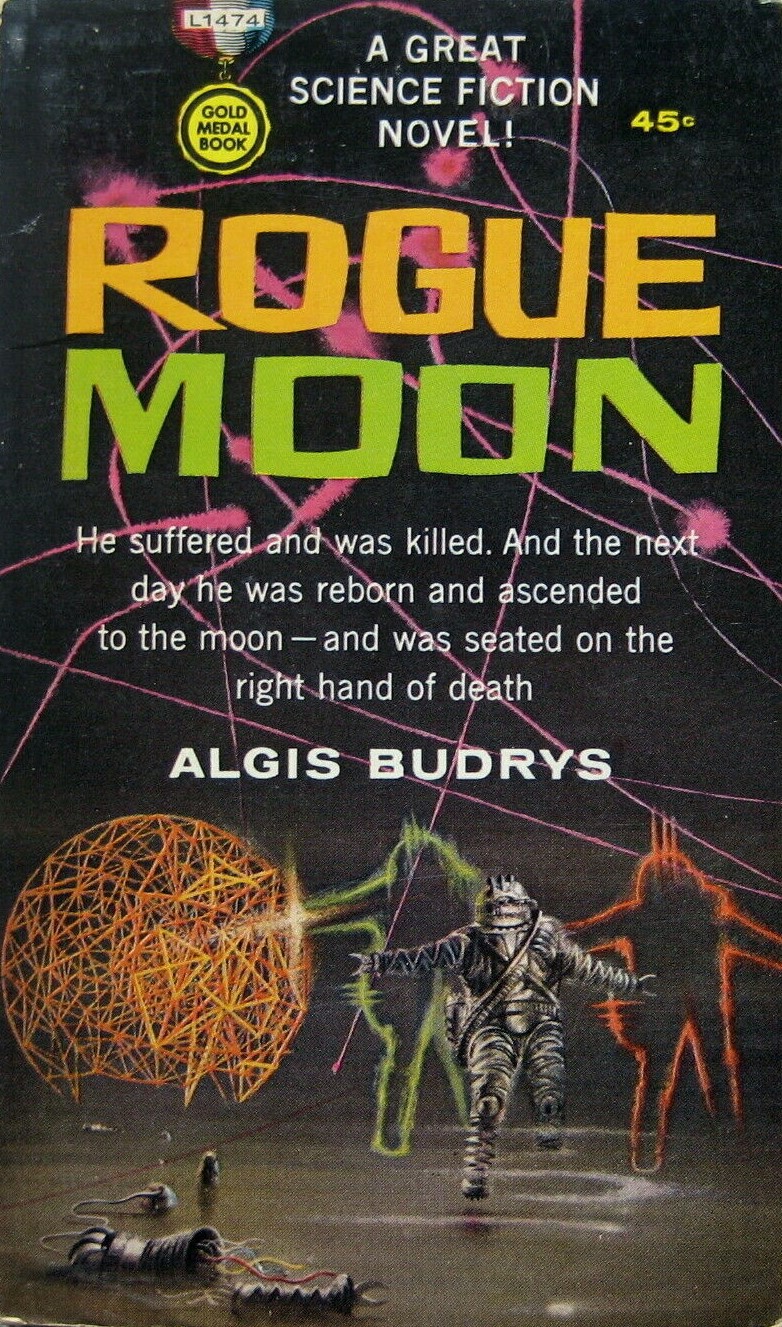
[Short] Book Reviews: Rogue Moon, Algis Budrys (1960) and Syzygy, Michael G. Coney (1973)

Note: My “to review” pile is growing. Short reviews are a way to get through the stack. Stay tuned for more detailed and analytical reviews.

1. Rogue Moon, Algis Budrys (1960)

(Richard Powers’ cover for the 1960 edition)

4/5 (Good)

Over the almost decade of reading for my site, I’ve enjoyed Algis Budrys’ short stories and disliked his novels. After the moody and noir(ish) Rogue Moon (1960), I’ll continue exploring his oeuvre.

Rogue Moon, one of his best-known works, is an odd and oblique read. And odd in that reviewers seem to expect the science fiction al core should be given greater weight than the melodrama… Unlike the melodrama in Michael G. Coney’s Syzygy reviewed below, Budrys’ brand engages as each of his Continue reading

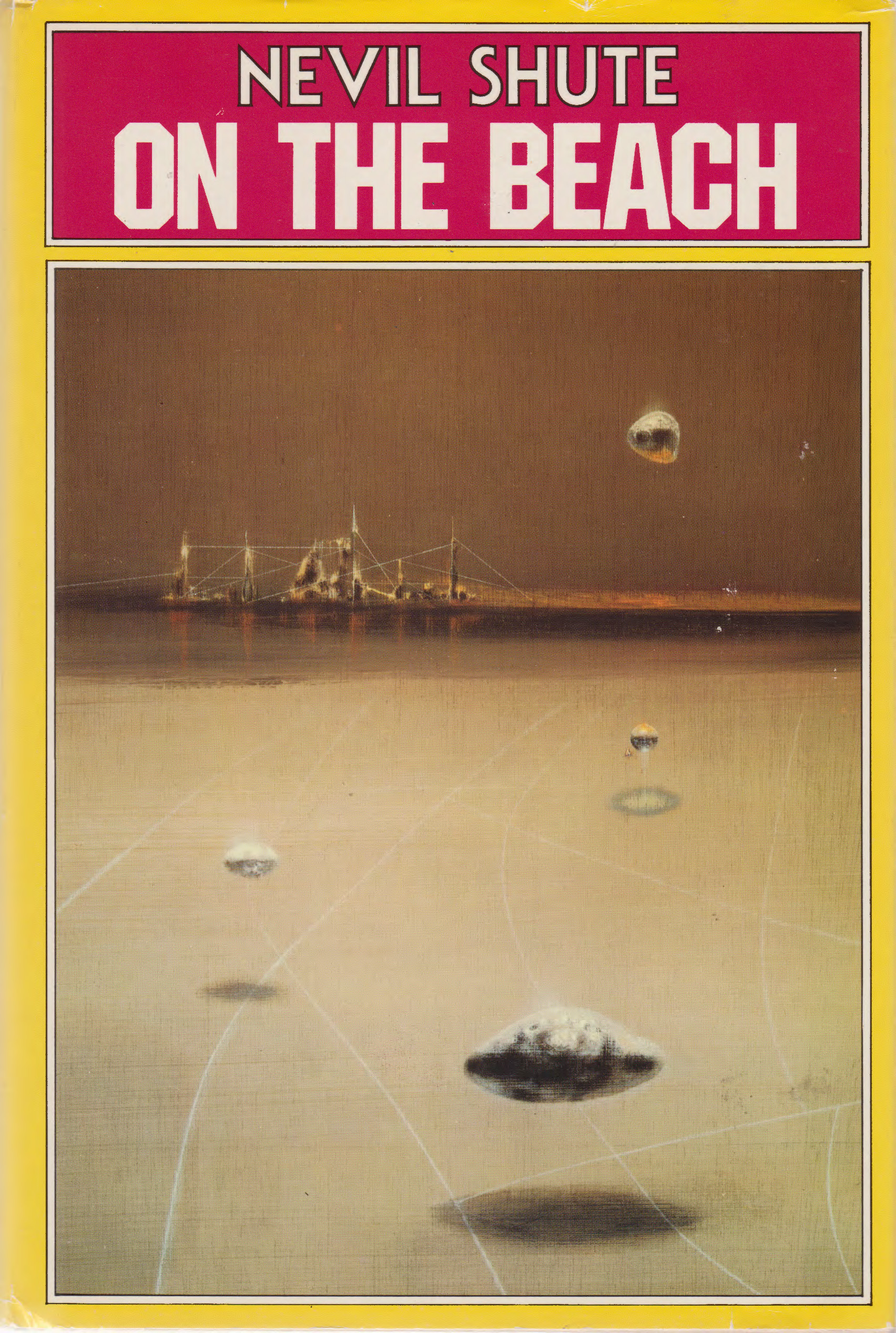
Updates: Recent Mostly Apocalyptic Science Fiction Acquisitions No. CCXXIX (Nevil Shute, Walter Tevis, Philip McCutchan, and Lawrence Watt-Evans)

1. I’m finally the owner of one of the 50s/60s post-apocalyptic novels…. I suspect the 1959 film adaptation of Nevil Shute’s On the Beach (1957), which I did not enjoy, was the reason I’ve taken so long to acquire a copy.

It’ll fit neatly into my recent themed review sequence:

2. A far lesser known UK post-apocalyptic novel–SF Encyclopedia compares Philip McCutchan’s A Time for Survival (1965) to the relentless despair of Cormac McCarthy’s The Road (2006

3. I’ve yet to read any of Walter Tevis’ SF–I’ve acquired his post-apocalyptic novel Mockingbird (1980).

4. And finally, the least-known quantity of this post…. an impulse buy (SF and noir is a fun combo) at my local Half Price.

Let me know what books/covers intrigue you. Which have you read? Disliked? Enjoyed?

~

1. On the Beach, Nevil Shute (1957)

(Richard Powers’ cover for the 1986 edition) Continue reading

Updates: Recent Science Fiction Acquisitions No. CCXXVII (Alan Dean Foster, F. M. Busby, Michael G. Coney, John Christopher)

1. Michael G. Coney is a firm blog favorite–from his deeply lyrical paean Hello Summer, Goodbye (variant title: Rax) (1975) to his off-the-wall bizarre short fictions in Friends Come in Boxes (1973). I eagerly snatched up a copy of his “ecological puzzle story” with  alien shapeshifters–Syzygy (1973) (Coney’s entry in SF Encyclopedia).

2. Always love a SF water world! hah. This one via Alan Dean Foster….

3. MPorcius over at MPorcius Fiction Log speaks highly of F. M. Busby’s Cage a Man (1973). I’ve only previously read Busby’s terrible shock story “Tell Me All About Yourself” (1973).

4. More British apocalypse tales join the ranks—this one a lesser known work by John Christopher. Pendulum (1968) is a tale of apocalypse from within rather than his normal external causes of societal devastation–see my recent review of A Wrinkle in the Skin (variant title: The Ragged Edge) (1966).. The inside flap reads as alarmist drivel—we shall see.

Let me know what books/covers intrigue you. Which have you read? Disliked? Enjoyed?

~

1. Syzygy, Michael G. Coney (1973)

(David Bergen’s cover for the 1975 edition) Continue reading