Today I’ve selected two lesser-known short stories from the early 1950s that explore issues of race in America. The Civil Rights mass movement gathered steam in the post-WWII world as soldiers returned to segregated hometowns. The federal government took a few tentative steps. In 1948, President Truman issued Executive Oder 9981, which abolished discrimination “on the basis of race, color, religion or national origin” in the United States Armed Forces.1 Both stories I chose for this post appeared in print before the famous Supreme Court case Brown vs. Board of Education (1954) that ruled segregation was inherently unequal. In Edward W. Ludwig’s “The Rocket Man” (1951), a young white child yearns to lead an expedition to Mars. He finds fellowship with other outcasts, including an African American boy who also dreams of space. In Alan E. Nourse’s “Marley’s Chain” (1951), a man must confront his own problematic past in a new America rebuilding from the wreckage of the old.
If you know of any other 1940s/50s short stories that attempt to tackle the topics of race and racism, let me know. As I’m afflicted with a serious strain of listomania, I’ve collated an incomplete catalog on the topic that I will return to periodically in coming months.
Let’s get to the stories!
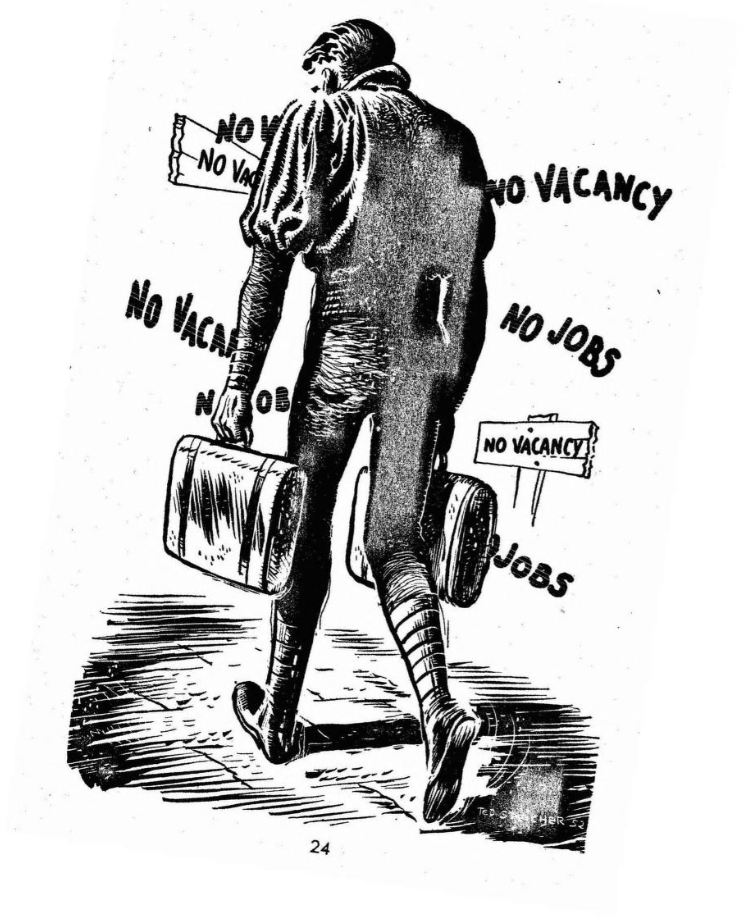
Ted Speicher’s interior art for Alan E. Nourse’s “Marley’s Chain” in If, ed. Paul W. Fairman (September 1952)
4/5 (Good)
Alan E. Nourse’s “Marley’s Chain” first appeared in If, ed. Paul W. Fairman (September 1952). You can read it online here.
Alan E. Nourse (1928-1992) re-entered my shortlist of authors I need to read as a result of my hunt for science fiction on the labor movement. Nourse might be best known for his many medical-themed stories (he was a practicing physician and wrote popular columns on medicine). He deviates from that interest with a classic illustration of 1950s anti-union sentiment in “Meeting of the Board” (1955), which I’ll cover eventually. While searching for further labor-related short stories, I came across a far different (and more perceptive) account of race and labor in America: “Marley’s Chain” (1952).2
Continue reading



 Science Fiction and Other Suspect Ruminations