What pre-1985 science fiction are you reading? + Update No. XVIII

What pre-1985 science fiction are you reading or planning to read this month? Here’s the November installment of this column.

Last week I wrote a post about Clifford D. Simak’s delightfully inclusive 1971 speech at the height of the New Wave in which he celebrated science fiction as a “forum of ideas” open to all voices. While reviewing the various snarky comments leveled at the movement by “classic authors” like Asimov, a faint memory of James Blish’s own anti-New Wave sentiments tickled my memory. I randomly opened up a book on my desk to figure out a fascinating SF tidbit to start this post, and voilà, the James Blish story.

Jacqueline Foertsch’s Reckoning Day: Race, Place, and the Atom Bomb in Postwar America (2013) contains a sustained analysis of Samuel R. Delany’s various post-apocalyptic novels. She includes a discussion of the response to Delany’s Nebula-winning The Einstein Intersection (1967). At the 1968 Nebula Awards Banquet, moments after Delany received his prize for Einstein (and where moments later he’d collected another award for “Aye, and Gomorrah”), Blish lambasted the New Wave. Blish complained about the “loosening of the genre’s parameters” and the “re-christening of the genre” as “speculative fiction” (98). I find all of this hilarious as Blish himself wrote fantasy novels like Black Easter (1968) (that would also nab a 1969 Nebula nomination) and far earlier oblique proto-New Wave speculative fictions like “Testament of Andros” (1953). I wonder if Blish aimed such vitriol at a figure like Simak, who took the loosening of the genre’s parameters to extremes during the New Wave–i.e. novels like The Goblin Reservation (1968), Destiny Doll (1971), and Out of Their Minds (1970). Unfortunately, I don’t think it’s surprising that Blish took especial issue with one of the few black SFF authors of the day.

And let me know what pre-1985 science fiction you’ve been reading!

Continue reading
Book Review: The Birth Machine, Elizabeth Baines (1983)

(Hannah Firmin’s cover for the 1983 edition)

4.25/5 (Very Good)

“Ladies and Gentleman: The age of the machine” (11).

I continue my loose sequence of reviews on medical science fiction with Elizabeth Baines’ evocative fable The Birth Machine (1983) (see notes). Pushing against notions that pregnancy is “medical: illness” (51), the narrative follows a nightmarish tact as an unsuspecting woman is linked up to a nebulously described machine and drugged. Beset by dehumanizing (and often patriarchal) forces, Zelda, without the help of others, comes to terms Continue reading

Updates: Recent Science Fiction Acquisitions No. CLXXV (Ballard + Strugatski + deFord + Baines)

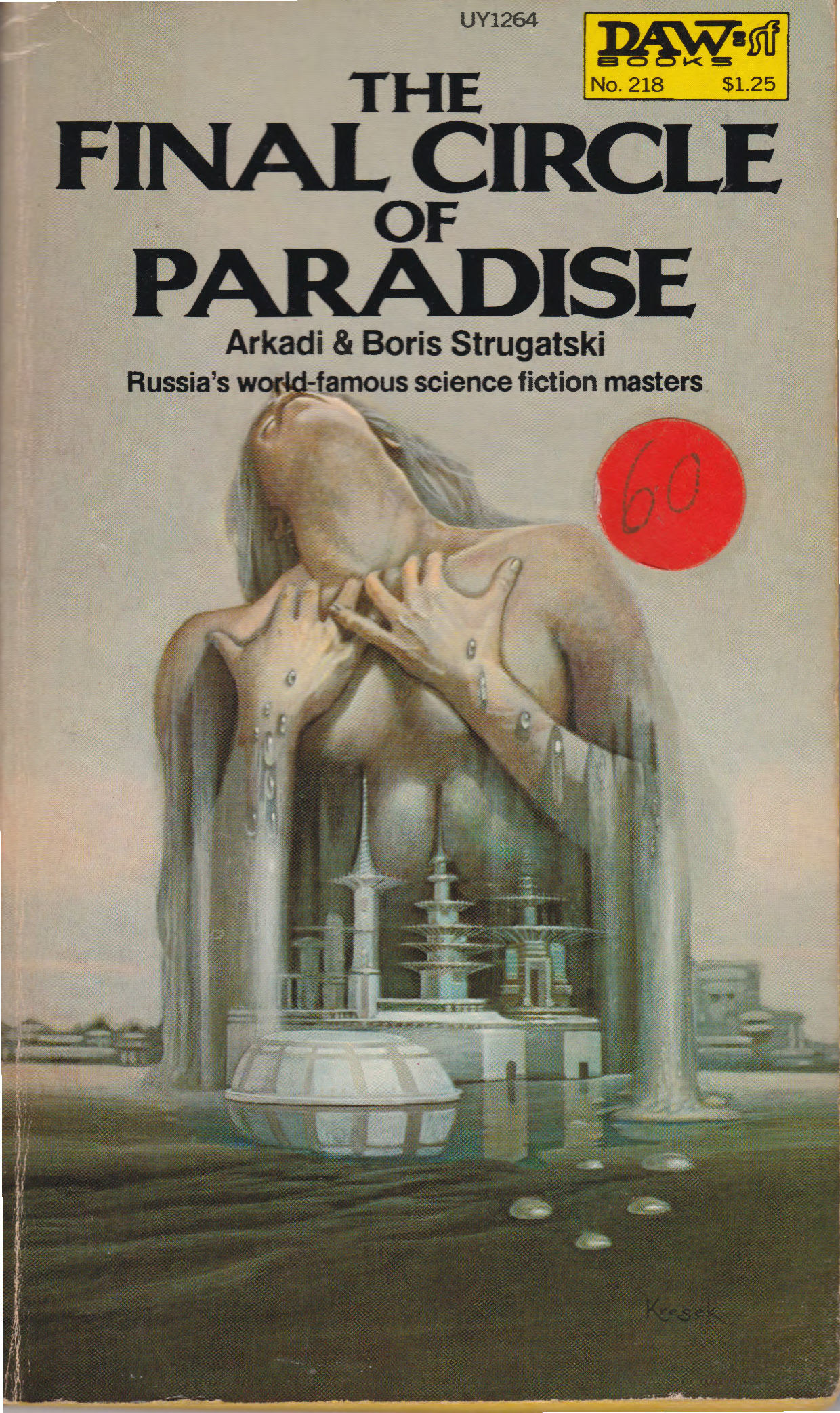
1) Blunt statement: I need to read more of the Strugatski brothers. I devoured the The Ugly Swans (written 1966-1967, published 1979 in the US, published in 1987 in the USSR) but did not review it.

2) A fascinating speculative feminist novel from The Women’s Press–birth, myth, delusions, dreams, terror.  Few reviews exist online so I will go in without much knowledge of the work.

3) I placed Miriam Allen deFord’s collection (filled with numerous gems) Xenogenesis (1969) on a list of SF Gollancz’s Masterwork series should acquire. Her only other published collection for the longest time was priced far out of my reach. This is why you have Amazon lists… scan them frequently, find the deals!

4) A Ballard novel with “pervading auroral gloom, broken by inward shifts of light”? Count me in! As a fierce advocate of Ballard’s early fiction and novels, I cannot wait to read this one…

Related reviews: Billenium (1962), High-Rise (1975), The Voice of Time and Other Stories (1962). The Drowned World (1962) and The Drought (1964) clock in as my favorite of his novels—although both remain unreviewed… Stay tuned for my upcoming review of The Terminal Beach (1964).

Scans are from my personal collection. Click to enlarge.

Thoughts/comments are welcome (as always)!

1. The Final Circle of Paradise, Arkadi and Boris Strugatski (1965, trans. 1976)

(Laurence Kresek’s cover for the 1976 edition) Continue reading