Book Review: The Bodyguard, Adrian Mitchell (1970)

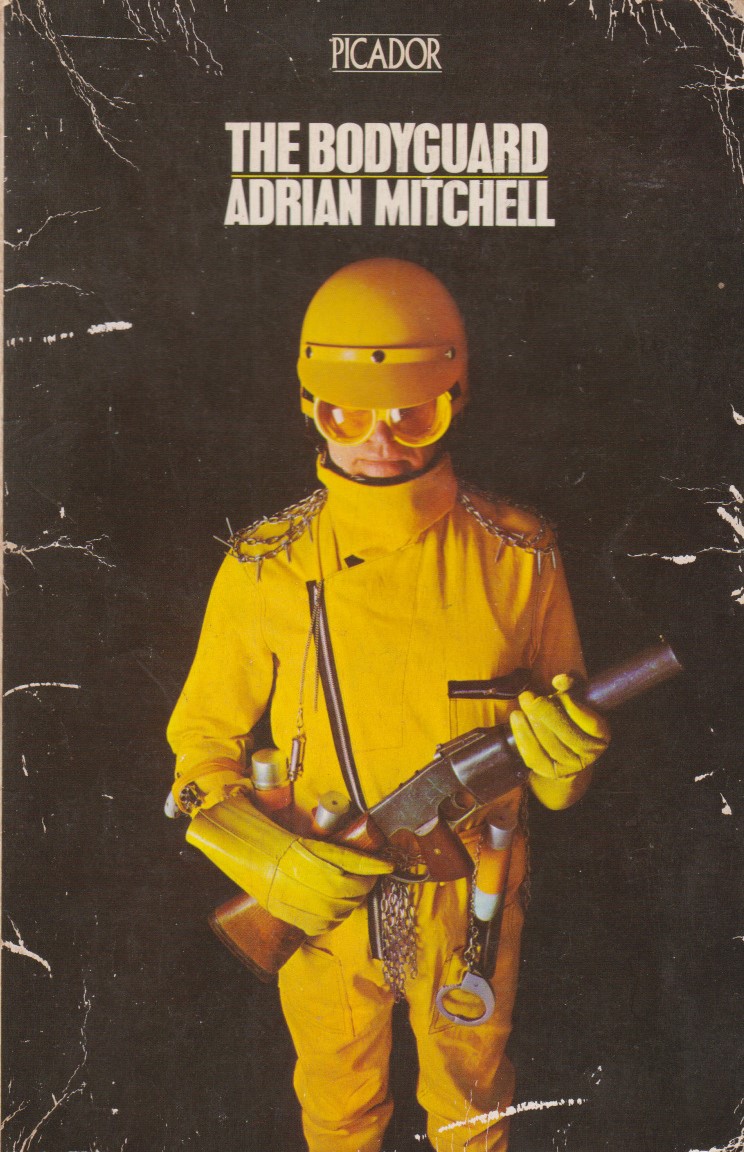
(Roger Phillips’ cover for the 1972 edition)

3.5/5 (Good)

“[Lens] Rossman’s narrative is both single-minded and rambling, a tangle of facts and fantasies, distorted sexuality, obscured dates, anti-feminism, glorified brutality and narcissism” (153).

Adrian Mitchell’s sole SF novel The Bodyguard (1970) is a perverse romp through a diseased England viewed through the eyes of an equally diseased narrator. Lens Rossman’s deathbed ramblings of his “adventures” and “training” as a B.G. (bodyguard) in his fight against “The Rot” spread by leftist subverts, is, as the “editor” of the narrative indicates in a hilarious afterword, “a tangle of facts and fantasies” and “glorified brutality” (153). Mitchell presents Rossman’s account as a ghastly artifact of a pre-revolutionary era while simultaneously suggesting that the excess Continue reading
Adventures in Science Fiction and Fantasy Art: Women SF Illustrators of the 1960s/70s, Part V: The Eerie Figures of Marcela Cordescu

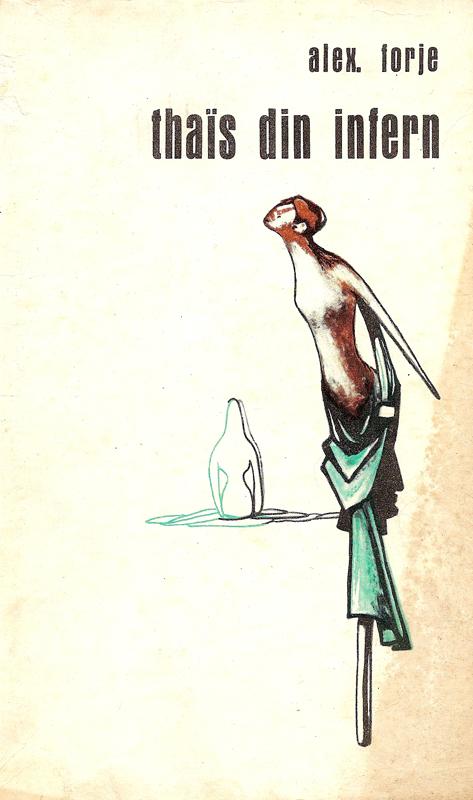
(Marcela Cordescu’s cover for the 1969 edition of Thaïs din Infern (1969), Alexandru Forje)

The Romanian graphic artist Marcela Cordescu produced a fascinating series of SFF covers from the 1950s-70s.  For more on her consult this short article (most resources are in Romanian unfortunately). Many of her covers graced editions of Vladimir Colin’s (her husband) SFF works. I came across her eerie figures researching the publication history of the French SF author Gérard Klein—a collection of his short stories appeared in Romania with a Cordescu cover in 1973 (below). Her cover for the 1969 edition of Alexandru Forje‘s Continue reading

Adventures in Science Fiction Cover Art: Philippe Curval’s 1950s Photo Collages, Part II

(January 1957)

Part II of my series on Philippe Curval’s SF art–check out Part I first if you haven’t already. In Part I, I included only his covers from 1956, his most productive year for the French SF magazine Fiction. In this post I include the rest of his 50s work, seven covers published between 1957-59. Curval published SF more and more as the 1950s progressed and I suspect writing was more lucrative than art….

This selection includes what I find to be his most disturbing and evocative cover–Fiction 47. Cyclopean imagery combines with odd textures and hair-like growths. I am partial to SF covers that explore skin, mutation, hands, heads, growths, eyes, etc…. And speaking of disquieting Continue reading

Adventures in Science Fiction Cover Art: Philippe Curval’s 1950s Photo Collages, Part I

(February 1956)

In celebration of the French SF author and artist Philippe Curval’s birthday, I’ve curated a collection of his covers. Between 1956 and 1959 he produced eighteen (there could be others that I’ll have to identify based on style) fascinating photo collages for the main French SF magazine Fiction. They often blend pulp SF stylings with otherworldly insectoid imagery (Fiction 27, 31, 35). In other instances surrealist touches interrupt a more realistic artistic styles (Fiction 28, 33).

My absolute favorite December 1956 (Fiction 37) presages Cronenberg’s iconic television scene in Videodrome (1981) by a quarter century Continue reading

Updates: Recent Science Fiction Acquisitions No. CLXXXVIII (Heinlein + Tenn + Wyndham + Bell)

1. My friend Mike sent this to me…. of dubious quality to say the least. But, O my, the cover!

2. Tell me again why I continue to buy Robert Heinlein paperbacks? Why in the world did I read SO MANY OF HIS BOOKS as a kid? Some of life’s persistent questions….

3. John Wyndham short fiction—or rather, a fix-up novel of sorts–with a co-writer. Did not realize any of his work was co-written…. Has anyone read it?

4. William Tenn’s short fiction collection is by far the most appealing of the bunch—his stories always have me chortling with laughter.  For example, The Human Angle (1956) and Of Men and Monsters (1968)

1. Gone To Be Snakes Now, Neal Bell (1974)

(Uncredited cover for the 1974 edition) Continue reading

Updates: Recent Book Acquisitions No. CLXXXVII (Burgess + Strugatsky + Fernández + Buzzati)

1. More Strugatsky? Of course. One can never have enough.

2. Anthony Burgess’ overpopulation novel… color me intrigued. Huge fan of overpopulation SF — > I’ve compiled a list here. And as diligent readers of my site might know, John Brunner’s Stand on Zanzibar (1968) is my favorite SF novel.

3. I recently read Dino Buzzati’s SF novel Larger than Life (1960) and decided to pick up his graphic novel… An enjoyable visual and textual experience. Not sure I’ll write a review but worth picking up!

4. I’d heard of Macedonio Fernández (1874 – 1952) only due to his relationship with Borges…. The Museum of Eterna’s Novel (The First Good Novel) (1967) is a fascinating experience (and experiment). Need a while to collect my thoughts….

1. Hard To Be a God, Arkady & Boris Strugatsky (1964)

(Eamon O’Donoghue’s cover for the 2015 edition) Continue reading

Book Review: New Writings in S-F 6, ed. John Carnell (1965)

(David McCall Johnston’s art for the 1971 edition)

3.25/5 (collated rating: Vaguely Good)

New Writings in S-F 6 (1965) is the third I’ve read so far in John Carnell’s anthology series and by far the most satisfying. New Writings in S-F 4 (1965) was worthwhile only for Keith Roberts’ short story “Sub-Lim” (1965). New Writings in S-F 9 (1972) was marginally overall better with solid outings by Michael G. Coney and M. John Harrison.

The sixth in the sequence offers an intriguing Keith Roberts novella–that takes up almost half the volume–and a kaleidoscope of other moody (albeit lesser) visions from William Spencer, John Baxter, and E.C. Tubb.

Brief Analysis/Summary

“The Inner Wheel” (1965), Keith Roberts, 4/5 (Good): A few months ago I procured a copy of Keith Roberts’ linked series of short stories containing the titular “The Inner Wheel” and chose this particular New Writings in SF volume because of the story. I suspect I won’t be returning to the “novel” Continue reading

Updates: Recent Science Fiction Acquisitions No. CLXXXVI (Wyndham + Conway + Brown + Wright)

Post-PhD job takes over… and books are not reviewed. But reading and buying still happens!

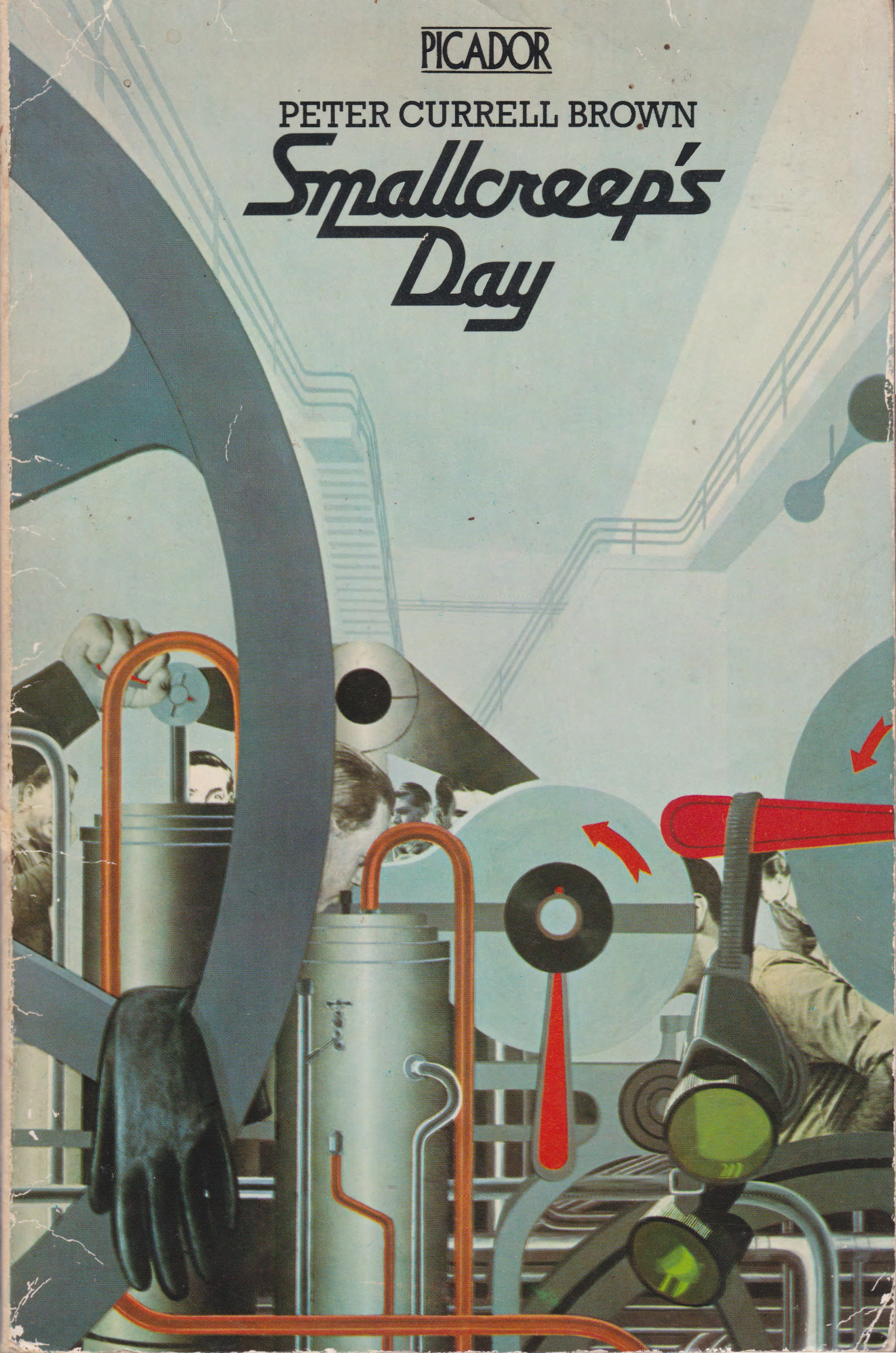
1. A supposed cult classic republished by Picador Press….. Has anyone read Smallcreep’s Day (1965)? Near the top of my “to read” pile. And I love Barbara Costall’s cover.

2. Early in the year I reviewed Conway’s short story “Mindship” (1971) in Universe 1 (1971), ed. Terry Carr. It was pretty solid. I tracked down the novel version which included the short as the prologue.

3. I was obsessed with Austin Tappan Wright’s Islandia (1942) as a kid. Not with the novel per se, which I never owned, but the lengthy and descriptive entry in Alberto Manguel and Gianni Guadalupi’s spectacular (and wonder inducing) The Dictionary of Imaginary Places (1987). And of course, the idea of  Wright slowly creating an imaginary world that could exist within our own and only “discovered” after his death resonated with a young me…

I’ve included the map from the entry in The Dictionary of Imaginary Places.

4. And finally, another John Wyndham novel… although the premise sounds downright bland and trite. But then again, I still have not read a lot of his work and I know he was a formative voice in SF.

~

1. Smallcreep’s Day, Peter Currell Brown (1965)

(Barbara Costall’s cover for the 1973 edition) Continue reading

Updates: Links from the Vintage SF Blogsphere No. 3 (Aldous Huxley + Soviet SF + Cyberpunk nightmares + et al.)

My third installment (earlier ones here) of Links from the Vintage SF Blogsphere… Be sure to check out the reviews linked from other amazing sites (and subscribe to them). And, as always, there are some fascinating covers to behold!

Go forth and read!

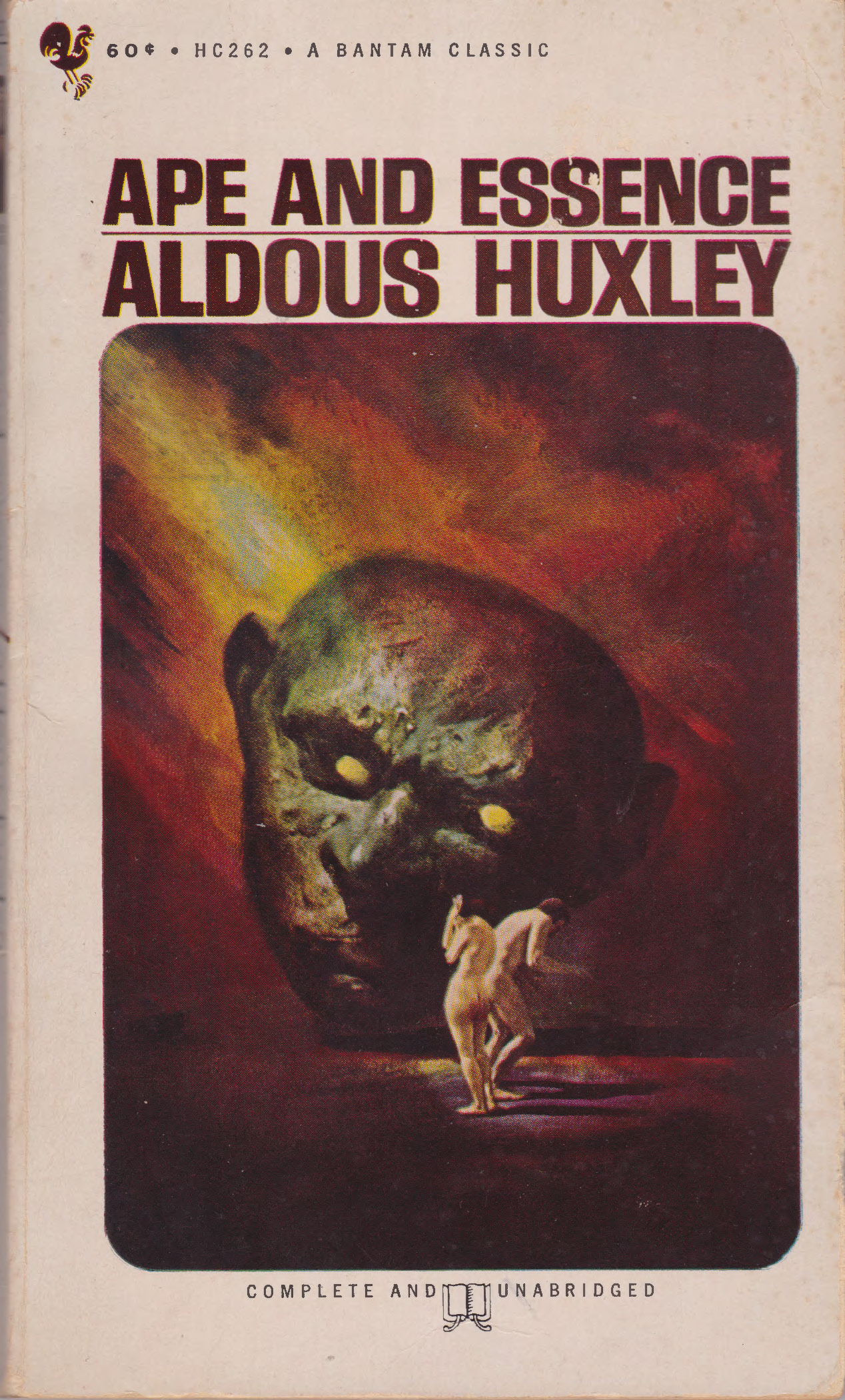
(Uncredited cover–Michael Hooks?–for the 1964 edition)

1. Mike White posts an earlier review of Aldous Huxley’s Ape and Essence (1948). Let’s just say I can’t wait to review the book myself.

From his review:

“Huxley’s not offering hopeful alternatives; we’re doomed by our essential nature. As a work of post-apocalyptic fiction, the book is a powerful exploration of the relationship between science and civilization that has brought humanity to the brink of near-total annihilation.”

2. Guy, a frequent commenter on this site and Continue reading