Adventures in Science Fiction Interior Art: Monday Maps and Diagrams (Science Fiction) 12/17/18 — Russell Hoban’s Riddley Walker (1980)

Monday Maps and Diagrams 12/17/18

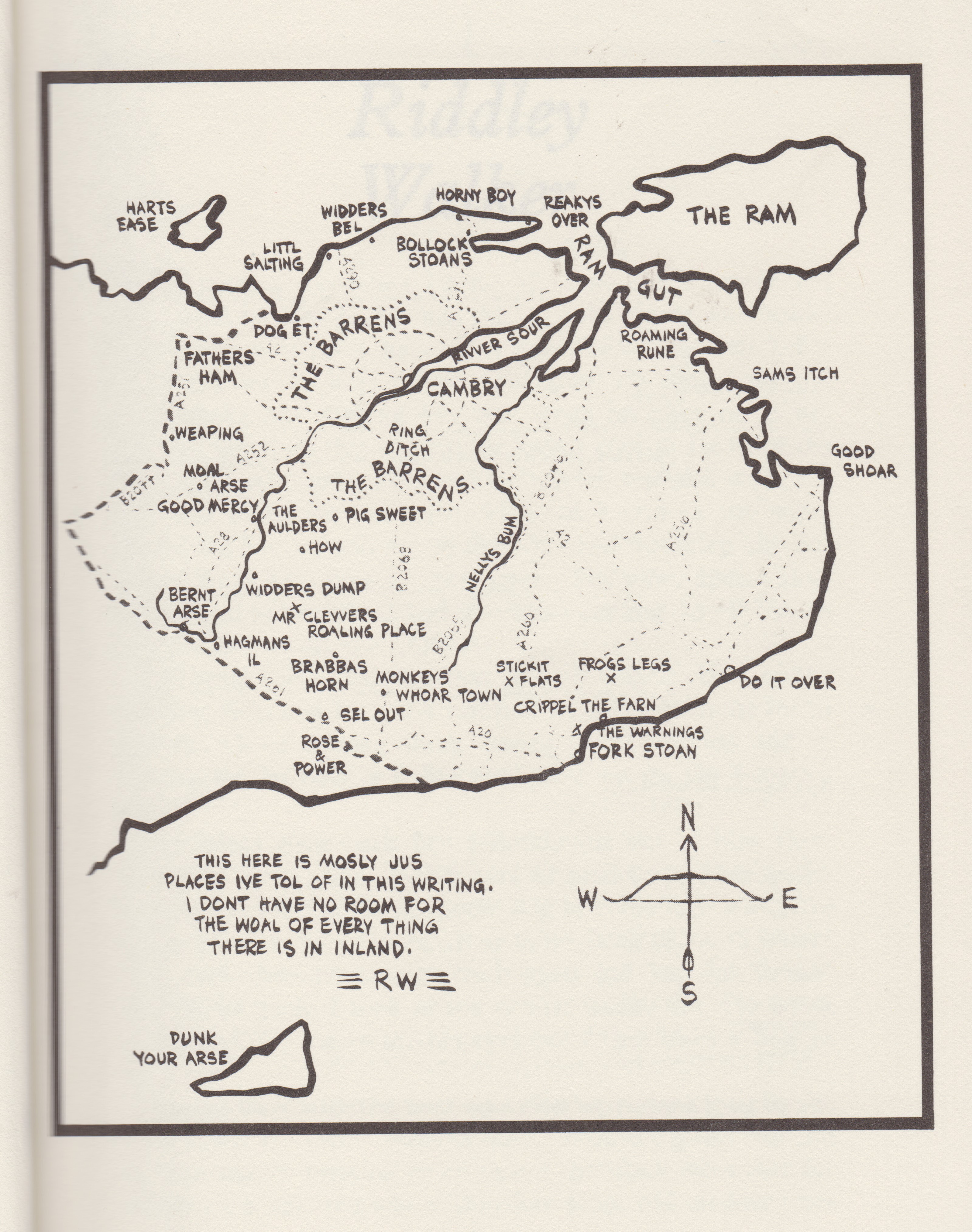
A map from one of the better known dystopias by one of my favorite authors… Russell Hoban’s Riddley Walker (1980). I have not read it, yet. I know, I know, I should. I have opened its pages and savored a passage or two–“Eusa sed, This is a dream. He opent up his iys but that ben open aul redde (34).”

The Map:

Citation: Map from the 1998 Indiana University Press Expanded edition of Russell Hoban’s Riddley Walker (1980). [click to enlarge]  Continue reading

Book Review: Emphyrio, Jack Vance (1969)


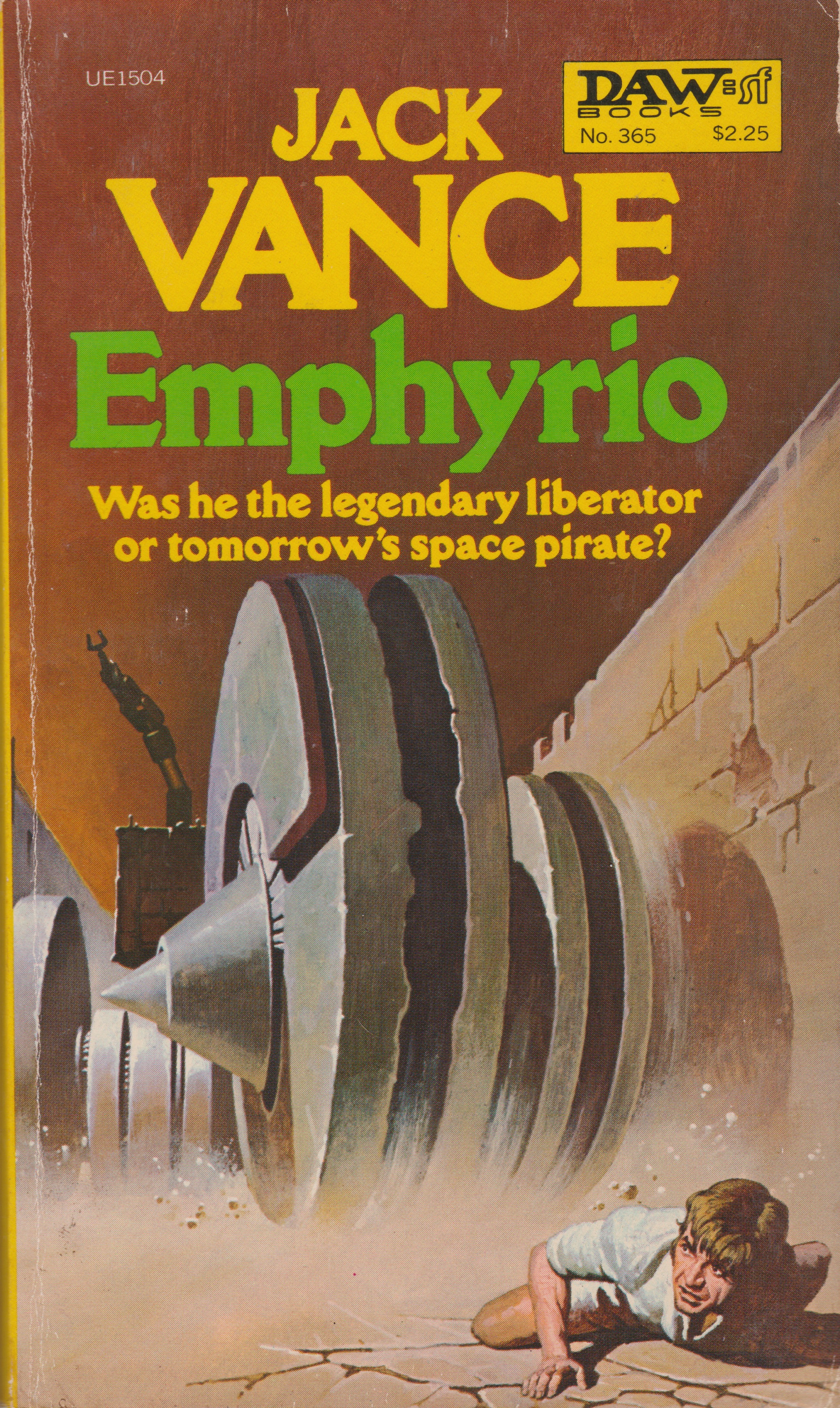
(Gino D’Achille’s cover for the 1979 edition)

3.5/5 (Good)

Jack Vance’s Emphyrio (1969) is a story about how a story can create change and heighten our own yearning for escape. Although a pulp coming-of-age adventure at heart, Vance reigns in his baroque descriptive tendencies to spin a narrative that tries (successfully) to say something meaningful about the impact of storytelling.
Continue reading

Adventures in Science Fiction Interior Art: Monday Maps and Diagrams (Science Fiction) 12/10/18 — Suzy McKee Charnas’ Walk to the End of the World (1974)

Monday Maps and Diagrams 12/10/18

A map from one of my absolute favorite SF novels… Suzy McKee Charnas’ Walk to the End of the World (1974).

The Map:

Citation: Map from the Ballantine Books 1st edition of Suzy McKee Charnas’ Walk to the End of the World (1974)
Continue reading

Adventures in Science Fiction Interior Art: Monday Maps and Diagrams (Science Fiction) 12/3/18 — Mark S. Geston’s Lords of the Starship (1967)

Monday Maps and Diagrams 12/3/18

As I paged through the hundreds and hundreds and hundreds of books in my science fiction question in a search for maps, my interior dialogue went something like this….

“Map? No. Map? No. Map? No. Map? No. Map? YES! FINALLY! Is the book a far future post-apocalyptical pseudo-medieval type story? Yes. Sounds about right. Do any other science fiction stories have maps?” Repeat.

Here’s one from a Mark S. Geston far future post-apocalyptical pseudo-medieval type story….

The Map:

Citation: Jack Gaughan’s map from the Ace Books 1st edition of Mark S. Geston’s Lords of the Starship (1967) [click to enlarge] [review]

Series blurb: In my informal Continue reading

Adventures in Science Fiction Interior Art: Monday Maps and Diagrams (Science Fiction) — Jack Vance’s Trullion: Alastor 2262 (1973)

Monday Maps and Diagrams 11/26/18

In my informal Monday Maps and Diagrams series I will showcase scans of SF maps and diagrams from my personal collection. As a kid I was primarily a fantasy reader and I judged books on the quality of their maps. When my reading interests shifted to science fiction, for years I still excitedly peeked at the first few pages… there could be a map!

Let’s start off with a simple yet effective map via Jack Vance. Islands, and rivers, and swamps….

The Map:

Citation: Map from the 1973 Ballantine edition of Jack Vance‘s Trullion: Alastor 2262 (1973) [click to enlarge]. Continue reading

Updates: Recent Science Fiction Acquisitions No. CXCVII (Farmer + Leinster + Williams + Anthology)

I’ve returned! New books!

If you missed it, I also posted a new review of a fantastic novel that melds New Wave sensibilities with an engaging narrative. Check it out.

1. A gift from a family friend…. But what a John Schoenherr cover!

2. Another gift…. a fun space medic premise but I do not trust anything produced by Leinster to have depth yet alone be “thought-provoking” as the blurb proclaims.

3. A Toronto, CA find — unfortunately a tag mutilated the cover…

4. Another Toronto, CA find — while browsing through the shelves I was reminded of one of Tarbandu’s infrequent 5/5 reviews…. We don’t always agree but he introduced me to John Crowley!

As always, comments are welcome.

Enjoy!

~

  1. Alien Worlds, ed. Roger Elwood (1964)

(John Schoenherr’s cover for the 1964 edition) Continue reading

Book Review: Killerbowl, Gary K. Wolf (1975)

4.75/5 (Very Good)

“The Minutemen’s hidden safety, crouching on the fifteenth floor of the Fontana West apartments, puts cross hairs on Gradington’s Adam’s apple, now even so slightly exposed just below the bottom of his bulletproof helmet and mask, just above the top of his body armor, and squeezes the trigger (5).”

In some ways SF comparisons between modern sports and Roman arenas, where blood and guts are spilled in obligatory fashion, might come off as a soft target. Imagine if the football players had knives! Pass. Imagine if one of the players had a gun! Double pass. Yes, we know sports can be violent and taxing on the mind and body. A quick browse through the current NFL injury list and articles such as The Boston Globe‘s six-part series on Aaron Hernandez makes grim and disturbing reading (researched only for this post). And adding levels of violence and trauma to an already splattered playing field is a predictable avenue of SF speculation. Predictable yet relentlessly fascinating in the hands of a talented author….

Continue reading

Updates: Recent Science Fiction Acquisitions No. CXCVI (Ballard + Lessing + Wilson + Nebula Awards Anthology)

1. A Ballard novel that had previously escaped my grasp… Too bad I don’t own the visually fun 1981 1st edition (Bill Botton’s cover screams Damnation Alley).

2. Unfortunately my 1st edition copy of Angus Wilson’s satirical 1961 SF novel The Old Men at the Zoo did not come with a dustjacket (damn sellers who incorrectly list books online!). The novel itself appears interesting! Has anyone read it?

3. A spectacular Paul Lehr cityscape cover + Nebula award winners = what is not to love?

4. And finally, my sole Brooklyn, NY book purchase from my summer trip — the fifth in Doris Lessing’s Canopus in Argos: Archives sequence of SF novels.

As always, comments (and even tangents) are welcome.

Note: His-res images of all but Angus Wilson’s novel are my personal copies.

~

1. Hello America, J. G. Ballard (1981)

(James Marsh’s cover for the 1985 edition) Continue reading

Novella Review (Italian SF in translation): “Cancerqueen” (1950), Tommaso Landolfi

DkVqsjsUwAEDHqm[1].jpg(Colin Hay’s cover for the 1984 Italian edition of Cancerqueen (1950), Tommaso Landolfi)

4.75/5 (Near Masterpiece)

The fiction of Tommaso Landolfi—an Italian author, translator, and critic—dabbled at speculative edges. Those far more knowledgeable about Italian SF consider Landolfi’s novella “Cancerqueen” (1950), translated in 1971 by Raymond Rosenthal, an important work in the history of Italian SF as it resonated with later “New Wave sensibilities” and “went against the realist grain of Italian high culture” (Salvatore Proietti, “The Field of Italian Science Fiction,” Science Fiction Studies, July 2015).

Redolent with gothic overtones, “Cancerqueen” tells the transfixing tale of a possibly insane narrator (N) relating his voyage into space, and into the womb of a manipulative spaceship. Writing as an act of self-delusion—“perhaps I should pretend I have a reader, I shall be less alone, and that is enough” (50)—N relates how, in a disconsolate state of mind, he agreed to an outrageous proposition put forth by Filano, an escapee from a nearby asylum.  The proposition: Deep in the mountains Filano has a spaceship named Cancerqueen and he wants to take N to the moon! For N, “she was my liberator, whose wings (wholly metaphorical) would transport me (not metaphorically) beyond my  disagreeable Continue reading