Which books/covers/authors intrigue you? Which have you read? Disliked? Enjoyed?
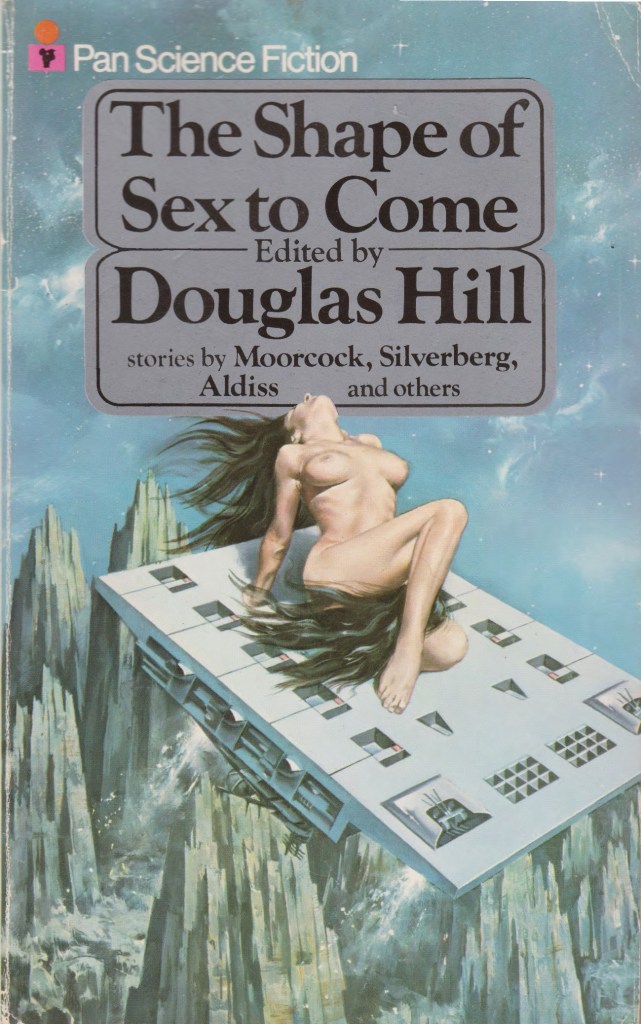
1. The Shape of Sex to Come, ed. Douglas Hill (1978)
Uncredited cover for the 1st edition
From the back cover: “Eight stories from SF names as highly-respected as Aldiss, Moorcock and Silverberg explore the strange and bizarre possibilities for sexuality in the furthest reaches of tomorrow.”
Contents: Robert Silverberg’s “In the Group” (1973), Thomas M. Disch’s “Planet of the Rapes” (1977), A. K. Jorgensson’s “Coming-of-Age Day” (1965), Anne McCaffrey’s “The Thorns of Barevi” (1970), Brian W. Aldiss’ “A One-Man Expedition Through Life” (1974), Brian W. Aldiss’ “The Taste of Shrapnel” (1974), Brian W. Aldiss’ “Forty Million Miles from the Nearest Blonde” (1974), Hilary Bailey’s “Sisters” (1976), John Sladek’s “Machine Screw” (1975), and Michael Moorcock’s “Pale Roses” (1974).
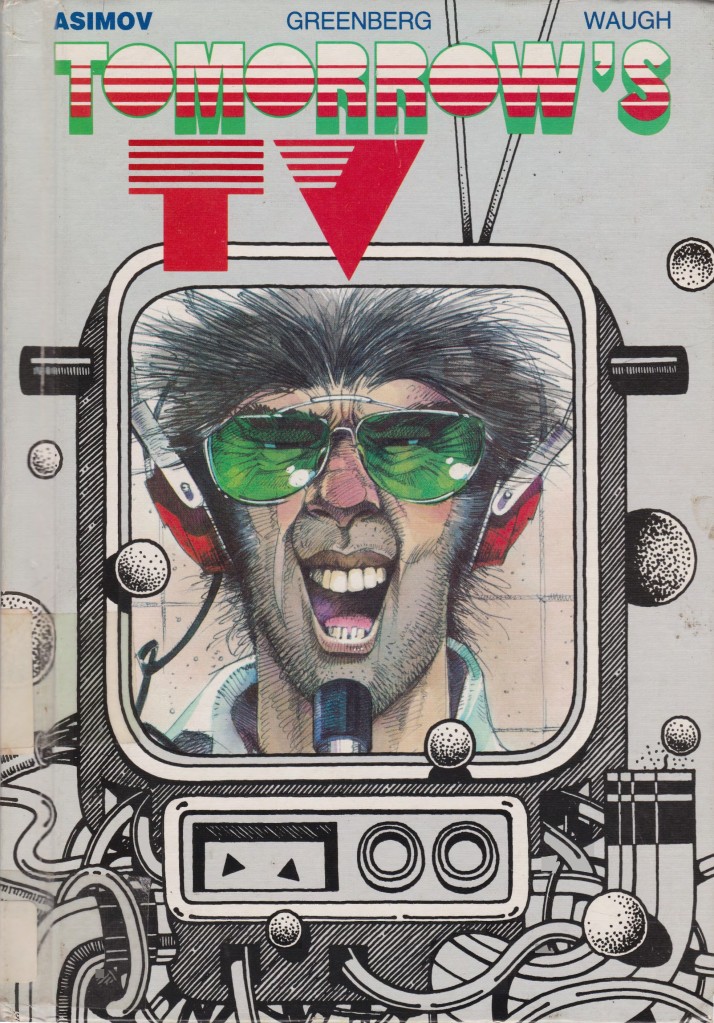
The seventh, eighth, ninth, and tenth stories in my series on the science fictional media landscape of the future appear in the anthology Tomorrow’s TV, ed. Isaac Asimov, Martin Harry Greenberg, and Charles Waugh (1982).
Tomorrow’s TV (1982) gathers together five short stories published between 1951 and 1979 on future speculations and disturbing manifestations of the tube of the future. The extensive number of TV-related science fiction from these decades (especially the 50s and early 60s) should not come as a surprise. According to Gary R. Edgerton’s magisterial monograph The Columbia History of American Television (2007), no “technology before TV every integrated faster into American life” (xi). Isaac Asimov speculates on the nature of education and the role of the “teacher” if every kid goes to school on their TV. Ray Bradbury imagines a frosty world where everyone turns inward towards the hypnotic glow of their TV sets. Robert Bloch explores the intersection of programming as escape and its collision with the real world. Ray Nelson narrates a hyperviolent expose of the alien entities behind subliminal messaging. And Jack Haldeman II imagines what will happen when the human mind reaches a moment of information overload.
The fifth and sixth story in my series on the science fictional media landscape of the future. Fritz Leiber imagines a sinister conjuration of the Girl behind the advertisement and a robot who wanders a post-nuclear landscape selling soda to the charred victims.
Previously: Brian W. Aldiss’ “Panel Game” (December 1955).
Next Up: Tomorrow’s TV (1982). Stories by Isaac Asimov, Jack C. Haldeman II, Ray Bradbury, Robert Bloch, and Ray Nelson.
Tony Roberts’ cover for the 1975 edition of The Secret Songs (1968)
4.5/5 (Very Good)
Fritz Leiber’s “The Girl with the Hungry Eyes” (1949) first appeared in The Girl with the Hungry Eyes, and Other Stories (1949). I read it in his collection The Secret Songs (1968). You can read it online here.
“The Girl with the Hungry Eyes” explores the post-WWII economic boom as television and rapidly growing suburbs expanded the reach and power of advertising. Cold War rhetoric promoted consumerism as a key component of the American Way of Life (source).
A tale of erotic obsession and terror, “The Girl with the Hungry Eyes” imagines a fantastical conjuration of the archetypal advertising Girl selling every conceivable product. Her face appears on billboards across the urban expanse. Her torso or limb holds the object to be marveled at. And her eyes, “the hungriest eyes in the world” (131), tear into the soul and take something away with their gaze. Fritz Leiber’s terrified narrator, the “poor damned photographer” (129)who unleashed her on the world and fell for her spell, confesses “there are vampires and vampires, and not all of them suck blood” (128).
The fourth story in my series on the science fictional media landscape of the future. Aldiss spins a wild satire of a television screen that views you!
Gerard Quinn’s cover for the December 1955 issue of New Worlds
3.75/5 (Good)
Brian W. Aldiss’ “Panel Game” first appeared in New Worlds Science Fiction, ed. John Carnell (December 1955). You can read it online here.
At 8:12 pm on September 22nd, 1955 the UK’s first TV advertisement–for Unilever’s Gibb’s S. R. [Sodium ricinoleate] toothpaste–aired on ITV (source). You can watch the commercial here with its toothpaste tube suspended in ice, a model excitedly brushing, and a hilarious graph that does not even pretend to convey data. Just a year earlier, the Television Act of 1954 allowed the formation–to great debate–of ITV, the first commercial television network in the UK.
Chelsey Bonestall’s cover for The Magazine of Fantasy and Science Fiction, ed. Anthony Boucher and J. Francis McComas (February 1952)
4/5 (Good)
You can read “The Pedestrian” in the February 1952 issue of The Magazine of Fantasy and Science Fiction, ed. Anthony Boucher and J. Francis McComas here.
Scenes and fragments from Fahrenheit 451 (1953), The Martian Chronicles (1951), Dandelion Wine (1951), The Illustrated Man (1951), and I Sing the Body Electric! (1969) percolate through my memories like embers that refuse to flicker out. The oppressive Venusian rains in “All Summer in a Day” (1954) and the carcasses consumed by lions in “The Veldt” (1951) remain the most distinct. Beacons of cryptic violence and sadness that continue to guide my reading adventures. All were from my first years of reading SF. Some were from cassette audiobooks with my family on long travels into the west. Others read in distant pastures surrounded by the sounds of creeks and roving cows. Until today, he was firmly an author of my youth. Yes, I’d seen (and enjoyed) the 1966 François Truffaut adaptation of Fahrenheit 451 in college but I’d never returned to the texts…
The following review is the 15th installment of my series searching for “SF short stories that are critical in some capacity of space agencies, astronauts, and the culture which produced them.” Some stories I’ll review in this series might not fit. And that is okay. I relish the act of literary archaeology.
I read this story in celebration of Walter M. Miller, Jr.’s birthday (1/23). While best known for his masterfulA Canticle for Leibowitz (fixup 1959)novellas, I’ve thoroughly enjoyed his other short fictions, including his previous appearance in this series “Death of a Spaceman” (variant title: “Memento Homo”) (1954).
As always, feel free to join the conversation and read along with me on the search for the depressed astronaut.
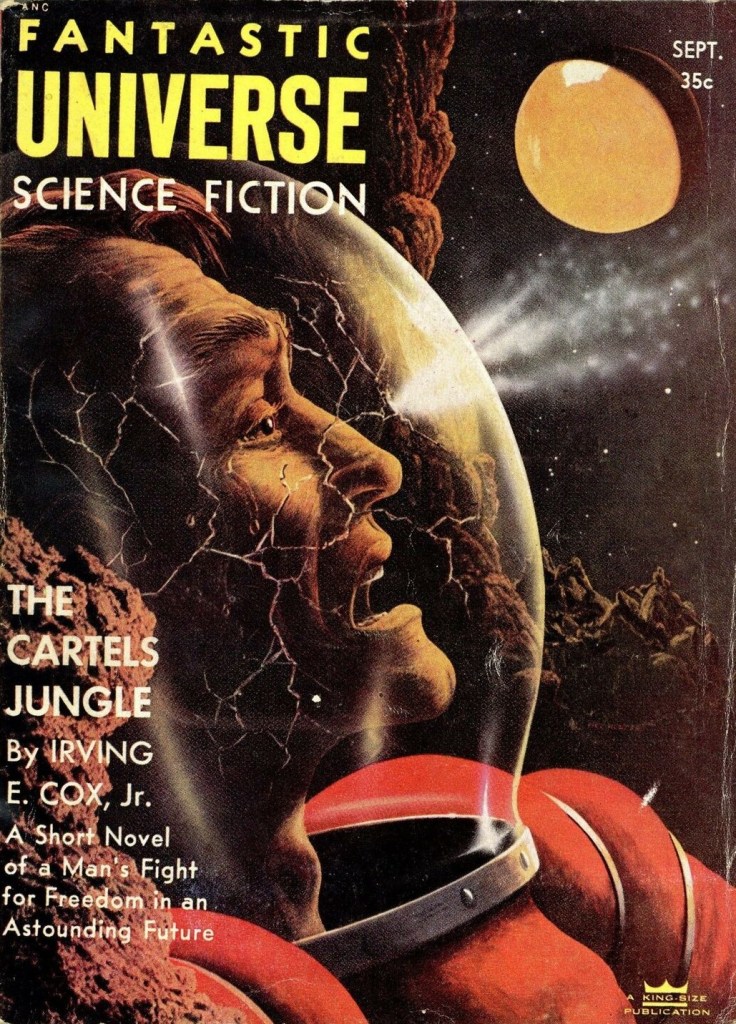
Mel Hunter’s cover for the September 1955 issue of Fantastic Universe
4.5/5 (Very Good)
Walter M. Miller, Jr.’s “The Hoofer” first appeared in the September 1955 issue of Fantastic Universe, ed. Leo Margulies. You can read it online here. I read it in S-F: The Year’s Greatest Science-Fiction and Fantasy, ed. Judith Merril (1956).
“The Hoofer” inhabits a similar future as “Death of a Spaceman” (1954) where space travel is a dangerous blue-collar occupation and coming home from the “Big Bottomless” parallels the traumas of a wartime veteran. With deceptive and powerful simplicity, “The Hoofer” follows Big Hogey Parker, with bottle of gin in hand that aggravates the physical symptoms of space travel–“glare-blindness, gravity-legs, and agoraphobia” (77), on his bus journey home a “week late” (79). He has a secret he fears to share with his wife. And the effects of space travel only explain some of his deep sadness within.
2021 was the best year in the history of my site for visits and unique viewers! I suspect this increasingly has to do with my twitter account where I actively promote my site vs. a growing interest in vintage SF. I also hit my 1000th post–on Melisa Michaels’ first three published SF short stories–in December.
As I mention year after year, I find reading and writing for the site—and participating in all the SF discussions it’s generated over the year—a necessary and greatly appreciated salve. Thank you everyone!
I read very few novels this year. Instead, I devoted my attention to various science short story reviews series and anthologies. Without further ado, here are my favorite novels and short stories I read in 2021 (with bonus categories).
Tempted to track any of them down?
And feel free to list your favorite vintage (or non-vintage) SF reads of the year. I look forward to reading your comments.
My Top 7 Science Fiction Novels of 2021 (click titles for my review)
Uncredited cover for the 1988 edition
1. Where Time Winds Blow (1981), Robert Holdstock, 5/5 (Masterpiece): Holdstock’s vision is a well-wrought cavalcade of my favorite SF themes–the shifting sands of time, the pernicious maw of trauma that threatens to bite down, unreliable narrators trying to trek their own paths, a profoundly alien planet that compels humanity to construct an entirely distinct society… It’s a slow novel that initially masquerades as something entirely different. Just like the planet itself.
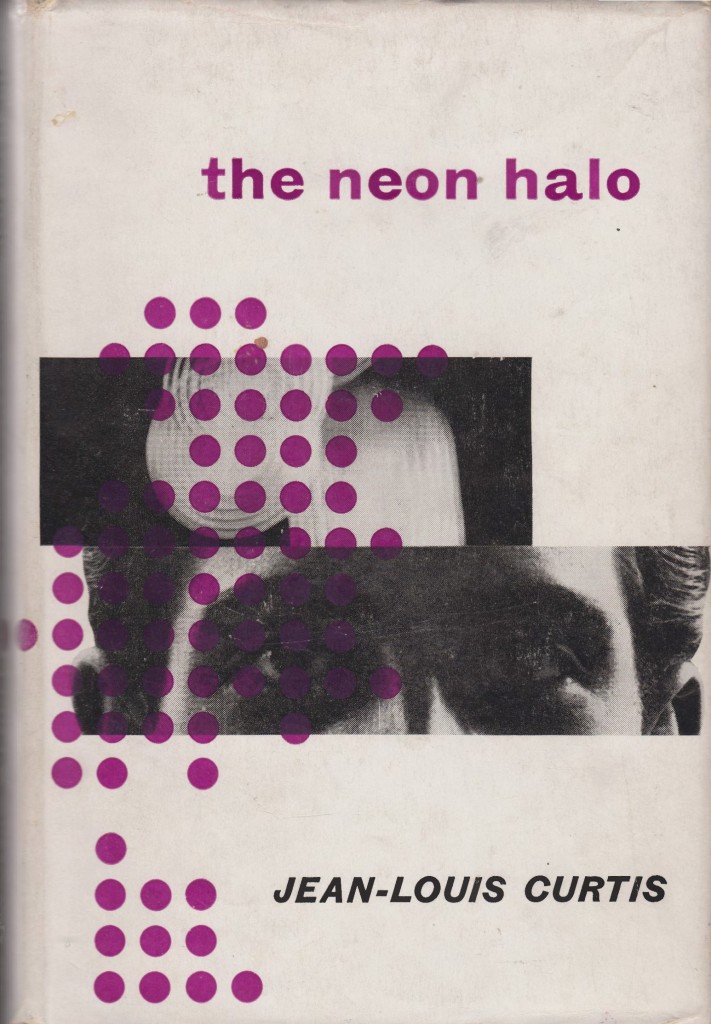
A. J. Bisley’s cover for the 1958 English translation
3.5/5 (collated rating: Good)
The French novelist Jean-Louis Curtis (1917-1995), best known for his Prix Goncourt-winning The Forests of the Night (1947), crafts a linked series of short stories in The Neon Halo (1956, trans. 1958) that chart the evolution of modern society between 1995-circa 2100. While the thematic influence of George Orwell’s 1984 (1949) and Aldous Huxley’s Brave New World (1932) permeates the pages (permanent warfare, reproductive technology, psychological and pharmaceutical conditioning, etc.), The Neon Halo contains genuine vibrancy and intriguing ruminations on persecution and martyrdom. Despite the frequent references to the French literary environment of Curtis’ day, The Neon Halo pulses with wit and levity despite the dour subject matter.
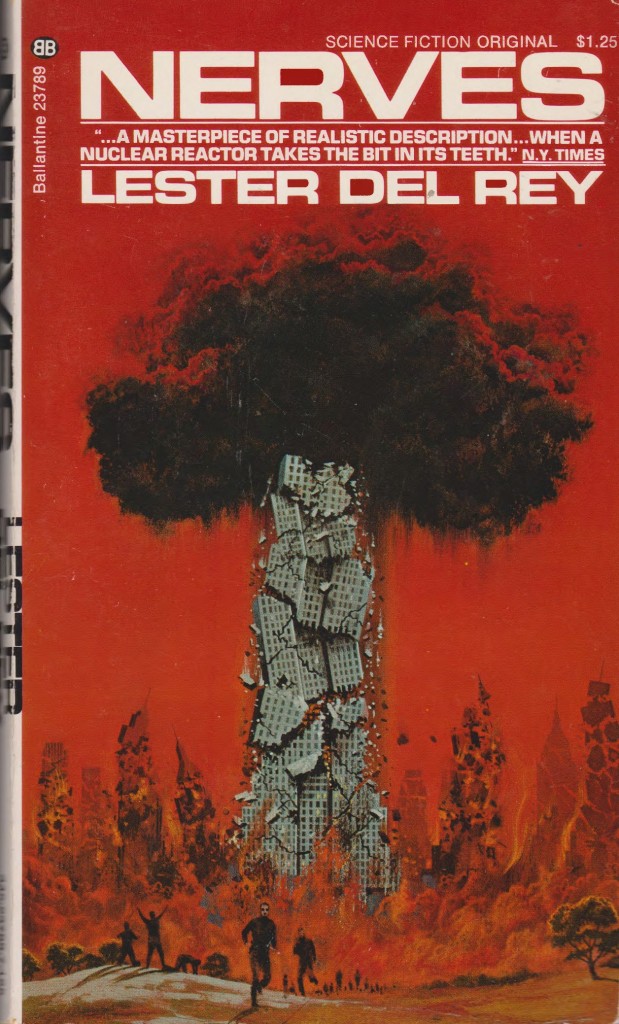
From the back cover: “THIS IS NO STORY OF SPACE SHIPS AND MARTIANS. THIS IS A STORY ABOUT OUR WORLD RIGHT NOW.
‘In 1942, three years before the general public had ever heard of nuclear fission. Lester del Rey wrote a brilliantly detailed novella of disaster in an atomics plant, which now appears, skillfully expanded to book length, as NERVES. A wholly admirable blend of prophetic thinking (in medicine as well as atomics), warm human values and powerful narrative suspense, this novel is strongly recommended…’ –N.Y. Herald Tribune.”