Which books/covers/authors intrigue you? Which have you read? Disliked? Enjoyed?
1. The Martian Chronicles, Ray Bradbury (1950)
Ian Miller’s cover for the 1979 edition
From the back cover: “A MAGNIFICANCTLY ILLUSTRATED EDITION OF THE MARTIAN CHRONICLES WHICH MASTERFULLY ENHANCES THE CLASSIC WONDER AND TERROR BY THE WORLD-RENOWNED AUTHOR OF THE ILLUSTRATED MAN RAY BRADBURY.
Note: My read but “waiting to be reviewed pile” is growing. Short rumination/tangents are a way to get through the stack before my memory and will fades. Stay tuned for more detailed and analytical reviews.
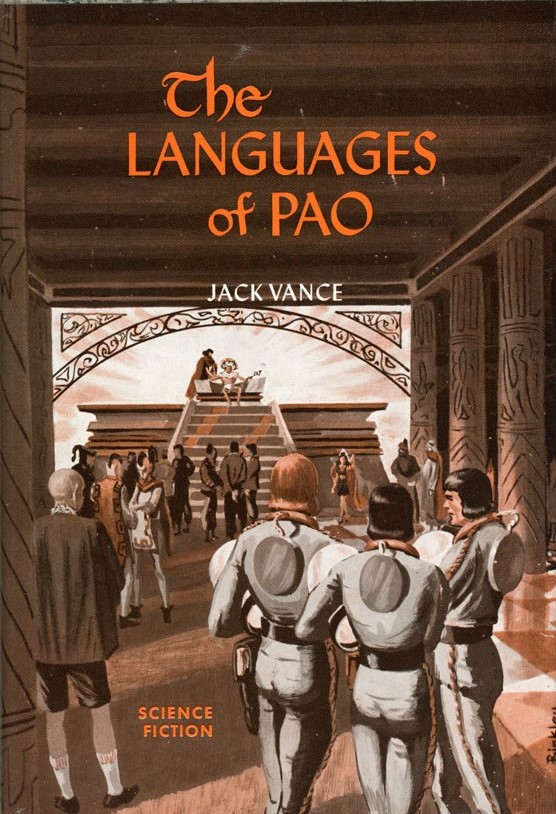
1. The Languages of Pao, Jack Vance (1958)
Ric Binkley’s cover for the 1958 1st edition
3.25/5 (Vaguely Good)
Since I started my site in 2011, I’ve soured a bit on Jack Vance’s brand of planetary adventure in richly realized and exotic worlds. I doubt I’d currently rate novels like Showboat World(1975) or The Blue World (1966) as highly as I did back then. One of more appealing elements of having a single project for so long is my ability to track my evolving views on genre. That said, I’d classify Wyst: Alastor 1716(1978) and The Languages of Pao (1958) amongst his most conceptually ambitious novels I’ve read so far and worth tracking down. For a full list consult my index. Note: I read but never reviewed Dying Earth (1950).
I’ve recently conducted a binge read of my ARC of Dangerous Visions and New Worlds: Radical Science Fiction, 1950-1985, ed. Andrew Nette and Iain McIntyre (2021). It is a must buy for any SF fan of the era interested in exploring the larger world behind the texts. Considering the focus of my website and most of my reading adventures over the last decade, I can unabashedly proclaim myself a fan of the New Wave SF movement–and this edited volume is the perfect compliment to my collection and interests.
The editors and PM Press have graciously provided me with the introduction to the volume. Perhaps it’ll convince you to purchase your own copy!
The “long sixties,” an era which began in the late 1950s and extended into the 1970s, has become shorthand for a period of trenchant social change, most explicitly demonstrated through a host of liberatory and resistance movements focused on class, racial, gender, sexual, and other inequalities. These were as much about cultural expression and social recognition as economic redistribution and formal politics. While the degree to which often youthful insurgents achieved their goals varied greatly, the global challenge they presented was a major shock to the status quo.
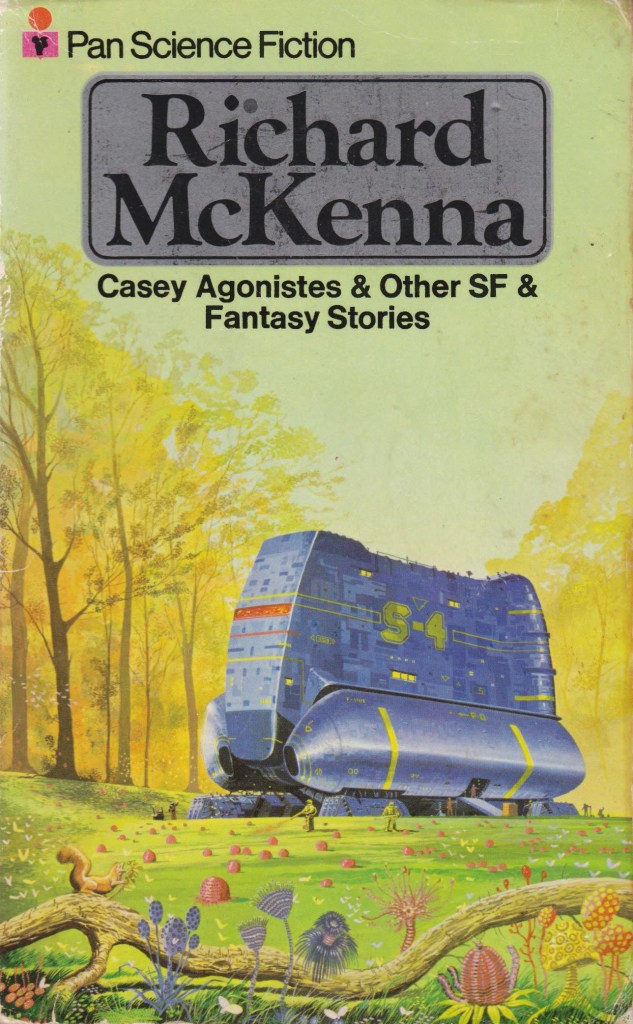
Richard McKenna (1913-1964) spent the majority of his adult career (1931-1953) “not very happily” in the US Navy. He was forced to leave college and join the service due to his lack of opportunities in rural Idaho during the Great Depression. Many of his science fiction stories explore the homosocial world of the military–the comradery through shared trauma and battle, the corrosive effect on those who struggle to fit in, and the destructive culture of machoism. After his military service, he enrolled at the University of North Carolina in English. Only a handful of SF short stories appeared during his lifetime, the majority were published posthumously. McKenna considered SF to be his “training ground” before a planned career in mainstream literature. Right before his early death in 1964, he hit it big with the non-SF novel The Sand Pebbles (1962), which was turned into a famous 1966 movie by the same name.
Which books/covers/authors intrigue you? Which have you read? Disliked? Enjoyed?
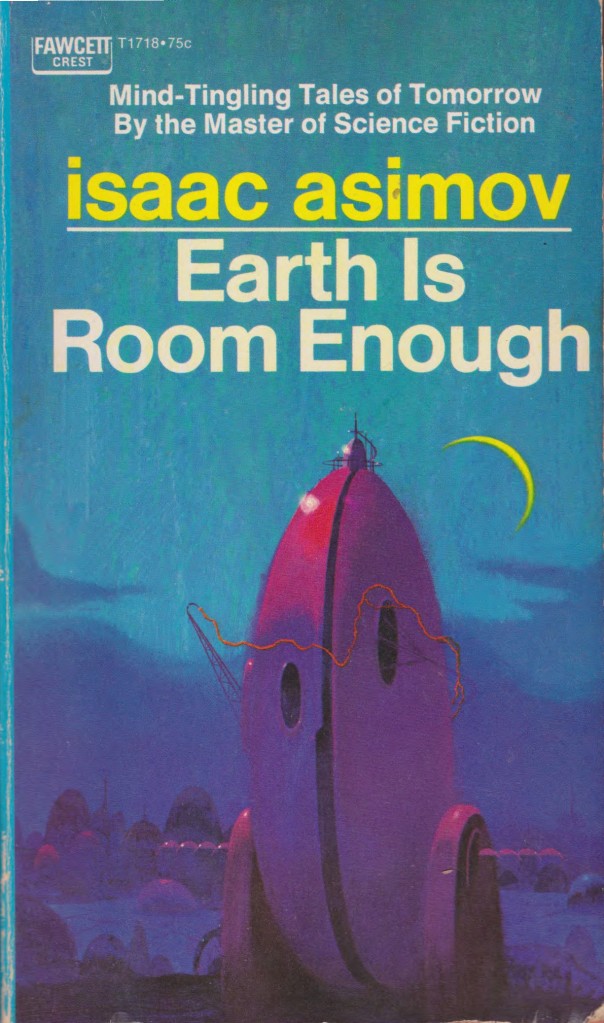
1. Earth Is Room Enough, Isaac Asimov (1957)
Paul Lehr’s cover for the 1970 edition
From the back cover: “ANYTHING CAN HAPPEN and probably will RIGHT HERE ON EARTH.
You don’t have to rent a spaceship or sign up for a singles cruise to Saturn or spend your weekends star-hopping along the Milky Way because EARTH IS ROOM ENOUGH.
Earth is where the action is and each tomorrow unleashes new discoveries.
Here are brilliant, witty, frightening, and fascinating stories of the future by the greatest science fiction master of them all. Just hitch your mind to these weird and wonderful tales for a spin around the world of tomorrow that will take you right to the center of your wildest dreams.”
Contents: “The Dead Past” (1956), “Franchise” (1955), “Gimmicks Three” (1956), “Kid Stuff” (1953), “The Watery Place” (1956), “Living Space” (1956), “The Message” (1956), “Satisfaction Guaranteed” (1951), “Hell-Fire” (1956), “The Last Trump” (1955), “The Fun They Had” (1951), “Jokester” (1956), “The Immortal Bard” (1954), “Someday” (1956), “The Author’s Ordeal” (1957), “Dreaming Is a Private Thing” (1955)
This is the 11th post in my newly resurrected series of vintage generation ship short fiction reviews. I’m continuing my exploration of 50s visions.
As a reminder for anyone stopping by, all of the stories I’ll review in the series are available online via the link below in the review.
You are welcome to read and discuss along with me as I explore humanity’s visions of generational voyage. And thanks go out to all who have joined already. I also have compiled an extensive index of generation ship SF if you wish to track down my earlier reviews on the topic and any that you might want to read on your own.
Ed Emshwiller’s cover for Galaxy Science Fiction (September 1954)
Arthur Sellings’ “A Start in Life” first appeared in Galaxy Science Fiction (September 1954), ed. H. L. Gold. 3/5 (Average). You can read it online here.
Which books/covers/authors intrigue you? Which have you read? Disliked? Enjoyed?
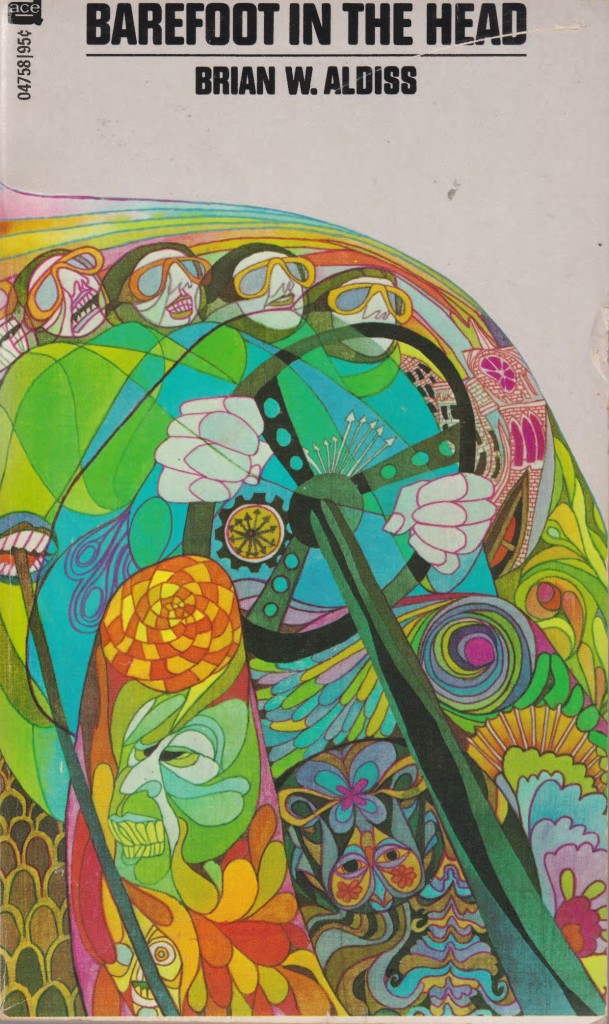
1. Barefoot In the Head, Brian W. Adliss (1969)
Diane and Leo Dillon’s cover for the 1972 edition
From the back cover: “AFTER THE ACID WAR…. Rising from the dust and ashes of a Europe still reeling from the effects of the great Acid War comes Colin Charteris, a futuristic Don Quixote riding the mechanized brontosaurus of the times.
Charteris tries desperately to make sense of the drugged, chaotic world he lives in, and finds himself hailed as the new Messiah. Stranger still, Charteris himself comes to believe this.
His adventures as he tries to save the world from its insanity are brilliantly told, a satiric science fiction comment on the future of mankind.”
This is the 10th post in my newly resurrected series of vintage generation ship short fiction reviews. I’ve returned to an author, Frank M. Robinson (1926-2014), that I promised to read more of after the wonderful “The Wreck of the Ship John B.” (1967).
As a reminder for anyone stopping by, all of the stories I’ll review in the series are available online via the link below in the review.
You are welcome to read and discuss along with me as I explore humanity’s visions of generational voyage. And thanks go out to all who have joined already. I also have compiled an extensive index of generation ship SF if you wish to track down my earlier reviews on the topic and any that you might want to read on your own.
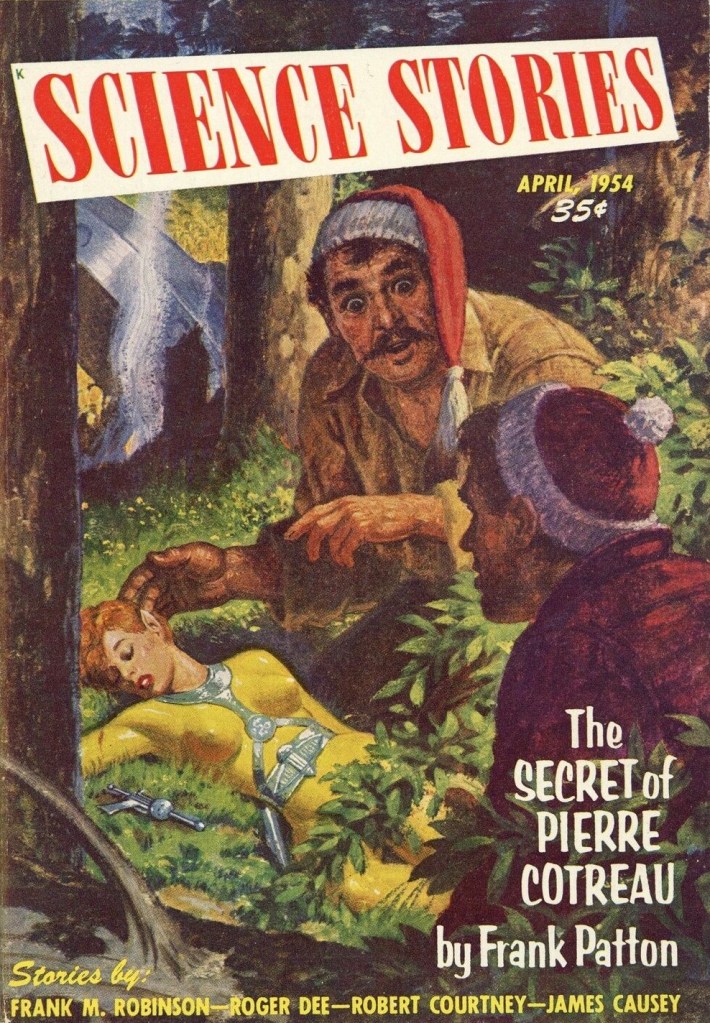
Robert Gibson Jones’ cover art for Science Stories (April 1954)
Frank M. Robinson’s “The Oceans Are Wide” first appeared in Science Stories (April 1954), ed. Bea Mahaffey and Ray Palmer. 3.75/5 (Good). You can read it online here. Note: I read the story in Starships, ed. Isaac Asimov, Martin Harry Greenberg, Charles G. Waugh (1983).
A Boy Comes of Age, or How Do You Make a Machiavellian Tyrant
This is the 9th post in my newly resurrected series of vintage generation ship short fiction reviews. Not every short story I read for this series fits my definition of a generation ship. If you choose to read the story before my review, know that I disagree with its inclusion in SF Encyclopedia’s entry and understand why it was excluded from Simone Caroti’s original list. And that’s okay! I enjoy mapping the territory with all its swampy bayous, hidden coves, and dead ends.
As a reminder for anyone stopping by, all of the stories I’ll review in the series are available online via the link below in the review.
You are welcome to read and discuss along with me as I explore humanity’s visions of generational voyage. And thanks go out to all who have joined already. I also have compiled an extensive index of generation ship SF if you wish to track down my earlier reviews on the topic and any that you might want to read on your own.
Frank Kelly Freas’ cover art illustrating Leigh Brackett’s “The Ark of Mars” in Planet Stories (September 1953)
Leigh Brackett’s “The Ark of Mars” first appeared in Planet Stories (September 1953), ed. Jack O’Sullivan. 2.5/5 (Bad). You can read it online here. “Ark” was combined with an expanded “Teleportress of Alpha C” (1954) and released as the fix-up Alpha Centauri or Die! (1963).
Let’s get the obvious out of the way. As I mentioned above, this is not a generation ship story despite its inclusion in the SF Encyclopedia’s entry on the theme. While mothers and children are brought on board a massive vessel secretly constructed on Mars for a journey to an Earth-like planet orbiting Alpha Centauri, the voyage lasts a mere five years. Children might be born on the ship but will only spend a short portion of their lives on board. All of the action of the plot revolves around launching the vessel and Mars’ last attempt to stop the trip immediately as it sets off. Few of the distinctive hallmarks of generation ship stories are present — there’s no generational strife between those born on the ship and their elders, no conceptual breakthrough as the “true” nature of the world is revealed, etc. Instead, the ship is a glorified covered wagon, symbolic of Brackett’s identification of a primitivist masculine drive (with adjacent spouses) to trek West rather than a new social system to explore.