Updates: Recent Science Fiction Acquisitions No. CLXXVII (Piercy + Gotschalk + Bax + anthology edited by Haldeman)

1) Futuristic city? Yes! Is more needed? Okay, okay, I concede, more is needed. I hope Gotschalk’s novel with its fantastic Dean Ellis cover delivers. Among the least known of the Ace Science Fiction Special series…

Check out my older reviews of J. G. Ballard’s “Billennium” (1961)Future City, ed. Roger Elwood (1973), and The World Inside, Robert Silverberg (1971) for more SF on this theme of futuristic cities. If you delve through the archives you’ll find many more examples.

2) Ballard blurbs Martin Bax’s novel as “…the most exciting, stimulating and brilliantly conceived book I have read since Burroughs’ novels.” Hyperbole aside, the two reviews (here and here) I’ve read of Bax’s sole novel puts this at the top of my “to read” pile.

I have cheated a bit by including the cover for the first New Directions edition rather than the later Picador edition I own due to the cover quality.

3) Three acquisitions posts ago (here) I mentioned that the premise of Marge Piercy’s Dance the Eagle to Sleep (1970) did not inspire me to read it anytime soon. Thankfully I found a copy of what many consider her masterpiece Woman at the Edge of Time (1976) cheap at the local used book store.

4) I am not sure why I picked this collection up—I’ve heard good things about Joe Haldeman’s introduction which draws on his experience in the Vietnam War. As Isaac Asimov, Mack Reynolds, etc are not normally authors who intrigue me, I might do something I rarely do and read and review Effinger’s story only (and maybe Poul Anderson’s as he’s better in short form)…

As always thoughts and comments are welcome.

~

1. Growing up in Tier 3000, Felix C. Gotschalk (1976)
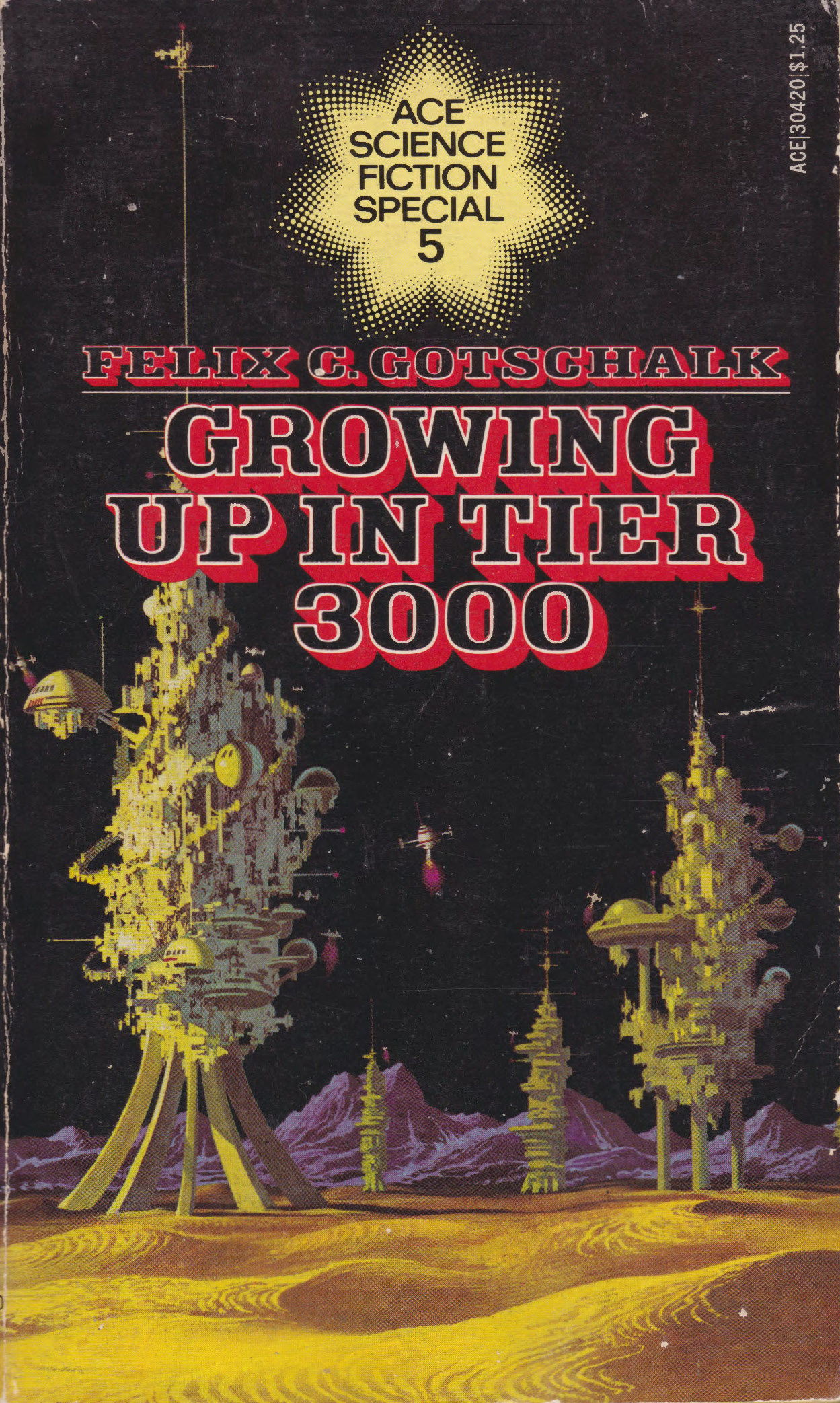
(Dean Ellis’ gorgeous cover for the 1976 edition) Continue reading
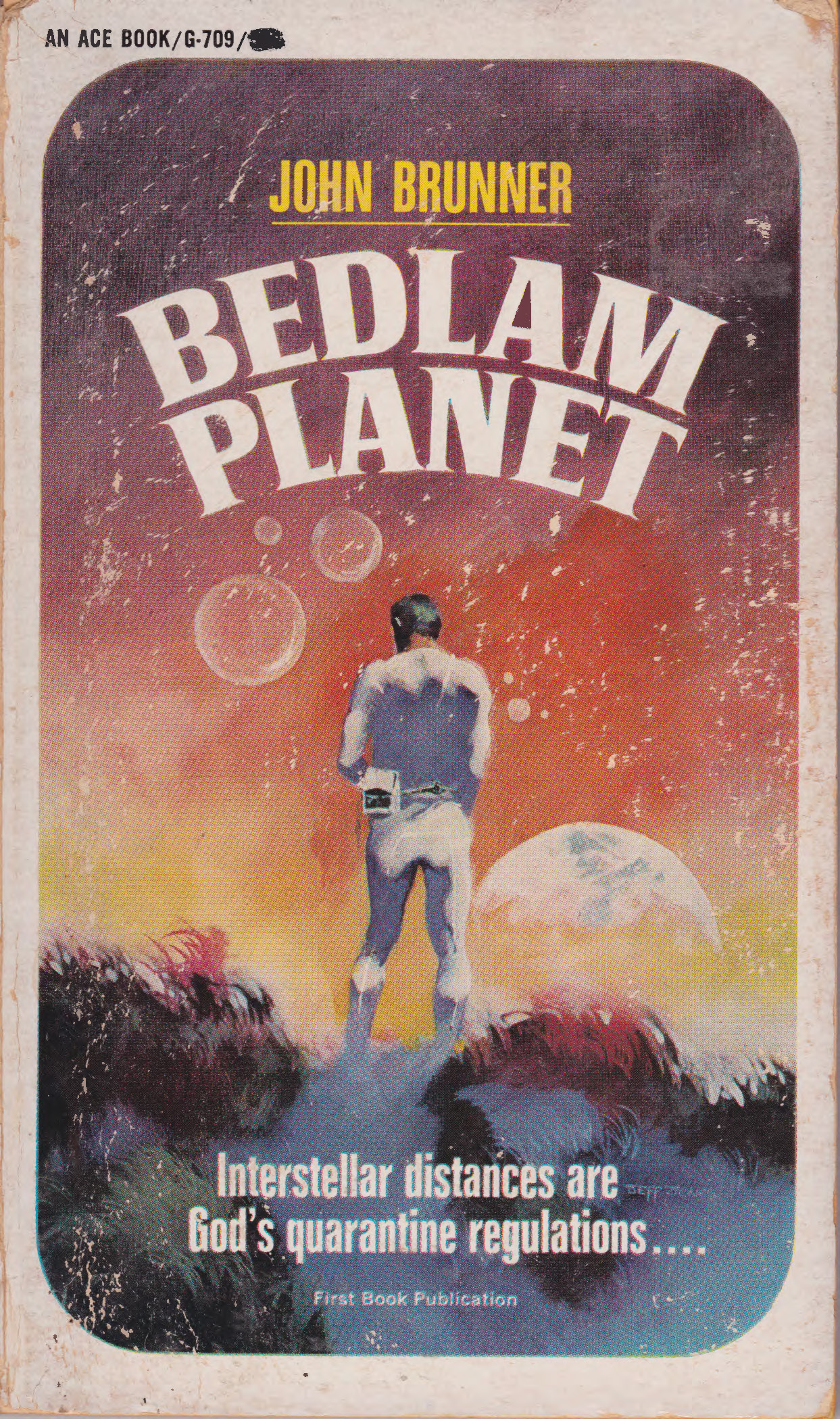

Book Review: Bedlam Planet, John Brunner (1968)

(Jeff Jones’ cover for the 1968 edition)

3.25/5 (Vaguely Good)

To move past my variegated obsessions regarding William Kotzwinkle’s Doctor Rat (1976) (review + list of imaginary scientific articles), I decided to reread a lesser known John Brunner novel. I cannot pinpoint exactly when I first read Bedlam Plant (1968), other than before I started my site, but it holds up as a moody biological mystery with mythological undertones as colonists confront their deceptive new world.

This isn’t Stand on Zanzibar (1968), Shockwave Rider (1975), The Sheep Look Up (1972), or The Jagged Orbit (1969), but it left me wishing that Brunner applied his Continue reading

Updates: Recent Science Fiction Acquisitions No. CLXXV (Ballard + Strugatski + deFord + Baines)

1) Blunt statement: I need to read more of the Strugatski brothers. I devoured the The Ugly Swans (written 1966-1967, published 1979 in the US, published in 1987 in the USSR) but did not review it.

2) A fascinating speculative feminist novel from The Women’s Press–birth, myth, delusions, dreams, terror.  Few reviews exist online so I will go in without much knowledge of the work.

3) I placed Miriam Allen deFord’s collection (filled with numerous gems) Xenogenesis (1969) on a list of SF Gollancz’s Masterwork series should acquire. Her only other published collection for the longest time was priced far out of my reach. This is why you have Amazon lists… scan them frequently, find the deals!

4) A Ballard novel with “pervading auroral gloom, broken by inward shifts of light”? Count me in! As a fierce advocate of Ballard’s early fiction and novels, I cannot wait to read this one…

Related reviews: Billenium (1962), High-Rise (1975), The Voice of Time and Other Stories (1962). The Drowned World (1962) and The Drought (1964) clock in as my favorite of his novels—although both remain unreviewed… Stay tuned for my upcoming review of The Terminal Beach (1964).

Scans are from my personal collection. Click to enlarge.

Thoughts/comments are welcome (as always)!

1. The Final Circle of Paradise, Arkadi and Boris Strugatski (1965, trans. 1976)

(Laurence Kresek’s cover for the 1976 edition) Continue reading
Adventures in Science Fiction Cover Art: The 50s/60s Surrealistic Stylings of Art Sussman

tfthslntpl1960

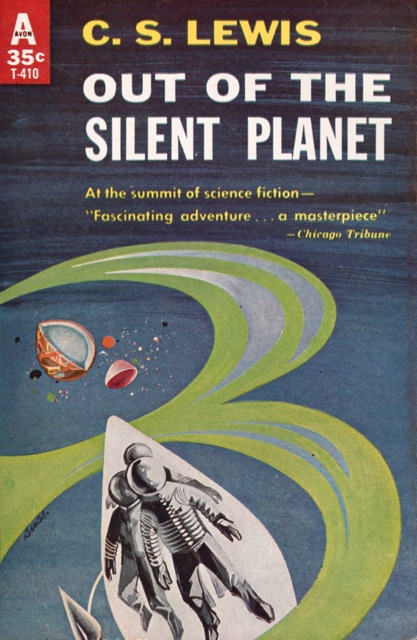
(Cover for the 1960 edition of Out of Silent Planet (1938), C. S. Lewis)

Art Sussman produced a remarkable corpus of SF and other pulp covers (mysteries, crime, etc). He could easily shift gears between Richard Powers-esque surrealism—although distinctly his own take—to covers that suited an Agatha Christie mystery (browse the range here). I would be wary comparing him to Powers until you skim through the latter’s late 50s early 60s art (definitely an enjoyable activity!). Although Powers is still far superior, both were part of the SF art movement increasingly experimented with surreal/metaphoric and experimental art (there are still spaceships lurking around the edges, and futuristic cities, and other pulpy moments).

There is a precision of vision with Sussman’s art—his cover for the 1960 edition of Out of Silent Planet (1938), C. S. Lewis places the astronauts in an outline of a vessel with strange hints at alien planets and experiences scattered gem-like in the distance. Sussman’s focus on the human form — often surrounded by surreal forms and humanlike membranes — showcases agony and despair. A great example (and my favorite of the bunch) pairs jagged black fields with a bloodied man, the 1960 Continue reading

Book Review: New Writings in SF 9, ed. John Carnell (1972) (Harrison + Coney + Sellings + King + et al.)

nwwrsnsf651972

(Gene Szafran’s cover for the 1972 edition)

3/5 (collated rating: Average)

An imaginary question I received: “Why do you read anthologies cover to cover?” I love discovering new authors and those I was aware existed but haven’t read—with New Writings in SF 9 (1972) the following fall into this bipartite category: Joseph Green, Paul Corey, Arthur Sellings, Vincent King, R. W. Mackelworth, and Eddy C. Bertin.

Of the bunch, I will probably only remember Vincent King’s vision of the angst as the exploration of the entire galaxy nears completion… Both authors whom I know far better produce the best of the collection.  Michael G. Coney’s haunting tale of evolutionary dependency and M. John Harrison account of paranoia and guilt over the massacre of mysterious aliens are worth the read. Too bad the three above were never anthologized outside of John Carnell’s New Writings series!

Overall New Writings in SF 9 is superior to New Writings in SF 4 (1965) but probably only satisfying for Coney and Harrison completists….

Note: this title refers to the 1972 US publication which was a best of earlier volumes. Another volume by the same name was published in 1966 in the Continue reading

Book Review: Budrys’ Inferno (variant title: The Furious Future), Algis Budrys (1963)

bdrysnfrn081963

(Richard Powers’ cover for the 1963 edition)

3.5/5 (Collated rating: Good)

Algis Budrys has not fared particularly well on this site. Back in 2012 I read The Falling Torch (1959) and found it a functional military SF novel with some social commentary about the “inhumanity” of the Soviets. More recently I tackled his so-called “masterpiece” Michaelmas (serialized 1976) (short review) that despite all its pretensions to say something relevant about technology and media, slips into SF thriller mode, abandoning the most compelling elements of the narrative (it’s hard to write a convincing character study). At least Michaelmas makes the motions towards SF that moves behind the mechanical blueprints of a potential future mindset and tries to say something substantive about the psyche and society of the people who might live there. As you know, Continue reading

Adventures in Science Fiction Cover Art: Lacroix’s Delicate Lines and Mutations (60s/70s covers for the French SF Magazine Fiction)

_57-3

(Cover for Fiction, #228 (1972), ed. Alain Dorémieux)

In the 60s and 70s the covers for Fiction—“the leading journal of science fiction and fantasy in France” until its cancellation in 2015—were characterized by simple color schemes punctuating by often delicate line work. Working within these strictures (I suspect to cut back on printing costs), a handful of artists pop out from the herd: Jean-Claude Forest, Philippe Curval, Wojtek Siudmak, Philippe Caza….

….and the mysterious Lacroix about which I can find little online. If anyone knows more about him, or if it’s a pseudonym for another artist, let me know!

I’ve included slightly more than half of Lacroix’s total SF art credits and two of them in particular resonate with me: Fiction, #228 (1972) (above) and Fiction, #197 (1970) (below). In the former the eyes staring out of the robotic body exudes horror and existential terror. And the mechanical body descends into some more sprawling contraption, losing its human form Continue reading

Updates: Recent Science Fiction Acquisitions No. CLXXII (Moorcock + Tennant + Sladek + White)

1) I made a “resolution” to read more John Sladek — miserable covers aside. Now what is that spaceman doing standing next the elephant? Although Sladek is rather on the surreal/comical end of things, Peter Goodfellow took the surreal title literally. Not his finest artistic moment. Now if only I could convince myself to put together my disperate thoughts on The Müller-Fokker Effect (1970) into something cohesive.

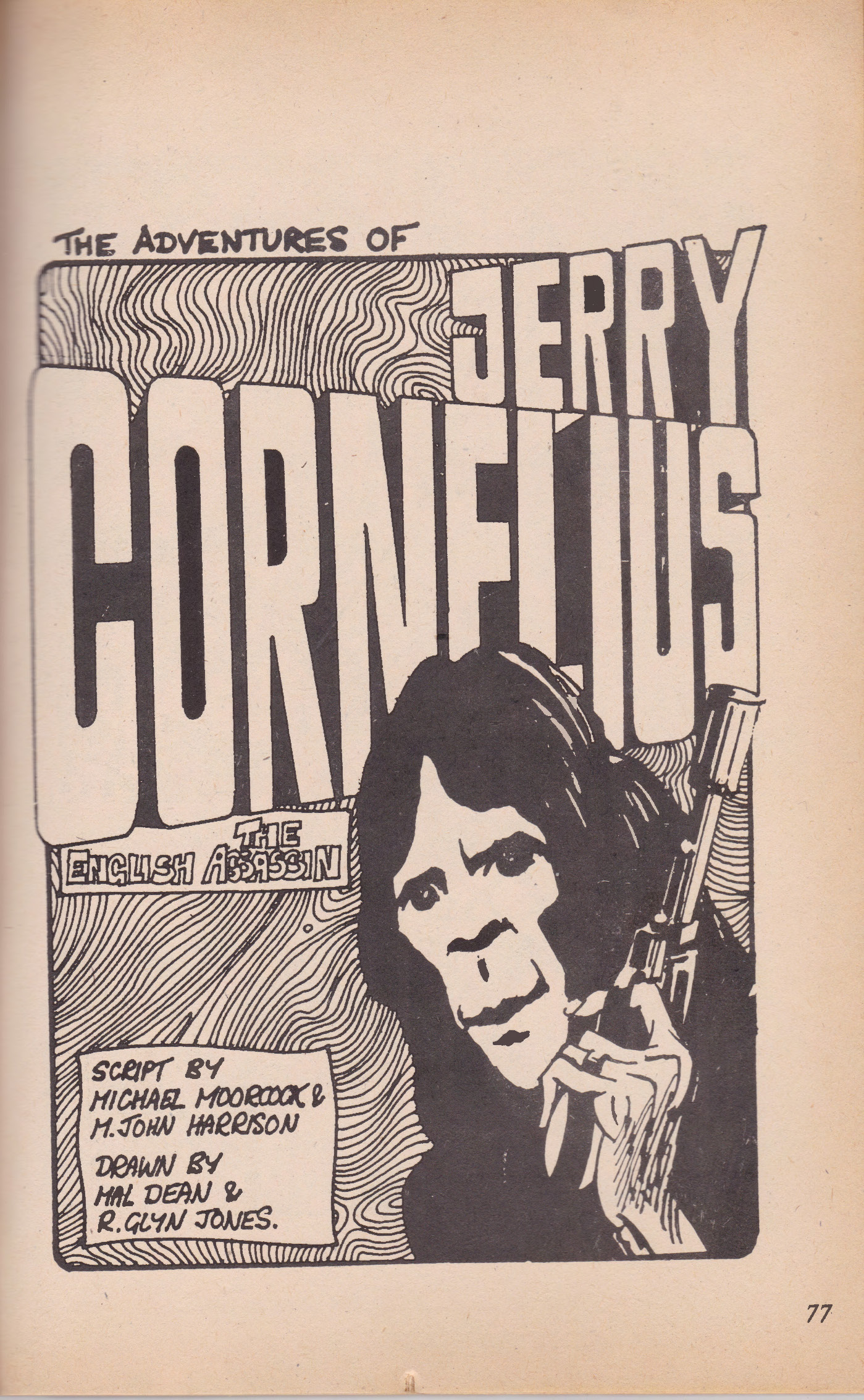
2) Although New Worlds editor supreme” Michael Moorcock’s novels haven’t not received the warmest reception on my site, I am determined to get a better sense of his fiction by exploring his short work. And this collection seems fantastic! It’s illustrated, there’s a comic strip (image below), and the Savoy Books publication includes tons of fascinating blurbs about other books both speculative and non-genre.

See my reviews of An Alien Heat (1972) and The Ice Schooner (1969).

The title page of the Jerry Cornelius comic.

jerry-cornelius-comic

3) A lesser known James White novel… Only printed in the UK.

James White is one of THE finds of the last few years. Best known for simple but earnest (and pacifistic) 50s stories about doctors solving alien medical problems, his novels demonstrate surprising power. A reader and frequent commentator (see I listen!) suggested I procure one of his late 70s novels unknown to me. I cannot wait to read it.

See my reviews of The Dream Millennium (1973), All Judgement Fled (1968), and The Watch Below (1966).

4) I recently discussed Emma Tennant’s work and how she was influenced by the UK SF scene (Ballard et al) here. Yes, I showed my inner academic by citing a few articles — many fans don’t realize that there’s serious and fascinating academic study of the genre. And, as literary historians are wont to do, they provide (often) relevant and erudite analysis of development of genre etc. I would pull more in if time allowed.  I am currently reading Tennant’s novel and it’s intriguing so far!

Scans are from my own collection (in order to zoom in on the zany madness, click on the image).

I look forward to your comments/thoughts!

Continue reading

Updates: Recent Science Fiction Acquisitions No. CLXXI (Silverberg + Lafferty + Sterling + Nolan)

1) William F. Nolan, best known for Logan’s Run (1967) (film adaptation 1976), was also a prolific short story author. As with my acquisition of Thomas N. Scortia’s collection The Best of Thomas N. Scortia (1981) a while back, I am hoping that a range of short stories might be the best way to approach an author new to me.

*wince*–> My edition has a miserable Chris Foss clone (Tony Roberts) cover!

2) As many R. A. Lafferty novels cost a pretty penny, I now buy them on sight if they are within my price range. I posted recently on Mati Klarwein’s fantastic covers–> here. My high resolution scan should convey the complexity and skill of the art!

3) Silverberg collections fall under the purchase compulsively category. I’ve read two or three from this particular volume already including the wonderful “How It Was When the Past Went Away” (1969).

4) A while back a reader recommended Bruce Sterling’s The Artificial Kid (1980). My wife saw a well-worn copy at a local Half Price Books and procured it for me. I read numerous Sterling works from the late 80s and 90s back when I consumed “newer” SF. I reviewed his first novel a few months ago—Involution Ocean (1977).

The cover is awful. The 1980s aesthetic pains me…

All images are scans from my own collection (click image to zoom).

As always, thoughts/comments are welcome.

1. Wonderworlds, William F. Nolan (1977 )

nolan-wonderworlds

(Tony Roberts’ cover for the 1979 edition) Continue reading