Updates: Recent Science Fiction Acquisitions No. CLXXV (Ballard + Strugatski + deFord + Baines)

1) Blunt statement: I need to read more of the Strugatski brothers. I devoured the The Ugly Swans (written 1966-1967, published 1979 in the US, published in 1987 in the USSR) but did not review it.

2) A fascinating speculative feminist novel from The Women’s Press–birth, myth, delusions, dreams, terror.  Few reviews exist online so I will go in without much knowledge of the work.

3) I placed Miriam Allen deFord’s collection (filled with numerous gems) Xenogenesis (1969) on a list of SF Gollancz’s Masterwork series should acquire. Her only other published collection for the longest time was priced far out of my reach. This is why you have Amazon lists… scan them frequently, find the deals!

4) A Ballard novel with “pervading auroral gloom, broken by inward shifts of light”? Count me in! As a fierce advocate of Ballard’s early fiction and novels, I cannot wait to read this one…

Related reviews: Billenium (1962), High-Rise (1975), The Voice of Time and Other Stories (1962). The Drowned World (1962) and The Drought (1964) clock in as my favorite of his novels—although both remain unreviewed… Stay tuned for my upcoming review of The Terminal Beach (1964).

Scans are from my personal collection. Click to enlarge.

Thoughts/comments are welcome (as always)!

1. The Final Circle of Paradise, Arkadi and Boris Strugatski (1965, trans. 1976)
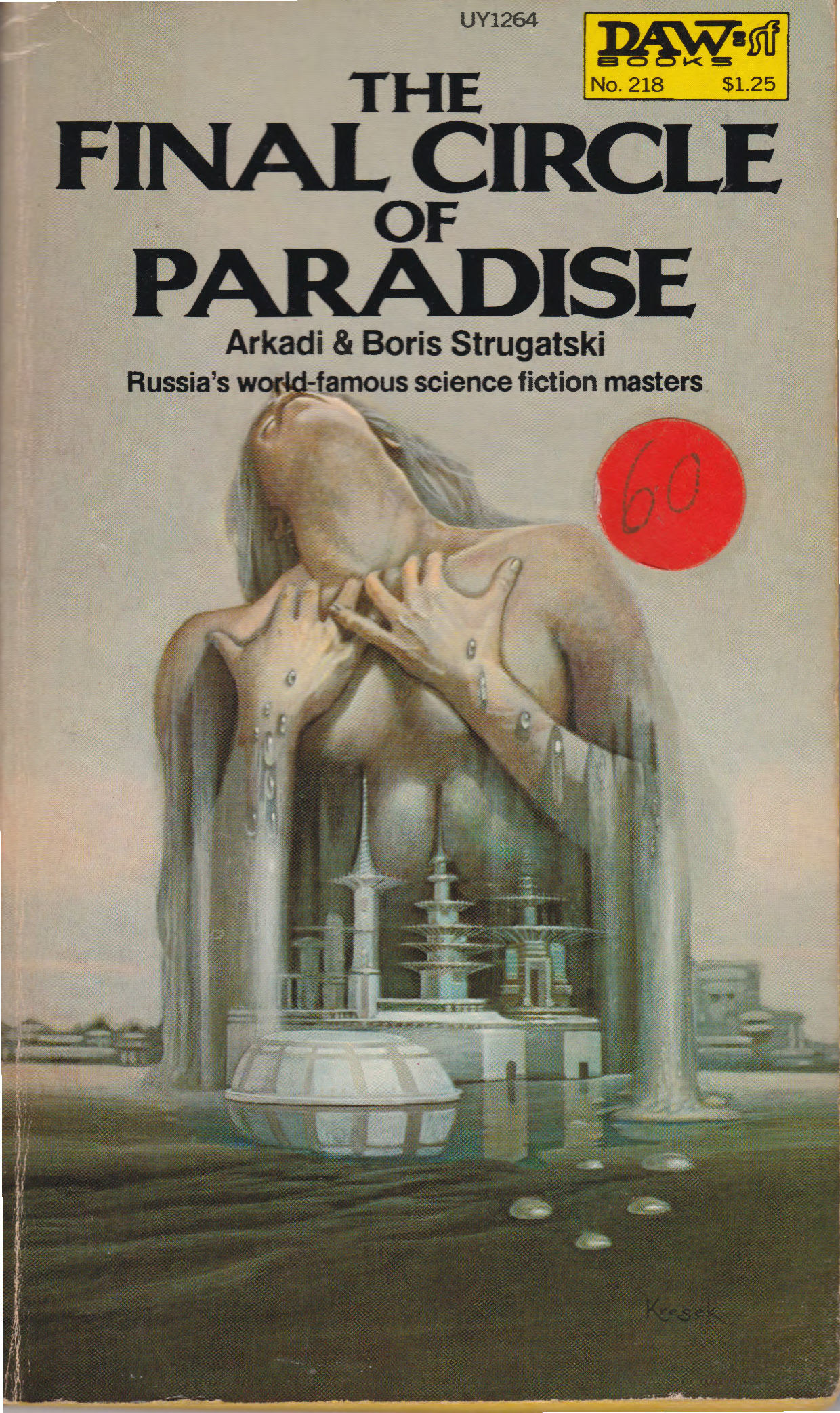
(Laurence Kresek’s cover for the 1976 edition) Continue reading
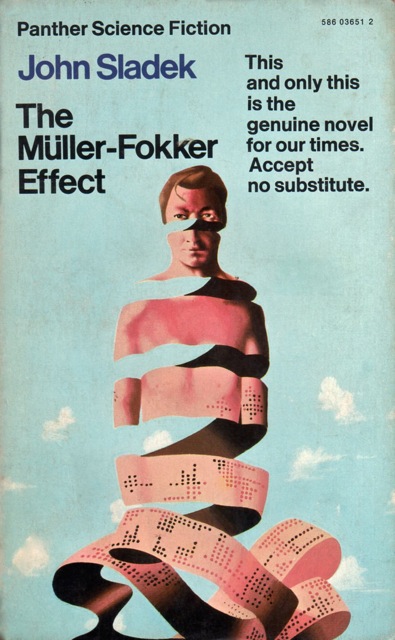
Short Book Reviews: Jeff VanderMeer’s Annihilation (2014), John Sladek’s The Müller-Fokker Effect (1970), Robert Sheckley’s Options (1975)

Yes (I see inquisitive phantom stares), I listened to an audiobook written in this decade. And it was good. Very good. Brilliant actually. As it was an audiobook, I’m unable to write an in-depth review. However there are plenty online for the curious–in part because it won the 2015 Nebula Award. I added two additional novels that have been waiting patiently in a “to review” pile that are more my standard territory…

Think of these short reviews as tantalizing fragments rather than my normal analysis. The books that reside in these short review posts often defeated my reviewing capabilities.

1. The Müller-Fokker Effect, John Sladek (1970)

(McInnery’s cover for the 1972 edition)

4.25/5 (Very Good)

In my 2016 in review I promised to read more of Sladek’s work, and for once I’m holding true to my reading goals.

That said, I find Sladek’s novels notoriously difficult to parse into cohesive reviews—his SF (and my reviews by extension) stretch satirically in all directions, unfolding in fascinating experiments that jest with layered wordplay and (often) diagrammatic dalliances (see example below). There’s a humorous Continue reading

Updates: Recent Science Fiction Acquisitions No. CLXXIV (Hoban + Roberts + Piercy + Baker)

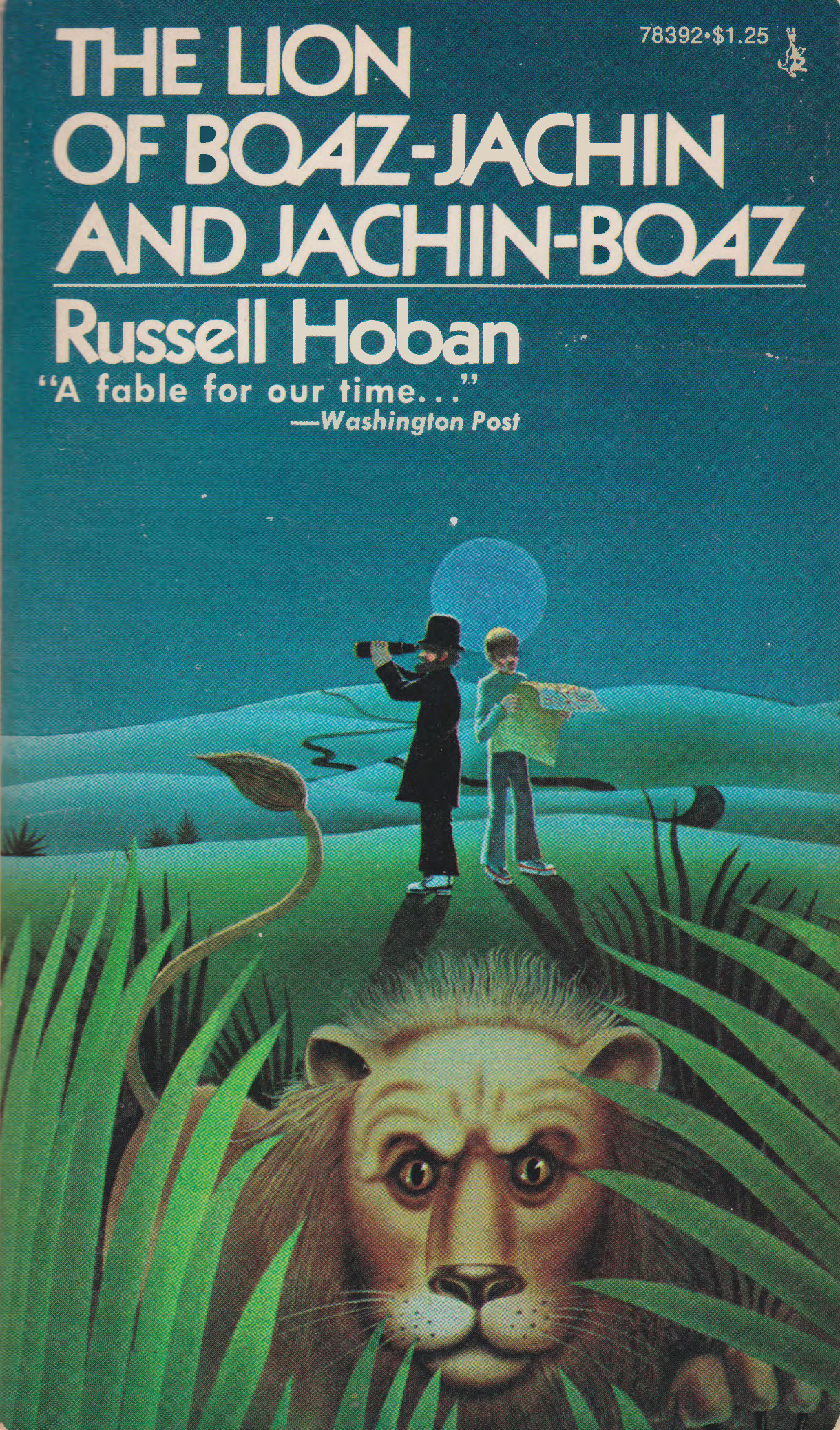
1) Two SF/F reads inspired my pseudonym “Joachim Boaz.” The first, a novel from my dad’s shelf by Russell Hoban–The Lion of Boaz-Jachin and Jachin-Boaz (1973) in which a mapmaker designs a map charting the places of inspiration. This resonated with what I wanted my site to be (and hopefully, is)! I finally have a personal copy. I remember little from the book other than the before mentioned map.

The second, Barrington J. Bayley’s vaguely solid (but influential as I was new SF reader at the time) novel Pillars of Eternity (1982) about a man who decides to name his new self “Joachim Boaz.” Be warned, it’s one of the first, and rather shoddy, reviews on my site. I wrote the review sometime before 2010 (the date Science Fiction and Other Suspect Ruminations began).

2) Marge Piercy’s a new author to me and I look forward to her work. That said, the premise of Dance the Eagle to Sleep (1970) seems more miss than hit. I suspect I should find a copy of Woman on the Edge of Time (1976) instead.

3) Keith Roberts’  The Inner Wheel (1970) takes the form of a fix-up novel (although often listed as a collection). As I have been impressed with his SF so far, this will move towards the top of my ever-changing read to list. And it’s graced with an evocative cover despite the Playboy Press SF edition!

Related Keith Roberts reviews: “The Deep” (1966), “High Eight” (1965), “Sub-Lim” (1965), “Molly Zero” (1977), and “Coranda” (1967).

4) Scott Baker’s Symbiote’s Crown (1978) seems to be his best known work. I know little about the book other than it won the 1984 Prix Apollo.

Scans are from my own collection. Click to enlarge!

As always, thoughts and comments are welcome.

1. The Lion of Boaz-Jachin and Jachin-Boaz, Russell Hoban (1973)

(Alan Magee’s cover for the 1974 edition) Continue reading

Book Review: New Writings in SF 9, ed. John Carnell (1972) (Harrison + Coney + Sellings + King + et al.)

nwwrsnsf651972

(Gene Szafran’s cover for the 1972 edition)

3/5 (collated rating: Average)

An imaginary question I received: “Why do you read anthologies cover to cover?” I love discovering new authors and those I was aware existed but haven’t read—with New Writings in SF 9 (1972) the following fall into this bipartite category: Joseph Green, Paul Corey, Arthur Sellings, Vincent King, R. W. Mackelworth, and Eddy C. Bertin.

Of the bunch, I will probably only remember Vincent King’s vision of the angst as the exploration of the entire galaxy nears completion… Both authors whom I know far better produce the best of the collection.  Michael G. Coney’s haunting tale of evolutionary dependency and M. John Harrison account of paranoia and guilt over the massacre of mysterious aliens are worth the read. Too bad the three above were never anthologized outside of John Carnell’s New Writings series!

Overall New Writings in SF 9 is superior to New Writings in SF 4 (1965) but probably only satisfying for Coney and Harrison completists….

Note: this title refers to the 1972 US publication which was a best of earlier volumes. Another volume by the same name was published in 1966 in the Continue reading

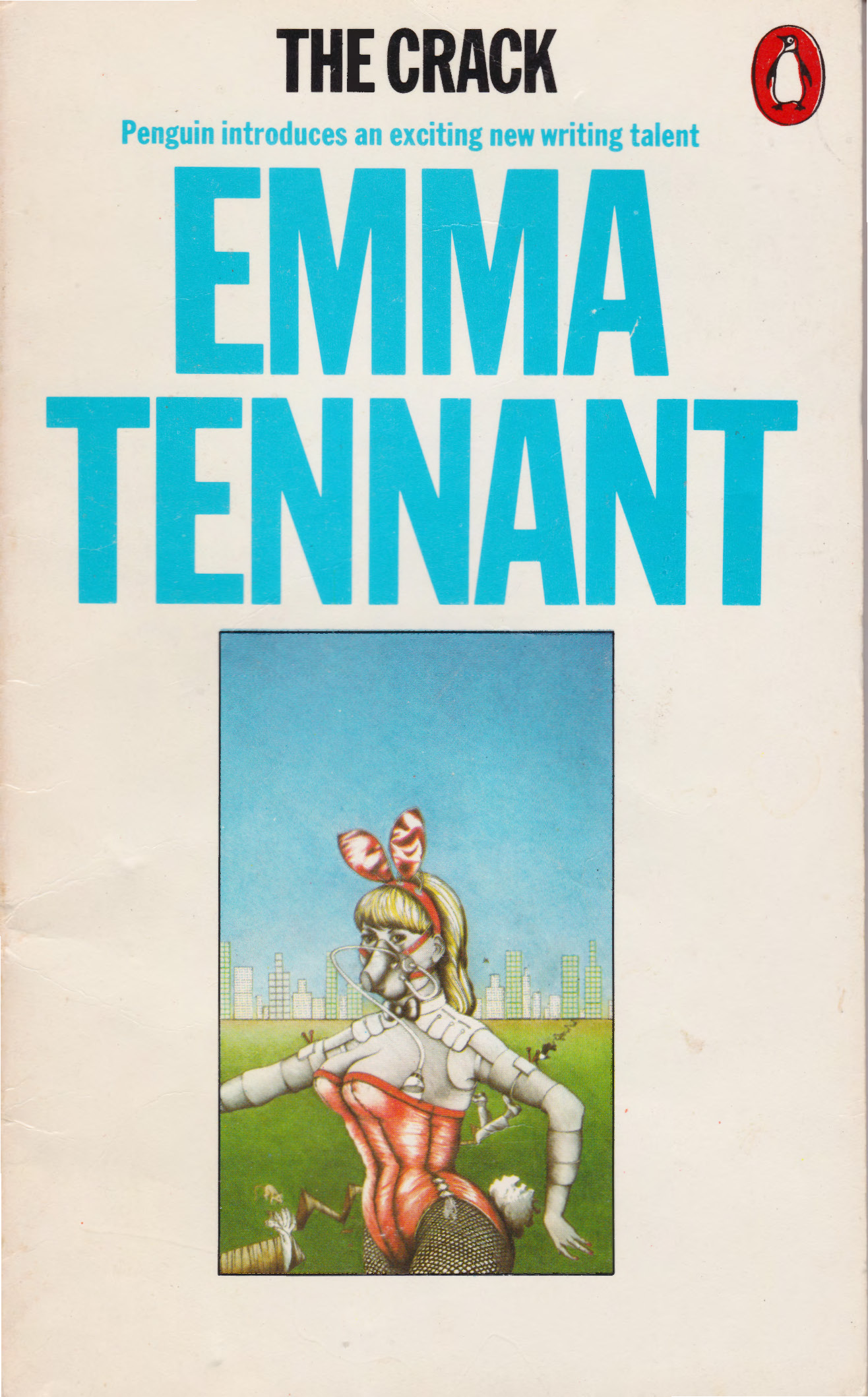
Book Review: The Time of the Crack (variant title: The Crack), Emma Tennant (1973)

emma-tennant

(Candy Amsden’s disturbing cover for the 1978 edition)

4/5 (Good)

Emma Tennant’s The Time of the Crack (variant title: The Crack) (1973) takes the form of a series of character vignettes in a transmogrified London. Despite Tennant’s wide-ranging societal critiques,  it’s a brief book–my 1978 Penguin edition clocks in at 112 pages–threaded loosely together by the occasional presence of Baba, a Playboy bunny. The cataclysm in question, the appearance of an expanding crack under the Thames, although causing devastation, doubles as a metaphoric birth moment. The landscape modified, buildings contorted by the severance… And in the wreckage of what remains the survivors make postures towards all manners of “New” English societies Continue reading

Adventures in Science Fiction Cover Art: Lacroix’s Delicate Lines and Mutations (60s/70s covers for the French SF Magazine Fiction)

_57-3

(Cover for Fiction, #228 (1972), ed. Alain Dorémieux)

In the 60s and 70s the covers for Fiction—“the leading journal of science fiction and fantasy in France” until its cancellation in 2015—were characterized by simple color schemes punctuating by often delicate line work. Working within these strictures (I suspect to cut back on printing costs), a handful of artists pop out from the herd: Jean-Claude Forest, Philippe Curval, Wojtek Siudmak, Philippe Caza….

….and the mysterious Lacroix about which I can find little online. If anyone knows more about him, or if it’s a pseudonym for another artist, let me know!

I’ve included slightly more than half of Lacroix’s total SF art credits and two of them in particular resonate with me: Fiction, #228 (1972) (above) and Fiction, #197 (1970) (below). In the former the eyes staring out of the robotic body exudes horror and existential terror. And the mechanical body descends into some more sprawling contraption, losing its human form Continue reading

Updates: Recent Science Fiction Acquisitions No. CLXXII (Moorcock + Tennant + Sladek + White)

1) I made a “resolution” to read more John Sladek — miserable covers aside. Now what is that spaceman doing standing next the elephant? Although Sladek is rather on the surreal/comical end of things, Peter Goodfellow took the surreal title literally. Not his finest artistic moment. Now if only I could convince myself to put together my disperate thoughts on The Müller-Fokker Effect (1970) into something cohesive.

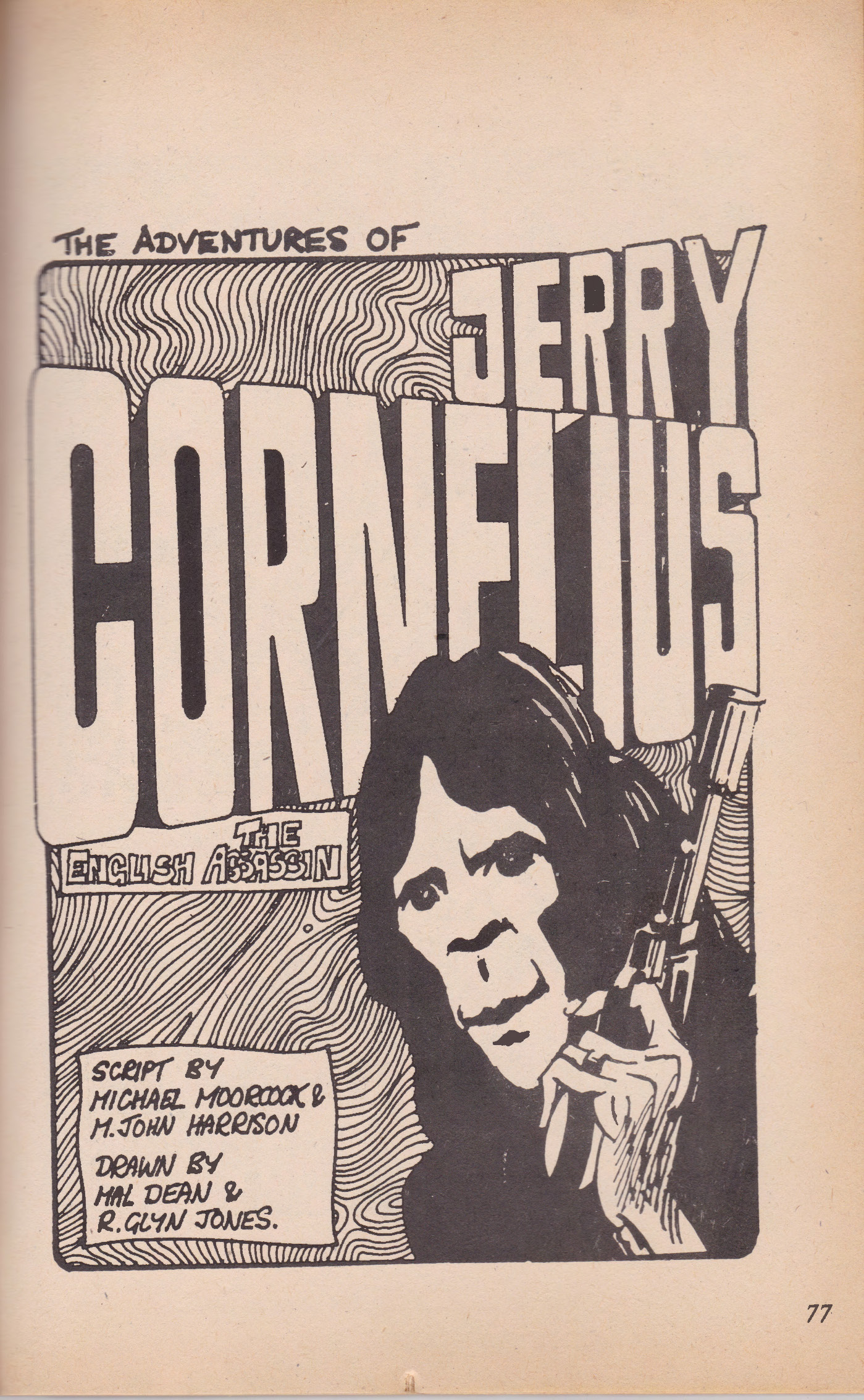
2) Although New Worlds editor supreme” Michael Moorcock’s novels haven’t not received the warmest reception on my site, I am determined to get a better sense of his fiction by exploring his short work. And this collection seems fantastic! It’s illustrated, there’s a comic strip (image below), and the Savoy Books publication includes tons of fascinating blurbs about other books both speculative and non-genre.

See my reviews of An Alien Heat (1972) and The Ice Schooner (1969).

The title page of the Jerry Cornelius comic.

jerry-cornelius-comic

3) A lesser known James White novel… Only printed in the UK.

James White is one of THE finds of the last few years. Best known for simple but earnest (and pacifistic) 50s stories about doctors solving alien medical problems, his novels demonstrate surprising power. A reader and frequent commentator (see I listen!) suggested I procure one of his late 70s novels unknown to me. I cannot wait to read it.

See my reviews of The Dream Millennium (1973), All Judgement Fled (1968), and The Watch Below (1966).

4) I recently discussed Emma Tennant’s work and how she was influenced by the UK SF scene (Ballard et al) here. Yes, I showed my inner academic by citing a few articles — many fans don’t realize that there’s serious and fascinating academic study of the genre. And, as literary historians are wont to do, they provide (often) relevant and erudite analysis of development of genre etc. I would pull more in if time allowed.  I am currently reading Tennant’s novel and it’s intriguing so far!

Scans are from my own collection (in order to zoom in on the zany madness, click on the image).

I look forward to your comments/thoughts!

Continue reading

Article: Emma Tennant on the Influence of the 1970s British SF Scene

emma tennant.jpg

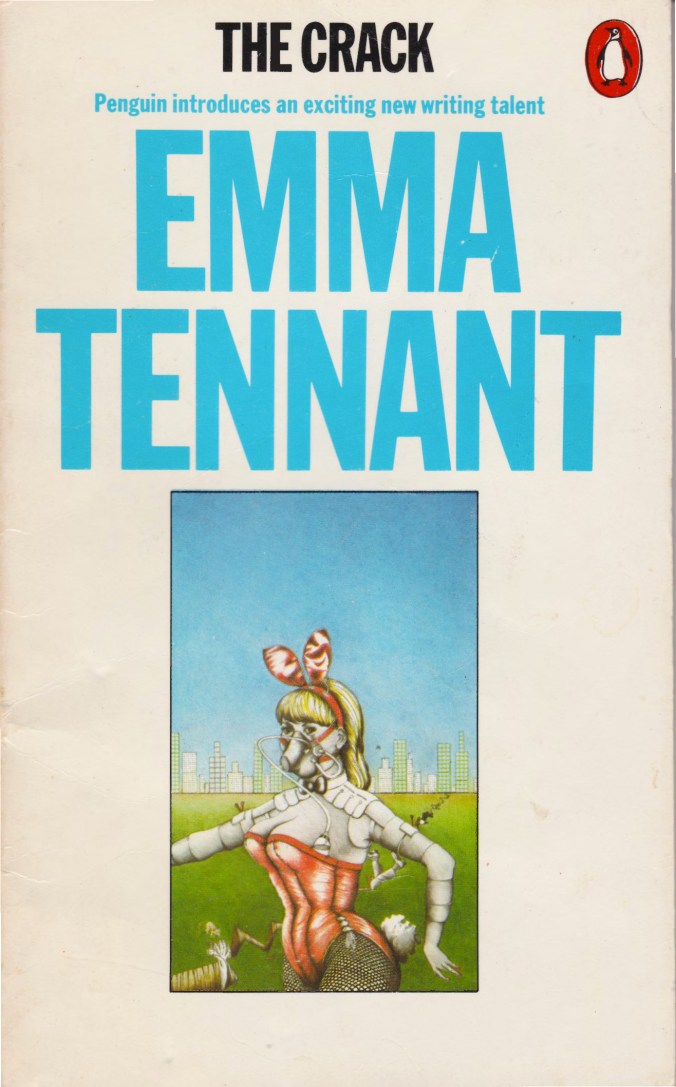
(Candy Amsden’s cover for the 1978 edition of The Crack (variant of: The Time of the Crack) (1973), Emma Tennant)

As I recently procured a copy of Emma Tennant’s The Crack (variant title: The Time of the Crack) (1973) in which a fault line appears under London destroying half the city, I decided to research her work.

William Grimes describes Emma Tennant’s fiction—in a New York Times retrospective on her life and works—as blending “fantasy, science fiction and social satire” that “explored the borderland between daylight and dreams, anatomized contemporary Britain.” Grimes quotes Gary Indiana’s 1990 The Village Voice article: “a startling procession of novels unlike anything else being written in England: wildly imaginative, Continue reading

Book Review: The Resurrectionist, Gary K. Wolf (1979)

new-books_page_2

(Margo Herr’s cover for the 1979 edition)

2.75/5 (Vaguely Average)

“Corporate authorities referred to him instead as the Resurrectionist, the man who dragged the living back from electrical purgatory” (5)

Gary K. Wolf, best known for Who Censored Roger Rabbit? (1981), started his writing career with three SF novels for Doubleday—Killerbowl (1975), A Generation Removed (1977), and The Resurrectionist (1979). Doubleday’s art director, Margo Herr, provided The Resurrectionist‘s captivating cover, which suggests the corruption of pattern, the subversion of delicate movement. A few reflective, but altogether too fleeting, moments suggest Wolf might have had similar ideas at the back Continue reading