Updates: Recent Science Fiction Acquisitions No. CXCVIII “Christmas Edition” (An Atlas of Fantasy + Sturgeon + Jeter + Berriault)

1. One of two SF/F gifts (not specifically for Christmas — but let’s pretend!) I’ve included in this post…. Due to my recent series on Maps and Diagrams in Science Fiction, a reader and fan of the site sent me his extra copy of J.B. Post’s An Atlas of Fantasy (1973)–which includes some SF maps as well. Thank you!

2. The second gift—I’ve been spacing a giant pile of vintage SF I received from a family friend out over many months! Sturgeon sometimes intrigues, and sometimes infuriates—hopefully there will be more of the former in this collection. No stories in the vein of “The Hurkle Is a Happy Beast” (1949) please.

3. Dr. Adder, K. W. Jeter’s infamous “couldn’t be published when it was written” novel that might have defined “cyberpunk” long before Gibson’s Neuromancer (1984). I have the Bluejay Books 1st edition with lots of evocative (and disturbing) interior art.

4. And finally, a completely unknown quantity from an author I’d never heard of–Gina Berriault. Promises to be a Cold War satire of impending nuclear destruction. And it has a History professor as a main character! (i.e. maybe a 1960s version of me? we shall see).

Enjoy!

Happy Holidays!

And let me know in the comments if you receive any SF/fantasy Christmas gifts.

~

1. An Atlas of Fantasy, J. B. Post (1973)
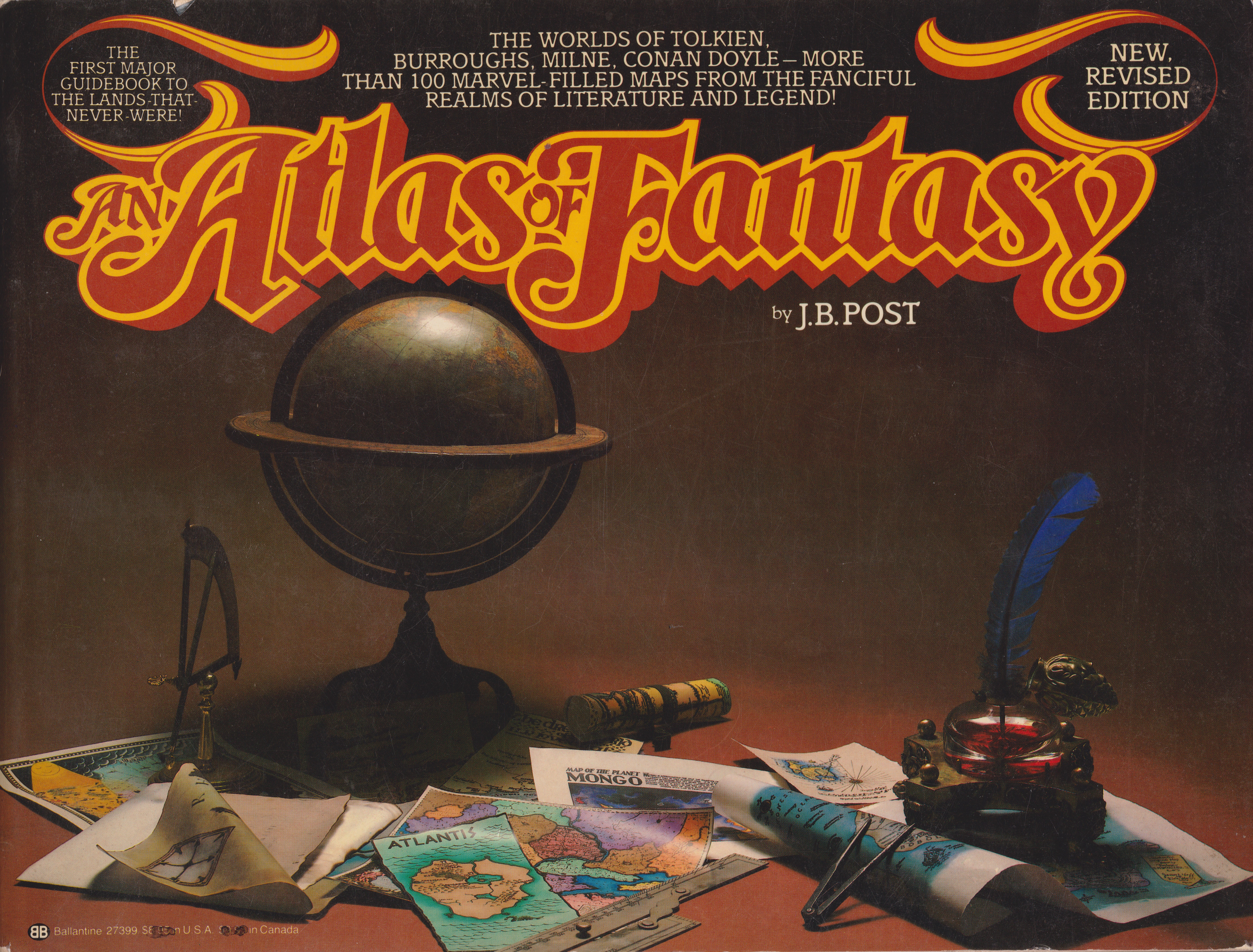
(Uncredited cover for the 1979 edition) Continue reading

Book Review: Mindship, Gerard F. Conway (1974)

mindship conway(Kelly Freas’ cover for the 1974 edition)
3/5 (Average)

“The only truth is what happens, in plain and simple reality. I’ve seen the inside of too many minds to think any man’s intentions can be good. We’re evil inside ourselves Kilgarin. We’re sick and foul and filthy. The only ones who come close to being pure are those too stupid to be anything else” (72).

Back in 2016 I read Universe 1, ed. Terry Carr (1971) and was pleasantly surprised by Gerard F. Conway’s short story “Mindship” (1971) about telepathic (“sensitive”) “corks” who calm the minds of the spaceship crews whose psychic powers run interstellar “engines.” This story forms the prologue of Conway’s novel continuation. In an odd way, the novel reinterprets the original short story and adds an additional level of mystery (it wasn’t an accidental death, it was a murder!) to its straightforward plot.

Continue reading

Updates: Recent Science Fiction Acquisitions No. CXCVII (Farmer + Leinster + Williams + Anthology)

I’ve returned! New books!

If you missed it, I also posted a new review of a fantastic novel that melds New Wave sensibilities with an engaging narrative. Check it out.

1. A gift from a family friend…. But what a John Schoenherr cover!

2. Another gift…. a fun space medic premise but I do not trust anything produced by Leinster to have depth yet alone be “thought-provoking” as the blurb proclaims.

3. A Toronto, CA find — unfortunately a tag mutilated the cover…

4. Another Toronto, CA find — while browsing through the shelves I was reminded of one of Tarbandu’s infrequent 5/5 reviews…. We don’t always agree but he introduced me to John Crowley!

As always, comments are welcome.

Enjoy!

~

  1. Alien Worlds, ed. Roger Elwood (1964)

(John Schoenherr’s cover for the 1964 edition) Continue reading

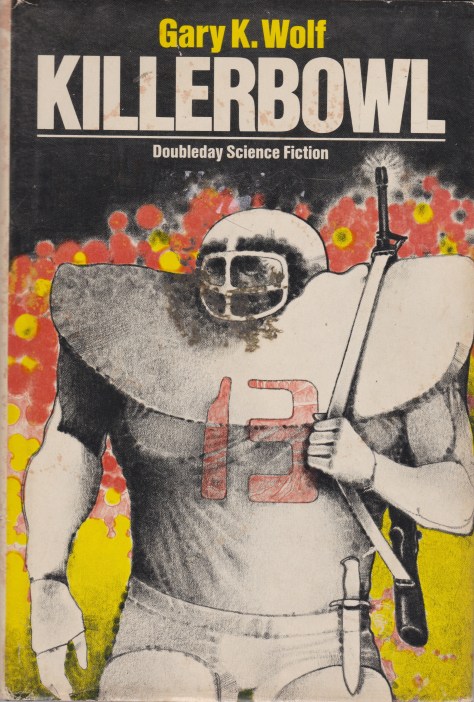
Book Review: Killerbowl, Gary K. Wolf (1975)

4.75/5 (Very Good)

“The Minutemen’s hidden safety, crouching on the fifteenth floor of the Fontana West apartments, puts cross hairs on Gradington’s Adam’s apple, now even so slightly exposed just below the bottom of his bulletproof helmet and mask, just above the top of his body armor, and squeezes the trigger (5).”

In some ways SF comparisons between modern sports and Roman arenas, where blood and guts are spilled in obligatory fashion, might come off as a soft target. Imagine if the football players had knives! Pass. Imagine if one of the players had a gun! Double pass. Yes, we know sports can be violent and taxing on the mind and body. A quick browse through the current NFL injury list and articles such as The Boston Globe‘s six-part series on Aaron Hernandez makes grim and disturbing reading (researched only for this post). And adding levels of violence and trauma to an already splattered playing field is a predictable avenue of SF speculation. Predictable yet relentlessly fascinating in the hands of a talented author….

Continue reading

Updates: Recent Science Fiction Acquisitions No. CXCVI (Ballard + Lessing + Wilson + Nebula Awards Anthology)

1. A Ballard novel that had previously escaped my grasp… Too bad I don’t own the visually fun 1981 1st edition (Bill Botton’s cover screams Damnation Alley).

2. Unfortunately my 1st edition copy of Angus Wilson’s satirical 1961 SF novel The Old Men at the Zoo did not come with a dustjacket (damn sellers who incorrectly list books online!). The novel itself appears interesting! Has anyone read it?

3. A spectacular Paul Lehr cityscape cover + Nebula award winners = what is not to love?

4. And finally, my sole Brooklyn, NY book purchase from my summer trip — the fifth in Doris Lessing’s Canopus in Argos: Archives sequence of SF novels.

As always, comments (and even tangents) are welcome.

Note: His-res images of all but Angus Wilson’s novel are my personal copies.

~

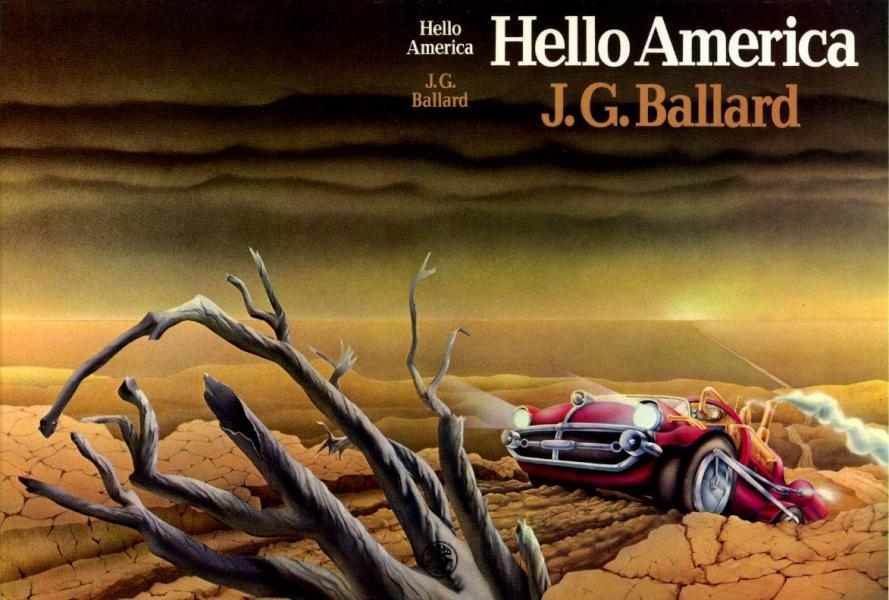
1. Hello America, J. G. Ballard (1981)

(James Marsh’s cover for the 1985 edition) Continue reading

Novella Review (Italian SF in translation): “Cancerqueen” (1950), Tommaso Landolfi

DkVqsjsUwAEDHqm[1].jpg(Colin Hay’s cover for the 1984 Italian edition of Cancerqueen (1950), Tommaso Landolfi)
4.75/5 (Near Masterpiece)

The fiction of Tommaso Landolfi—an Italian author, translator, and critic—dabbled at speculative edges. Those far more knowledgeable about Italian SF consider Landolfi’s novella “Cancerqueen” (1950), translated in 1971 by Raymond Rosenthal, an important work in the history of Italian SF as it resonated with later “New Wave sensibilities” and “went against the realist grain of Italian high culture” (Salvatore Proietti, “The Field of Italian Science Fiction,” Science Fiction Studies, July 2015).

Redolent with gothic overtones, “Cancerqueen” tells the transfixing tale of a possibly insane narrator (N) relating his voyage into space, and into the womb of a manipulative spaceship. Writing as an act of self-delusion—“perhaps I should pretend I have a reader, I shall be less alone, and that is enough” (50)—N relates how, in a disconsolate state of mind, he agreed to an outrageous proposition put forth by Filano, an escapee from a nearby asylum.  The proposition: Deep in the mountains Filano has a spaceship named Cancerqueen and he wants to take N to the moon! For N, “she was my liberator, whose wings (wholly metaphorical) would transport me (not metaphorically) beyond my  disagreeable Continue reading

Updates: Recent Science Fiction Acquisitions No. CXCV (Leiber + Goulart + Wolf + Anthology edited by Bryant)

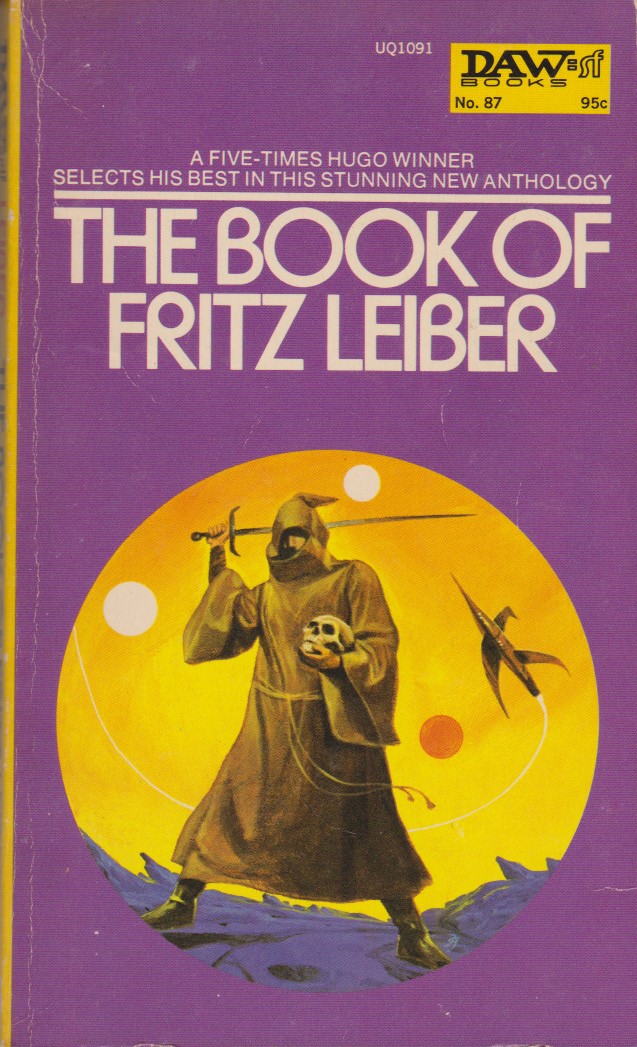
1. Why more Fritz Leiber (you might ask) considering your scattered negative comments about his most beloved series of stories, Fafhrd and the Gray Mouser? In short, I enjoy his non-sword and sorcery short fiction—notably the stories in A Pail of Air (1964).

And of course his bizarre (and most famous) 50s novel The Big Time (1958)… (read long before I started my site).

2. This looks like a fascinating collection “celebrating” America’s 300th future anniversary! I did not know that Edward Bryant edited volumes of short stories. He includes a wide range of authors—including those by Marge Piercy, Harlan Ellison, Jo Ann Harper (unknown to me), Carol Emshwiller, Vonda N. McIntyre, et al.

3. I finished Gary K. Wolf’s Killerbowl (1975) a few days ago and was blown away. Absolutely one of my favorite novels I’ve read so far this year! The bad taste left by The Resurrectionist (1979) is completely washed from my mouth. I snuck on the computer…. late at night…. and purchased the last of his three 1970s novels I didn’t own–A Generation Removed (1977).

4. A gift from a family friend…. with an otherworldly (and early) Vincent Di Fate cover.

As always, thoughts and comments are welcome.

Note: Images are hi-res scans from my personal collection.

_

1. The Book of Fritz Leiber, Fritz Leiber (1974)

(Jack Gaughan’s cover for the 1974 edition) Continue reading

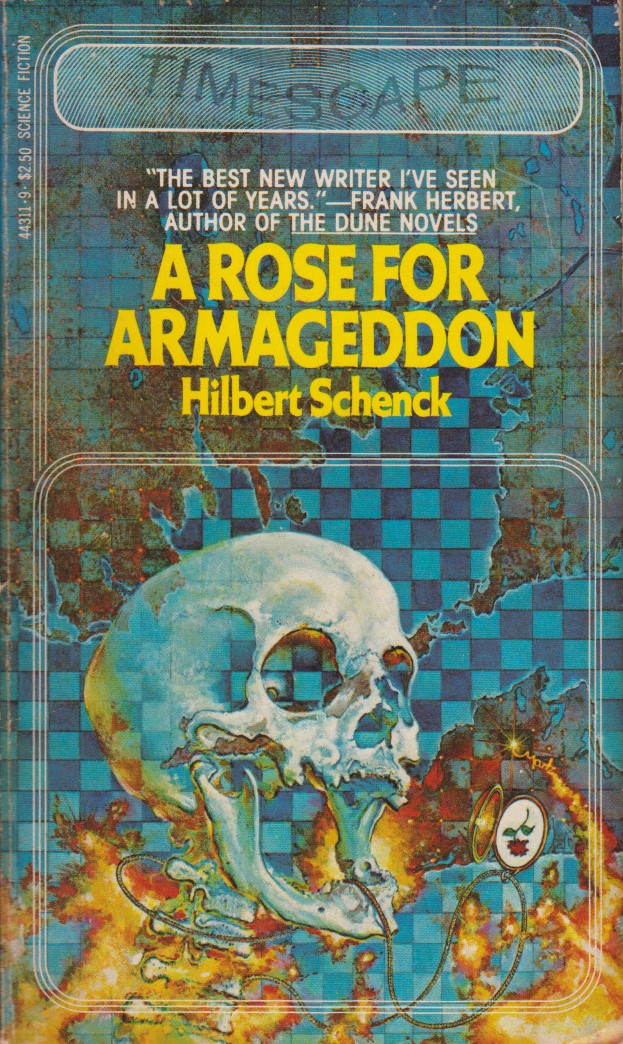
Book Review: A Rose for Armageddon, Hilbert Schenck (1982)

(Don Maitz’s cover for the 1982 edition)

2.75/5 (Vaguely Average)

Hilbert Schenck’s A Rose for Armageddon (1982) postulates that in the near future a complex computer program (“Archmorph”) will be able to predict political and social trends as “conflict was [and will be] pattern-determined” (26). Filled with references to the turbulent 1970s (Vietnam protests, campus unrest, the 1979 energy crisis) and the fear the decade generated, Schenck suggests that a cataclysmic possibility looms.

A Rose for Armageddon treads intriguing grounds in part because it centers on two non-standard individuals (it’s rare to have elderly main characters!): Dr. Elsa Adams, the Louis Agassiz Professor of Analytic Zoology and Dr. Jake Stinson Continue reading

Updates: Recent Science Fiction Acquisitions No. CXCII (Sturgeon + Turner + Schenck + Best of 1973 Anthology)

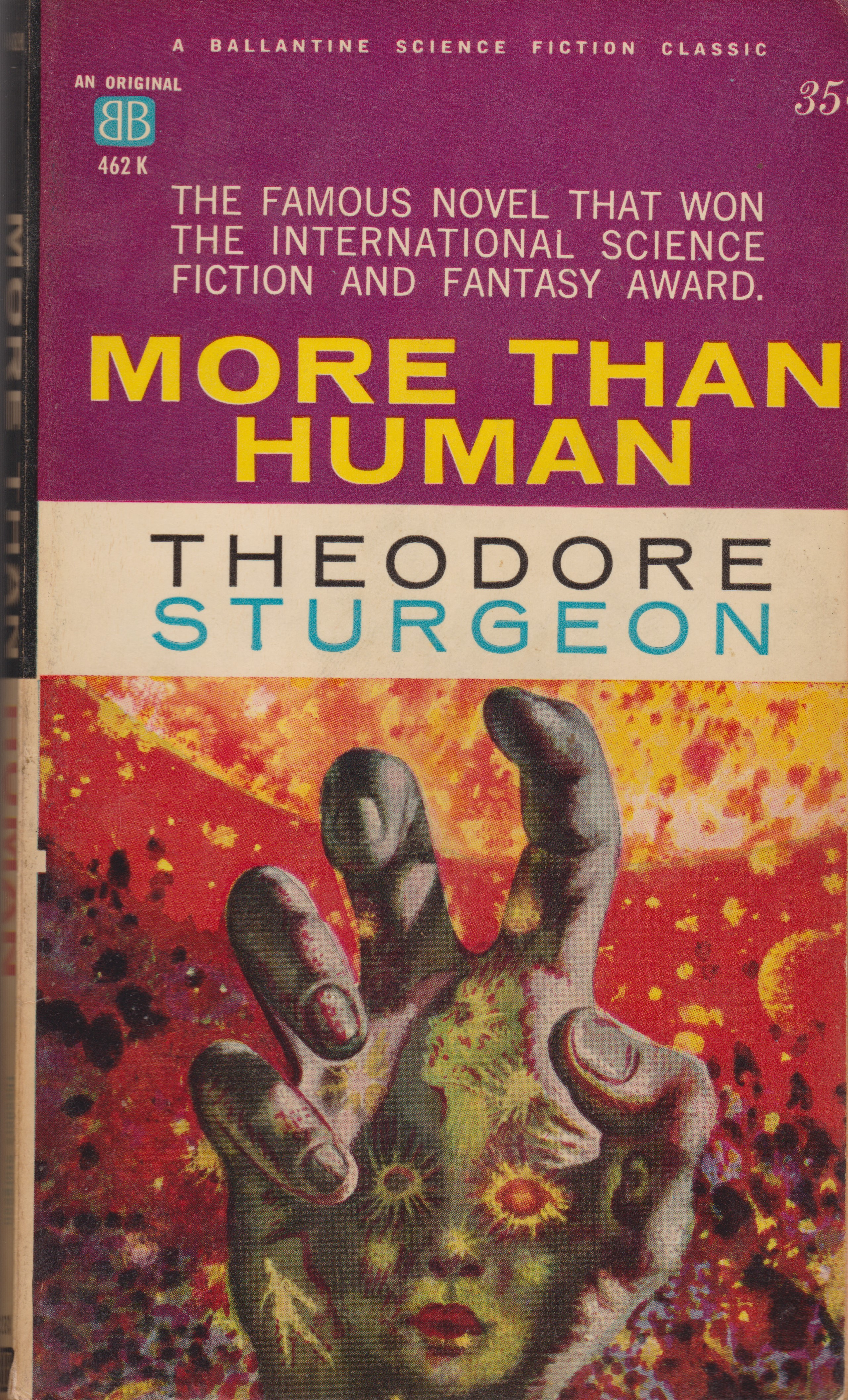
1. I seldom buy duplicate editions. I originally read Sturgeon’s masterpiece as a teen and I’m unsure where my original 70s edition with a Bob Pepper cover ran off to…. And this perfect condition 1960 edition has glorious Richard Powers art!

2. George Turner—an author I know next to nothing about. I’ve already read 75 pages of his first novel and am absolutely entranced.

3. Hilbert Schenck—another author who is new to me. He published primarily in the early 80s and snagged a few Nebula nominations for his short fiction. His second novel proved to be a dud (I’ll have a review up soon).

4. Why are you buying another Donald A. Wollheim Best Of collection when you’re firmly in the Terry Carr camp of Best Of anthologies? Good question.

That said, I recently reviewed The 1972 Annual World’s Best SF (1972) and it was solid.

Note 1: All images are hi-res scans of my personal copies — click to expand.

Note 2: A diligent Twitter follower indicated that the 1984 edition cover of the Turner novel is Tony Roberts’ work.

Thoughts? Comments? Tangents? All are welcome.

_

1. More than Human, Theodore Sturgeon (1953)

(Richard Powers’ cover for the 1960 edition) Continue reading