Generation Ship Short Story Review: Chad Oliver’s “Stardust” (1952)

This is the seventh post in my newly resurrected series of vintage generation ship short fiction reviews. I have returned to the author and anthropologist Chad Oliver (1928-1993) whose “The Wind Blows Free” (1957) inspired me to start the series. All of the stories I’ll review in the series are available online and linked.

You are welcome to read and discuss along with me as I explore humanity’s visions of generational voyage. And thanks go out to all who have joined already. I also have compiled an extensive index of generation ship SF if you wish to track down my earlier reviews on the topic and any that you might want to read on your own.

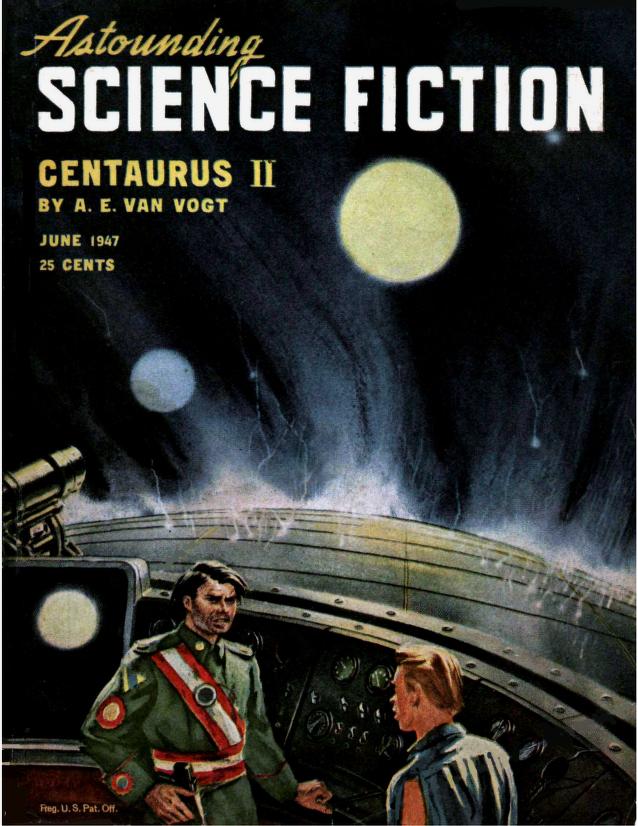
Previously: A. E. van Vogt’s “Centaurus II” (1947)

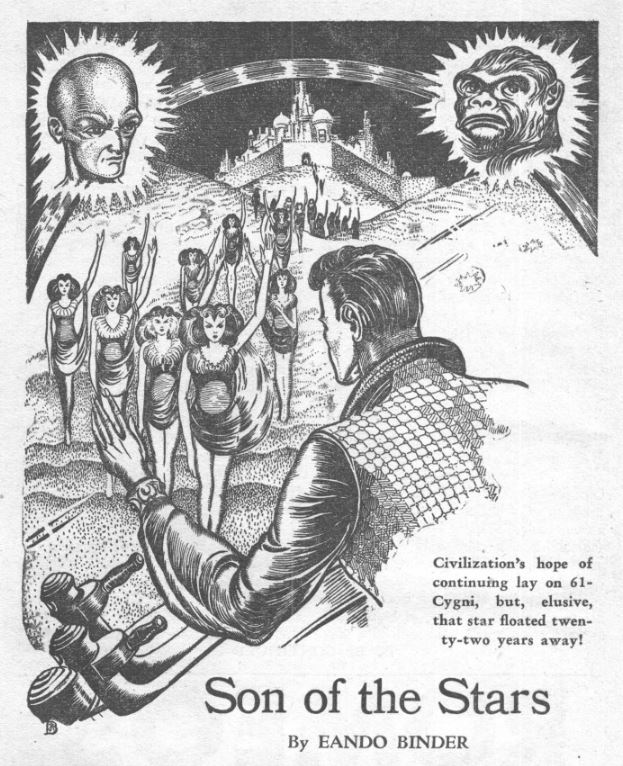
Next Up: Otto Binder’s “Son of the Stars” (1940).

As the last post was way back in January 2020, here’s a reminder of what I’ve covered so far:

I’ve also reviewed five additional generation ship works (two novels and one short story) since I started the series that I didn’t include:


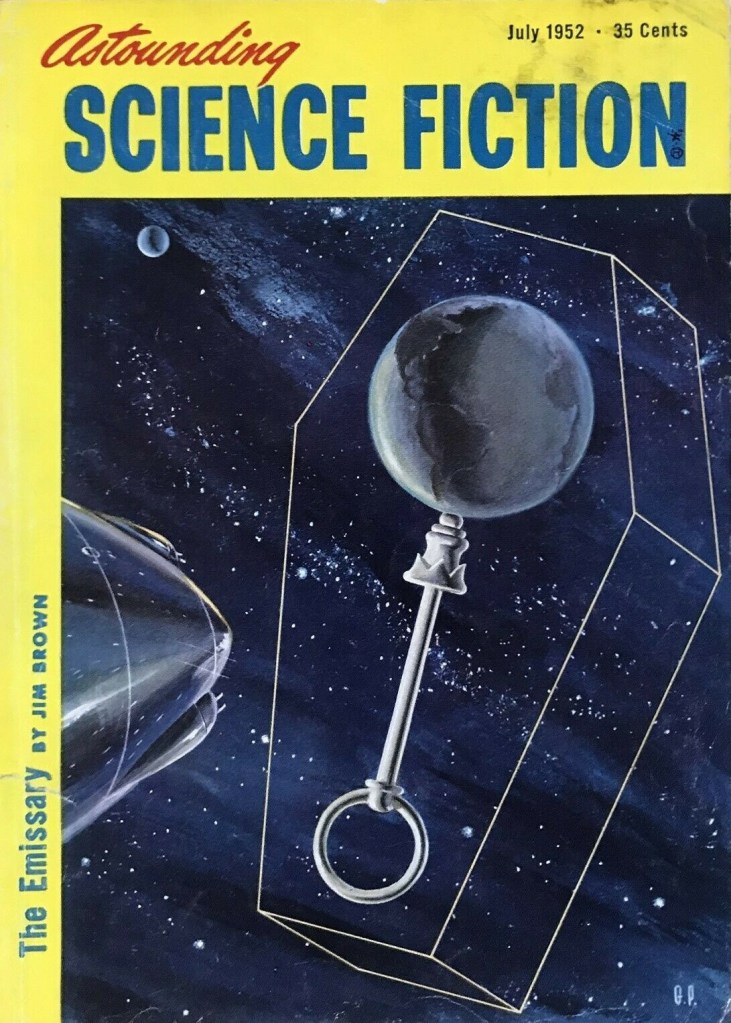
Chad Oliver’s “Stardust” first appeared in the July 1952 issue of Astounding Science Fiction, ed. John W. Campbell, Jr. 3.5/5 (Good). You can read it online here.

In the 1974 paper “Two Horizons of Man” for the American Anthropological Association, Chad Oliver identified the “larger theoretical and social contexts” in which his two professions (SF and anthropology) were subsumed: “The problems of cultural contact and culture conflict, the discussions of cultural relativism, the idea of cultural evolution, the whole emphasis on looking at things from different perspectives, the questions about what it meant to be human–all of these were as characteristics if science fiction as they were of anthropology” (note). “Stardust” (1952) exemplifies this intersection of concerns. The new generation of explorers encounter the first generation, trapped for hundreds of years on sabotaged generation ship on their way to colonize Capella.

Continue reading

Short Story Review: Raymond F. Jones’ “The Memory of Mars” (1961)

3.5/5 (Good)

Before Philip K. Dick’s “We Can Remember It for You Wholesale” (1966), Raymond F. Jones wrote the far lesser known “The Memory of Mars” (1961)–his own paranoid thriller about a vacation to Mars that might not have happened exactly as remembered. This is a plot-driven story. There are multiple twists and delusional layers that unfold at lightning speed–some more satisfying than others. You might want to read the story in the December 1961 issue of Amazing Stories, ed. Cele Goldsmith first.

“The Memory of Mars” has all the pieces of a paranoid masterpiece. A journalist named Mel Hastings, trained to be objective, waits for his wife Alice to be released from surgery. As he waits anxiously for news knowing that something has gone wrong, he recalls his wife’s persistent claim that they had gone on a vacation to Mars the first year of their marriage. The simmering terror of his own phobia of space and recurrent nightmares of being chased across the black void suggest there’s more than he remembers. Mel’s called into the surgery room with disturbing news. His wife is dead and something is terribly wrong with her viscera. Vigil Finlay’s top-notch interior art (above) hints at the terror that unfolds as Alice’s inhuman interior is laid bare….

Continue reading

Updates: Recent Science Fiction Acquisitions No. CCL (Worlds of If and Galaxy magazines)

(David A. Hardy’s cover art detail from the September 1974 issue of Galaxy)

I am not a collector. “But Joachim Boaz you post recent purchases all the time!” Let me revise: I am a reader who procures a lot of science fiction novels, collections, and anthologies that I may never read. As a general rule, I only buy science fiction that I want to read. There’s a logic behind the handful of duplicate copies I own—for example, both the 1952 and the 1969 editions of Wilson Tucker’s fantastic The Long Loud Silence (1952) grace my shelf. Editors sliced and diced the 1st edition and Tucker Continue reading

Short Book Reviews: Fredric Brown’s The Lights in the Sky Are Stars (variant title: Project Jupiter) (1953), M. A. Foster’s Waves (1980), Eric Frank Russell’s The Great Explosion (1962)

My “to review” pile is growing and my memory of them is fading… hence short—far less analytical—reviews.

1. The Lights in the Sky Are Stars, Fredric Brown (1953)

(Mitchell Hooks’ cover for the 1955 edition)

3/5 (Average)

Frederic Brown’s The Lights in the Sky are Stars (1953)  is a slick 1950s vision of the fanatical men and women who take America by the scruff of the neck and yank it, without letting the law get in the way, towards space and the deep beyond. As a rumination on radicalism,  The Lights in the Sky are Stars succeeds—I’m not entirely sure if it was entirely intentional as Continue reading

Generation Ship Short Story Review: A. E. van Vogt’s “Centaurus II” (1947)

Preliminary note: This is the sixth post in a series of vintage generation ship short fiction reviews. All of the stories I’ll review are available online (see links below). You are welcome to read and discuss along with me as I explore humanity’s visions of generational voyage. And thanks go out to all who have joined already.

Previously: J. G. Ballard’s “Thirteen to Centaurus” (1962)

Next up: Chad Oliver’s “Stardust” (1952)

I’ve compiled a helpful list on the theme with links to all my reviews.

(Charles Schneeman’s cover for the June 1947 issue of Astounding Science Fiction, ed. John W. Campbell, Jr.)

4/5 (Good)

A. E. van Vogt’s “Centaurus II” (1947)* (story link) first appeared in the June 1947 issue of Astounding Science Fiction edited by John W. Campbell, Jr. Together with two later stories—“Rogue Ship” Continue reading

Book Review: The Space-Born, E. C. Tubb (1955)

(Ed Valigursky’s cover for the 1956 edition)

2.5/5 (Bad)

Almost the surprise of the year! E. C. Tubb’s The Space-Born (variant title: Star Ship) (1955) first appeared as a serial in New Worlds (April, May, and June 1955 issues). For American audiences, Tubb’s novel was paired with Philip K. Dick’s The Man Who Japed (1956) as an Ace Double. My only previous exposure to the prolific British author’s SF was “The Seekers” (1965), a paranoid vision of spacemen possessed by delusions of grandeur after their captain’s death. The Space-Born is a fascinating generation ship novel with a catastrophic Continue reading

Generation Ship Short Story Review: Judith Merril’s “Wish Upon A Star” (1958)

Preliminary note: This is the third post in a series of vintage generation ship short fiction reviews. All of the stories I’ll review are available online. You are welcome to read and discuss along with me as I explore humanity’s visions of generational voyage. And thanks go out to all who have joined already!

Previously: Clifford D. Simak’s “Spacebred Generations” (variant title: “Target Generation”) (1953).

Next up: John Brunner’s “Lungfish” (1957)

I’ve compiled a helpful list on the theme.

(Ed Emshwiller’s cover for the December 1958 issue of The Magazine of Fantasy and Science Fiction, ed. Robert P. Mills)

4.25/5 (Good)

In Judith Merril’s “Daughters of Earth” (1952), she refashions the classic pulp SF tale of male exploration of the galaxy by tracing, in biblical fashion, one family of female explorers. In “Wish Upon A Star” (1958), Merril reworks another trope—the male hero on a generation ship who discovers the true Continue reading

Generation Spaceship Short Story Review: Chad Oliver’s “The Wind Blows Free” (1957)

Initial note: This is the inaugural post in a series of vintage generation ship short fiction reviews. You are welcome to read and discuss along with me–all of the stories I’ll review will be available online–as I explore humanity’s visions of generational voyage!

Next up: Clifford D. Simak’s “Spacebred Generations” (variant title: “Target Generation”) (1953).

I’ve compiled a helpful list on the theme.

(Bob Layzell’s cover for the 1980 edition of A Sea of Space (1970), ed. William F. Nolan)

4.5/5 (Very Good)

Chad Oliver’s “The Wind Blows Free” (1957) first appeared in the July 1957 issue of The Magazine of Fantasy and Science Fiction, ed. Anthony Boucher (Internet Archive link). Despite the simple premise, Oliver’s powerful delivery and imagery reaffirmed my love for generation ship stories and their common tropes: generational change, the science of survival, the architecture of arks Continue reading

Updates: Recent Science Fiction Acquisitions No. CCXXXI (Sheri S. Tepper + Paul H. Cook + Robert Merle + Anthology)

1. I bought this themeless hodgepodge anthology for two reasons–the UK 1980 edition has a cool spaceship! And second, it contains Chad Oliver’s generation ship short story “The Wind Blows Free” (1957). MPorcius calls it one of Oliver’s best. As I’ve not been enamored with his brand of SF, I’m eager to try a short story on a favorite theme far outside of his normal anthropological-focused oeuvre.

I’ve previously reviewed Oliver’s The Shores of Another Sea (1971).

2. Sheri S. Tepper is a glaring hole in my SF knowledge. I often explore the back catalog before plunging into the best known novels of an author—The Revenants, her first published novel, is “a long, complex work of SF” according to SF Encyclopedia. I wish it would be a tad more descriptive…. the novel has a fun map which I’ll feature in a Monday Maps and Diagrams post.

3. French post-apocalyptic SF in translation! With an awful cover…

4. Paul Cook is another unknown author to me. His first novel, Tintangel (1981) has a bizarre premise (see blurb below). This might be my next SF read.

Let me know what books/covers intrigue you. Which have you read? Disliked? Enjoyed?

~

1. A Sea of Space, ed. William F. Nolan (1970)

(Bob Layzell’s cover for the 1980 edition) Continue reading