Note: My read but “waiting to be reviewed pile” is growing. Short rumination/tangents/impressions are a way to get through the stack before my memory and will fades. My website partially serves as a record of what I have read and a memory palace for future projects. Stay tuned for more detailed and analytical reviews.
1. Polly Toynbee’s Leftovers (1966)
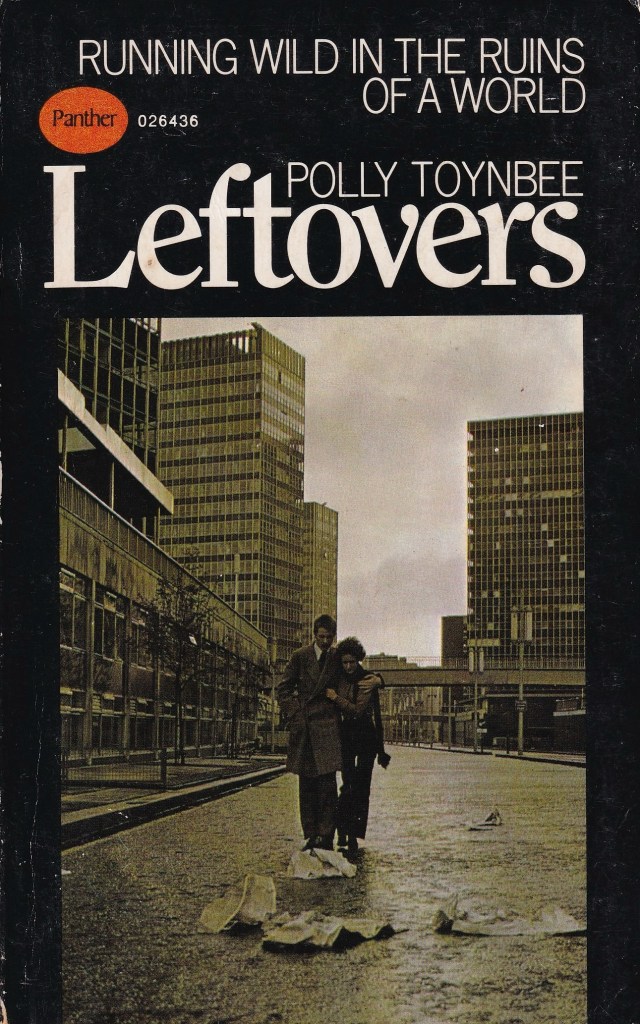
Paul May’s cover for the 1969 edition
2.5/5 (Bad)
After reading a monograph on the history of science fiction I inevitably find a handful of works that I must track down (more as an act of data collection than a quest for literary genius). Andrew Hammond’s Cold War Stories: British Dystopian Fiction, 1945-1990 (2017) contained a wealth of lesser-known works that immediately dented my pocketbook.1
Polly Toynbee’s Leftovers (1966) fits into Hammond’s analysis of a British Empire irrevocably weakened by WWII and growing US supremacy in the Cold War. Toynbee’s novel, and in even more severe terms Lewis Gibbs’ Late Final (1951) discussed below, with its focus on a handful of self-absorbed survivors of an apocalyptic event depicts a nation “irrelevant to the geopolitical present and as unrecognizable to its own past.”2 Intriguing ideas aside, debilitating flaws sink Leftovers. I found it interesting only as a lens for the moment — youth culture and rebellion in the mid-60s. As a literary and reading experience, Leftovers leaves a lot to be desired. Toynbee would soon abandon her literary career for a famous career in journalism from a leftist perspective.
Continue reading
