Updates: Recent Science Fiction Acquisitions No. CCXLIV (John Shirley, Carol Emshwiller, Daniel Walther, and Jacques Sternberg)

1. Few themes make me as excited as dystopic urbanism: the city or suburbia as an arena of all the malignancies of societal decay. The progressive SF symbol of progress, a lake of uplifting spires, tossed into anarchy and chaos….

John Shirley’s City Come A-Walking (1980) takes this premise to its extremes—the city of San Francisco, the “pulsing heart of urbanized madness” gains sentience. Definitely the Shirley novel I’ll read first (recently nabbed Shirley’s 1985 novel Eclipse).

Tarbandu read it and didn’t care for it over at The PorPor Books Blog. I hope my experience is different!

2. Back in 2017, I read and reviewed Carol Emshwiller’s masterful short story “Animal” (1968). It’s about time I read more of her short fictions.

3. I recently read and enjoyed Jacques Sternberg’s collection Future Without Future (1971, trans. 1973). He was a Belgian author who wrote in French. Unfortunately, the only other one of his SF works available in English is Sexualis ’95 (1965, trans. 1967). I’m not sure this erotic SF novel has any merit. We shall see.

Too bad his first SF novel La sortie est au fond de l’espace (1956) remains untranslated. Its premise seems like SF I could get behind: “a black comedy set in space and featuring the last human survivors of a bacterial Holocaust” (SF Encyclopedia).

4. Daniel Walther, a French SF author, positions The Book of Shai (1982, trans. C. J. Cherryh, 1984) as a deliberate anti-Ayn Rand novel. Considering the one man saves everything nature of so many post-apocalyptical and sword-and-sorcery adventures, I’m intrigued how it plays out! I don’t have high hopes.

Translated by fellow author C. J. Cherryh, who appeared to translate a bunch of the DAW French editions….  lists of translations should be a feature of her  isfdb.org listing — alas.

I also find it humorous that Cherryh gives the sequel, which she also translated, 1 star on Goodreads! The third volume of the trilogy remains untranslated.

~

1. City Come A-Walking, John Shirley (1980) (MY REVIEW)
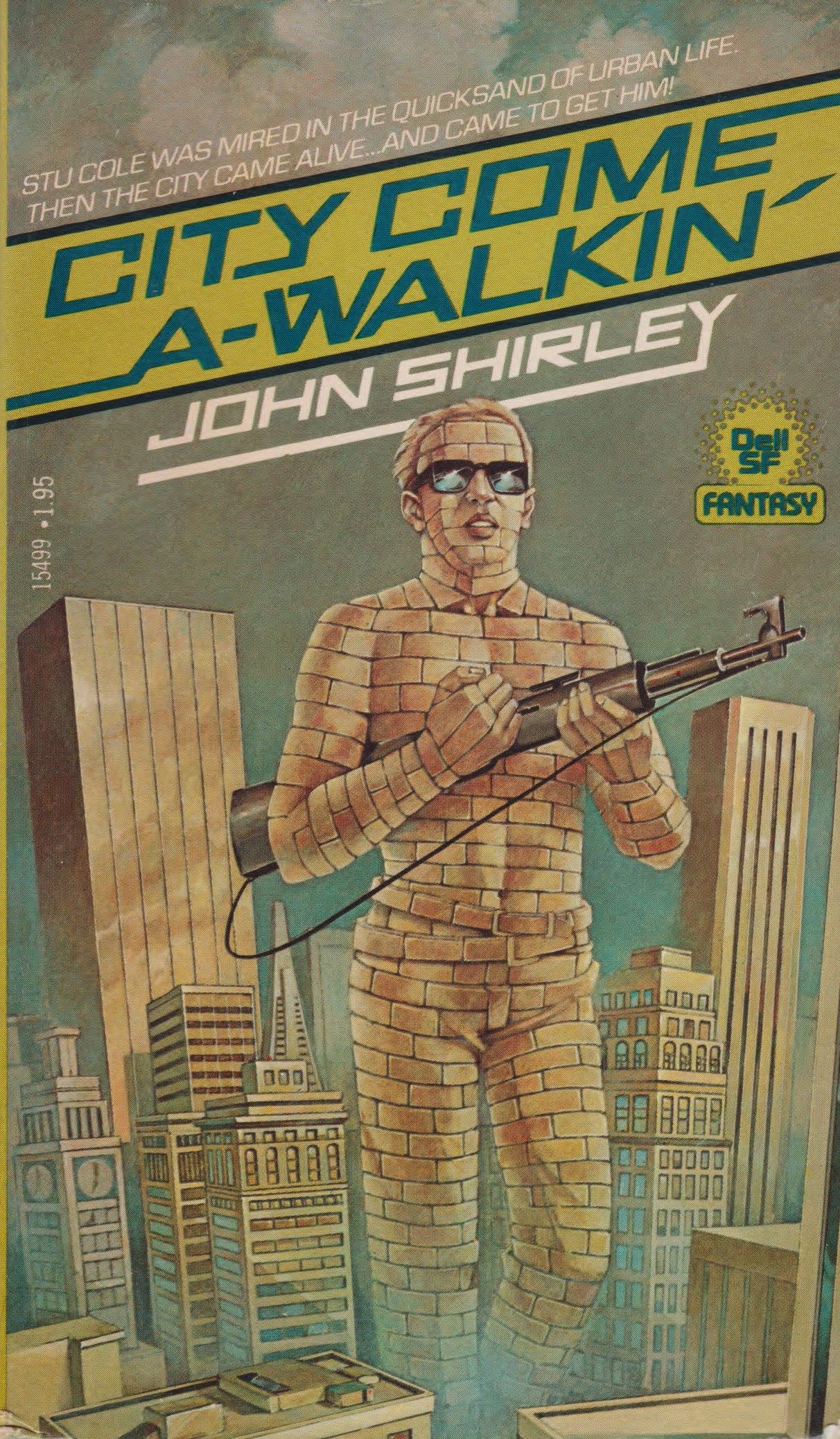
(Catherine Huerta’s cover for the 1st edition) Continue reading

Book Review: New Writings in SF 7, ed. John Carnell (1971)

(David McCall Johnston’s cover for the 1971 edition)

3/5 (collated rating: Average)

Preliminary publication note: The UK and US editions of the New Writings in Science Fiction anthology series (1964-1977) varied in content—even volumes indicated by the same number. They are often treated as separate entries in the isfdb.org anthology listing. I read and reviewed the US edition.

~

The back cover of New Writings in Science Fiction 7 (1971), ed. John Carnell promises a form of “future shock”—plunging us into a world derived from ours but foreign and alien. Is the collection successful? As with the three other volumes in this anthology series I’ve read—New Writings in SF 4 (1965), New Writings in SF 6 (1965), and New Writings in SF 9 (191972)–the answer is a mixed “somewhat.”

In the volumes I’ve explored so far, Vincent King is the biggest surprise—i.e. an author I had never read who produces regularly solid work. As with “Testament” (1968), King’s “Defence Mechanism” (1966) evokes “existential emptiness” Continue reading

Updates: Recent Science Fiction Acquisitions No. CCXLIII (Mary Gentle, Robert Reed, Mike Resnick, and Jayge Carr)

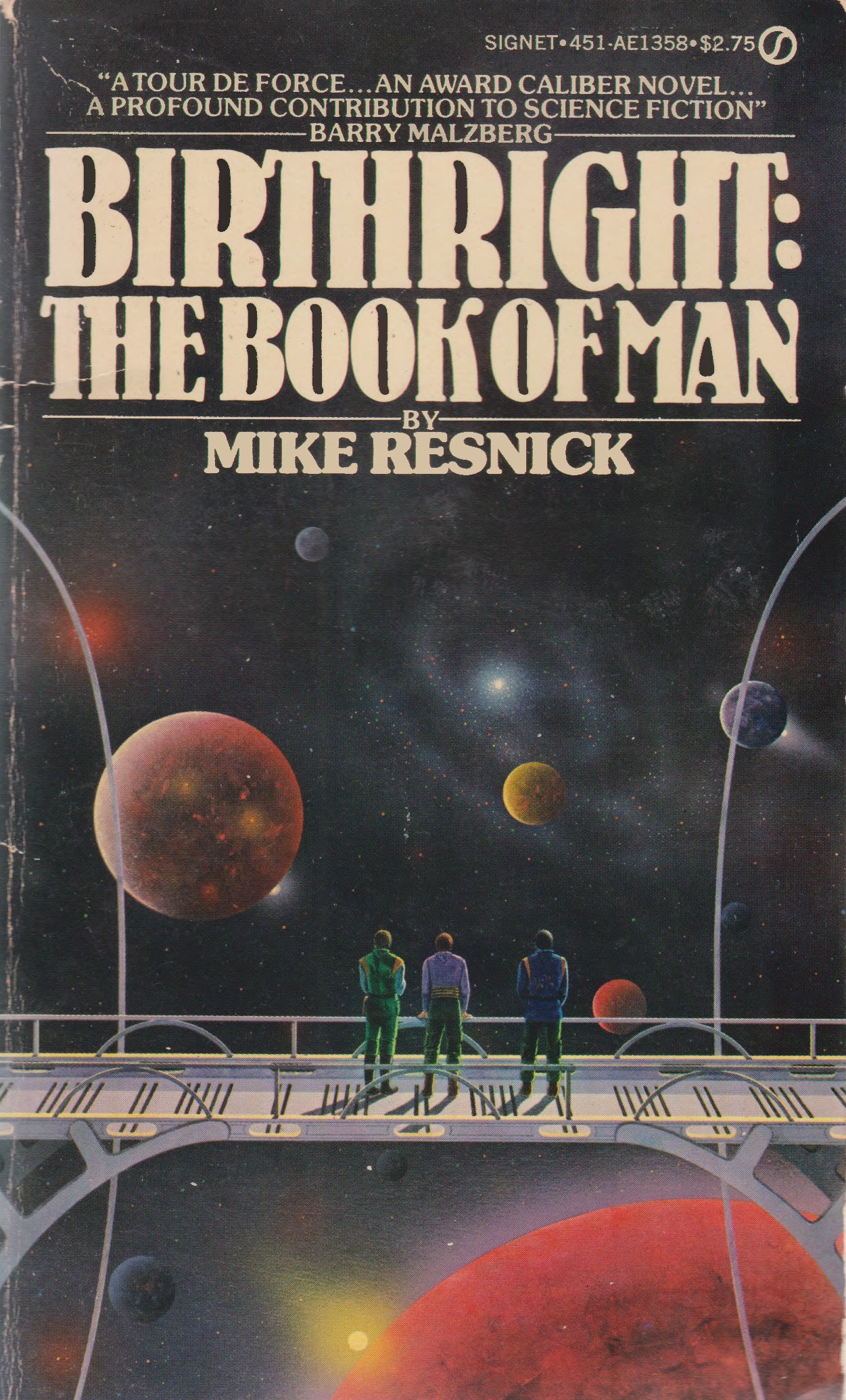
1. As a historian, I am particularly fascinated by future histories—stories or novels chronologically organized to convey the historical scope of a society’s evolution. Mike Resnick, a new author to me, presents a future history in the form of linked original short stories. The format reminds me of Michael Bishop’s Catacomb Years (1979), although the stories in the latter volume were previously published.

Barry N. Malzberg also tried his hand at a future history (albeit, a distinctly Malzbergian take) in the underrated Universe Day (1971).

2. I’ve read extensively about Mary Gentle but I haven’t picked up one of her novels–until now. I’d love to know your thoughts on this one.

3. Jayge Carr is best known for Leviathan’s Deep (1979) which I bought a few years back but haven’t read. Here’s a lesser known work—it only received one printing—in a trilogy.

4. And finally, another complete unknown…. SF Encyclopedia describes Robert Reed’s first novel, The Leeshore (1987), as “a tale which combines adventure-sf plotting (a pair of twins, the sole humans left on the eponymous water-covered colony planet, must guide a task force in pursuit of the Computer-worshiping zealots who have killed everyone else) with an almost mystical sense for the genius of place, the intricacies of self-hood.”

Count me intrigued! I’m all for unusual planets…..

As always, let me know what you think of the books and covers in the comments!

~

1. Birthright: The Book of Man, Mike Resnick (1982)

(Uncredited cover for the 1st edition) Continue reading
Adventures in Science Fiction Cover Art: Space Elephants!

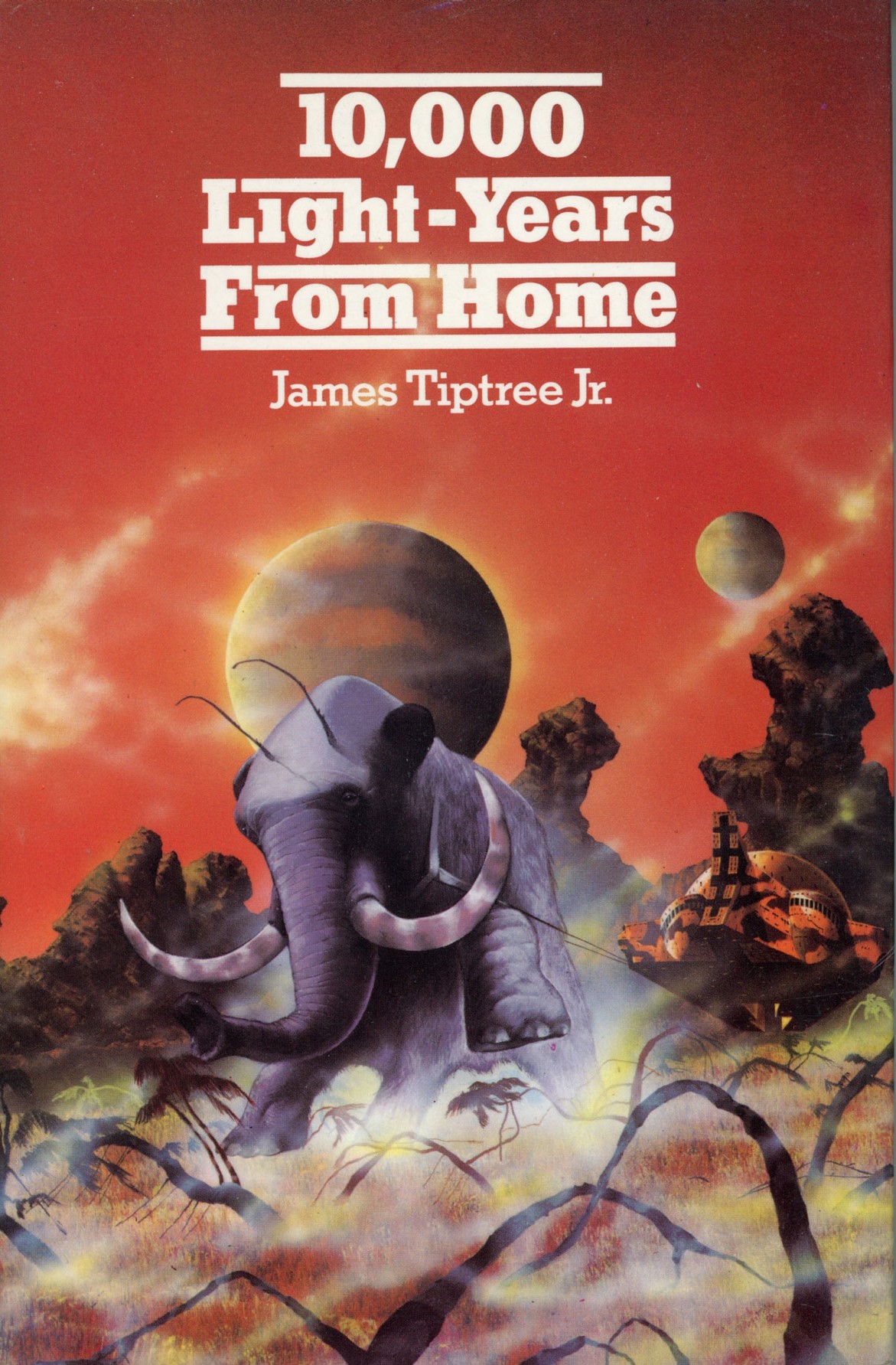
(Tony Roberts’ (?) cover for the 1975 edition of Ten Thousand Light-Years From Home (1973), James Tiptree, Jr.)

Here’s a lighthearted themed science fiction art post on elephants, elephantine aliens, and prehistoric mammoths that I’ve cobbled together over the last few weeks. Elephants have always made me happy–especially baby elephants…. and yes, I have been known to watch Youtube videos of baby elephant antics. I digress.

The SF novel that first came to mind was Robert Silverberg’s masterful rumination on colonization on a decaying world Downward to the Earth (1970). Rather than Continue reading

Updates: A New Resource on Sports and Games in Science Fiction

(Richard Powers’ cover for the 1972 edition of The Space Olympics (1967), A. M. Lightner)

Official Resource Page LINK (this will be updated based on your suggestions).

In the era of Covid-19, sports leagues and events around the world have been cancelled. ESPN runs replays of the glorious past…. partial sports fans like myself miss Major League Soccer and the conclusions to various European football leagues. I thought it would be fun to put together a new resource on Sports and Games in Science Fiction. And, these resources serve as a way to organize my reviews (links provided).

To quote from my review of William Harrison’s “Roller Ball Murder” (1973), “I am (generally) not a fan of sports. I am a fan of science fiction about sports. More specifically, I’m a proponent of sports as a SF vehicle for social commentary on commercialism, trauma, alienation, and violence.”

One last thing before I discuss the list I’ve compiled, let me know your favorites. I am open to tracking a bunch down for my reading pleasure in this sports-deprived Continue reading

Adventures in Science Fiction Cover Art: The Strange Visages of Burt Shonberg (1933-1977)

(Burt Shonberg, 1964 Ibiza Spain)

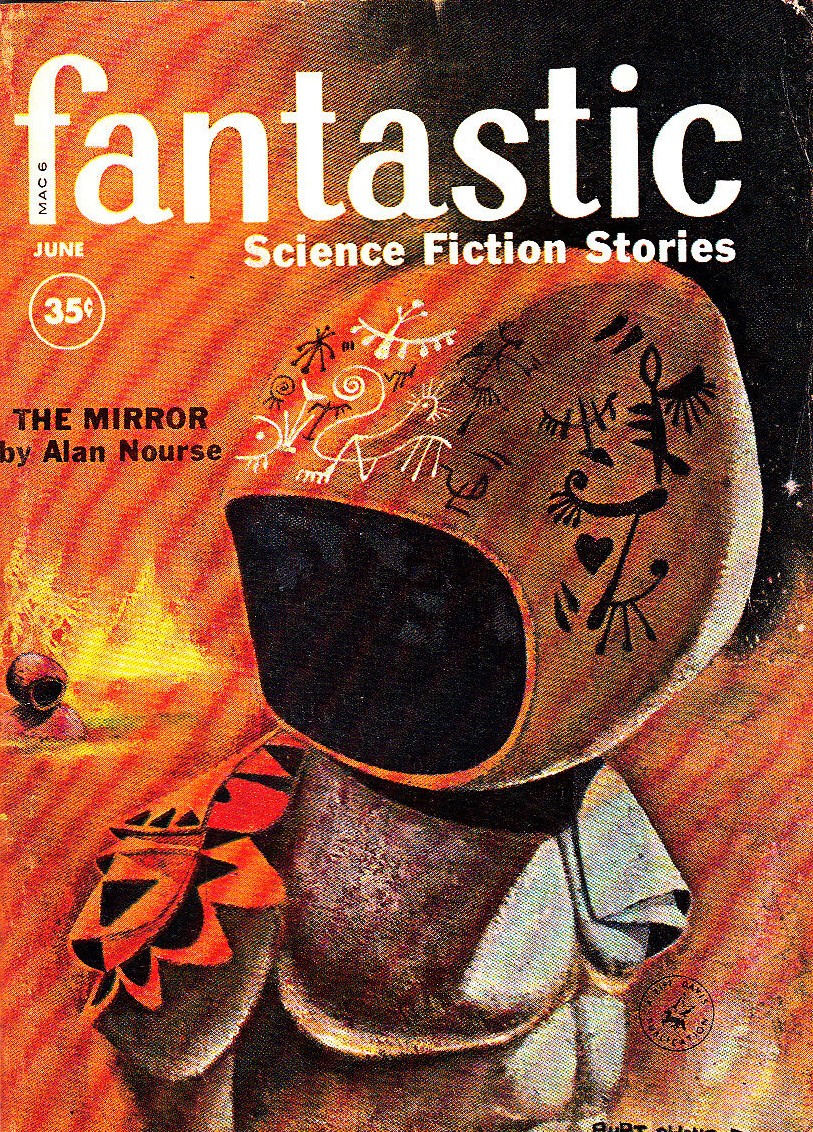
Burt Shonberg (1933-1977) produced only one SF cover for the Fantastic Science Fiction Stories (June 1960), ed. Cele Goldsmith. I adore the etched helmet, the lack of a distinct face, the looking backward at a similar form emerging…. I wish more magazines commissioned covers from him–he could have added a nice visual wrinkle to the fair of the day. Here’s the isfdb.org listing for the issue–do you know which story he’s illustrating?

(Fantastic Science Fiction Stories (June 1960), ed. Cele Goldsmith)

So who was he? His biography, which the following paragraph is based on, lays out an intriguing life. Born in Continue reading

Updates: Recent Science Fiction Acquisitions No. CCXLII (C. J. Cherryh and T. A. Waters)

All the following books came from the Chicago, IL bookstore Bucket O’Blood. I bought them online to support one of my favorite bookstores negatively impacted by the Covid-19 pandemic. Check them out!  If able, support your favorite stores (buy online, buy gift cards for later purchases, etc.) in this trying time.

I hope all of you are well.

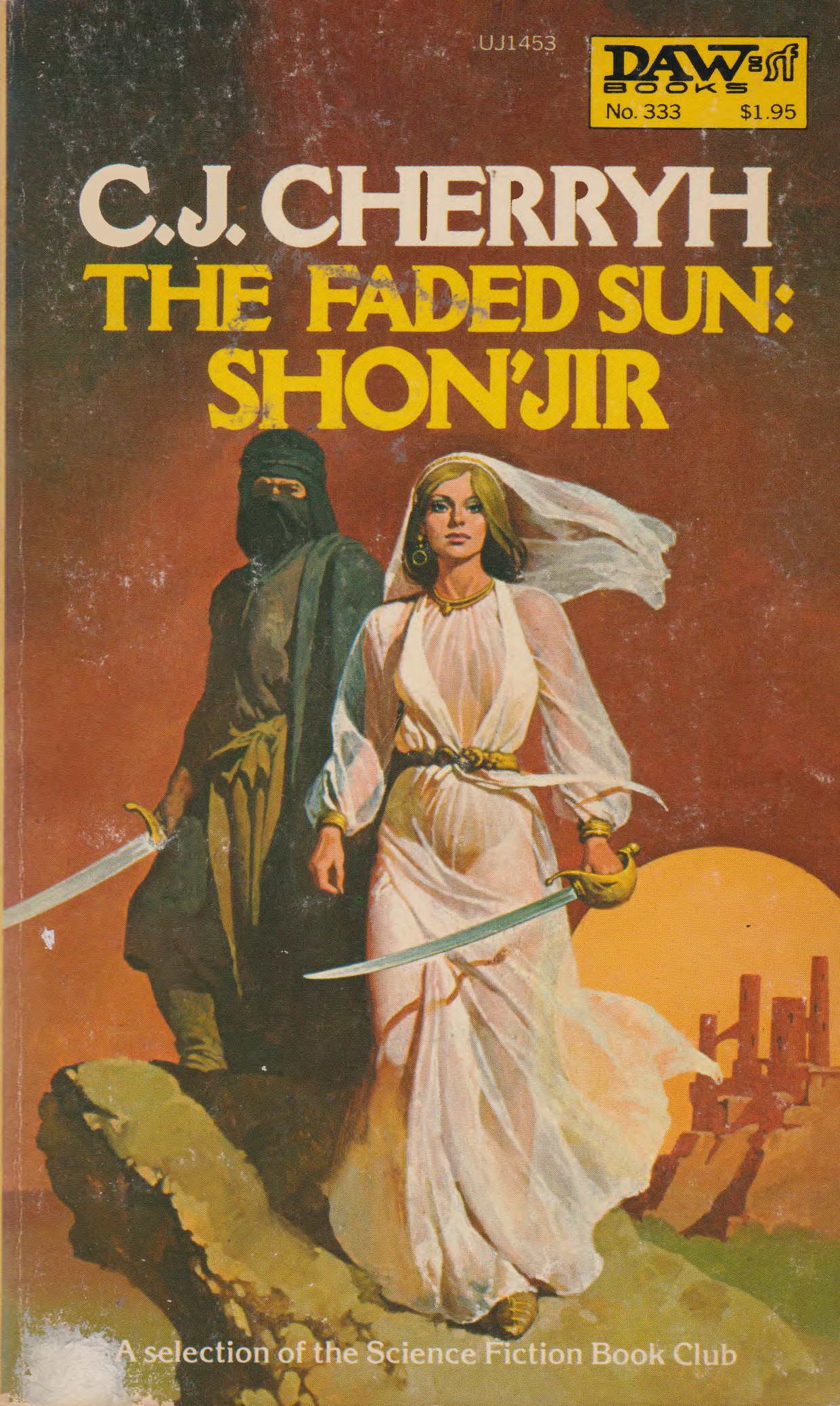
1. Book two of C. J. Cherryh’s Faded Sun trilogy. I bought the first one a few months ago.

While I’ve only reviewed two of Cherryh’s novels on my site—-Merchanter’s Luck (1982) and Port Eternity (1982)—she was one of my favorite pre-blog authors. I’ve previously read fifteen or so of her novels including Cyteen (1988) and Downbellow Station (1981). I have yet to read any of her pre-1980 novels so I look forward to diving into this trilogy.

2. An unknown author and novel (at least to me)…. with a flashy/fun cover. According to SF Encyclopedia, “A counter-cultural ethos also inspired the grimmer Centerforce (1974), in which motorcycle dropouts and commune dwellers combine in opposition to a Near-Future police-state America.”

3. One of C. J. Cherryh’s few standalone novels–Hestia (1979). Seems like a standard anthropological mystery on an alien world. Thoughts? As always, annoyed by the cat woman alien art….

4. Book three of C. J. Cherryh’s Faded Sun trilogy.

Let me know what you think of the books and covers in the comments!

~

1. The Faded Sun: Shon’Jir, C. J. Cherryh (1978)

(Gino D’Achille’s cover for the 1979 edition) Continue reading

Adventures in Science Fiction Cover Art: Cathy Millet illustrates Michael Moorcock, Bob Shaw, and John Cristopher

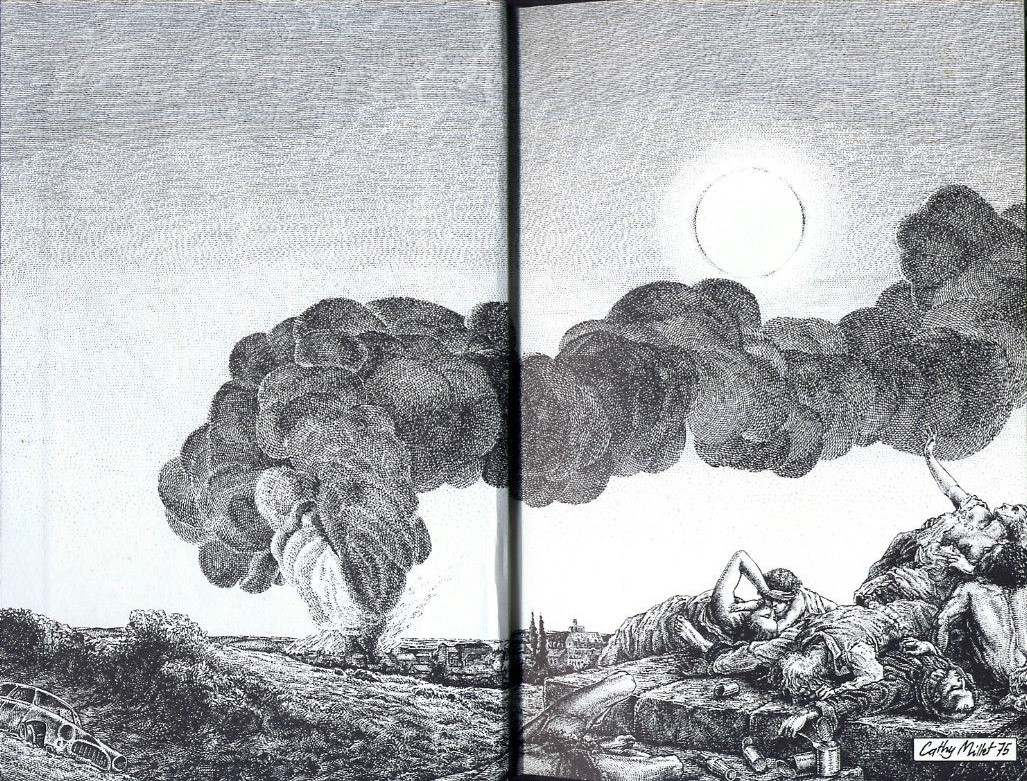
(Interior art for the 1975 French OPTA edition of The Death of Grass (1956) and The Long Winter (1962), John Christopher)

I cannot ascertain the identity of Cathy Millet. There is a well known Catherine Millet—a French writer, art critic, curator, etc. However, I do not think they are the same. If you know more information about who she might be, please please please let me know! (French articles are fine — I can read them easily).

Cathy Millet created a handful of covers and larger number of interior illustrations for the French publisher OPTA. Here’s her incomplete isfdb.org listing which I used as a jumping off point. The ones which caught my eye are her spectacular interior illustrations for two John Christopher post-apocalyptic Continue reading

Updates: Recent Science Fiction Acquisitions No. CCXLI (Ben Bova, Margaret Elphinstone, Christopher Evans, Lee Hoffman)

1. New author to me. Unknown book. Fascinating Peter Gudynas city-scape cover. Let the act of exploration carry me through!

2. My The Women’s Press collection of SF/F novels grows. This is probably one of the least known volumes.

But so was Elizabeth Baines’ The Birth Machine (1983) and it was fantastic!

3. I love the concept of an epic near-future space thriller involving weather manipulation! But me and Ben Bova never see eye-to-eye….

4. An unknown Doubleday SF edition. I have yet to read any of Lee Hoffman’s SF — she wrote a handful.

Let me know what you think of the books and covers in the comments!

1. Capella’s Golden Eyes, Christopher Evans (1980)

(Peter Gudynas’ cover for the 1982 edition) Continue reading