Book Review: Cybernaut, E. G. Valens (1968)

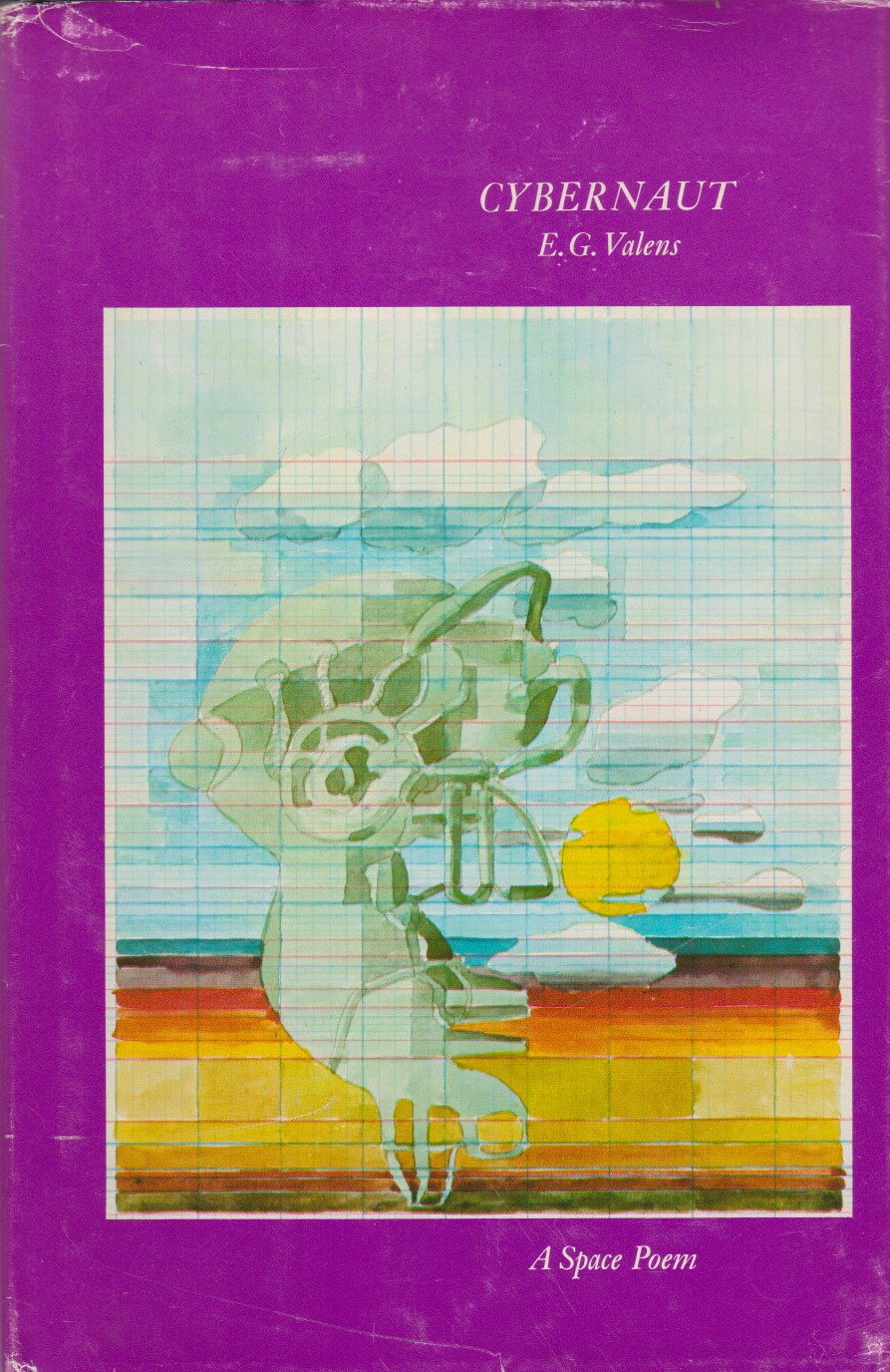
(Robert Andrew Parker’s cover art for the 1968 edition)

2.75/5 (Vaguely Average)

E. G. Valens’ Cybernaut (1968), a narrative SF poem, translocates earth exploration metaphors into the endless emptiness of space with varying degrees of success.

The narrator’s deep space exploration–“Operation C / Exploratory / A first incision in the skin of time. / Objective: / Lay back the superficial tissue / Lay bare the cortex of / The galaxy” (13)–is not all triumph. Continue reading

Book Review: Under a Calculating Star, John Morressy (1975)

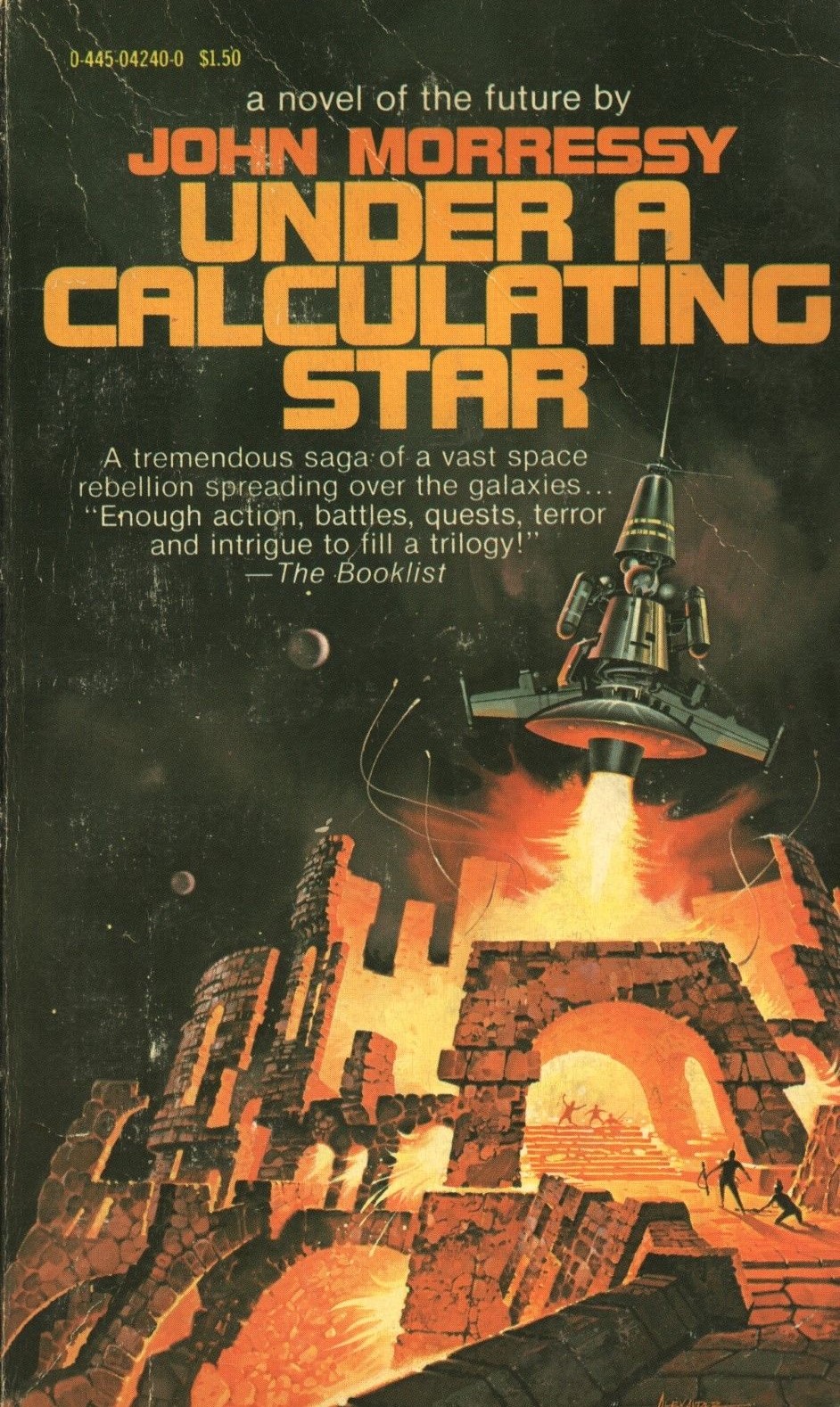
(Paul Alexander’s cover for the 1978 edition)

3/5 (Average)

After finishing John Morressy’s Frostworld and Dreamfire (1977), I tracked down another volume of his Del Whitby sequence. Although far from as engaging and emotionally affective as the former, Under a Calculating Star (1975) provides the historical background to the Morressy’s weirdly primitive far future world: the origins of the Sternverein (the dominant business polity), the explanation of why swords and knives are the weapons of choice while high-tech spaceships roam the interstellar expanses, and the role of Old Earth in the colonization of the far flung reaches. Historical content aside, Under a Calculating Star‘s plot and characters fail to engage and the worlds and societies are one-dimensional in comparison to Frostworld and Dreamfire‘s metamorphic Onhla and the planet Hraggellon, locked in its unusual orbit. Continue reading

Updates: Recent Science Fiction Acquisitions No. CCVII (Moorcock + Pohl + Leinster + Morressy)

1. Frederik Pohl short stories? I’ve collected volumes and volumes and volumes for years—I suspect I should get around to reading one!

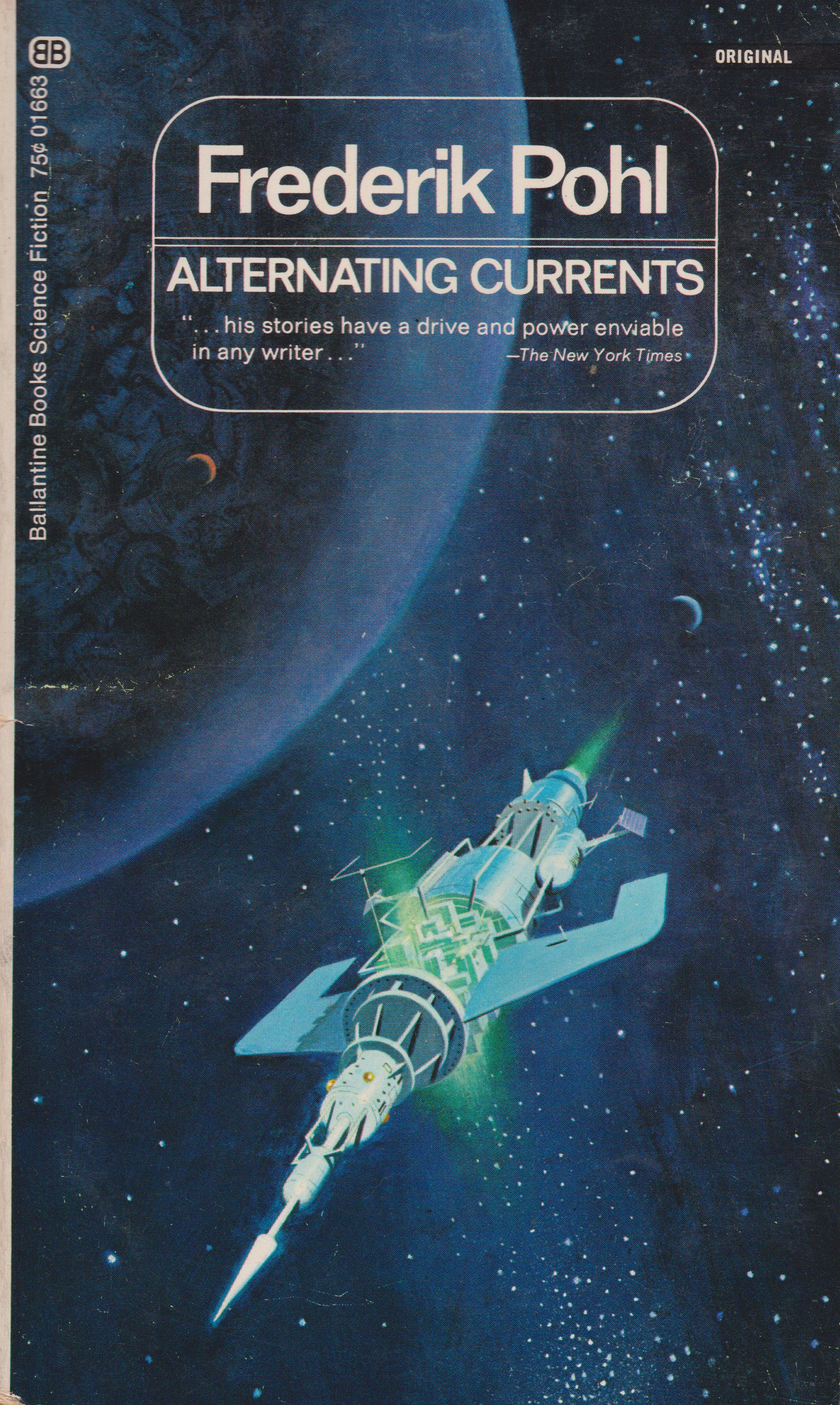
An effective Dean Ellis cover….

2. I acquired the second volume in Michael Moorcock’s Dancers at the End of Time sequence at my local used bookstore down the street. I read An Alien Heat (1972) in 2016.

3. A few days ago I reviewed John Morressy’s wonderful Frostworld and Dreamfire (1977) — I was intrigued enough that I tracked down another volume in the Del Whitby sequence—Under a Calculating Star (1975). I’ll have a review up in the next few days.

4. The second Murray Leinster Med Service collection I’ve acquired–as a huge fan of medical-themed SF…. I should put together a list.

Other lists: Immortality in SF, Generation Ships, and Overpopulation in SF.

Do you have a favorite cover?

As always, I look forward to your comments!

~

1.  Alternating  Currents,  Frederik  Pohl  (1956)

(Dean Ellis’ cover for the 1969 edition) Continue reading

Book Review: Frostworld and Dreamfire, John Morressy (1977)

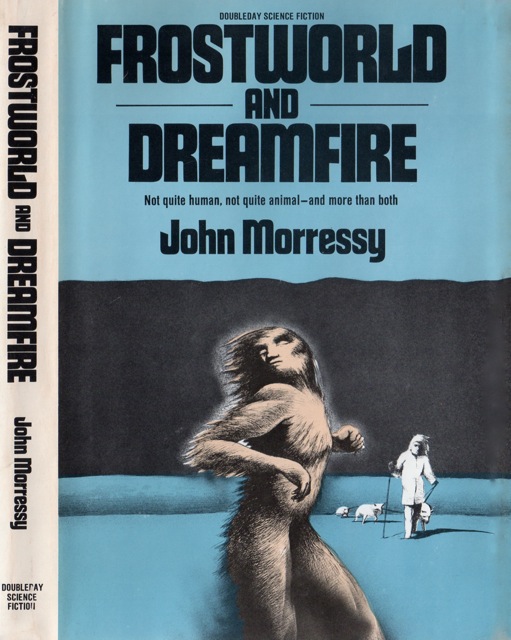
(David Wilhelmsen’s cover for the 1977 edition)

4.25/5 (Very Good)

John Morressy’s moving SF epic Frostworld and Dreamfire (1977) is set in the Del Whitby sequence (1972-1983) of novels which explore conflict and colonialism (humans and humanoid aliens) within the loose human Sternverein polity.  Conceptually the sequence, which does not have to be read in order, fascinates: the first three novels–Starbrat (1972), Nail Down the Stars (1973), and Under a Calculating Star (1975)–analyze the same conflict from three different perspectives (SF Encyclopedia entry). Continue reading

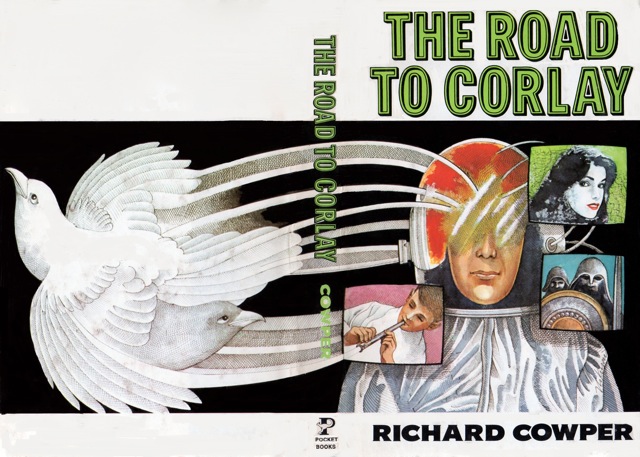
Book Review: The Road to Corlay, Richard Cowper (1978)

(Gary Viskupic’s cover for the 1979 edition)

3.75/5 (Good)

Nominated for the 1980 Nebula Award for Best Novel

Richard Cowper’s The Road to Corlay (1978) charts the ethereal pastoral wanderings and religious musings of the followers of The White Bird of Kinship, an anti-institutional pseudo-Christian religion at odds with the oppressive Church Militant that holds sway over what remains of Europe. Continue reading

Book Review: Secret Rendezvous, Kobo Abe (1977, trans. 1979)

(Tadanoi Yokoo’s cover for the 1979 edition)

5/5 (Masterpiece)

In Kobo Abe’s Secret Rendezvous (1977, trans. 1979) the hospital stretches like a recumbent body, leaking fluids through its membranes and undefined in its expansiveness, across the urban landscape. Within its labyrinthine interior, humans (agents of “disease”) animate various functions of the hospital for their own purposes–some sinister, some scientific, some sinisterly scientific. The hospital body lurches and vibrates with the sounds of its doctors and orderlies as they rewire the building’s organs and nerves in order to experiment on themselves and their patients. Within this veritable entity lacking a functional guiding agent, a harrowing, existential, and surreal Freudian mystery unfolds. Continue reading

Short Story Reviews: Four Stories from New Worlds Science Fiction (April 1964), ed. John Carnell

To mix things up a bit I decided to review four stories in John Carnell’s last issue of New Worlds Science Fiction (April 1964) before he handed over the reins of the dying publication to Michael Moorcock, who would elevate it to New Wave greatness. Other than the James White serial Open Prison, which I plan on reading in book form when I procure a copy, three of the four authors reviewed below owed much of their careers to John Carnell, and would see few stories in print after his departure (see the individual story reviews for details). Only Barrington J. Bayley, writing as P. F. Woods, would see continued publication (and growing popularity) in New Worlds under Moorcock.

Of the stories I recommend reading William Spencer’s rumination on overpopulation and urban life,  “Megapolitan Underground.” The others are worthwhile only for die-hard fans of Carnell’s New Worlds and other editorial projects. Continue reading

Book Review: The Word for World is Forest, Ursula K. Le Guin (1972)

(Richard Powers’ cover for the 1976 edition)

4.5/5 (Very Good)

Won the 1973 Hugo for Best Novella. Nominated for the 1973 Nebula for Best Novella.

In November 1969, word of the My Lai Massacre (March 16, 1968), where American soldiers killed (and raped and mutilated) between 347-504 unarmed South Vietnamese civilians, reached American newspapers. Ronald L. Haeberle’s iconic (and horrifying) photograph of massacred children and adults–superimposed with, “Q. And babies? A. and babies,” the chilling lines from NBC’s interview with massacre participant Paul Meadlo–was transformed into the “most successful poster” opposing the Vietnam War by the Art Workers Coalition. While written (most likely) before news of the massacre appeared in the press, Ursula K.  Le Guin brilliantly channels this general anti-war anger, transposed to an alien local with colonizing humans as villains, in The Word for World is Forest (1972). Note: Le Guin wrote her uncannily similar novel in 1968, before word of the massacre appeared in the news. Continue reading

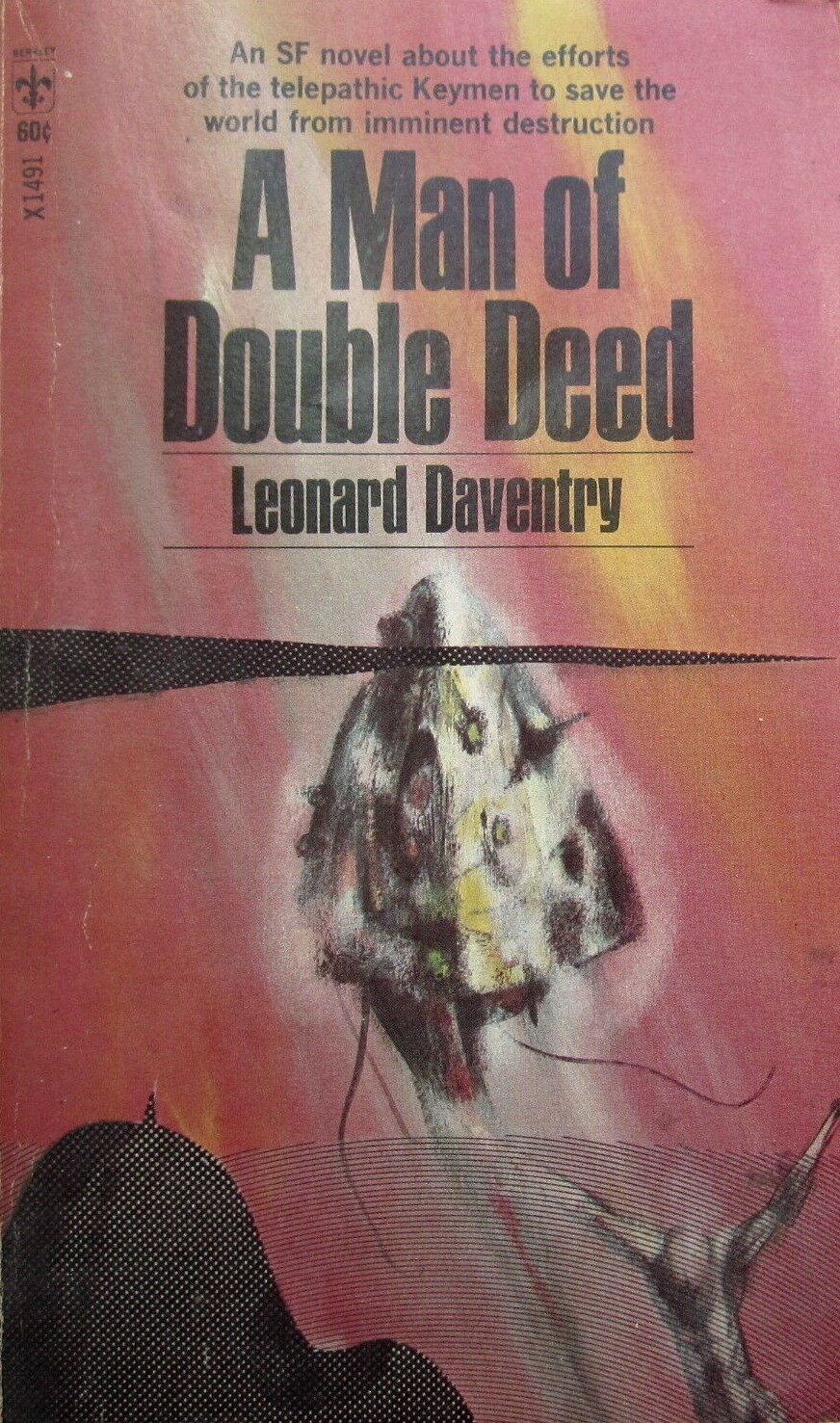
Book Review: A Man of Double Deed, Leonard Daventry (1965)

(Richard Powers’ cover for the 1967 edition)

3/5 (Average)

Leonard Daventry’s A Man of Double Deed (1965) is a dark and grungy tale of polyamory, telepathy, and apocalyptical violence. Swinging between philosophical and emotional introspection and awkwardly explained action sequences based on the flimsiest of plots, Daventry’s novel succeeds as a noirish character study but fails as a compelling unity of parts. Continue reading