Book Review: After the Flood, P. C. Jersild (1982, trans. 1986)

4.75/5 (Near Masterpiece)

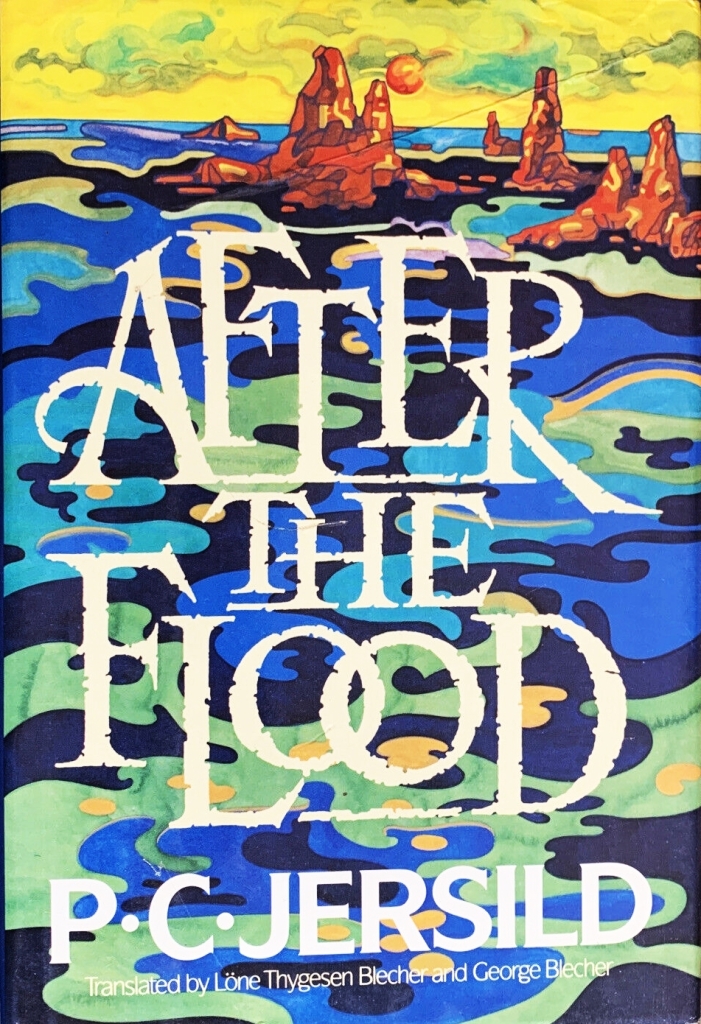
P. C. Jersild’s After the Flood (1982, trans. 1986), a relentlessly bleak and incisive analysis of humanity’s death drive after a nuclear event, hits harder than Cormac McCarthy’s The Road (2006). Possessed by a deceptively powerful prose, Jersild maps out the apocalyptic bodyscapes of this new and dying world with merciless strokes.

P.C. Jersild (1935-), a Swedish physician and author, wrote a handful of novels that can be classified as science fiction. According to SF Encyclopedia, he’s “a central figure in modern Swedish literature, both a favorite among critics and, with some of his novels, a major bestseller.” Until recently, as is typical for many mainstream authors, Jersild tried to distance himself from SF despite writing a range of works that are set in the future. Of these works, unfortunately only three have been translated into English–The Animal Doctor (1973, trans. 1975), A Living Soul (1980, trans. 1988), and After the Flood (1982, trans. 1986).

Continue reading

Future Media Short Story Review: Barry N. Malzberg’s “The Idea” (1971) (as K. M. O’Donnell)

Today I’ve reviewed the thirteenth story in my series on the science fictional media landscape of the future. Here, I finally return to the nightmarish embrace of Barry N. Malzberg.

Previously: Pat Cadigan’s “Rock On” (1984).

Up Next: Walter F. Moudy’s “The Survivor” (May 1965).

3.5/5 (Good)

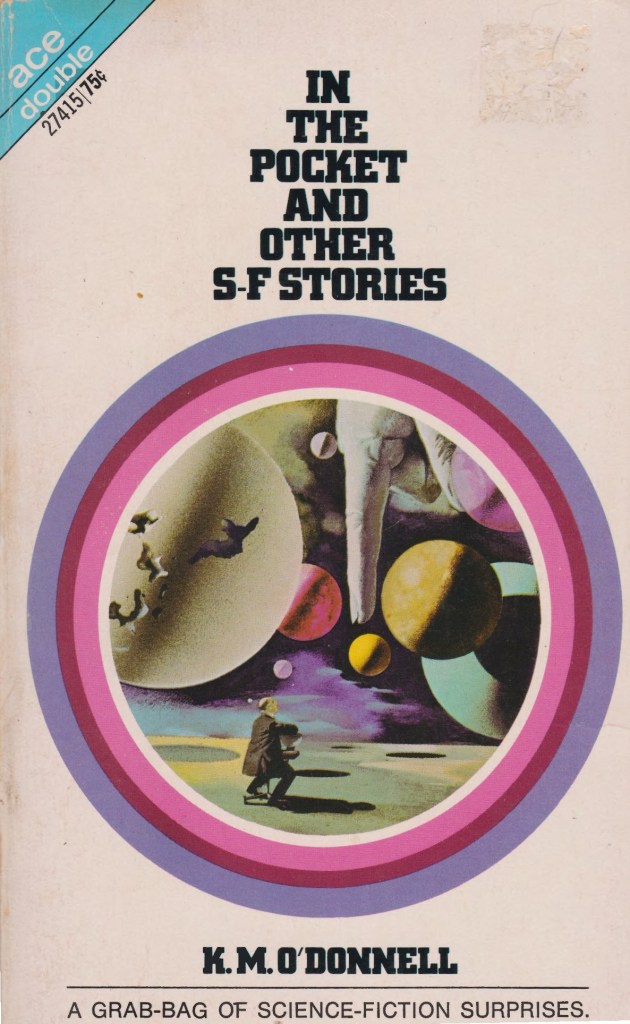
Barry N. Malzberg’s “The Idea” first appeared in In the Pocket and Other S-F Stories (1971) (as K. M. O’Donnell). I cannot find the story online. Please contact me if you do not own a copy and want a PDF of the story. I recommend you procure the fantastic anthology TV: 2000, ed. Isaac Asimov, Martin H. Greenberg, Charles G. Waugh (1982) which “The Idea” also appears in. I’ll be returning to this volume in coming weeks for this series.

Reading a Barry N. Malzberg story is like returning to a familiar embrace–an embrace of the blackest satire conveyed via terrifying existential traps. Ever since I read his masterpiece Beyond Apollo (1972), a metafictional destruction of America’s obsession with space exploration, Malzberg joined the pantheon of my favorite authors.

Continue reading

Short Fiction Reviews: Algis Budrys’ “Forever Stenn” (variant title: “The Ridge Around the World”) (1957), Basil Wells’ “Sole Survivor” (1957), Helen McCloy’s “The Unexpected” (1957), and John D. Odom’s “The Word is Law” (1957)

Preliminary note: I never can pinpoint exactly why I read what I read when I read it as I am a creature of impulse and whim. While browsing lesser known authors, I came across Helen McCloy (1904-1994). She’s best known for her post-apocalyptic novel The Last Day (1959) (as Helen Clarkson)—which you read online as paper copies are incredibly scarce and expensive–and wrote a handful of speculative short stories of which three appear to be science fiction. Mysteries and non-genre fiction made up the majority of her output.

The Last Day led me to McCloy’s “The Unexpected” (1957) and that in turn lead me to the December 1957 issue of Satellite Science Fiction, ed. Cylvia Kleinman. As I recently read the short novel in the issue, Jack Vance’s solid The Languages of Pao (1957), I decided that I might as well read the rest of the stories in the magazine. And I hadn’t read a Budrys short in a bit… And I’d never heard of Basil Wells (1912-2003) or John D. Odom (unknown dates).

Continue reading

Book Review: Universe 12, ed. Terry Carr (1982) (Kim Stanley Robinson, Howard Waldrop, Nancy Kress, R. A. Lafferty, et al.)

3.5/5 (collated rating: Good)

My fifth sojourn to Terry Carr’s Universe series of original anthologies (17 volumes published between 1971-1987) embodies the reasons I gravitate towards the medium: I discover new authors, I reassess old opinions, and deepen my understanding of my favorites. Recommended for Nancy Kress’ rumination on a childhood wrecked by insanity; Kim Stanley Robinson’s character piece on Mars transforming; Howard Waldrop’s account of obsession in an apocalyptic past; and Bruce McAllister’s tale of an astronaut returning home and the lies we tell.

Recommended for fans of more introspective early 80s SF.

Brief Plot Summary/Analysis

“A Pursuit of Miracles” (1982), George Turner, 3/5 (Average): The Australian author and SF critic George Turner (1916-1997) published his first science fiction at 62! It’s never too late to start. A few years ago I read Turner’s first novel Beloved Son (1978) in the Ethical Culture trilogy. While the details have faded from memory as I never got around to writing a review, I remember how fascinated I was by the exploration of a post-Holocaust world by a returning expedition in the first half of the novel. The second half faded and grew increasingly ponderous and I’m not sure I finished….

Continue reading

Updates: Cora Buhlert interviews Joachim Boaz

Hello everyone! Thank you for the immense support over the last twelve years (!) of my website. I keep doing what I do in part due to all the wonderful comments you leave, discussions you participate in, and suggestions you make. I can’t emphasize how much I appreciate it. I was recently interviewed by Cora Buhlert over on her website. She’s a three-time Hugo-nominated fan writer and a wonderful reviewer of vintage SF (often at Galactic Journey). Check out the interview here.

Continue reading

Future Media Short Story Review: Pat Cadigan’s “Rock On” (1984)

Today I’ve reviewed the twelfth story in my series on the science fictional media landscape of the future–and the first from the early 1980s. Pat Cadigan howls a ghastly punk scream into the vastness of the night.

Previously: Ann Warren Griffith’s “Captive Audience” (August 1953).

Up Next: Barry N. Malzberg’s “The Idea” (1971) (as K. M. O’Donnell).

3.75/5 (Good)

Pat Cadigan’s “Rock On” first appeared in Light Years and Dark: Science Fiction and Fantasy of and for Our Time, ed. Michael Bishop (1984). You can read it online here.

Whenever I delve into the nihilistic streets of cyberpunk, I enter the mental soundscape and acute estrangement imbued by the seminal 80s goth/post punk band The Cure: “scarred, your back was turned / Curled like an embryo” (“Cold” from Pornography, 1982). Robert Smith’s incantation of “a shallow grave / A monument to the ruined age” almost personifies cyberpunk’s fleeting but terrible power and apocalyptic conceptions of dark streets and conglomerates stamping out the last individuals finding their way across the net.

Continue reading

Future Media Short Story Review: Ann Warren Griffith’s “Captive Audience” (1953)

Today I’ve reviewed the eleventh story in my series on the science fictional media landscape of the future! Ann Warren Griffith spins a nightmarish dystopia where advertisements are illegal to block out.

Previously: Tomorrow’s TV, ed. Isaac Asimov, Martin H. Greenberg, and Charles Waugh (1982). Includes media-themed stories by Isaac Asimov, Jack C. Haldeman II, Ray Bradbury, and Ray Nelson.

Up Next: Pat Cadigan’s “Rock On” (1984).

4/5 (Good)

Ann Warren Griffith’s “Captive Audience” (1953) first appeared in The Magazine of Fantasy and Science Fiction, ed. Anthony Boucher and J. Francis McComas (August 1953). You can read it online here.

In the 1950s, Americans depicted Communism as denying inherent human freedoms of choice and enslaving the mind. Over the course of the decade, the terror of Communist brainwashing collided with fears of the detrimental effects of consumer culture and advertising. Perhaps the evil Communist was so successful due to a new softness within the American family (Dunne, 123). Anne Warren Griffith’s “Captive Audience” imagines a dystopic future in which the American mind is turned into malleable putty by an entropic (and sonic) inundation of advertisements. According to the story’s relentless logic, the last bastions of independent thought will cease to exist in a capitalist world where the right of every product to receive “its share of the consumer dollar” is the only right that matters (57).

Continue reading

Update: Recent Science Fiction Purchases No. CCLXXXIX (Nevil Shute, Nancy Kress, Hilbert Schenck, and a themed-anthology on future sex)

Which books/covers/authors intrigue you? Which have you read? Disliked? Enjoyed?

1. The Shape of Sex to Come, ed. Douglas Hill (1978)

From the back cover: “Eight stories from SF names as highly-respected as Aldiss, Moorcock and Silverberg explore the strange and bizarre possibilities for sexuality in the furthest reaches of tomorrow.”

Contents: Robert Silverberg’s “In the Group” (1973), Thomas M. Disch’s “Planet of the Rapes” (1977), A. K. Jorgensson’s “Coming-of-Age Day” (1965), Anne McCaffrey’s “The Thorns of Barevi” (1970), Brian W. Aldiss’ “A One-Man Expedition Through Life” (1974), Brian W. Aldiss’ “The Taste of Shrapnel” (1974), Brian W. Aldiss’ “Forty Million Miles from the Nearest Blonde” (1974), Hilary Bailey’s “Sisters” (1976), John Sladek’s “Machine Screw” (1975), and Michael Moorcock’s “Pale Roses” (1974).

Continue reading

Future Media Short Story Reviews: Tomorrow’s TV, ed. Isaac Asimov, Martin Harry Greenberg, and Charles Waugh (1982) (Isaac Asimov, Jack C. Haldeman II, Ray Bradbury, Robert Bloch, Ray Nelson)

The seventh, eighth, ninth, and tenth stories in my series on the science fictional media landscape of the future appear in the anthology Tomorrow’s TV, ed. Isaac Asimov, Martin Harry Greenberg, and Charles Waugh (1982).

Previously: Two short stories by Fritz Leiber.

“The Girl with the Hungry Eyes” (1949) 

“A Bad Day for Sales” (July 1953).

Up Next: Ann Warren Griffith’s “Captive Audience” (August 1953).

3.25/5 (collated rating: Above Average)

Tomorrow’s TV (1982) gathers together five short stories published between 1951 and 1979 on future speculations and disturbing manifestations of the tube of the future. The extensive number of TV-related science fiction from these decades (especially the 50s and early 60s) should not come as a surprise. According to Gary R. Edgerton’s magisterial monograph The Columbia History of American Television (2007), no “technology before TV every integrated faster into American life” (xi). Isaac Asimov speculates on the nature of education and the role of the “teacher” if every kid goes to school on their TV. Ray Bradbury imagines a frosty world where everyone turns inward towards the hypnotic glow of their TV sets. Robert Bloch explores the intersection of programming as escape and its collision with the real world. Ray Nelson narrates a hyperviolent expose of the alien entities behind subliminal messaging. And Jack Haldeman II imagines what will happen when the human mind reaches a moment of information overload.

Continue reading