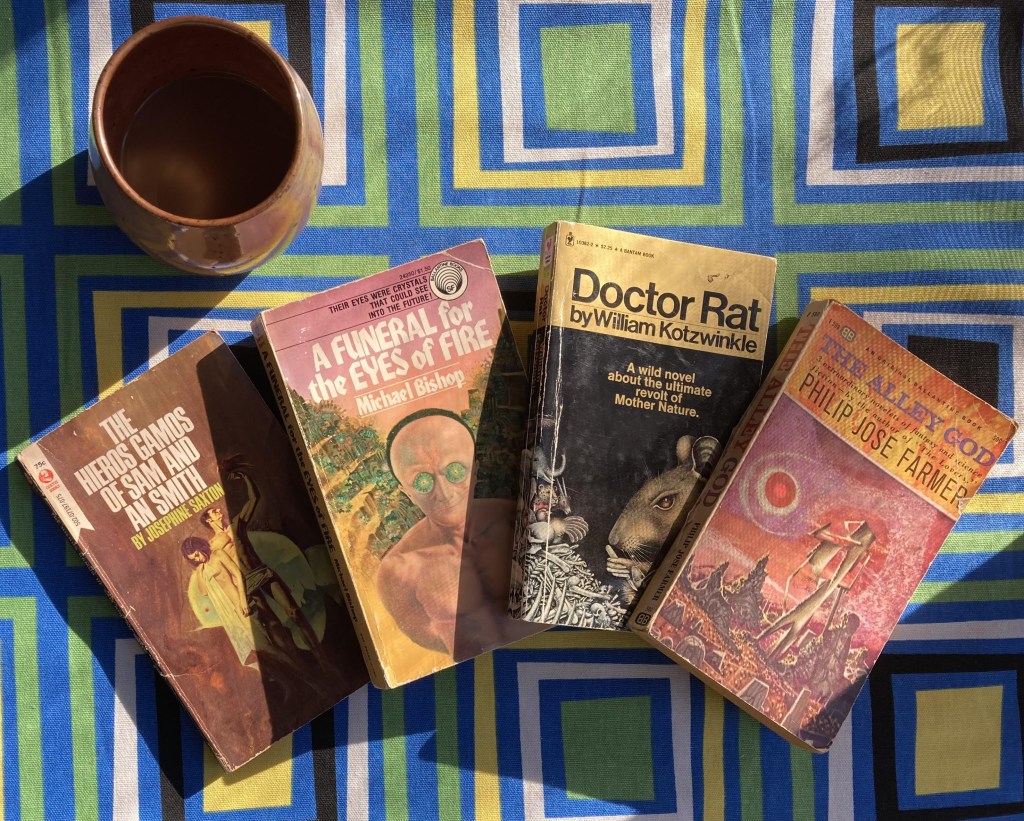
A selection from my shelves
What pre-1985 science fiction are you reading this week?
It’s been over a month since the previous installment. Sorry! While I’d like to keep a schedule, I find myself pathologically unable to do so. As with so much on my site, I’ll post continue to post these updates when I feel the inclination.
As these posts seem to bring in new readers, if you’re curious about my rationale for the perimeters of my site, check out this recent interview and podcast. And follow me on Mastodon if you don’t already as I no longer post on my Twitter account.
Let me know what pre-1985 SF you’ve been reading!
The Photograph (with links to reviews and brief thoughts)
- I forgot that I had included Saxton’s wonderful novel in an earlier post—alas! It’s still worth checking out if you’re not aware of her fascinating work.
- Michael Bishop (1945-2023) passed away six days ago. I had known this was coming ever since he was admitted to hospice care a few months back. It still hits hard. He’s one of my favorite SF authors of the 70s (I have not explored his early 80s work, yet). If you’re new to his fiction, check out my reviews of A Funeral for the Eyes of Fire (1975), Stolen Faces (1977), Transfigurations (1979), And Strange at Ecbatan the Trees (variant title: Beneath the Shattered Moons) (1976), and Catacomb Years (1979).
- William Kotzwinkle’s Doctor Rat (1976) ranks among my favorite 70s speculative visions. I’m a sucker for the encyclopedic gaze in fiction, moments of body horror, and existential dread. Kotzwinkle creates a rich substrate of Doctor Rat’s world (or delusion) by referencing both invented pseudo-knowledge and real events. I gathered all his references here.
- I included Farmer’s The Alley God (1962) as a reminder that I need to read more of his 50s and early 60s SF–the New Wave before the New Wave.
What am I writing about?
I recently reviewed three of Chan Davis’ nuclear war related stories: “The Nightmare” (1946), “To Still the Drums” (1946), and “The Aristocrat” (1949). I have a collection of Leigh Brackett’s Mars stories on deck.
What am I reading?
I’m currently working through a collection of early Greg Bear short stories at the moment. Not sure what I think. I’m eyeing a few hard-hitting SF novels on my shelves to fill out the year.
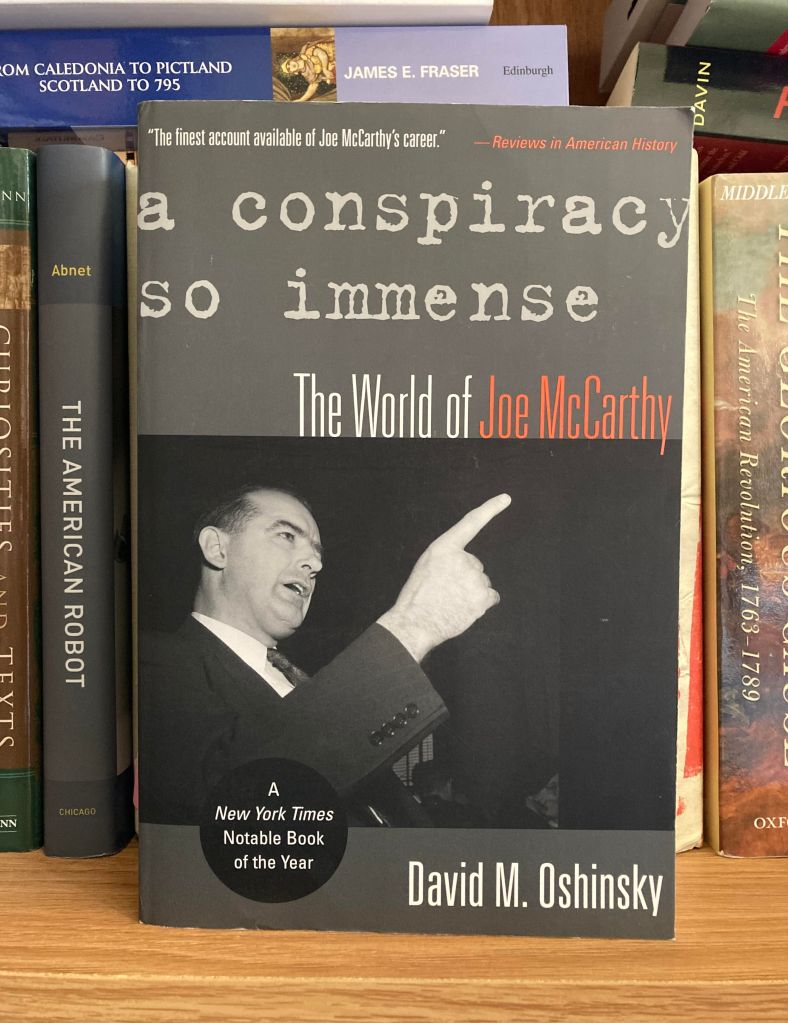
And my current history read — David M. Oshinsky’s A Conspiracy So Immense: The World of Joe McCarthy (1983). I suspect there are newer books on McCarthy worth reading but I took a class with Oshinsky as an undergraduate (post-1945 American History) and remember him fondly. I also highly recommend his Pulitzer-Prize winning monograph Polio: An American Story (2005).
A Curated List of SF Birthdays from the Last Two Weeks
November 6th: Author Sarban (1910-1989). I recently acquired his best-known work: The Sound of His Horn (1952).
November 6th: David I. Masson (1915-2007). I’ve reviewed two of his short stories: “A Two-Timer” (1966) and “The Transfinite Choice” (1966).
November 7th: R. A. Lafferty (1914-2002). Maybe this will be the year I finally finish one of his novels? I’ve read and enjoyed, in small doses, fifteen of his short stories over the years.
November 8th: Ben Bova (1932-2020)
November 8th: Raymond E. Banks (1918-1996). The author of SF smut like Lust of the Swampman (1978) also made the Nebula ballot for “Deliver the Man!” (1966) in 1967. Did he write any worthwhile short fiction?
November 8th: Kazuo Ishiguro (1954-)
November 9th: Alfred Coppel (1921-2004). I found plenty to enjoy in my post on three Coppel stories critical of the space agency: “The Dreamer” (1952), “Double Standard” (1952), and “The Hunters” (1952). And Dark December (1960) is an underrated post-apocalyptic novel worth tracking down.
November 11th: Kurt Vonnegut, Jr. (1922-2007). I should visit the museum in my current place of residence devoted to his life… I’ve lived here long enough! I thoroughly enjoyed Cat’s Cradle (1963) and Slaughterhouse Five (1969).
November 11th: Artist Ian Miller (1946-). Click his name for all of his SF covers. Here’s a wonderful interview with him.

Ludovico De Luigi’s “Thomas Mann,” 2007
November 11th: Italian artist Ludovico De Luigi (1933-). I featured his covers for Galassia a while back.
November 11th: Mack Reynolds (1917-1983).
November 11th: Howard Fast (1914-2003).
November 12th: Michael Bishop (1945-2023). As I stated above, he’s a favorite of mine! Stolen Faces (1977) is one of THE underrated SF novels of the 70s.
November 12th: Paul Cook (1950-). Haven’t explored his work yet. I have at least two of his novels on my shelves.
November 13th: Stephen Baxter (1957-)
November 14th: Phyllis MacLennan (1920-2012). I reviewed three of her short stories here.
November 14th: Artist Alex Ebel (1932-2013). In the world of SF art, he’s best known for his Le Guin covers: The Dispossessed and The Left Hand of Darkness.
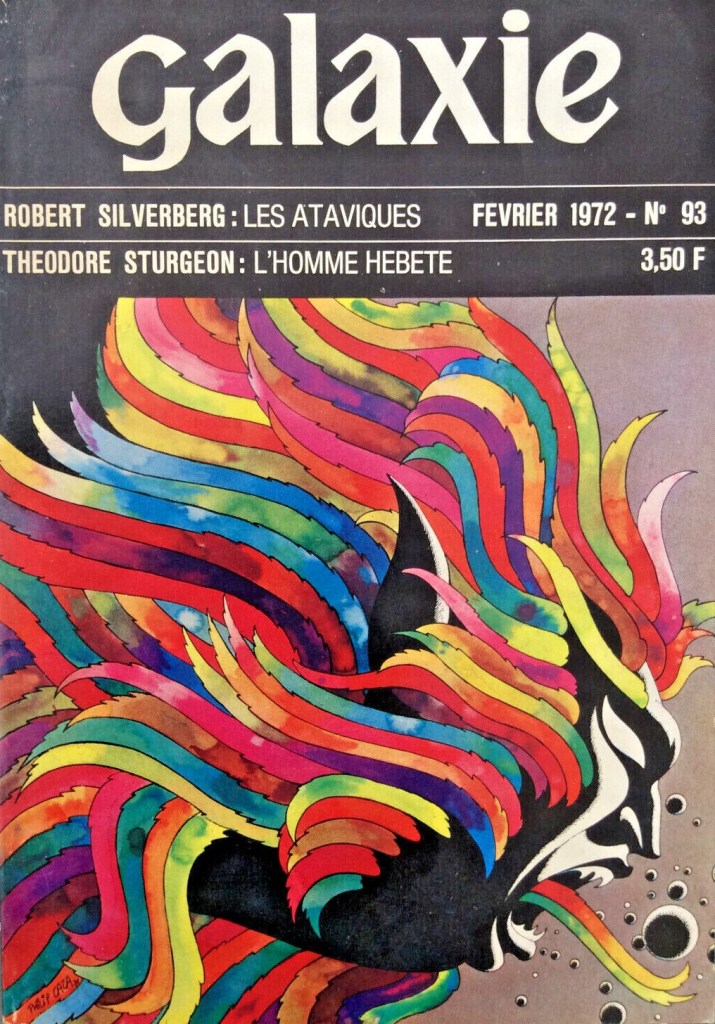
Philippe Caza’s cover for Galaxie (2ème série), ed. Michel Demuth #93 (February 1972)
November 14th: Artist Philippe Caza (1941-). I’m a huge fan of his work.
November 15th: Raymond F. Jones (1915-1994). I should read more of his short fiction. “The Memory of Mars” (1961) was surprisingly good!
November 18th: Michael Swanwick (1950-)
November 18th: Alan Dean Foster (1946)
November 18th: Suzette Haden Elgin (1936-2015). I’ve reviewed two of the installments of her Coyote Jones sequence: At the Seventh Level (1972) and Furthest (1971).
November 19th: David Ely (1927). I’d place Ely’s Seconds (1962) in my top-15 SF novels of the 60s.
November 19th: Neil Shapiro (1949-). Wrote a handful of stories in the 70s for If, F&SF, Vertex, etc. Any good?
For book reviews consult the INDEX
For cover art posts consult the INDEX
For TV and film reviews consult the INDEX
 Science Fiction and Other Suspect Ruminations
Prompted by one of your recent reviews and out of idle curiosity I picked up a Clark Ashton Smith collection – so far, not great really but the purple prose is intermittently entertaining in its own. Some v pulpy SF scattered in among the pedestrian horror plots. Also picked up Silverberg’s “Hawksbill Station”, one of the few from his peak period that I have yet to read, but havent started yet. A nice 70s hardback edition.
My view of Smith is limited to that one story I read — “Master of the Asteroid” (1932). I made sure to link an online copy of the story if you wanted to read that one.
I thoroughly enjoyed Hawksbill Station. Reviewed it ages ago on the site: https://sciencefictionruminations.com/2011/08/02/book-review-hawksbill-station-variant-title-the-anvil-of-time-robert-silverberg-1968/
As long as its better than Up the Line lol (I couldn’t even finish that one)
I haven’t read that one yet. Seems divisive. Hawksbill Station is certainly more on the serious side of things.
I’m excited to dig into it, I similarly rank Downward to the Earth and The World Inside (and Dying Inside, A Time of Changes and the Stochastic Man and a bunch of his short fiction) very highly. Up the Line just centers all his worst tendencies re: sexual material in an egregiously indulgent way, ir’s embarrassing. Also lots of stupid time travel hijinks. Apart from Hawksbill Station I think the only other one I havent gotten to from his New Wave period is Thorns.
There’s lots of Silverberg material to explore on my site if you haven’t already. He is one of my favorites. I’ve reviewed a good 12 of his novels and 45 of his short stories. It represents close to everything of his I’ve read other than A Time of Changes and Tower of Glass (both of which I enjoyed) that I couldn’t review as I listened to them as audiobooks.
My most recent Silverberg review was a few days ago! (albeit, not one of his best short stories) https://sciencefictionruminations.com/2023/10/22/short-story-reviews-robert-silverbergs-road-to-nightfall-1958-and-edgar-pangborns-the-music-master-of-babylon-1954/
The most recent pre-1985 SF novel I read is THE SHORES OF KANSAS, by Robert Chilson — a pretty decent time travel to the age of the dinosaurs story. I have a review coming soon in Black Gate.
I have a copy of Sarban’s THE SOUND OF HIS HORN in my TBR pile — I should get to it soonish.
As you probably know, I admire Josephine Saxton’s work a great deal. She is the most recent winner of the Cordwainer Smith Rediscovery Award. Here’s my post about that, which includes links to my reviews of VECTOR FOR SEVEN, QUEEN OF THE STATES, and HIEROS GAMOS: https://rrhorton.blogspot.com/2023/07/cordwainer-smith-rediscovery-award-for.html
I am also a great admirer of Michael Bishop’s work. My favorite among his novels is probably COUNT GEIGER’S BLUES, which, alas, is post-1985. 🙂
I did of course recently finish Avram Davidson and Grania Davis’ just post-1985 novel MARCO POLO AND THE SLEEPING BEAUTY, and also John M. Ford’s masterpiece THE DRAON WAITING, from 1983.
Did you write about The Dragon Waiting somewhere? I am interested in reading more of his work after the unusual reading experience that was The Princes of the Air (1982).
THE DRAGON WAITING review: https://rrhorton.blogspot.com/2023/11/review-dragon-waiting-by-john-m-ford.html
I need to reread THE PRINCES OF THE AIR.
Ah, it’s from this month. No wonder I missed it. I’ve been out of the loop. I’ll rectify that ASAP. Thanks for the link.
My favorite Bishop novel is the original version of A Funeral for the Eyes of Fire (1975). And the short stories in Catacomb Years (1979) were uniformly brilliant. I should reread that collection and write up my thoughts on each of the stories vs. my short review that exists on the site with my overall impressions.
I liked A Funeral for the Eyes of Fire a lot, and I felt that the revised version, Eyes of Fire, was less interesting. Perhaps just because I read Funeral first.
Yeah, the purpose of the rewrite was always a bit mystifying. I thought the collision of religion and science the original explored was one of the more ingenious ruminations on the topic in SF.
Almost finished the Sarban! Intriguing. Intense.
Posted the Sarban review!
Raymond E. Banks’s best-known early story is probably “The Short Ones,” an early computer simulation story, worth seeking out.
Thank you John! I’ve been eying a series on computer simulation stories… or at least a post or two.
Coincidentally, there’s a query on the SF/F Stack Exchange which refers to this story and refreshes my recollection that it’s not quite a computer simulation, but more of a physical simulation. See https://scifi.stackexchange.com/questions/281014/story-where-people-living-in-a-primitive-world-find-god-wires .
I’m only sure about reading Raymond F Jones’ ‘Correspondence Course’ and the novel ‘This Island Earth’. Do either of you have anything to say about the Jones collection, “The Non-Statistical Man”? Or any other recommended stories or novels?
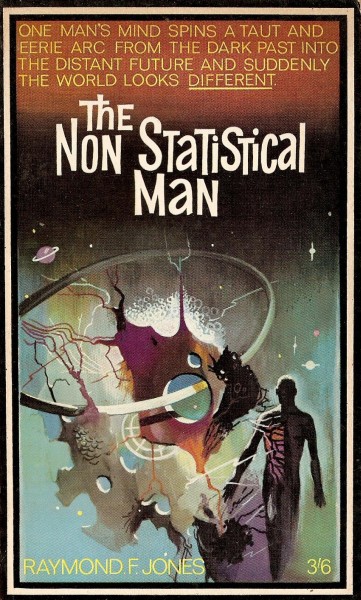
EDIT: GOODNESS! It should be the confusion of first rather than last names. muahaha.
The confusion of middle initials! I think we’re mixing up the two Raymond Joneses — Raymond E. Jones and Raymond F. Jones. I have only read one Raymond F. Jones story and it was an effective thriller! “The Memory of Mars” (1961). It’s essentially a bit less convoluted and more straight-laced version of PKD’s later “We Can Remember It for You Wholesale” (1966).
I haven’t read anything by Raymond E. Jones.
Actually, not even a Jones — Raymond E. Banks.
I have liked a lot of Raymond F. Jones’ work. To be honest, I don’t remember any of Raymond E. Banks’ work. (His novels all appear to be erotica.)
Goodness, I put an edit in my original comment. Lesson learned: don’t talk SF too early in the morning.
Yeah, I mentioned the erotica up in the post for his birthday. And then I realized that he was on the Nebula ballot for one of his stories… and I wanted to know more!
Not only am I completely confused, I’m the source of the confusion!
Sorry, I’m not sure what happened there…
Pretty sure I have that issue of F&SF with “The Short Ones”, as I know I’ve read Ciardi’s “The Bone That Speaks”. I’ll check it out.
I can’t tell any more whether the subject is Jones or Banks, but I will say that the most striking thing I have read by Raymond F. Jones is his 1950 GALAXY story “A Stone and a Spear,” which is about as shocking as Merril’s slightly earlier “That Only a Mother,” but nobody seems to have noticed. I read it in Conklin’s OMNIBUS OF SF years ago. As for THE NON-STATISTICAL MAN, I bought it and read it when it came out in 1964 and don’t remember anything about any of its contents.
I have a copy of the Omnibus. Thanks!
Man I want to read something by Raymond E. Jones!
Raymond F on the other hand… I will hunt down a copy of The Memory of Mars tout suite!
Haha, I think all that happened is that I assumed (perhaps erroneously) you mixed up the Raymonds because you discussed Raymond F. in the Raymond E. discussion thread… and then I mixed up their names further. ‘Tis all! 🙂
I really should track down a copy of The Hieros Gamos of Sam and An Smith–soemthing I’ve been meaning to do since I read your review of it years ago.
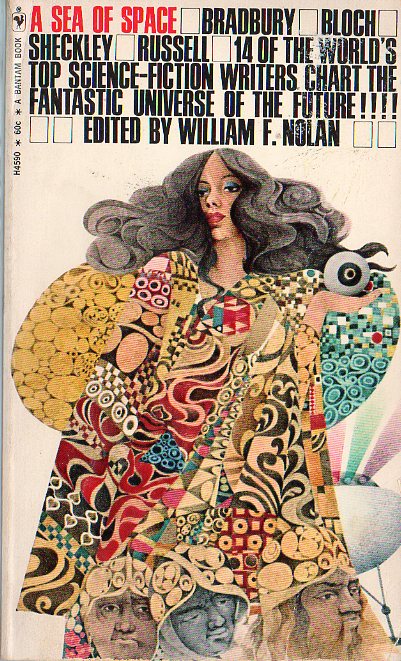
Presently, after a short spell away from SF (I know, I know…) I’ve decided to read the rest of the ‘A Sea of Space’ collection, edited by William F. Nolan (1970). I’ve only read the Chad Oliver ‘The Wind Blows Free’ that is contained within (and which I recall discussing over your review some time ago), and thought it was past time I returned to the rest of the stories. The first story, by Ray Bradbury, ‘The Blue Bottle’, I quite liked. An effective elegy on the death drive–in part!
Wow great Klimt-homage cover at least
It looks vaguely like the work of Diane and Leo Dillon although isfdb.org does not credit it. https://www.isfdb.org/cgi-bin/title.cgi?36335
The Chad Oliver story, “The Wind Blows Free” (1957), that Anthony mentioned in the collection is quite good. It inspired my momentarily paused (albeit, I have little left to read pre-1985 on the subject) review series on generation ships.
‘The Wind Blows Free’ is good. Though I often find myself wanting to like Chad Oliver’s stuff more than I do. But I’ve enjoyed some other of his short stories, e.g. ‘Transfusion’ (1959).
Re: the cover. I have only just noticed the three faces at the bottom!
So not a book recommendation, but a game, hope that is allowed, apologies if not!
The Invincible, a story game heavily influenced by vintage scifi and atompunk. It has gotten great reviews so far and really seems to create a ripple in the gaming community.
The cover art seems to be inspired by the famous skull inside a helmet, wich is always a plus.
The link to the steam page with additional information and footage: https://store.steampowered.com/app/731040/The_Invincible/
Yeah, it’s based off of Stanislaw Lem’s wonderful 1964 novel by the same name. Can’t say I play many games but I have heard of and watched someone play this one.
But yes, it’s probably riffing off the covers the novel received when it was published in the US and the UK in the 70s.
And https://www.isfdb.org/wiki/images/1/11/THNVNCBLSC1973.jpg
Currently reading Poul Anderson’s The Star Fox. Today I might read “Angel’s Egg” by Edgar Pangborn for review. I had read a couple of his novels but this would be my first short story of his. He did not write that many.
I tried to read The Star Fox at one point. Not sure I finished it. As Anderson was one of the authors my dad read as a kid, I binged on his stuff in my late teens.
Yup, I plan on reading everything of Pangborn’s I’ve yet to cover in the next year. That story included.
I have an Anderson review slated for Sunday, his rather atypical The Byworlder.
Apparently its his one novel where he’s sympathetic to hippies.
Having finished The Star Fox, it’s a bit uneven, you can tell it’s three related novellas stitches together, but it’s fascinating as a pro-war (pro-intervention might be more accurate) allegory written and published a few years before the Vietnam war escalated.
Just finished Malzberg’s ‘Destruction of the Temple’. Had a strange sense that I was probably the only person on Earth reading it but maybe there were thousands of others.
As ever with Malzberg (this one picks over the JFK and MLK assassinations) criticism seems pointless. This one has some extremely amusing passages, especially the chapters with Frank the used-car salesman.
Destruction is one of only a handful of Malzberg novels from the 60s/70s that I have not yet read. I have it on the shelf, somewhere. I’m a huge fan of his nihilistic black comedies.
I’m reading Lin Carter’s The Nemesis of Evil. Someone described it as a novelization of a comic book. That’s a pretty fair description of it. I’m only about a quarter of the way through and it’s fun and something I can read if only half my brain is awake. I am enjoying the cartoonish villain and hero.
Thanks for stopping by. I have not read much Lin Carter. But the “novelization of a comic book” description is the vibe from reviews I’ve read of his stuff.
Just finished a few books by AE Van Vogt – The Battle of Forever, The War Against the Rull, and Voyage of The Space Beagle. (In relation to which he sued and got a settlement from 20th Century Fox for plagiarising his idea of an Alien getting onboard and impregnating crew members)
Enjoyed Battle of Forever (fun!) and Space Beagle (interesting!), Rull less so, but still entertaining enough. The internal conflict plot in Beagle was more interesting than the various encounters they have. The book was put together from a bunch of short stories. (“Fix-ups” is the term AEVV uses for such books).
Currently his short story collection “Pendulum” is my dunny reading. I’m not very keen on short stories as a general thing. If it is good then there isn’t enough of it to satisfy me, and if bad its harder to justify putting down than a novel since the end seems closer…)
Current nighttime reading is a re-read of Andrew Norton’s “Voorloper” (in a Baen collection of four stories assembled under the title “The Game of Stars and Comets”).
You have a far greater tolerance for A. E. van Vogt than I!
Yeah, all fix-up is a generic name for all SF novels, especially starting in the 50s and 60s when the novel became more popular, derived from previously published material. van Vogt’s fix-ups were often the result of needing money as he went down the Dianetics rabbit hole and could reconfigure older work without writing anything new…
Kotzwinkle is best known for the novelisation of ET (I think). I read two of his books – The Exile and Fata Morgana – but not King Rat (both were excellent). Howard Fast has a great SF short story in his collection A Touch of Infinity – the story is called A Matter of Size. The first time I read it I totally bought into the idea (an American town is suddenly besieged by homunculi) the second time I read it, years and years later, I recognised it for what it is; an allegory. It works on both levels. Howard’s son – Jonathan Fast – wrote a SF novel called Mortal Gods. It’s pretty generic, but above average – if that isn’t a contradiction in terms.
King Rat is a different book by James Clavell. To be honest, I tend not to put any weight into what is best known or lesser known or what. But yeah, I imagine the ET adaptation did snag him a healthy paycheck as novelizations and property novels do. At least Doctor Rat had some critical success with a World Fantasy Award. I have a copy of Fata Morgana on the shelf.
As for Fast, I own The General Zapped an Angel (1970) (which has a spectacular Karel Thole cover) but it did not maintain my interest. For whatever reason.
Oops – my bad (re Dr. Rat)! I read another, earlier, collection of Howard Fast’s SF stories and found them pretty forgettable. He wrote a lot and – in the case of A Touch of Infinity – I reckon he just happened to hit a sweet spot. The stories were tonally different from his earlier work and reminded me a bit of Casey Agonistes & Other Science Fiction & Fantasy Stories (which, in fairness, I read around the same time).
I enjoyed the McKenna collection! As you probably remember as you left comments on the 2021 review.
In case anyone wants to take a peek: Casey Agonistes and Other Science Fiction and Fantasy Stories, Richard McKenna (1973)
China Miéville apparently also wrote a novel called King Rat — urban fantasy. https://en.wikipedia.org/wiki/King_Rat_(Mi%C3%A9ville_novel)
Really enjoyed Dr Rat, a perfect mix of brutal violence and a fairytale atmosphere that heightens the effect, and I have a note about one of its historical references: researcher Jeffrey Kaye has been collecting for some time evidence that supports claims of US biowarfare in Korea: https://jeff-kaye.medium.com
I find his presentation convincing, and also find it notable that the “smoking gun” that supposedly disproves these events is a hand copied secret Russian document, originally “discovered” by a Japanese journalist writing for a right wing tabloid which denied IJA warcrimes, of which the original has never surfaced. Us biowarfare in Korea would have been based directly on work from Unit 731, taken by the US in exchange for immunity. This is not to get into the weeds, as these events were just one of many references Kotzwinkle used, but I hope the link above is useful.
I’m a big fan of Doctor Rat — as I hope my review suggested! Whether that historical event happened or not does not change the fantastic literary effect that Kotzwinkle creates by blending entirely invented scientific articles with a mixture of real and imaginary historical events.
As a science-fiction author this is off course gold – going through the literature that shaped the genre. I’m grateful for any tips and try to read as much as possible 🙂
My 2022 in review is a good place to see what I’ve been covering and writing about. That said, please note that I am more interested in how SF reveals the history of a moment in time and am not always on the hunt for the best — however, I find some great stuff along the way. https://sciencefictionruminations.com/2023/01/01/updates-my-2022-in-review-best-sf-novels-best-sf-short-fiction-and-bonus-categories/
After not having read SF for a couple of months, I recently read the Ballard collection The Day of Forever, which was interesting in that it contained a lot of very early stories, with a lot of those older SF-tropes that you usually doesn’t expect from Ballard – space exploration, time travel, twist endings. There were also a couple of great “classic” Ballard stories, but mostly you just got small hints of the later greatness.
I also read a lot of ETA Hoffmann stories, a few of which I guess had sort of proto-SF elements, though none of them could really be said to be proper precursors.
Right now I’m reading John Crowleys Little, Big – it’s fantasy, sort of, but with more SF-elements than I expected. I really loved Crowleys Engine Summer, and some say that this is somewhat reminiscent so I gave it a chance even though I’m not usually into fantasy. So far it’s good, but not as good as Engine Summer.
I read decades ago that he wrote the two book concurrently, and switched when he wanted a change of pace…
Since Little, Big came only two years after Engine Summer, and is much longer, it makes sense that he worked on both simultaneously at least for some time. I get the impression that he tried to do something deeper/more ambitious and literary with Little, Big, and yet it seems much more unfinished and unfocused to me.
Engine Summer is one of my favorite novels of all time. I like Little, Big too, but not as much as Engine Summer. However, I have the fabulous new deluxe hardcover edition, and I will reread that soon.
I also recommend The Translator (which is not SF, or maybe barely SF) very highly indeed.
Reviews:
https://rrhorton.blogspot.com/2019/01/the-translator-by-john-crowley.html
https://rrhorton.blogspot.com/2015/03/an-appreciation-of-john-crowleys-engine.html
Thank you for the reviews – I feel the same for Engine Summer as you do it seems – and I would also agree that Beasts is weaker (I haven’t read The Deep, I’ll be looking out for it…). I just finished Little, Big, and yeah, it was quite good but also has its flaws, and nowhere near as good as Engine Summer.
I’m a huge fan of Crowley — based on his first two novels that I reviewed on the site. The Deep (1975) and Beasts (1976). I plan on reading Engine Summer and Little, Big eventually.
As for Ballard, I’m a huge fan of his early fiction and have reviewed quite a few of his short stories–collections like Billenium (1962), The Voices of Time and Other Stories (1962), to individual stories like “The Cage of Sand” (1962) and “Thirteen to Centaurus” (1962)–from that period on my site. I’ve also read all his early SF novels but never got around to reviewing The Drought, The Crystal World, or The Drowned World. Which leaves The Wind From Nowhere (1962), his disavowed first novel, as the only early novel I’ve actually managed to review.
I love most of those early short stories, but this collection had a lot that seemed much more generic, like The Gentle Assassin or The Waiting Ground, or with Twilight Zone-ish plots. Not bad as such, but far from his usual standard.
As for Crowley, I think you would really, really love Engine Summer, it’s like it was made to be reviewed on this blog.
Yeah, “The Gentle Assassin” was my least favorite story in Billenium (1962) https://sciencefictionruminations.com/2014/03/10/book-review-billenium-j-g-ballard-1962/
Maybe I’ll get to the Crowley in 2024, we shall see.
Recently finished City by Clifford Simak but honestly found it a bit of a slog to get through. Not sure why as there were elements that I would normally enjoy but I just couldn’t quite get on with it. Just finished Split Second by Garry Kilworth which was a breezy enough read but maybe more reminiscent of earlier pulp type work and I couldn’t take it too seriously – the plot revolved around a piece of technology which allows archaeologists to see the life of early men from bone fragments. Cue a character touching the image and his mind becoming fused with the mind of the Cro-Magnon teen of the bone fragment and their interrelated experiences across the millennia (all set in Cyprus). Preposterous but I wouldn’t necessarily avoid giving other works by him a read if in the right mood. Looking to start New Worlds 6 next, edited by Michael Moorcock.
I enjoyed City in my late teens. I have not returned to it.
As for Kilworth, I’ve read two of his novels — they were solid but not spectacular.
In Solitary (1977)
The Night of Kadar (1978)
And I have a review of The Best SF Stories from New Worlds 6 (1970), ed. Michael Moocock on my site if that’s the one you’re referencing.
It is that New Worlds edition, yes. It is the Panther edition from 1970 that you have the cover of at the end of your review. Found it in my local used book shop in amongst what was a large collection of sci-fi that had been given in (also got City, Beyond Apollo, Galactic Pot Healer, the Garry Kilworth I mentioned above and a pile more that I am still working my way through).
I love City. It is uneven, sure. Mostly a result of its fix-up nature. But some of its stories, e.g., ‘Desertion’ (orig. 1944) are truly wonders of 1940s sf.
Finished Bob Shaw’s The Palace of Eternity after dinner last night. An odd duck, surely too “problematic” to be reprintable in the current environment. The first half is dominated by a battle of attitude between an embittered Heinlein Man and what I can only describe as Young Buck Turgidson — for a while I hated, hated, hated having to read another Heinlein Man until I realized he was as much in dialog with Heinlein as Panshin was at the time. Really beautiful descriptive writing and appallingly clunky dialog. As all the online reviews report, there’s a sharp left turn to the metaphysical just past the half-way point that nobody else has the heart to spoilerize so I won’t either … but it’s a stunning left turn and lifts the whole thing upward. One of the most beautiful renderings of an Afterlife I’ve seen, and a gutting vision of Humanity-as-Locusts. Weirdly telescoped third act and a rushed finale, but a striking window into 1969-mind, both of the field from within, and of the US military from without.
Definitely sounds intriguing — and far more interesting than the Shaw I’ve read so far. I have a copy on the shelf somewhere.
I read it about 25 years ago and liked it a lot at the time. Jim F’s description of “One of the most beautiful renderings of an Afterlife I’ve seen” rings bells, but little else, unfortunately.
I have a huge soft spot for The Ragged Astronauts. I should read more of his work, maybe.
I read The Sound of His Horn years ago and remember it as a good, but weird Hitler-victorious novel. Recently, I read James Blish´s VOR, which was a competent but not very entertaining expansion of a short story he had written with Damon Knight. My next pre-1985 novel is going to be Wilson Tucker´s To the Tombaugh Station.
I should have a review up soon of The Sound of His Horn. It definitely was weird but in a good way.
I enjoy Tucker but haven’t read that one yet.