Short Book Reviews: Fredric Brown’s The Lights in the Sky Are Stars (variant title: Project Jupiter) (1953), M. A. Foster’s Waves (1980), Eric Frank Russell’s The Great Explosion (1962)

My “to review” pile is growing and my memory of them is fading… hence short—far less analytical—reviews.

1. The Lights in the Sky Are Stars, Fredric Brown (1953)

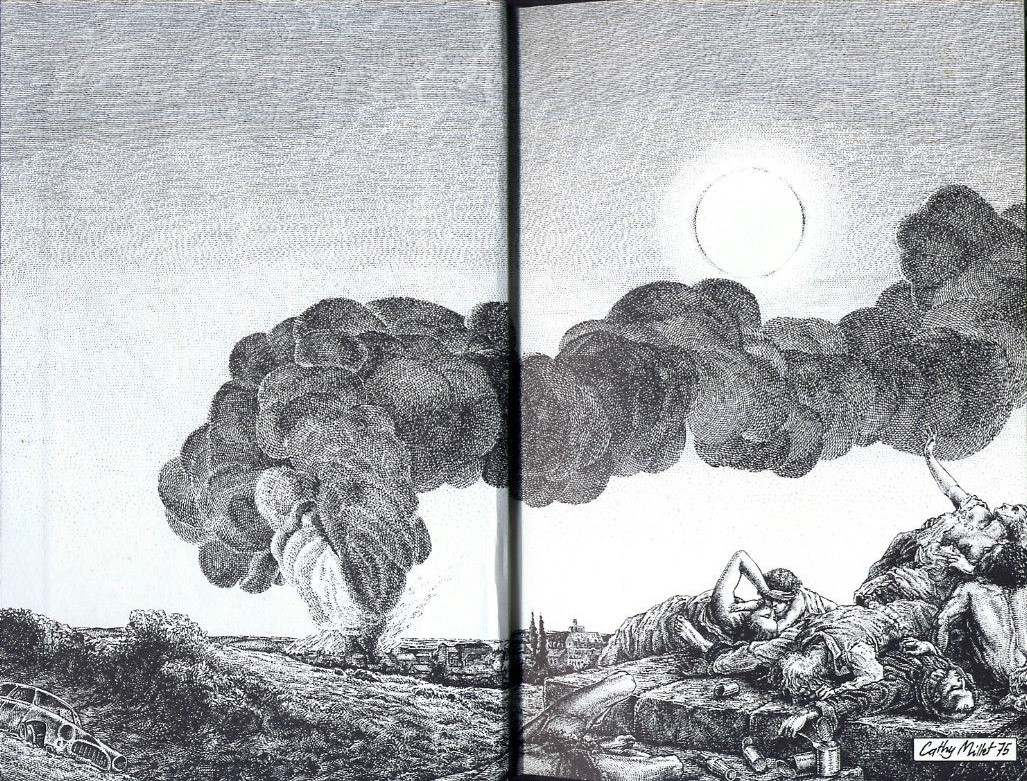
(Mitchell Hooks’ cover for the 1955 edition)

3/5 (Average)

Frederic Brown’s The Lights in the Sky are Stars (1953)  is a slick 1950s vision of the fanatical men and women who take America by the scruff of the neck and yank it, without letting the law get in the way, towards space and the deep beyond. As a rumination on radicalism,  The Lights in the Sky are Stars succeeds—I’m not entirely sure if it was entirely intentional as Continue reading

Book Review: In Solitary, Garry Kilworth (1977)

(Paul Alexander’s cover for the 1979 edition)

3/5 (Average)

Garry Kilworth’s first novel, In Solitary (1977),  attempts to present a morally complex take on human revolt against brutal alien conquest. A brief read, In Solitary piques interest but doesn’t manage to provide compelling backstories to beef up its analysis of the morality of revolt.

Ultimately, In Solitary (1977) does not live up to its compelling premise. Recommended for die Continue reading

Book Review: Electric Forest, Tanith Lee (1979)

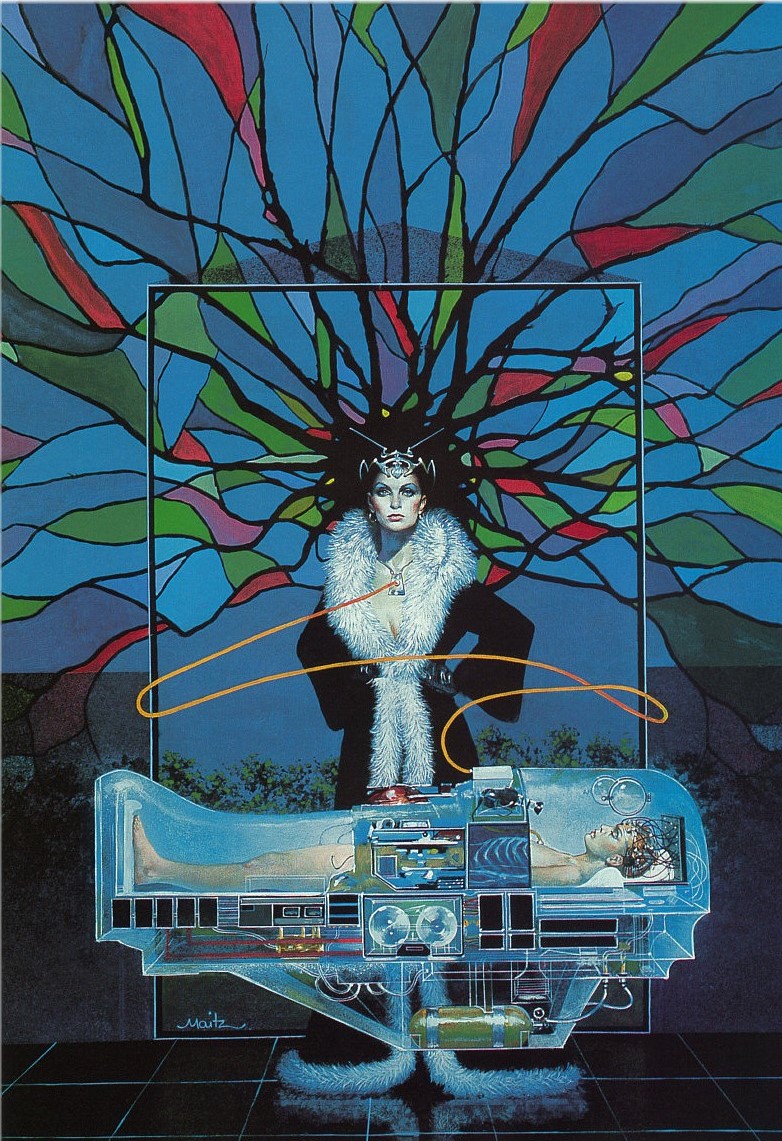
(Don Maitz’s original canvas for the 1979 edition)

5/5 (Masterpiece)

“Two years,” Claudio said. “Wasted. I used to go hunting, searching. For someone like you, my Magdala. But you’re unusual, my dear. A freak. Hard to come by. And it had to be someone like you. A genetic mistake. An atrocity, crawling about its hopeless round. Devoid of normal self-preservative wariness. Mewing, inside its warped little soul, for rescue. Not quite human. Here we are (23).”

Tanith Lee spins a gauzy, sinister, and terrifying tale of manipulative resurrection. A brilliant inventor projects the mind of a grotesque social outcast into a new transcendent body—but this isn’t an altruistic act. There’s a plot afoot. Electric Forest (1979), a shimmery nightmare of psycho-sexual manipulation,  enters my pantheon of favorite 70s SF visions.

Electric Forest demonstrates marked improvement over Don’t Bite the Sun (1976). It’s more Continue reading

Updates: Recent Science Fiction Acquisitions No. CCXL (Melissa Scott, Ignácio de Loyola Brandão, Sheila MacLeod, and Albert J. Guerard)

1. I have yet to read anything by Melissa Scott — as is my habit, I start with a lesser known novel (in this case, her first one).

2. SF in translation from Brazil! Looks terrifying.

3. And I’m yet again the owner of another one of the worst SF covers. That said, Sheila MacLeod’s Xanthe and the Robots  (1977) seems to be an intriguing take on androids and the the nature of humanity.

4. A complete unknown author (wrote more mainstream lit than SF) and novel… According to SF encyclopedia, Albert Joseph Guerard’s only SF novel Night Journey (1950) “depicts an idealistic soldier against the background of a useless Near-Future European Future War. The loss of his illusions is rendered with psychological acuity, though the narrative itself is dithery.”

Count me intrigued.

Let me know what you think of the books and covers in the comments!

~

1. The Game Beyond, Melissa Scott (1984)

(Alan Gutierrez’s cover for the 1st edition) Continue reading

Updates: Recent Science Fiction Acquisitions No. CCXXXIX (Jack Dann, Judith Merril, Anne McCaffrey, John Shirley)

1. I have yet to read any of Jack Dann’s SF — this surreal (?) post-apocalyptical novel looks promising! And a strange Jim Burns cover to boot…

2. I recently reviewed Judith Merril’s “Wish Upon a Star” (1958) for my generation ship short story read-through (i’ll have a new installment soon). I decided to track down another one of her short fiction collections….

I’ve reviewed the following collections so far:

3. The title of Anne McCaffrey’s collection Get Off the Unicorn (1977) was derived from a humorous misprint. According to the collection’s introduction: “The title was derived by accident: McCaffrey’s working title had been “Get of the Unicorn” but this was misprinted as “Get Off the Unicorn” in Ballantine’s roster of unfilled contracts. After McCaffrey’s editor, Judy-Lynn del Rey, was repeatedly asked what “Get Off the Unicorn” was, del Rey asked McCaffrey what she could do about that theme.”

The collection itself contains a wide-range of her short fictions—from the Pern sequence (a childhood favorite) to the earliest story in the Catteni Sequence. I DEVOURED Freedom’s Landing (1995), Freedom’s Choice (1997), Freedom’s Challenge (1998), and Freedom’s Randsom (2002) as a kid! How to survive and thrive on an alien planet was my “go-to” SF device.

4. I’ve only read a handful of John Shirley’s short stories. It’s time for a novel. Eclipse (1985), set in a future a cyberpunk dystopia, tells the tale of anti-fascist resistance. We shall see!

Let me know what you think of the books and covers in the comments!

1. The Man Who Melted, Jack Dann (1984)

(Jim Burns’ cover for the 1986 edition) Continue reading

Adventures in Science Fiction Cover Art: The Spectral Visions of Terry James, Part I

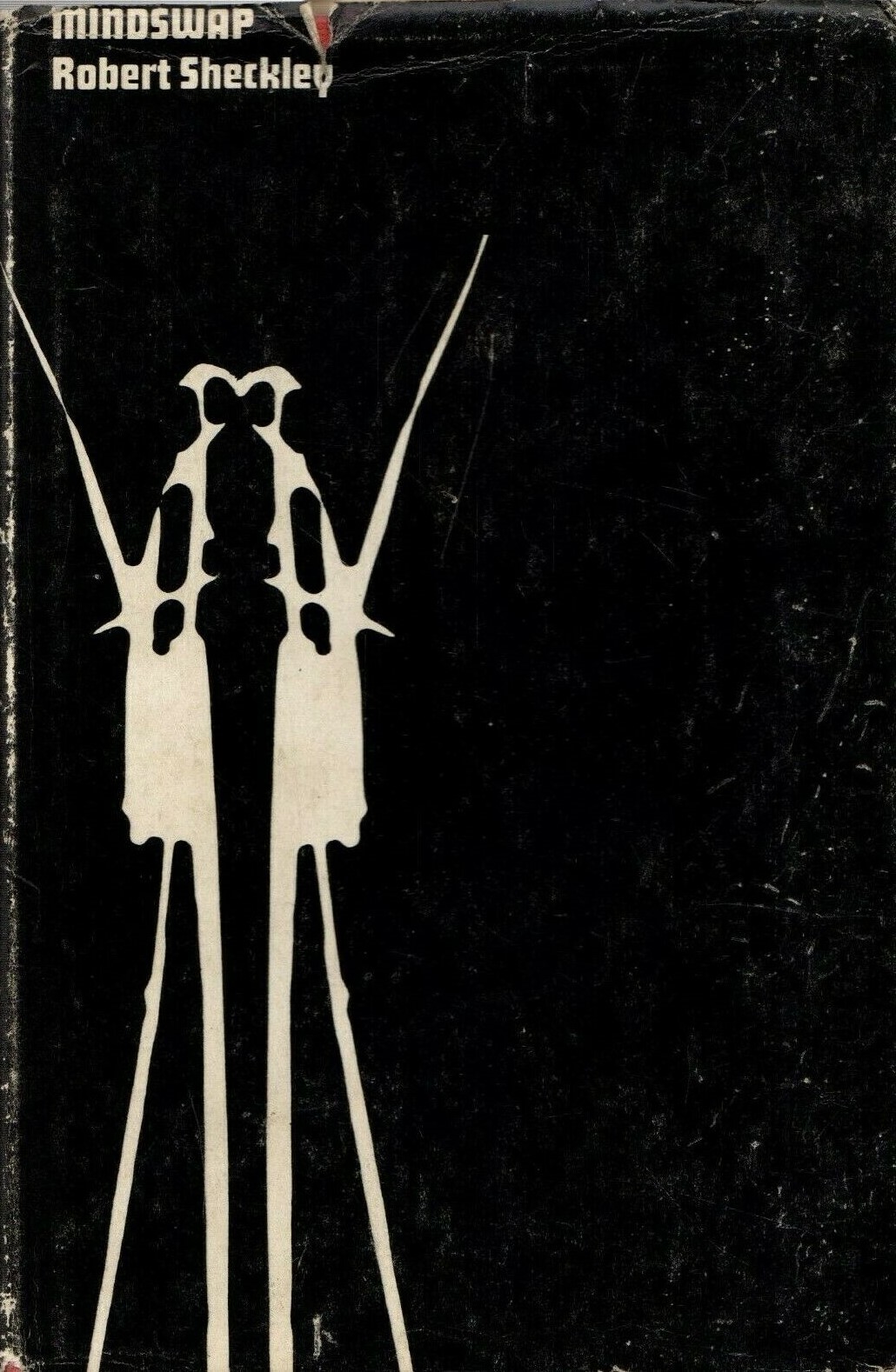
(The 1967 edition of Mindswap (1966), Robert Sheckley)

A few weeks ago I reviewed Clifford D. Simak’s The Werewolf Principle (1967) and came across Terry James’ cover (below) for the 1969 Science Fiction Book Club (UK) edition. The spectral shedding/transforming of the human figure matched the uncanny vibe of the novel. And I headed immediately to isfdb.org to browse his ouvre (note: a few volumes in the pub. series are clearly his but remain uncredited)! And I decided to put together a series of posts showcasing his work.

His art, the entire catalog of SFBC editions between 1968 and the mid-way point of 1971, works with little Continue reading

Book Review: The Bleeding Man and Other Science Fiction Stories, Craig Strete (1977)

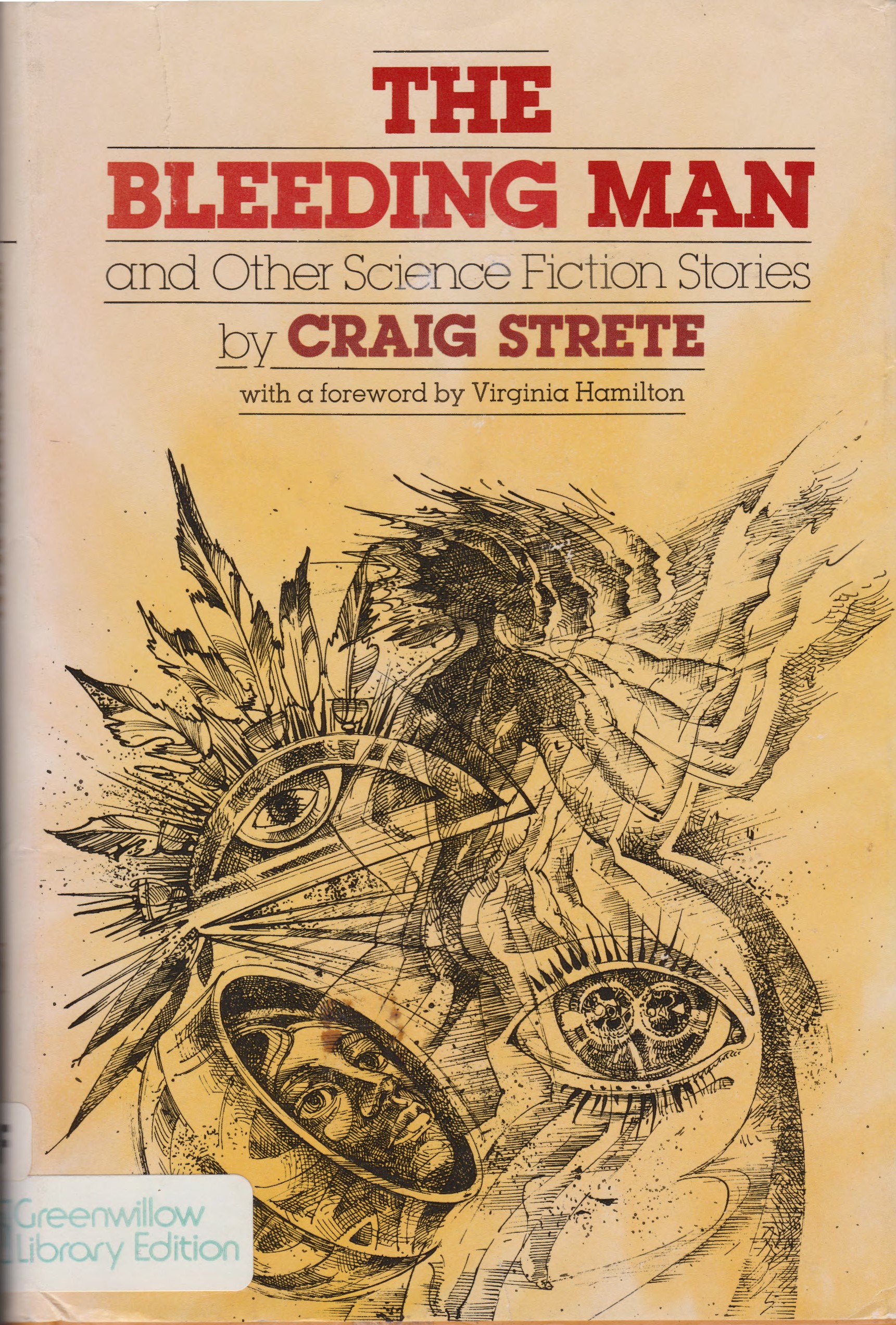
(Karl Stuecklen’s cover for the 1st edition)

4/5 (collated rating: Good)

In 2015, I read and reviewed Craig Strete’s collection If All Else Fails…. (1980) and found it to be a spectacular vision “filled with gorgeous lines, evocative images” and palpable “despair at the loss of Native-American culture.” Strete, one of the few Native-American SF authors I know of, picked up three Nebula Award nominations for short SF over the 70s and early 80s (“Time Deer” in 1976, “The Bleeding Man” in 1976, and “A Sunday Visit With Great-Grandfather” in 1981 although it was withdrawn). The latter two are in this collection. The former two can be found in If All Else Fails….

Recommended for fans of experimental 70s Continue reading

Updates: Recent Science Fiction Acquisitions No. CCXXXVIII (Poul Anderson, Kathleen M. Sidney, Barry B. Longyear, Philippe Curval)

1. I have yet to read anything by Barry B. Longyear, best known Enemy Mine (with David Gerrold) (1985) and Sea of Glass (1986). Circus World (1981) seems like a fun series of linked short stories published in 1978 and 1979 about the descendants of a crashed circus ship.

2. My Poul Anderson collections grows and grows. Sometimes I’m not sure why I bother procuring them… I mean, it was only $1. See the index for my extensive (and apparently contentious) reviews of his work i.e. Tau Zero (1971). And eww, a gauzy cover by Gene Szafran….

3. A complete unknown—and Kathleen M. Sidney’s only SF novel (she wrote three additional short stories according to isfdb.org).

4. Vintage French SF in translation! With a fantastic cover by Max Ernst. In addition to writing SF, Philippe Curval produced fascinating photo collage SF cover art. I’ve featured his art previously on the site: Part I and Part II.

Let me know what you think of the books and covers in the comments!

~

1. Circus World, Barry B. Longyear (1981)

(John Rush’s cover for the 1981 edition) Continue reading

Book Review: The Werewolf Principle, Clifford D. Simak (1967)

(Richard Powers’ cover for the 1st edition)

3.25/5 (Vaguely Good)

“Have you ever thought that I was frozen and thrown off the ship because they didn’t want me aboard, because I’d done something or they were afraid of me or something of the sort?” (49)

Andrew Blake, with memories of an earlier Earth, is discovered by asteroid miners frozen in a capsule. Is he the crew of a lost vessel? Was he the victim of a catastrophic accident? Or, something far more sinister? A claustrophobic and violent mission unfolds has Andrew Blake seeks to establish his identity, and the reason for the two alien voices in his head, while Continue reading