Updates: Recent Science Fiction Acquisitions No. XXV (Silverberg + Dickson + Bester + et al.)

I have a substantial backlog of purchases from my “productive” book hunting Spring Break in Texas….

I’ve read Alfred Bester’s The Demolished Man (1952), which I loved, and The Stars My Destination (1956), which I mostly enjoyed, however I’ve rarely seen his short story collections in used book stores.  I snatched up the gorgeous covered The Dark Side of the Earth (1956).  I suspect Bester is even better at short stories than his novel length works….

The Time of the Great Freeze (1964) is considered one of Robert Silverberg’s best pulp works.  On indirect advise of my friend Michael Dalke at Potpourri of Science Fiction Literature, I’ve procured more of Gordon R. Dickson’s short works…  Thankfully, he hasn’t reviewed the collection The Star Road (1973) yet (I think) — we have a “rivalry.”  Haha.

I’ve already reviewed the short story collection edited by Donald Wollheim, The End of the World (1956) (MY REVIEW), and highly recommend it. A few of the stories are duds but two are in my top 5 short work list.  Philip K. Dick’s ‘Impostor’ (1953) alone is reason enough to track down the volume.

1. The Dark Side of the Earth (1964), Alfred Bester (MY REVIEW)

(Uncredited cover for the 1964 edition) Continue reading

Adventures in Science Fiction Art: Doomed Cities Part III (the attack of the metal missile casings, monks among ruins)

(Rod Turner’s cover for the 1952 edition of The G-Bomb (1952), Vargo Statten (i.e. John Russell Fearn)

Make sure to check out Part I and Part II if you haven’t.  Some of the doomed cities are stunning!

Of all the 50s pulp covers, Rod Turner’s series for Vargo Statten’s novels (John Russell Fearn) has become one of my favorites (above).  Although they adhere to every possible cliché, the pure exuberance of delivery is addicting — the books themselves are supposed to be pure drivel.

Enjoy monks among ruins, spaceships hovering above the fragments of past cities, hordes emerging from the wrecked husks of our august metropolises, the attack Continue reading

Updates: Recent Science Fiction Acquisitions N. XXIV (Simak + Henderson + Pangborn + Coney)

Returning to my old haunt (Texas) conjures the normal quality science fiction haul….  Not the range of Dallas’ spectacular Half Price Books but still a nice selection.

As always, I took a few risks.  I know very little about Zenna Henderson’s short stories — and the cover for the 72 edition of Holding Wonder (1971) (below) is atrocious!  But she’s generally considered a worthwhile author despite the rather hokey premise of her The People series.  I’m most interested in Edgar Pangborn’s A Mirror for Observers (1954) — and I promise not only because of the Richard Powers’ cover.  My father disliked Simak’s Our Children’s Children (magazine 1973) so I don’t have high hopes…  I’m rather ambivalent towards Simak.  I enjoyed City (1954) but would never call it a masterpiece.  Cemetery World (1973) was an interesting read but more in concept than delivery.  Way Station (1963) didn’t deserve the Hugo award but had its moments… etc.

Michael G. Coney’s The Hero of the Downway (1973) was an impulsive buy.  I know very little about the quality of his writing but was persuaded by Josh Kirby’s cover!  And underground societies usually hold my interest — even if they don’t achieve the heights of David F. Galouye’s wonderful Dark Universe (1961).

Enjoy the covers!  And the back cover blurbs!

1. A Mirror for Observers (1954), Edgar Pangborn

(Richard Powers’ cover Continue reading

Updates: New Book Review Index by Rating

I’ve added a new index ordered by rating for easy navigation to my book reviews (here).  This is in addition to by index by author (here).  This makes my best  (here) and worst science fiction book index (here) redundant and I might get rid of it at a later date.  I’ll also add more themed indexes in addition to my Sci-Fi Novels about Overpopulation Index, Sci-Fi Works by Female Authors over the course of the next few weeks.

All the indexes can be found on the bar on the righthand side.

Thanks for all the fascinating comments/observations and words of encouragement.  I’ve greatly enjoyed reading/reviewing and conversing!

Adventures in Science Fiction Cover Art: Through the View Screen, Through the Window

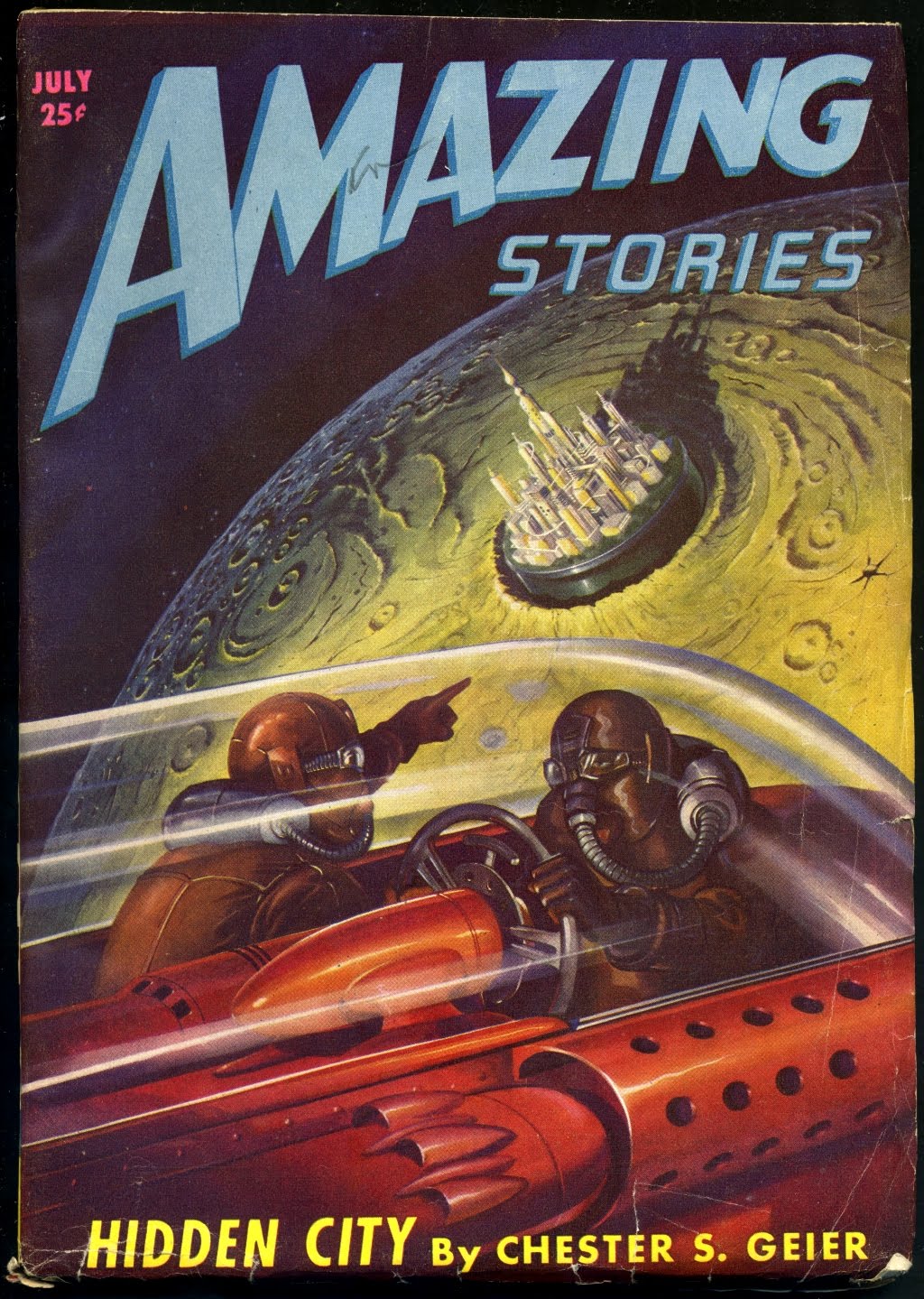
(Julian S. Krupa’s cover for the July 1947 issue of Amazing Stories)

Through the window, through the view screen cities are discovered, worlds end in searing flame,  vectors to unknown lands are plotted, the horrors of earth are left behind.  Alone in a space station an astronaut observes the fragile construction arrayed around him.  Through the window, through the view screen aliens observe our strife, loved ones watch in agony, and the culmination of our era’s scientific endeavors are arrayed in orderly rows.  

In short, the possibilities are endless.  The glass (or some scientifically advanced clear material) frames the story, we watch others watching or we see what they see while we stand among them… 

Definitely a delightful sci-fi cover art trope worth exploring.  Here are a broad selection of covers from juvenile science fiction novels, pulp magazines, edited Continue reading

Adventures in Science Fiction Cover Art: The Art of Robert Foster, Part II

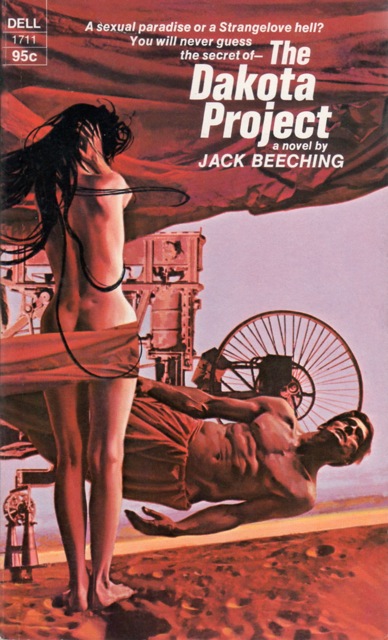
(Robert Foster’s cover for the 1971 edition of The Dakota Project (1968), Jack Beeching)

Unfortunately, science fiction covers from the 60s/70s are not always credited — Robert Foster’s covers are no exception.  Originally I assumed that Foster had only produced a handful (see my first post on his work, Part I), but after searching under Bob Foster and identifying covers by sight I’ve cobbled together another varied/intriguing/unusual collection of his work.

His work are often characterized by fascinating collaged, geared, industrial machinery paired with nudes and semi-nudes Continue reading

Updates: Recent Science Fiction Acquisitions N. XXIII (Farmer, Malzberg + et al.)

A while back I slogged through Philip José Farmer’s dismal To Your Scattered Bodies Go (1971) (the worst novel ever to win the Hugo Award?) and all the increasingly terrible sequels and made a solemn vow to wait a few years before I returned to his extensive oeuvre — so, against my better judgement I picked up a copy of  Traitor to the Living (1973).  I don’t have high hopes (but I love the cover!).  I hope my two dollars were well spent.

Malzberg is shaping into my “under read/unjustly forgotten author of the year” whom I’ll showcase.  Last year’s winner was the brilliant D. G. Compton (see INDEX for reviews).  Fresh off Conversations (1975) and In The Enclosure (1973) I picked up a copy of Guernica Night (1975).  I can’t wait!

Harold Mead’s The Bright Phoenix (1955) is yet another against the oppressive state à la Orwell’s 1984… But, I’ve found that the premise generally holds up despite frequent re-interpretations…

Greenfield’s Waters of Death (1967) should be avoided — at all cost.  I’ve already written a scathing review (rant).

1. Traitor to the Living (1973), Philip José Farmer (MY REVIEW)

(Hans Ulrich Osterwalder and Ute Continue reading

Book Review (rant): Waters of Death, Irving A. Greenfield (1967)

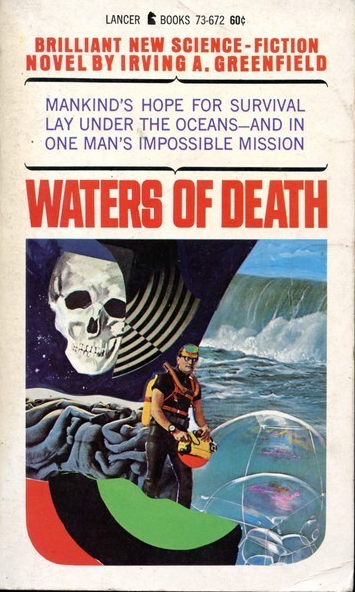
(Hoot von Zitzewitz’s cover for the 1967 edition)

1/5 (Terrible)

I apologize for the lack of deep philosophical insight into the nuances of the book in question. None can be dispensed/inferred/implied or even invented that would adequately embody the throbbing intellect that exudes forth from every word.  Instead, I shall wax nostalgic.

I loved underwater farms/cities/towns when I was a child.  I drew translucent housing domes in cross-section, replete with carefully delineated plots of seaweed stewarded by land dwelling turtle/dog/humans (flippers, tummy fur, soft shells and the like) and an array of mechanical contrivances to facilitate harvesting, processing, and oxygen production.

I picked up a copy of Irving A. Greenfield’s Waters of Continue reading

Book Review: Eight Keys to Eden, Mark Clifton (1960)

(Ralph Brillhart’s cover for the 1962 edition)

3.25/5 (Average)

Mark Clifton’s readable and thought-provoking Eight Keys to Eden (1960) has been unfortunately overshadowed by his dismal failure, They’d Rather Be Right (1955) (co-written with Frank Riley), which is generally considered the worst novel ever to win the Hugo Award.  Although I wouldn’t classify Eight Keys to Eden as a masterpiece, the novel does contains an original premise, good plotting, and sufficiently thought out “pseudo-intellectual” content that is only overbearing at the work’s climax.  The serious nature of the premise is weakened by a forced strain of unfunny “humor” that creeps in at the wrong moments.  Also, a complete lack of character development makes us care little for the challenges Continue reading