Book Review: The Wind From Nowhere, J. G. Ballard (1962)

Richard Powers’ cover for the 1st edition

3/5 (Average)

In J. G. Ballard’s The Wind From Nowhere (1962), cosmic radiation creates an immense natural disaster. Ever-increasing winds threaten to tear buildings out by their foundations and force the survivors into subterranean caverns. With the winds comes dust, a manifestation of erasure, that lacerates skin and engulfs all.

John Carnell serialized Ballard’s first novel in New Worlds in 1961 (issues 110 and 111). Continue reading

Updates: Recent Science Fiction Purchases No. CCLVI (Joan Slonczewski, Barrington J. Bayley, James E. Gunn, Per Wahlöö)

As always which books/covers/authors intrigue you? Which have you read? Disliked? Enjoyed?

1. The Mind Master (variant title: The Dreamers), James E. Gunn (1981)

Lisa Falkenstern’s cover for the 1982 edition

From the back cover: “IT IS THE 22ND CENTURY… IT IS THE AGE OF ECSTASY… Man has perfected the chemical transfer of information. Pop a pill and experience the Garden of Eden, the knowledge of centuries, or the vicarious thrill of someone else’s life. And in this world, one man—The Mnemonist—holds the task of keeping society Continue reading

Book Review: Hyacinths, Chelsea Quinn Yarbro (1983)

Al Nagy’s cover for the 1st edition

4.25/5 (Very Good)

Chelsea Quinn Yarbro’s Hyacinths (1983) is an unsettling dystopian tale of a future where even the unregulated creative world of dreams is harnessed and controlled. On another level, Hyacinths lays bare the dangers of unregulated industry and the ingrained sexism within western capitalism. There’s a deep sadness within these pages, a sadness at the lack of progress for equal rights in the workplace, a sadness at our collective inability to help those who need Continue reading

Book Review: The Heirs of Babylon, Glen Cook (1972)

Detail from Dean Ellis’ (?) cover for the the 1st edition

3/5 (Average)

Glen Cook’s first novel, The Heirs of Babylon (1972), is one of a handful of science fiction works in his extensive catalog. He’s best known for two fantasy sequences, Chronicles of the Black Company and Dread Empire. Operating in standard post-apocalyptic territory (wrecked landscapes created by nuclear and chemical warfare), Cook weaves a disturbing tale of the power of militaristic fantasies and traditions. While suffering from diminishing narrative impetus as the ancient warship Jäger steams towards its inevitable end, The Heirs of Babylon transpires within a well-wrought Earth hellscape with a deeply flawed main Continue reading

Book Review: The Long Tomorrow, Leigh Brackett (1955)

(Darrell K. Sweet’s cover for the 1974 edition)

4.5/5 (Very Good)

“No city, no town, no community of more than one thousand people or two hundred buildings to the square mile shall be built or permitted to exist anywhere in the United States of America” (Thirtieth Amendment of the United States Constitution) (1)

Nominated for the 1956 Hugo Award for Best Novel. Leigh Brackett’s The Long Tomorrow (1955) not only clocks in as the best of her work I’ve read so far but also joins my pantheon of favorite 50s SF visions (*).  At first glance Brackett’s novel appears to traverse standard SF juvenile territory where a teenage boy, in a religiously and socially oppressive society, encounters an object  and memories of the past that opens up a path to self-discovery. But memories are memories. And dreams are Continue reading

Book Review: City Come A-Walkin’, John Shirley (1980)

(Catherine Huerta’s cover for the 1st edition)

4/5 (Good)

“It’s the gestalt of the whole place, this whole fuckin’ city, rolled up in one man. Sometimes the world takes the shape of gods and those gods take the form of men. Sometimes. This time. That’s a whole city, that man” (18).

John Shirley’s City Come A-Walkin’ (1980), an early cyberpunk novel, succeeds as a surreal and earthy paean to  diverse urban community and punk rebellion. A club owner and angst rocker join forces with a physical manifestation of San Francisco to fight the forces of technological change. While a brilliant evocation of aesthetic and emotion with sympathetic main Continue reading

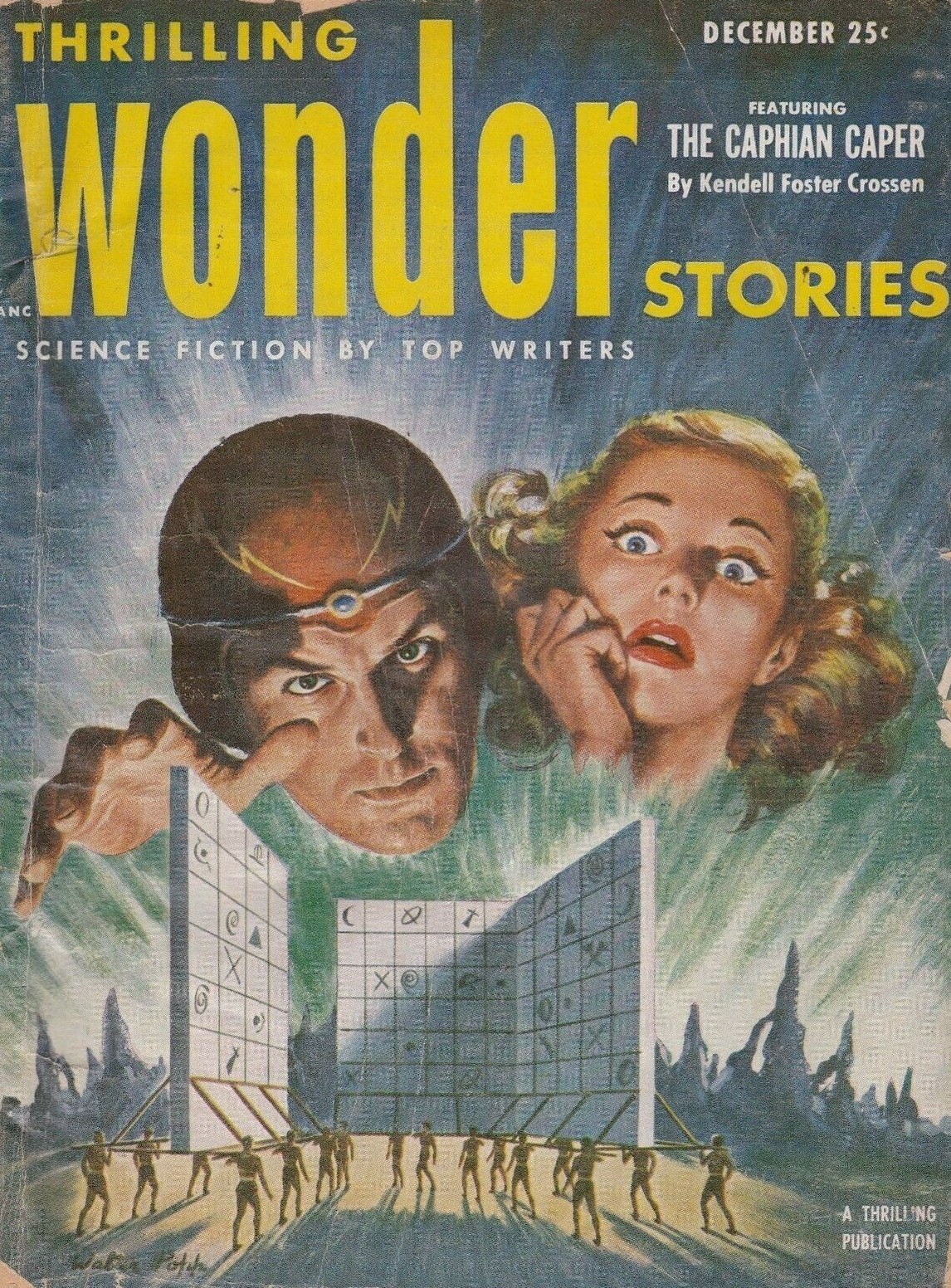
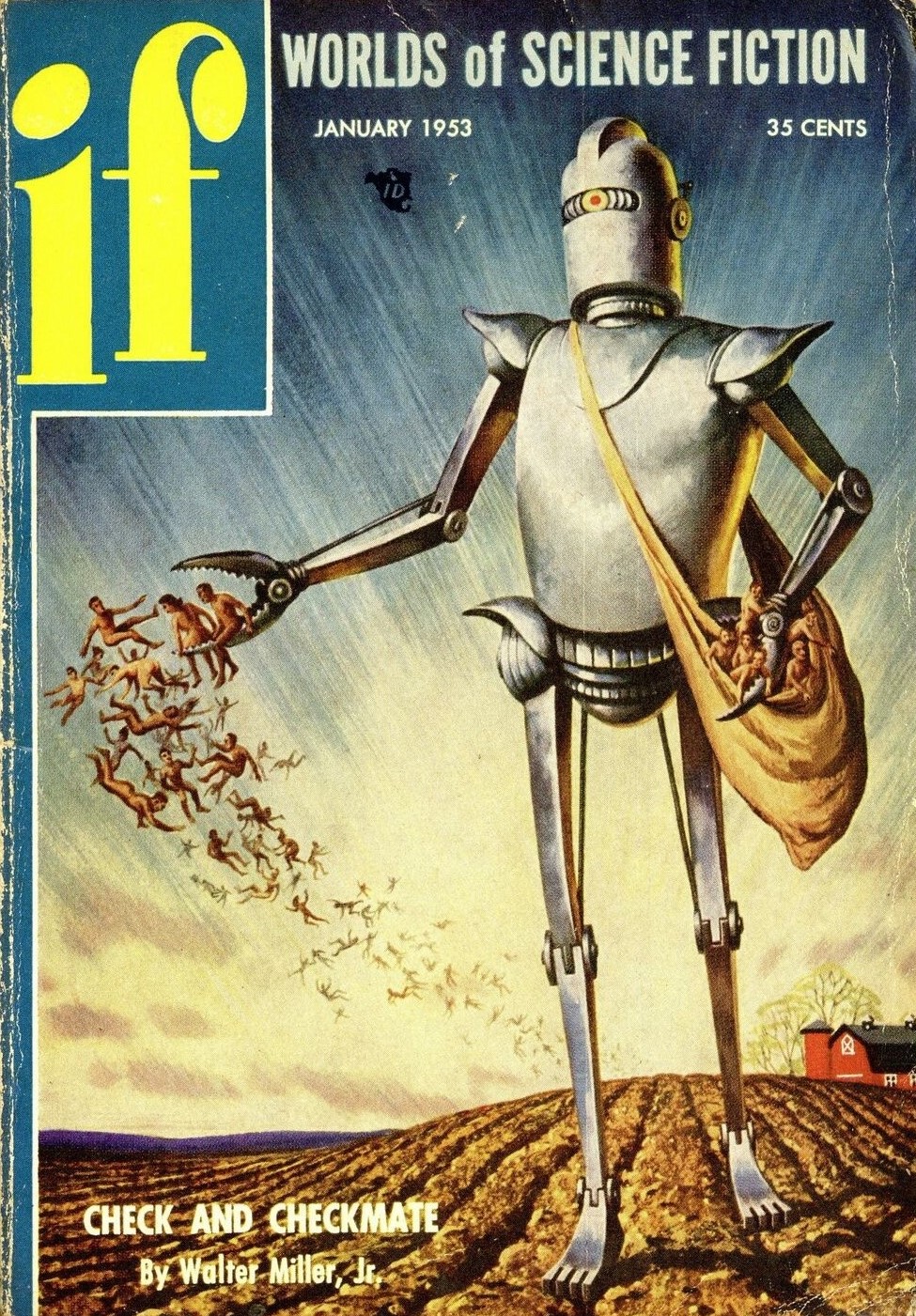
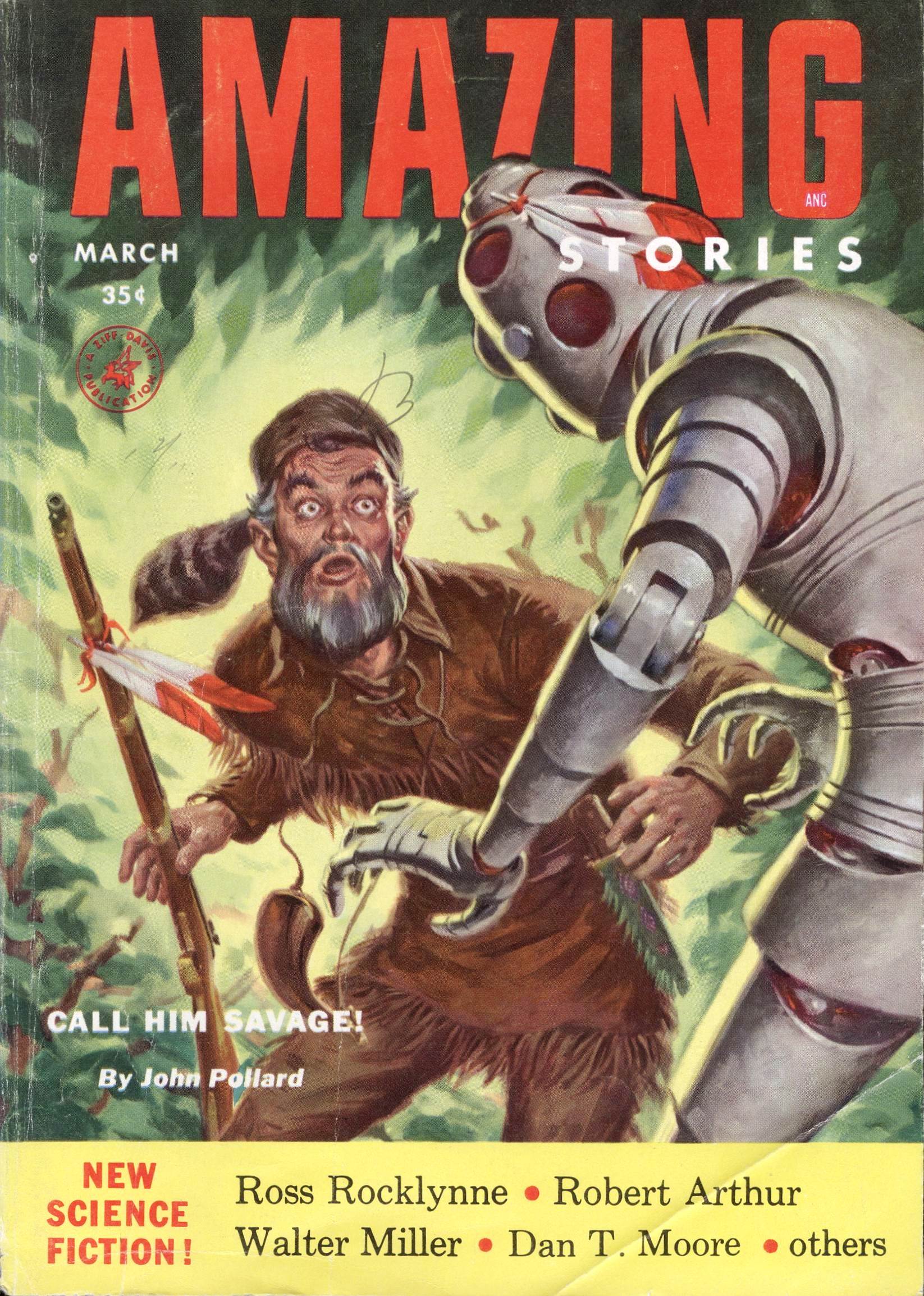
Updates: Recent Science Fiction Acquisitions No. CCL (Worlds of If and Galaxy magazines)

(David A. Hardy’s cover art detail from the September 1974 issue of Galaxy)

I am not a collector. “But Joachim Boaz you post recent purchases all the time!” Let me revise: I am a reader who procures a lot of science fiction novels, collections, and anthologies that I may never read. As a general rule, I only buy science fiction that I want to read. There’s a logic behind the handful of duplicate copies I own—for example, both the 1952 and the 1969 editions of Wilson Tucker’s fantastic The Long Loud Silence (1952) grace my shelf. Editors sliced and diced the 1st edition and Tucker Continue reading

Book Review: Termush, Sven Holm (1967, trans. 1969)

(Uncredited cover for the 1969 edition)

4.5/5 (Very Good)

“[He] maintained that it was in fact essential to conceal what could be concealed; indeed, an inspired lie could be preferred to a malignant truth” (24).

Sven Holm’s Termush (1967, trans. 1969) depicts, with stark minimalism, the psychological state of wealthy survivors holed up in a hotel shelter after an apocalyptic nuclear event. This brief work, a mere 110 pages, is not an adventure story. It is not an exercise in nightmarish brutality like The Road (2006) or an account of humanity’s turn towards evil as the gauze of “civilization” falls away like The Death of Grass(1956).

Rather, Sven Holm (1940-2019) (SF Encyclopedia entry), a Danish author of mainstream literature, delves into the psyche of the survivors, their isolation and inability to grasp the immensity of the changes beyond their walls, and their Continue reading

Book Review: The Dead Astronaut, ed. uncredited (1971) (J. G. Ballard, Ursula K. Le Guin, Arthur C. Clarke, et al.)

(Pompeo Posar’s cover for the 1st edition)

3/5 (collated rating: Average)

“The dead astronaut: The phrase is filled with anxiety, the words themselves evoking the tension and anguish that gripped the whole world in that fateful month of April 1970, when a technical malfunction came close to costing the lives of astronauts Lovell, Swigert and Haise” (5).

The Dead Astronaut (1971) contains a range of 50s and 60s SF stories—from Ursula K. Le Guin to J. G. Ballard—on the broad theme of astronauts, that appeared in Playboy Magazine. For a  reader of genre for only the last decade (and a bit), it’s shocking to consider that Playboy, at one point, contained top-notch science fiction! That aside, The Dead Astronaut contains a range of soft and hard science fictional accounts of astronauts Continue reading